
If your houseplants are struggling because your windows do not provide enough sunlight, I think the Bell & Howell Bionic Grow LED Plant Light is worth considering.
I like its flexible design, multiple light modes, adjustable brightness, and built-in timer because they make indoor plant care much easier.
It is especially appealing for small houseplants, herbs, seedlings, and darker corners. However, I would not treat it as a professional grow-room replacement.
If you want an affordable, compact grow light for everyday indoor gardening, I would buy the Bell & Howell Bionic Grow LED Plant Light.
My Personal Experience With The Bell & Howell Bionic Grow LED Plant Light
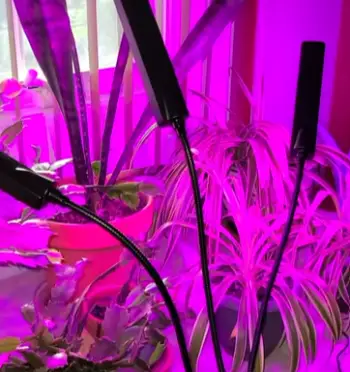
When I first started using a grow light, I honestly thought almost any bright LED would do the job. I quickly realized that plants are much pickier than I am.
A light can look extremely bright to my eyes and still fail to provide plants with the type and amount of light they need.
That is what made the Bell & Howell Bionic Grow LED Plant Light interesting to me. Instead of taking over an entire room with a large panel, it is designed around individual flexible light heads that I can position around my plants.
That small footprint immediately made sense for my indoor setup.
I particularly liked being able to adjust the arms. If one plant was taller than another, I could reposition the light rather than moving the entire plant collection.
The flexible heads also helped me direct illumination toward foliage instead of wasting as much light on the surrounding wall or furniture.
The different lighting modes were another useful feature. Depending on the version, the Bionic Grow line offers combinations of red and blue light as well as a fuller-spectrum setting.
I found the mixed setting more comfortable for everyday use because it gave my plants supplemental illumination without making the room look excessively red or blue.
The timer was probably one of my favorite features. I do not always remember to turn a plant light on and off at exactly the same time every day.
With scheduled operation, I could establish a consistent routine and leave the light to do its job.
I also noticed that positioning mattered enormously. When I placed the light too far away, the effect was much less impressive.
Once I adjusted the heads closer to the foliage, the plants received much more useful illumination.
My overall impression is that this is a convenience-focused grow light rather than a high-powered horticultural system.
For a few houseplants sitting in a dim apartment, office, bedroom, or shelf, I can see why people like it.
For a large collection or plants with demanding light requirements, I would want something substantially more powerful.
What Is The Bell & Howell Bionic Grow LED Plant Light??
The Bell & Howell Bionic Grow is a flexible indoor LED plant-light system designed to supplement or replace insufficient natural light for indoor plants.
The basic concept is simple: position several adjustable LED heads around your plants, select an appropriate lighting mode and brightness level, and allow the light to provide supplemental illumination on a schedule.
Different Bionic Grow configurations exist, including models with two, three, or four adjustable heads. Features can vary slightly between versions, so I would always check the exact model before purchasing.
Many versions include multiple brightness settings, several lighting modes, flexible gooseneck-style arms, and automatic timer options. Some models are powered through USB, meaning the power arrangement is something I would check carefully before ordering.
That last point matters because a grow light is only useful when it actually fits your setup. If the particular package does not include the wall adapter you need, you may have to supply one separately.
Pros Of Bell & Howell Bionic Grow LED Plant Light
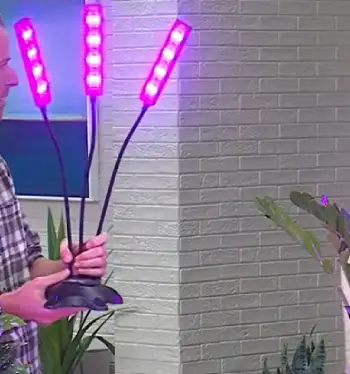
- Easy Positioning
For me, the adjustable arms are a major advantage. I can aim individual lights toward particular leaves or plants instead of depending on one fixed beam.
- Useful for Low-Light Rooms
If you have a north-facing room, basement, office, apartment, or shelf far from a window, supplemental lighting can make a noticeable difference.
The Bionic Grow gives me an easy way to add light without rearranging my entire home.
- Convenient Timer
The automatic timer is one of the features I appreciate most. Once I establish a schedule, I do not have to keep remembering when the light should turn off.
- Multiple Light Settings
The availability of different modes gives me more control than a basic desk lamp. I can experiment with different settings based on the plants I am growing.
- Adjustable Brightness
This is particularly useful because plants vary. A delicate seedling and a mature sun-loving plant should not necessarily receive identical treatment.
- Space-Friendly
I like that the Bionic Grow does not demand a large dedicated area. It is much more approachable for someone who simply wants to keep several houseplants healthy.
- Beginner-Friendly Concept
I would recommend this type of design to someone who is new to indoor gardening because the basic controls are straightforward.
You position the heads, select the brightness, choose a lighting mode, set the timer, and observe your plants.
That is much less intimidating than installing a complicated commercial grow system.
- Relatively Low Energy Use
LED technology is generally more energy-efficient than older lighting technologies.
Because the Bionic Grow is designed as a relatively small indoor plant light, I would expect its electricity consumption to be modest compared with running large high-output grow fixtures.
Still, actual cost depends on the specific model, operating hours, and your local electricity rate.
Cons Of Bell & Howell Bionic Grow LED Plant Light
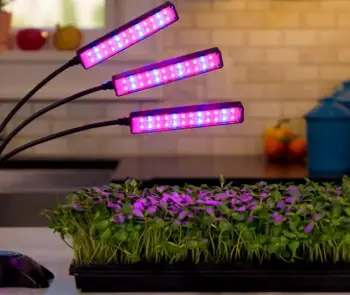
- Not Designed for Large Gardens
This is probably the biggest limitation.
I would not purchase the Bionic Grow expecting it to illuminate an entire indoor garden. Its flexible multi-head design is much better suited to a limited number of plants.
If you have dozens of plants or a large seed-starting operation, a larger LED panel would make more sense.
- Power Accessories Can Be Confusing
One issue I would watch carefully is the power setup. Some configurations use USB power, and product packages can vary regarding the included adapter.
Before buying, I would check exactly what comes in the box. A missing wall adapter can turn an otherwise simple installation into an unnecessary inconvenience.
- Durability Can Be Inconsistent
Customer feedback is not universally positive. While many users report good plant performance and convenient operation, some reviews mention lights arriving damaged, individual heads failing, or the unit stopping after a relatively short period.
That does not mean every unit will fail, but it is enough for me to consider reliability a potential weakness.
- Flexible Arms May Need Readjustment
The flexible arms are convenient, but they are not always perfectly rigid. If you reposition them frequently, you may find yourself making small adjustments to keep the lights aimed exactly where you want them.
- Not a Replacement for Natural Sunlight in Every Situation
I would not assume that a small desktop grow light can completely replace sunlight for every plant.
Some high-light plants require considerably more intensity than a compact multi-head fixture can provide.
Maintenance Tips For The Bell & Howell Bionic Grow
- Keep the LED Surfaces Clean
Dust gradually builds up on almost anything sitting indoors, and grow lights are no exception.
I recommend turning the unit off and unplugging it before cleaning. Then I use a soft, dry microfiber cloth to gently remove dust from the LED surfaces.
I avoid spraying liquid directly onto the light.
Clean LEDs can provide more consistent illumination than dirty ones covered with dust.
- Check the Flexible Arms Regularly
I like to reposition the arms when my plants grow, but I try not to bend them aggressively.
Instead, I make gradual adjustments and avoid repeatedly forcing the same section into extreme angles.
That simple habit can help reduce unnecessary mechanical stress.
- Keep Water Away From the Electronics
This sounds obvious, but indoor gardening can get messy.
I water plants, mist foliage, and occasionally deal with spilled soil. I make sure the grow light and its electrical connections stay dry.
I also avoid placing the power connection directly underneath a plant where dripping water could reach it.
- Clean Around the Base
Soil, leaves, and dust can collect around the base over time.
I periodically wipe the base and surrounding area so the unit remains stable and the growing station stays tidy.
- Inspect the Cable
If your model uses a USB cable, I would occasionally check it for visible damage, loose connections, or unusual heat.
If a cable becomes damaged, I would replace it rather than continuing to use it.
- Maintain a Consistent Light Schedule
Plants generally respond better to consistency than random bursts of artificial light.
Instead of turning the light on for several hours one day and forgetting it the next, I prefer using the timer and maintaining a predictable schedule.
- Watch the Plant, Not Just the Light
This is one of my most important tips.
The correct setting is not determined solely by the product. Your plant gives you clues.
If a plant becomes stretched and leggy, it may not be receiving enough useful light. If foliage appears stressed or develops signs of excessive light exposure, I reconsider the intensity and distance.
Comparison Of Bell & Howell Bionic Grow With Other Brands
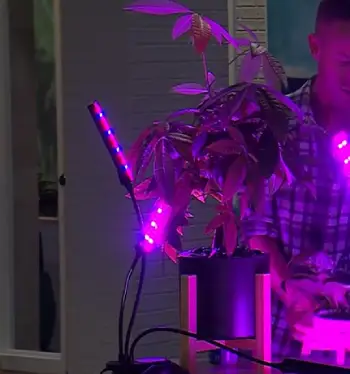
- Bell & Howell Bionic Grow vs. GE Grow Light Bulbs
GE grow-light bulbs are a different type of solution. Instead of providing several flexible heads, a grow bulb can be installed in a compatible lamp or fixture.
I prefer the Bell & Howell design when I want to position multiple light sources around a small collection. I prefer a grow bulb when I want a simpler setup that fits an existing lamp.
For someone who values flexibility and multiple adjustable heads, I think Bionic Grow has the advantage.
- Bell & Howell Bionic Grow vs. Sansi Grow Lights
SANSI offers LED grow bulbs and fixtures designed for indoor plants. Its products are appealing when you want a more traditional bulb-style solution or stronger targeted illumination.
I find the Bell & Howell system more convenient when I am working with several plants that need separately positioned light heads.
SANSI can make more sense when I want a conventional grow bulb or fixture rather than a flexible multi-arm lamp.
- Bell & Howell Bionic Grow vs. Barrina Grow Lights
Barrina is well known for larger indoor lighting formats, including bar-style fixtures. These are particularly useful when covering plant shelves or longer growing areas.
The Bionic Grow feels more personal and compact.
If I have a small plant stand, I like the Bell & Howell approach. If I am lighting a long shelf with many plants, I would lean toward a bar-style system.
- Bell & Howell Bionic Grow vs. Spider Farmer
Spider Farmer occupies a more serious end of the indoor-growing market, with larger fixtures designed around higher-output growing environments.
That is not really the same target as Bionic Grow.
If I were growing a serious indoor crop or managing a dedicated grow space, I would consider a purpose-built horticultural fixture. For casual houseplant care, I would rather have the simplicity and compactness of Bell & Howell.
- Bell & Howell Bionic Grow vs. Monios-L
Monios-L offers a range of indoor plant-light solutions, including bar-style systems that can work well for shelves and indoor plant racks.
I see the difference mainly in installation style.
The Bionic Grow is convenient when I want adjustable individual heads without permanently arranging an entire shelf-light system.
Frequently Asked Questions (FAQ)
There is no single best option; the right light depends on plant type, growing area, and required light intensity.
They consume electricity, require positioning, can produce unwanted brightness, and may be insufficient for high-light plants.
Usually not significantly for small LED fixtures, although costs increase with higher wattage and longer daily operation.
Yes. Properly designed LED grow lights can provide supplemental light that supports photosynthesis and healthy plant growth.
Final Thoughts
After looking at what the Bell & Howell Bionic Grow offers, I see it as a practical middle-ground option.
It is more versatile than a basic household lamp but less powerful and specialized than a professional horticultural fixture.
I especially like its flexible design because I can adapt the light as my plants grow. The timer and adjustable brightness also make everyday plant care less demanding.
My biggest reservations are power-accessory confusion and inconsistent reports about durability. Those issues prevent me from calling it perfect.
Still, if you need affordable supplemental lighting for a small indoor plant collection, I would buy the Bell & Howell Bionic Grow LED Plant Light.
It offers useful features without requiring me to build a complicated growing setup.
Recent Posts
I tried Meltoway Hair Dissolving Cream because I wanted a quick way to deal with unwanted body hair without reaching for a razor every few days. If you are looking for a convenient at-home...
If you’re considering a saffron-based supplement to support mood, appetite control, and everyday wellness, Happy Saffron Plus is worth considering.I like that it takes a familiar botanical...