
If you’re thinking about buying Drylok Extreme, I’d urge you to pause for a moment.
I’ve used it, tested it, and compared it with alternatives—and while it promises serious waterproofing power, my experience didn’t fully live up to the hype.
Before you spend your money, you deserve a clear, real-world perspective on whether this product actually delivers or just sounds good on the label.
My First Experience With Drylok Extreme
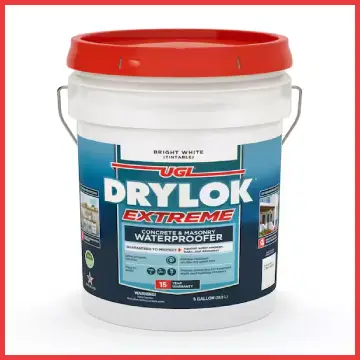
I still remember the first time I picked up Drylok Extreme. My basement walls had that familiar musty smell, with occasional damp patches after heavy rain.
Like you, I wanted a reliable, long-term fix—not a temporary patch job. The marketing around Drylok Extreme made it seem like the ultimate solution, claiming to withstand high water pressure and seal masonry surfaces effectively.
Application was my first mixed impression. On one hand, it went on fairly thick, almost like a heavy paint. That gave me confidence initially—it felt substantial, like it would form a tough barrier.
But at the same time, it was harder to spread evenly than I expected. If you’re not careful, you’ll end up with uneven patches or visible brush marks.
I had to go over certain sections multiple times just to get consistent coverage.
The drying time was another factor. It dried reasonably fast on the surface, but I noticed that areas with higher humidity took longer to fully cure.
During that period, I was constantly worried about whether moisture would sneak back in before it set properly.
Now here’s where things got frustrating. For the first few weeks, everything looked fine. The walls felt dry, and I thought I had solved the issue.
But after about two months—especially following a heavy rainstorm—I noticed faint damp spots creeping back in. Not as bad as before, but enough to question the product’s long-term reliability.
I also observed some peeling in one corner where the wall wasn’t perfectly prepped. That’s when I realized how sensitive Drylok Extreme is to surface preparation.
If your wall isn’t completely clean, dry, and structurally sound, the product doesn’t forgive mistakes. And let’s be honest—not every basement wall is in perfect condition.
Another thing you should know is that it doesn’t address underlying structural issues. If water is coming in through cracks or pressure buildup, Drylok Extreme alone won’t solve it.
It’s more of a surface-level barrier than a complete waterproofing system.
By the end of my testing period, I felt underwhelmed. It worked somewhat, but not consistently enough to justify the cost and effort. You might get decent results in mild conditions, but if your moisture problem is even slightly serious, this product can fall short.
What Drylok Extreme Promises Vs. Reality?
Drylok Extreme is marketed as a high-performance masonry waterproofer designed to stop water intrusion, resist mold growth, and withstand hydrostatic pressure. On paper, that sounds exactly like what you need.
In reality, the performance heavily depends on your wall condition, application quality, and the severity of your moisture problem. If any of those factors are off, the results can be inconsistent.
It’s not that the product completely fails—it just doesn’t live up to its bold claims in many real-life situations.
Pros Of Drylok Extreme
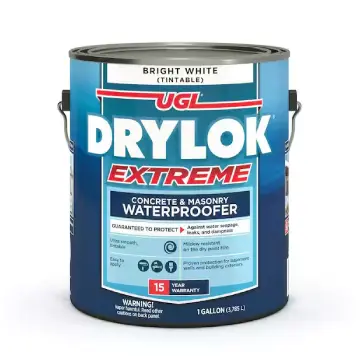
- Strong Initial Waterproofing Performance
One of the biggest selling points—and honestly one of the few areas where it does deliver—is its ability to resist water pressure on paper.
It’s designed to withstand around 15 PSI of hydrostatic pressure, which is fairly high for a DIY coating .
When I first applied it, I noticed this right away. The wall felt sealed, almost like it had a protective shell.
If your basement only deals with light moisture or occasional dampness, you’ll likely see immediate improvement.
But here’s the thing—you’ll probably feel like the problem is solved… at least at first.
- Thick, Heavy-Duty Coating Feel
Unlike standard paint, this stuff is thick—almost like a paste. That thickness works in your favor because it helps fill small pores and imperfections in concrete.
When you’re applying it, you can literally feel it gripping the surface. It doesn’t just sit there—it pushes into the wall pores, which is exactly how it’s supposed to work .
For you, this creates a sense of durability. It feels like you’re doing something serious, not just painting over a problem.
- Mold and Mildew Resistance
Drylok Extreme includes a mildew-resistant additive, which is actually helpful in damp environments. After applying it, I did notice that musty odors reduced significantly for a while.
If your basement smells slightly damp but isn’t actively leaking, this feature alone might improve your space.
But again, it only works if moisture stays under control—if water keeps coming in, mold will eventually find a way back.
- Widely Available and Easy to Buy
You don’t have to hunt this product down. It’s available in most hardware stores and online.
For you, that means:
- No waiting
- No special ordering
- Easy to start your project immediately
That convenience is a big reason why so many homeowners try it first.
- DIY-Friendly
You can apply it yourself with a brush, roller, or sprayer . That’s a major advantage if you’re trying to avoid professional costs.
But let’s be real—this “easy DIY” label comes with conditions. You need to:
- Clean the surface properly
- Remove efflorescence (that chalky white stuff)
- Patch cracks beforehand
If you do all that correctly, the application is manageable. If you don’t, results drop fast.
- Decent Coverage and Quick Dry Time
It covers roughly 75–100 square feet per gallon and dries to the touch in under an hour .
From your perspective, this means:
- You can finish the job relatively quickly
- You don’t need endless coats (though at least two are required)
- The project feels efficient
That quick progress is satisfying, especially if you’re tackling a basement upgrade.
Cons Of Drylok Extreme
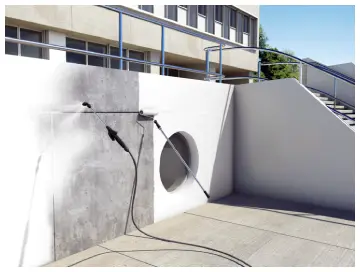
- Extremely Sensitive to Surface Preparation
This is where things start going downhill.
Drylok Extreme demands near-perfect surface prep. The manufacturer itself makes it clear that:
- Surfaces must be clean
- Free of grease, dust, and old paint
- Efflorescence must be removed
If you skip or rush this, the coating won’t bond properly.
From your side, this turns a “simple project” into a time-consuming process. And honestly, most basement walls are far from perfect—so you’re already starting at a disadvantage.
- Not a True Solution for Serious Water Problems
This is the biggest reality check.
Drylok Extreme is a surface-level barrier, not a structural fix. If your basement has:
- Cracks
- Hydrostatic pressure buildup
- Poor drainage
…it won’t solve those issues.
Even the warranty excludes failures caused by structural problems or improper prep.
So if you’re hoping this will permanently stop leaks—you’re likely going to be disappointed.
- Inconsistent Long-Term Results
This is something many users quietly experience.
At first, everything looks great. But over time:
- Damp spots may return
- Coating may weaken in certain areas
- Performance becomes uneven
This inconsistency is frustrating because it creates false confidence early on.
- Peeling, Flaking, and Failure Risk
If adhesion isn’t perfect—or if moisture pressure builds behind the coating—it can start to peel.
And once that happens, the entire barrier is compromised.
Some real-world opinions reflect this frustration:
“It will work or it will flake”
That short statement sums it up perfectly. It’s not always reliable.
- Traps Problems Instead of Solving Them
Here’s something people don’t always think about:
When you seal a wall from the inside, water pressure doesn’t disappear—it just builds behind the coating.
In some cases, this can:
- Push the coating off
- Redirect moisture to other areas
- Make underlying issues worse
That’s why professionals often recommend exterior waterproofing instead of interior coatings.
- Thick Texture Makes Application Harder
Yes, the thickness is a pro—but also a con.
You’ll likely struggle with:
- Uneven coverage
- Visible brush strokes
- Heavy rolling effort
It’s not smooth like regular paint. If you’re expecting an easy, clean finish, this can be frustrating.
- Requires Multiple Coats
You must apply at least two coats for it to work properly .
And not just quickly:
- You need proper drying time
- You need even application
- You may need extra coats for weak spots
So while it seems simple, the workload adds up fast.
- Limited Use Cases
Drylok Extreme isn’t as versatile as it sounds.
It:
- Doesn’t work well on painted surfaces
- Isn’t suitable for floors
- Needs bare masonry to perform properly
That limits how and where you can actually use it.
Tips For Drylok Extreme Masonry Waterproofer
- Clean and Prep Thoroughly Before Application
If you decide to use Drylok Extreme, preparation is everything. You need to remove dirt, old paint, efflorescence, and any loose material.
A wire brush and cleaning solution can help.
Think of it this way—this product sticks only as well as the surface allows. If you rush this step, you’re setting yourself up for failure.
- Repair Cracks Before Coating
Before applying anything, inspect your walls carefully. Fill cracks and holes with an appropriate patching compound. Don’t rely on the waterproofer to cover structural flaws.
You’ll get much better results if the surface is solid and uniform.
- Apply Multiple Coats Carefully
One coat isn’t enough. You should apply at least two coats, allowing proper drying time in between. Make sure each layer is even and consistent.
From my experience, rushing this process leads to weak spots where moisture can sneak through.
- Monitor Humidity Levels
After application, keep an eye on humidity in your basement. Use a dehumidifier if necessary. Even the best coating struggles in consistently damp environments.
You want to create conditions where the product can actually perform as intended.
- Inspect Regularly for Early Signs of Failure
Don’t assume the job is done forever. Check your walls periodically for damp spots, peeling, or discoloration.
Catching issues early can save you from having to redo the entire project later.
- Combine With Other Waterproofing Methods
If your moisture problem is more than minor, don’t rely solely on Drylok Extreme. Consider improving drainage, sealing exterior cracks, or installing a sump pump.
A combined approach is far more effective than depending on a single coating.
Comparison Of Drylok Extreme Masonry Waterproofer With Other Brands
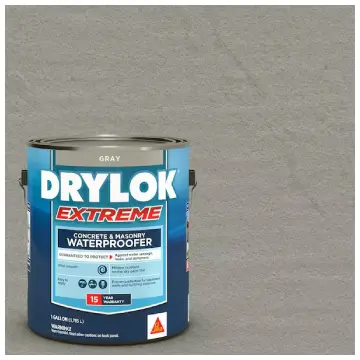
- Drylok Extreme vs. Regular Drylok
The standard version is less expensive and slightly easier to apply. Drylok Extreme claims higher durability and better resistance, but in real-world use, the difference wasn’t dramatic enough for me.
If anything, both products share similar limitations when it comes to long-term reliability.
- Drylok Extreme vs. RadonSeal
RadonSeal penetrates deeper into the concrete rather than sitting on the surface. In my experience, this makes it more durable over time.
While it may cost more upfront, it often performs better in challenging conditions.
- Drylok Extreme vs. Liquid Rubber Waterproof Sealant
Liquid rubber products tend to be more flexible. That flexibility helps them handle minor structural movement without cracking or peeling.
Compared to Drylok Extreme, they feel more forgiving and adaptable.
- Drylok Extreme vs. Basement Systems Solutions
Professional waterproofing systems go beyond coatings. They address drainage, pressure, and structural concerns.
While they’re more expensive, they offer a more complete and reliable solution if you’re dealing with serious water issues.
Is Drylok Extreme Worth It?
In my opinion, it’s only worth considering if your moisture problem is very mild and you’re willing to put in the effort for proper preparation and maintenance.
For anything beyond that, you might find it underwhelming.
Frequently Asked Questions (FAQ)
It can be worth it for minor dampness issues, but for long-term or serious water problems, it often falls short. I wouldn’t rely on it as a complete solution.
The main downsides include heavy dependence on surface preparation, inconsistent long-term performance, difficulty in application, and the risk of peeling or flaking.
Drylok Extreme is marketed as a more durable and water-resistant version. However, in practical use, the difference isn’t always significant enough to justify the higher expectations.
Yes, there are better options depending on your needs. Penetrating sealers, flexible coatings, and full waterproofing systems often provide more reliable results.
Final Thoughts
If you’re considering Drylok Extreme, go in with realistic expectations. It’s not a magic fix, and in my experience, it didn’t deliver consistent long-term results.
You’re better off exploring alternatives or combining solutions to truly protect your space.
Recent Posts
● Interactive 5-Zone Interior & Exterior Paint Blueprint Paint Coverage Calculator: Gallons, Primer, Square Footage & Cost Tap any architectural surface zone on the blueprint...
If you want smooth, shiny hair without spending a fortune on a premium styling tool, the Ella Bella hair dryer may be worth considering.In these Ella Bella hair dryer reviews, I’ll look...