
I set out to settle the Henckels Paradigm versus HexClad debate for myself after years of testing hybrid pans in my own kitchen.
My goal here is simple: give you a clear, hands-on breakdown of how these two lines actually perform side by side so you can decide which fits your cooking style, budget, and stove without the marketing noise.
| Feature | Henckels Paradigm | HexClad |
| Construction | Tri-ply stainless with aluminum core, raised hexagonal steel peaks over nonstick | Tri-ply stainless with aluminum core, laser-etched hexagonal steel over nonstick |
| Thickness | Approx. 2.4 mm | Approx. 3 mm |
| Heat behavior | Heats faster on gas/electric, cooler retention | Slower to heat, stronger retention |
| Oven safe | Up to 500°F | Up to 900°F (lids lower) |
| Nonstick type | PTFE or ceramic options available | PTFE-based hybrid coating |
| Weight (12-inch fry pan) | Lighter | Heavier |
| Metal utensil safe | Yes | Yes |
| Dishwasher safe | Yes | Yes |
| Induction ready | Yes | Yes |
| Price range (single 12-inch) | Often under $100 | Typically $130–$180+ |
| Warranty | Limited lifetime | Lifetime |
| Brand age of line | Newer collection | Established hybrid pioneer |
My First Impressions After Weeks Of Side-By-Side Cooking
I pulled both lines into daily rotation—eggs at breakfast, seared chicken thighs at dinner, and everything in between. The visual similarity hits you first.
Both pans show that raised hexagonal steel pattern sitting over a dark nonstick layer. You can feel the texture under a spatula.
The idea is identical: the steel peaks take the abuse and give you browning power while the valleys hold the nonstick coating that lets food slide free.
Yet the moment heat hits the base the differences show up. On my gas range the Henckels Paradigm comes to temperature quicker.
Oil shimmers sooner. On induction the HexClad catches up and sometimes edges ahead because of its thicker mass.
I noticed the Paradigm also cools faster once I pull it off the burner. That can be handy when you want to stop the cooking process right away.
HexClad holds residual heat longer, which helps when you are finishing a thick steak or keeping a sauce warm while you plate.
Key Differences Between The Henckels Paradigm And Hexclad
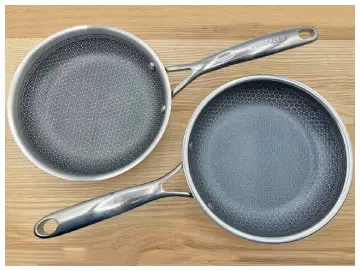
- Thickness and thermal mass: HexClad runs thicker at roughly three millimeters, storing more heat and resisting temperature swings during long sears, while Henckels Paradigm sits closer to 2.4 millimeters for quicker response to burner changes.
- Weight and handling: The lighter Paradigm feels easier to lift and tilt with one hand even when full, whereas HexClad’s extra heft delivers a solid professional feel but can tire the wrist over extended cooking sessions.
- Surface texture and searing: Both create good browning from the steel peaks, yet HexClad’s pattern produces a slightly more aggressive crust and better fond, while Paradigm still browns well but feels a bit smoother under the spatula.
- Price gap: A solid Paradigm starter set often costs less than one or two HexClad pieces, and that difference grows quickly when you want multiple sizes for a complete kitchen setup.
- Heat retention versus speed: HexClad holds steady high heat longer for searing large cuts, while Paradigm shines for quick weeknight meals that need the pan ready in under a minute.
- Oven temperature limits: HexClad handles up to 900°F for high-heat finishing, while Paradigm tops out around 500°F, which still covers most everyday roasting needs without issue.
- Long-term brand presence: HexClad has years of market history and professional visibility, whereas the Paradigm line is newer and still building its extended real-world track record.
Key Features Of Henckels Paradigm
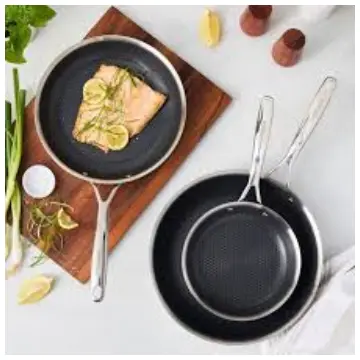
- Raised stainless hexagonal peaks: The steel ridges protect the nonstick layer so you can use metal utensils without immediately damaging the coating, and I scraped eggs and flipped burgers for weeks with no major wear.
- Tri-ply construction with aluminum core: Heat spreads evenly enough for home cooking on medium settings, and the aluminum core is what gives the pan its quick temperature response.
- Dual nonstick options: Some sets use traditional PTFE-style coating while newer versions lean ceramic, and both release food cleanly once the surface is lightly oiled.
- Stay-cool handles and polished exterior: The handles stayed comfortable even after ten minutes of high-heat searing, and the smooth outer finish is gentler on glass cooktops than many textured pans.
- Dishwasher and oven readiness: I ran the pans through the dishwasher repeatedly with no obvious coating loss, and oven use up to 500°F covered nearly all of my roasting tasks.
- Affordable entry into hybrid technology: You get the raised-steel protection and nonstick performance without the steep premium that often comes with celebrity-backed brands.
Compatible with all common cooktops: The pans work smoothly on gas, electric, and induction without any special adapters or adjustments needed in a typical home kitchen.
Pros Of Henckels Paradigm
- Faster heat-up on most home ranges: I waited less time for oil to shimmer, so breakfast eggs hit the pan sooner and weeknight stir-fries moved along without long preheat delays.
- Lighter weight for everyday handling: Tilting the pan to baste or pour sauce felt natural, and people with smaller hands or wrist concerns will notice the difference right away.
- Strong value for the hybrid concept: You receive raised-steel protection and solid nonstick performance at a price that does not require stretching the kitchen budget thin.
- Quick cooling when needed: Once I removed the pan from heat the temperature dropped fast enough to stop overcooking delicate fish or vegetables without extra effort.
- Polished exterior that is gentle on glass tops: No aggressive texturing means lower risk of scratching induction or glass surfaces during normal daily use.
- Available in both PTFE and ceramic-leaning coatings: That flexibility lets you choose based on personal preference around materials and long-term coating feel.
- Easy everyday cleanup: Warm water, mild soap, and a soft sponge removed most residue quickly, and stuck-on bits yielded to a nylon scrubber without surface damage.
Cons Of Henckels Paradigm
- Lower heat retention: After searing a thick cut the pan lost temperature more quickly than HexClad, so you may need to adjust burner settings more often during longer cooks.
- Newer line with shorter real-world track record: Long-term durability data is still building, and while early owners report good results, multi-year wear patterns are less documented so far.
- Slightly less aggressive searing texture: The hexagonal peaks work well, yet HexClad’s pattern left a more pronounced crust on steaks in my direct side-by-side tests.
- Handles that can feel rounded for some grips: A few users note the handle shape allows minor rotation when the pan is heavy and tilted at extreme angles during pouring.
- Thinner walls that may be more susceptible to warping: Proper care reduces the risk, but the lighter gauge leaves less margin than thicker competitors over years of high-heat use.
- Slightly slower recovery on induction: The thinner mass takes a moment longer to regain temperature after adding cold ingredients compared with heavier pans.
Key Features Of Hexclad

- Patented laser-etched hexagonal surface: The steel pattern is etched into the construction to create a durable hybrid that balances strong searing power with reliable food release.
- Heavier-gauge tri-ply body: The extra thickness improves heat retention and helps the pan recover temperature quickly after you drop in cold protein or large batches.
- High oven tolerance: Pans can go into a 900°F oven, which opens the door for finishing thick chops or light baking tasks that most nonstick pans cannot handle safely.
- Lifetime warranty: The coverage is one of the stronger promises in the hybrid category and offers real peace of mind if a manufacturing issue appears years down the road.
- Professional-grade marketing and presence: The brand is widely recognized and often appears in restaurant kitchens and media, giving extra confidence to buyers who value a familiar name.
- Metal-utensil and induction compatibility: You can use your existing tools and any cooktop without changing your routine or buying special accessories.
- Consistent food release when properly preheated: Eggs, fish, and sticky sauces slide free with minimal effort once the pan reaches the right temperature and a light oil film is applied.
Pros Of Hexclad
- Superior heat retention for consistent searing: Once the pan reaches temperature it stays there, so multiple steaks cooked in sequence came out more uniform across batches.
- Robust construction that feels built for heavy use: The extra mass and thicker walls give confidence when you are working with high heat or larger volumes of food.
- Higher oven ceiling: Finishing dishes under a broiler or in a very hot oven is straightforward without worrying about coating damage at extreme temperatures.
- Established reputation and lifetime support: The brand has been in the hybrid space longer and backs the product with a clear lifetime promise that many buyers appreciate.
- Excellent food release once properly preheated and oiled: Eggs, fish, and sticky sauces slid free with minimal effort after the pan was ready and lightly prepared.
- Strong presence across retail and professional circles: Replacement pieces and matching sets are easy to find if you decide to expand the collection later on.
- Steady temperature control during long cooks: The thicker body helps maintain even heat so sauces and braises stay consistent without constant burner tweaks.
Cons Of Hexclad
- Higher price that adds up quickly: Building a full set costs significantly more than an equivalent Paradigm collection, and the performance gap does not always justify the premium for casual cooks.
- Heavier feel during prolonged cooking: Wrist fatigue becomes noticeable when you are tossing vegetables or flipping pancakes for a larger group over an extended time.
- Slower initial heat-up on gas and electric: You wait longer for the surface to reach cooking temperature compared with the thinner and more responsive Paradigm.
- Marketing history that drew legal scrutiny: A class-action settlement addressed claims about “non-toxic” and PFAS-free advertising while the nonstick layer uses PTFE chemistry, and the company settled without admitting wrongdoing.
- Exterior finish that can show discoloration: High heat and dishwasher cycles sometimes leave rainbow marks or water spots that require extra polishing to keep the pans looking new.
- Less ideal for very quick weeknight meals: The slower heat-up and heavier weight can feel like overkill when you just need a fast scramble or simple sauté.
Real Kitchen Performance Across Common Tasks
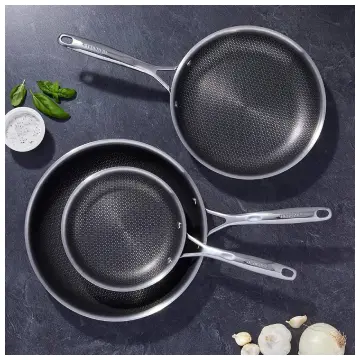
I ran the same sequences on both lines. Scrambled eggs needed a light oil film on each pan; both released cleanly.
The Paradigm reached the right temperature faster so the eggs finished sooner.
For chicken thighs the HexClad produced a deeper brown crust and held the fond better for deglazing.
Salmon fillets behaved almost identically—skin crisped and flesh slid free on both surfaces.
Stir-fries favored the lighter Paradigm because constant motion felt easier.
Thick steaks and pork chops favored HexClad because the pan recovered heat faster after the meat went in.
Cleanup was simple for both: warm water, mild soap, and a soft sponge removed most residue. Stuck-on bits yielded to a nylon scrubber without damaging either surface.
Who Should Choose Which Line?
If you cook mostly weeknight meals, value speed, and want hybrid performance without a large outlay, the Henckels Paradigm makes strong sense.
The lighter weight and quicker response fit the way many home cooks actually work. If you regularly sear large cuts, finish dishes in a very hot oven, or simply prefer the solid feel of heavier cookware and are willing to pay for it, HexClad remains a solid contender.
Budget stretches farther with Paradigm. A three-pan set often costs less than one HexClad skillet. That reality lets you equip more of the kitchen at once.
HexClad’s lifetime warranty and higher temperature rating give long-term security that some buyers prize above the initial savings.
Also Read: Is Siraat Titanium Pan Worth It?
Frequently Asked Questions (FAQ)
Yes. Both use the same hybrid concept of raised stainless peaks over nonstick. Performance is close enough that many testers call Paradigm a strong value alternative.
A class-action case alleged the brand marketed certain pans as non-toxic and free of PFAS while the nonstick coating used PTFE chemistry. The company settled for $2.5 million without admitting fault and adjusted some advertising language.
Yes for everyday cooking. They heat quickly, release food well when lightly oiled, and handle metal utensils. Heat retention is the main trade-off versus thicker pans.
No. They share the hybrid surface idea and tri-ply construction, yet differ in thickness, weight, heat behavior, price, and oven limits. They are close cousins rather than identical products.
Final Thoughts
I started this comparison because I wanted cookware that could sear like stainless and release like nonstick without forcing me to own two full sets.
Both Henckels Paradigm and HexClad deliver that hybrid promise. After weeks of real meals I lean toward the Paradigm for daily speed and value, while I still reach for HexClad when I need maximum heat retention for a special dinner.
You now have the side-by-side details that matter most—thickness, heat response, weight, price, and daily handling. Match those factors to how you actually cook and the choice becomes clear.
Pick the line that fits your stove, your budget, and the way you move a pan, then get back to making dinner.
Recent Posts
NESCO VS-12 Deluxe Review: Is This Vacuum Sealer Worth Buying?
After using and comparing different food preservation methods, I found the NESCO VS-12 Deluxe particularly interesting because it combines strong vacuum performance, multiple sealing options, and a...
Schick Hydro Silk Sensitive Care Review: Is It Worth Buying?
If you have sensitive skin and want a razor that focuses on comfort rather than simply getting the closest possible shave, I think the Schick Hydro Silk Sensitive Care is worth considering.I like...