
I spent weeks using both the Hydrotech and Pocket Hose expandable models in my own yard.
I switched between them for watering beds, rinsing the driveway, and filling the kids’ pool. My goal here is simple.
I want to give you a clear real-world breakdown of how these two stack up so you can pick the one that actually fits your setup and avoids the common headaches I ran into.
| Feature | Hydrotech | Pocket Hose |
| Expansion style | Latex core expands with water pressure | Latex core expands with water pressure |
| Typical contracted size | About 1/3 of full length | About 1/3 of full length |
| Outer material | Fabric webbing with force-control design | Ballistic or reinforced fabric (model dependent) |
| Fittings | Brass valve common; nylon on some ends | Copper-infused or aluminum; swivel options |
| Nozzle included | Rarely | Often (multi-pattern on higher models) |
| Weight (empty, 50 ft) | Around 2–3 lbs | Around 2–3 lbs |
| Pressure rating | Varies; lower on basic 5/8″ models | Up to 650 PSI on Ballistic/Copper lines |
| Warranty | Often 10 years | Often 10 years |
| Storage | Compact coil or bag | Compact coil or bag |
| Notable issue | 5/8″ models recalled for burst risk | Occasional nozzle or long-term fabric wear |
That table gives you the snapshot. Now let me walk you through what it actually feels like to live with each one.
My Personal Experience With Hydrotech And Pocket Hose
I started with a Hydrotech 50-foot model because the price looked right and the marketing talked a lot about force control and lightweight design.
It felt almost weightless when empty. I could toss it over my shoulder and walk to the far end of the yard without thinking about it. Once the water ran it stretched out and delivered a steady stream.
The brass shut-off valve at the end let me control flow without running back to the spigot which I used constantly while moving between flower beds.
After a couple of months I swapped in a Pocket Hose Ballistic 50-foot version. The difference in handling jumped out right away.
The Pocket Hose stayed more flexible even under full pressure. It did not stiffen up the way the Hydrotech sometimes did.
The swivel connector at the spigot end kept the hose from twisting every time I walked around a corner. That one detail alone saved me from the constant un-kinking sessions I still do with traditional rubber hoses.
Both shrink back when you drain them. Both store in a small space. Both cut the weight of a conventional hose by a huge margin.
The real differences show up in daily use longevity under sun and abrasion and how each brand handles the pressure spikes that happen when someone turns the water on hard.
Key Differences Between Hydrotech And Pocket Hose
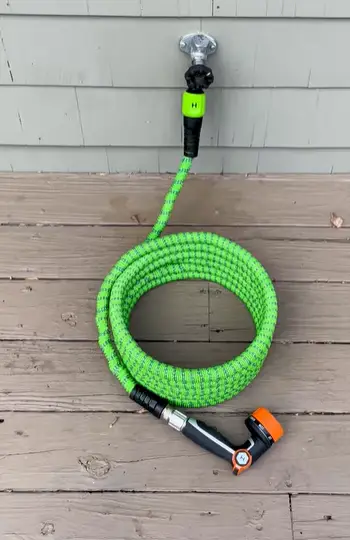
- Build focus: Hydrotech leans on its force-control system and reinforced latex liner to manage pressure spikes.
Pocket Hose puts more energy into the outer sleeve strength and connector design especially on the Ballistic and Copper lines.
- Flexibility under pressure: The Pocket Hose stayed softer and easier to curve around obstacles once full.
The Hydrotech felt a bit more rigid in the middle sections when fully expanded and that made longer runs less smooth.
- Connector design: Many Pocket Hose models include a 360-degree pivot that keeps the hose from binding at the faucet.
Hydrotech models usually rely on a solid brass valve and strain-relief guards instead of a full swivel.
- Included accessories: Pocket Hose often ships with a multi-pattern nozzle. Hydrotech rarely does so you buy that separately and that adds extra cost.
- Pressure handling claims: Higher-end Pocket Hose models advertise very high burst ratings.
Hydrotech stresses its force-control technology to keep the hose from over-expanding in the first place.
These differences matter more once you use the hose several times a week. A small stiffness issue becomes annoying after the twentieth watering session.
A good swivel becomes something you notice every single time you set the hose down.
Key Features Of Hydrotech
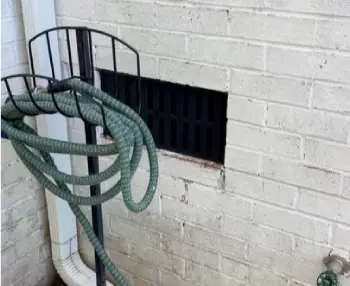
- Force Control Technology: This system aims to limit how hard the inner liner can push outward.
In practice it reduces the chance of sudden expansion under high household pressure and that gives a bit more peace of mind.
- Reinforced latex core: The liner is thicker at the ends where most stress occurs.
That design choice helps with connection-point durability over repeated expansion cycles.
- Brass shut-off valve: On the models I used the valve felt solid and let me stop water right at the nozzle end.
It stayed leak-free for the months I tested it.
- Lightweight empty weight: A 50-foot version sits in the two-to-three-pound range when drained.
You can carry it with one hand without strain even on longer walks across the yard.
- Compact storage: After draining the hose collapses to roughly one-third its working length and coils into a small bundle that fits on a shelf or in a bucket.
- Available lengths: You can find 25 50 75 100 and even longer options depending on the series so matching yard size is straightforward.
These features make the Hydrotech attractive if you want something simple and light for regular light-duty watering.
The force-control idea is smart on paper and the brass valve is a practical upgrade over basic plastic ends.
Pros Of Hydrotech
- Extremely light when empty: You can pick it up and move it without any of the drag of a traditional hose. For older users or anyone with limited strength this is a real benefit that shows up every single day.
- Compact after use: Once drained it takes almost no space. I kept mine in a small plastic bin on a garage shelf and never had storage issues.
- Solid brass valve on many models: The flow control feels reliable and stays easy to turn even after repeated use which saves trips back to the spigot.
- Competitive price point: You can usually get a usable length for less money than premium traditional hoses and that makes it easier to buy a second one for backup.
- Decent water delivery for everyday tasks: For flower beds containers and light rinsing the flow is more than enough to get the job done without complaint.
- Easy to handle around tight spaces: The flexibility when expanded lets you work close to plants without heavy hose weight pulling on the stems and that protects delicate growth.
These advantages make the Hydrotech a practical daily driver if your watering needs stay moderate and you value low weight and easy storage above all else.
Cons Of Hydrotech Expandable Hoses
- Recall on many 5/8-inch models: A large number of units sold between 2021 and early 2025 were recalled because the hose could burst if the plastic strain relief broke or fully unthreaded. The risk included impact injury and temporary hearing effects from the noise of a burst.
- Outer fabric can show wear: Dragging the hose across rough concrete or gravel eventually frays the webbing on some units and that shortens the useful life.
- Feels thinner when fully expanded: Compared with the Pocket Hose Ballistic the Hydrotech can feel less substantial in the middle of a long run and that makes it less confident under higher pressure.
- Needs careful draining: Leaving water inside and then exposing the hose to freezing temperatures risks damage. You have to open the nozzle and let it empty every time without fail.
- Nozzle usually sold separately: You will spend extra if you want a decent spray pattern and that adds to the overall cost.
- Mixed long-term durability reports: Some users get multiple seasons while others report pinholes or connection leaks sooner than expected so results vary.
These drawbacks do not make the hose unusable but they do require more attention to care and a check against the recall list if you already own one.
Key Features Of Pocket Hose
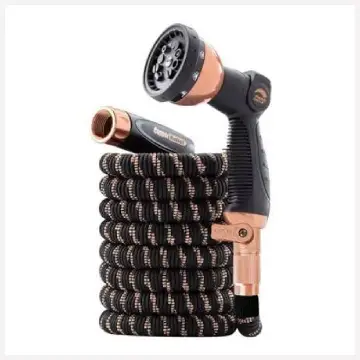
- Multi-layer latex core: Most versions use three layers.
That construction gives better resistance to pinholes and keeps the expansion even across the full length.
- Ballistic-grade outer sleeve: On the Ballistic line the outer fabric includes a liquid-crystal polymer strand.
The company describes it as significantly stronger than standard webbing and in my use it shrugged off scrapes against concrete edges better than the Hydrotech.
- Pocket Pivot swivel: This 360-degree connector sits at the spigot end.
It lets the hose rotate freely so twists do not travel down the length and I used it every day without fighting a kink at the faucet.
- Copper-infused or lead-free fittings: Higher models use copper-anodized or copper-infused connectors.
They feel solid and are marketed as drinking-water safe which helps if you water edible plants.
- UV-resistant coating on select models: Some versions add extra UV protection.
If your hose lives outside in full sun that coating slows the fading and hardening that hits cheaper expandable hoses.
- Included multi-pattern nozzle: Many packages come with a nozzle that offers several spray patterns.
The quality varies by model but having one in the box saves a trip to the store.
These features add up to a hose that feels more finished out of the box. The swivel and stronger sleeve are the two I noticed most during daily use.
Pros Of Pocket Hose
- Stronger outer sleeve on higher models: The Ballistic versions handle abrasion and pressure better in real use. I dragged mine over the same concrete edges that started to wear the Hydrotech and saw less damage.
- Excellent swivel connector: The pivot keeps the hose from fighting you at the faucet. That single feature reduces daily frustration more than almost anything else on the list.
- Consistent flexibility under pressure: Even when fully expanded the hose stays easy to curve and move. It does not turn into a stiff tube the way some expandables do during long sessions.
- Often includes a usable nozzle: Having a multi-pattern nozzle in the box means you can start watering the same day and skip an extra purchase.
- Good range of lengths and versions: From basic Silver Bullet to Copper and Ballistic lines you can match the hose to how hard you use it without compromise.
- Lead-free fittings on many models: Useful if you water edible plants or fill pet bowls because safety becomes part of the design.
- Solid reputation in independent tests: Multiple review sites have ranked various Pocket Hose models near the top for convenience and overall performance and that matches what I saw.
These strengths make the Pocket Hose feel like a more complete tool for someone who waters regularly and wants fewer small annoyances.
Cons Of Pocket Hose
- Premium models cost more: You pay extra for the Ballistic sleeve and swivel. The basic versions sit closer in price to the Hydrotech but the better ones raise the budget.
- Expansion still depends on water pressure: If your household pressure sits on the low side the hose may not reach its full advertised length. You may need to buy the next size up to compensate.
- Outer fabric can still wear over years: Even the stronger sleeves eventually show abrasion if you drag the hose hard across rough surfaces every day so care still matters.
- Nozzle quality varies: Some included nozzles feel solid while others feel plasticky and may leak after a season which forces a later upgrade.
- Requires the same careful draining: Like every expandable hose you must empty it after use and store it out of freezing conditions or risk internal damage.
- Not ideal for constant high-pressure commercial use: These remain consumer products. Heavy daily commercial watering still favors traditional reinforced rubber hoses for long-term reliability.
None of these cons are deal-breakers for typical home use but they keep the Pocket Hose from being perfect.
How They Compare in Real Daily Use?
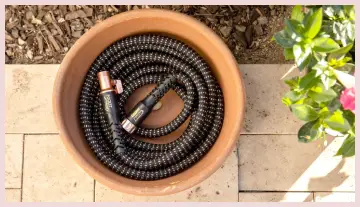
I ran both hoses through the same tasks for several weeks. Watering a long flower border showed the Pocket Hose’s flexibility advantage.
I could walk the length of the bed without the hose fighting the turns. The Hydrotech worked fine but needed more repositioning.
Rinsing the driveway highlighted flow and pressure feel. Both delivered enough volume. The Pocket Hose Ballistic held its shape better when I kinked it briefly on purpose.
The Hydrotech recovered well once the kink was released but the outer fabric showed a small mark afterward.
Storage is nearly identical. Drain coil put away. Both take up far less space than any traditional hose I have owned.
Weight is also close enough that the difference only shows if you carry the hose a long distance every day.
Durability is the area where the recall history and the Ballistic sleeve create the biggest gap. If you already own a Hydrotech 5/8-inch model check the date code under the washer at the spigot end. Many units fall under the voluntary recall and should be returned for a refund.
Newer or Pro Series models avoid that issue. The Pocket Hose has no comparable large-scale recall which gives it an edge in long-term peace of mind.
Who Should Choose Hydrotech?
Choose Hydrotech if you want the lightest possible hose for light-to-moderate watering. You are on a tighter budget and you are willing to check the recall status carefully.
The force-control design and brass valve work well for container gardens small yards and occasional car washing.
Just treat the hose gently drain it fully after every use and store it indoors during cold months.
Who Should Choose Pocket Hose?
Choose Pocket Hose if you water more frequently deal with obstacles and corners or simply want fewer daily frustrations.
The swivel connector and stronger outer sleeve on the Ballistic and Copper lines make a noticeable difference.
The included nozzle is a convenience that adds up over time. You pay a bit more for the better models but the handling improvements justify the cost for most regular users.
Care Tips That Apply To Both
Both hoses last longer when you follow the same simple habits. Always open the nozzle and let the water drain completely before coiling.
Store the hose out of direct sun when possible. Bring it inside before freezing temperatures arrive. Avoid dragging it across sharp gravel or rough concrete edges if you can help it.
Check the connectors and washers a couple of times a season and replace any that look worn.
These steps matter more with expandable designs than with traditional rubber hoses because the expansion and contraction cycle already stresses the materials.
Frequently Asked Questions (FAQ)
Independent tests often place higher-end Pocket Hose models such as the Ballistic or Copper lines near the top for overall balance of flexibility durability and convenience.
They work well for light and moderate use when you choose current non-recalled models and drain them properly after each session. The lightweight design and brass valves are genuine strengths.
Certain 5/8-inch expandable models manufactured before late 2024 can burst if the plastic strain relief breaks or fully unthreads creating impact and temporary hearing risks. Pro Series 3/4-inch versions are not included.
Zero-G is a non-expandable hybrid design that resists kinks and stays relatively light. Hydrotech is fully expandable and lighter when empty. Choose Zero-G for more consistent diameter and flow. Choose Hydrotech for maximum compact storage.
Final Thoughts
After living with both I keep a Pocket Hose Ballistic as my primary hose and a shorter Hydrotech as a backup for quick jobs near the house.
The Pocket Hose simply feels more refined in daily use. The swivel and outer sleeve strength remove small irritations that add up over a full growing season.
The Hydrotech still earns a place because it is light stores easily and costs less when you need a second hose.
You now have a clear picture of the strengths weak points and real-world behavior of each. Match the features to how often you water how rough your surfaces are and how much you value a swivel connector and stronger outer fabric.
Either choice will feel dramatically better than a heavy traditional hose provided you treat it with the care these expandable designs need.
Recent Posts
I have spent years testing cat litters in my own multi-cat home, scooping daily, measuring dust clouds, tracking paw prints across floors, and judging how long a box stays livable between full...
If you want a phone case that combines fashionable designs, attractive finishes, and everyday protection, Velvet Caviar is worth considering.I like the brand's focus on stylish patterns, slim...