
As someone who’s spent years tinkering with my lawn to get that perfect green hue, I know how frustrating it can be to choose the right product.
In this article, I’ll compare Ironite and Scotts Green Max, two popular options for boosting lawn color and health.
My main goal is to break down their features, differences, pros, and cons from a hands-on perspective, helping you decide which fits your yard’s needs.
| Feature | Ironite | Scotts Green Max |
| NPK Ratio | Typically 1-0-1 (mineral supplement version) | 27-0-2 |
| Iron Content | Around 10% (with soluble iron for quick uptake) | 5% |
| Primary Purpose | Greening without excessive growth, micronutrient boost | Feeding and fast deep greening |
| Application Type | Granular or liquid | Granular |
| Coverage (per standard bag) | Up to 10,000 sq ft (30 lb bag) | Up to 10,000 sq ft (33 lb bag) |
| Greening Speed | Visible in 7-14 days | Deep greening in 3 days |
| Burn Risk | Low, non-burning when directed | Possible in hot conditions |
| Stain Risk | Non-staining | Guaranteed not to stain concrete |
| Best For | Supplementing existing fertilizer, alkaline soils | All-season feeding, quick color boost |
| Price Range (approx.) | $20-30 per bag | $30-40 per bag |
Key Differences Between Ironite And Scotts Green Max
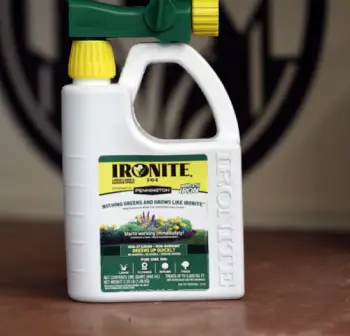
When I pit these two against each other in my yard experiments, the contrasts become clear.
Ironite acts like a specialist doctor for nutrient deficiencies, while Scotts Green Max is more of a general practitioner boosting overall vitality.
Here’s how they stack up in key areas, based on my observations and label specs.
- Nutrient composition: Ironite’s low 1-0-1 NPK focuses on minimal growth with high iron for color correction, whereas Scotts’ 27-0-2 packs a nitrogen punch for feeding and expansion, but with less iron percentage-wise.
- Greening speed and intensity: Scotts delivers that wow-factor green in just three days thanks to its optimized iron formula, but Ironite takes a week or two for subtler, sustained results without overwhelming the lawn.
- Growth impact: I notice Ironite keeps mowing minimal since it avoids excess nitrogen, ideal for maintenance mode; Scotts ramps up blade production, which means more trims but a thicker turf over time.
- Risk factors: Ironite’s non-burning nature makes it forgiving for beginners like me early on, while Scotts requires careful watering to prevent potential heat stress.
- Versatility: Both work on various plants, but Ironite’s mineral focus suits alkaline soils better, and Scotts excels in neutral to acidic conditions for broad feeding.
- Cost efficiency: Per square foot, Ironite often edges out as cheaper for spot treatments, but Scotts covers more ground with its nutrient density if you’re fertilizing large areas.
Understanding Ironite: My Take On This Classic Supplement
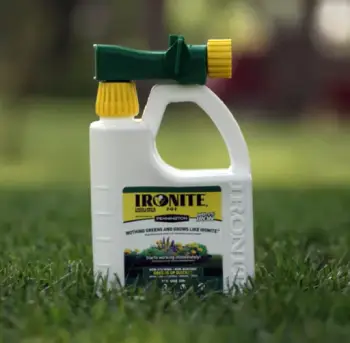
I’ve used Ironite on my own lawn for seasons when I noticed that yellowish tint creeping in, especially after heavy rains washed away nutrients.
It’s not your typical full-blown fertilizer; think of it more as a targeted booster. Made by Pennington, it focuses on delivering iron and other minerals to correct deficiencies that make grass look lackluster.
From my experience, it’s great if you’re dealing with soil that’s on the alkaline side, where iron gets locked up and unavailable to plants.
What stands out to me is how Ironite promotes that deep green without pushing a ton of new growth. That means less mowing for me during peak summer, which is a huge win when I’m busy.
The formula includes sulfur too, which helps lower soil pH slightly over time, making it easier for grass to absorb those key elements.
I’ve applied the granular version by hand-spreading it evenly, and the liquid spray when I wanted quicker foliar uptake on shrubs and trees around the yard.
But let’s be real—it’s not a standalone solution. I always pair it with a balanced fertilizer because its low nitrogen means it won’t feed the lawn for overall vigor.
If your soil test shows low iron or micronutrients, this is where Ironite shines.
I’ve seen my Bermuda grass perk up noticeably after a week or two, turning from pale to vibrant without any surprises like uneven patches.
- High iron concentration: With about 10% iron, including soluble forms, it targets chlorosis effectively, giving your lawn that pop of color without overdoing it.
- Micronutrient mix: Includes sulfur, manganese, and zinc, which support overall plant health and root strength in ways basic fertilizers might miss.
- Non-burning formula: I’ve applied it in warm weather without scorching the grass, thanks to its gentle release.
- Versatile application: Works on lawns, flowers, veggies, and trees, so I use leftovers on my garden beds.
- Soil improvement tech: Features Advanced Soil Technology that enhances water retention, which helped my sandy soil hold moisture better.
- Robust nitrogen base: At 27% nitrogen, it encourages vigorous growth, making thin spots fill in quicker than with low-N products.
- Iron enhancement: 5% iron ensures deep, uniform greening, perfect for masking seasonal fading.
- All-season usability: I’ve applied it spring through fall without issues, as long as the grass is active.
- No-stain guarantee: Won’t mark up your driveway or patio, which saved me cleanup time.
- Full nutrition granules: Every particle delivers balanced feeding, so no wasted product.
Pros Of Ironite
I’ve come to rely on Ironite for its straightforward reliability, especially in tricky soil situations. It’s not flashy, but it gets the job done without drama.
- Safe and forgiving: No burning or staining, even if I overapply slightly—perfect for my imperfect spreading technique.
- Minimal growth surge: Keeps the lawn green without forcing extra mowing, saving me time on weekends.
- Targets deficiencies: Excellent for iron-poor soils, fixing yellowing that other fertilizers ignore.
- Multi-use: I apply it to shrubs and veggies too, maximizing value from one bag.
- Soil health boost: The sulfur and tech improve pH and water holding, leading to long-term yard improvements.
- Budget-friendly: Often cheaper upfront, and a little goes far for supplemental use.
Cons Of Ironite
No product is perfect, and Ironite has its drawbacks that I’ve navigated over time.
- Slower results: Takes longer to see changes compared to faster-acting options, testing my patience.
- Low feeding power: Doesn’t provide much nitrogen or potassium, so I always need a separate fertilizer.
- Potential contaminants: Older formulas had heavy metal concerns, though current versions are cleaner—still makes me double-check labels.
- Less dramatic green: The color boost is natural but not as intense as iron-heavy feeders.
- Application frequency: Needs reapplying every 4-6 weeks for ongoing effects, adding to my routine.
- Not ideal for acidic soils: Can over-acidify if overused, requiring soil tests.
Exploring Scotts Green Max: A Powerhouse For Quick Results
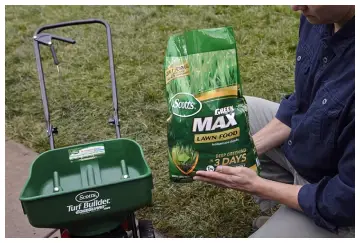
Switching gears to Scotts Green Max, this one feels more like a complete meal for your lawn rather than a snack.
I’ve thrown it down when I wanted fast, noticeable changes, and it delivers on that promise.
Produced by Scotts Miracle-Gro, it’s designed as a dual-action product: it fertilizes with a solid nitrogen kick while the iron amps up the color.
The 27-0-2 ratio means it’s heavy on nitrogen for growth and potassium for resilience, but no phosphorus, which is smart if your soil already has plenty.
In my trials, the greening effect kicks in super fast—often within three days, as advertised.
That’s because the 5% iron is formulated for quick absorption, turning a dull yard into something envy-worthy.
I remember applying it before a backyard gathering, and by the weekend, the grass looked lush and inviting.
It’s granular, so I use a broadcast spreader for even coverage, and it’s safe for most grass types, from cool-season fescue to warm-season St. Augustine.
One thing I appreciate is how it feeds the lawn comprehensively.
The nitrogen promotes healthy blade development, while the iron handles the aesthetics.
However, I’ve learned to be cautious in scorching heat; it can stress the grass if not watered in properly.
Overall, if you’re after rapid transformation and don’t mind a bit more mowing from the growth spurt, this is a solid pick.
Pros Of Scotts Green Max
Scotts Green Max has won me over for those times when I need quick gratification. It’s like a shot of espresso for your lawn.
- Rapid greening: Three-day turnaround is real—I’ve seen it transform my yard before events.
- Comprehensive nutrition: High nitrogen feeds growth, filling bare spots faster.
- Easy application: Granules spread evenly, and the no-stain feature keeps things tidy.
- Versatile for seasons: Works year-round on active grass, fitting my flexible schedule.
- Enhanced durability: Potassium strengthens roots against stress like drought.
- Visible thickness: Promotes denser turf, making the lawn feel plusher underfoot.
Cons of Scotts Green Max
Despite its strengths, Scotts Green Max isn’t without flaws, based on my hands-on use.
- Burn potential: In hot weather, it can scorch if not watered deeply, which happened to me once.
- More mowing required: The growth boost means weekly trims during peak times.
- Higher cost: Pricier per bag, especially for frequent applications.
- Staining risks in practice: Though guaranteed, I’ve heard of issues if not swept off hard surfaces.
- Fast-release dominance: Mostly quick nutrients, so effects fade sooner without follow-ups.
- Not for minimalists: If you want color without growth, this overdelivers on expansion.
How These Products Fit Into Real Lawn Care Routines?
From my analytical viewpoint, choosing between Ironite and Scotts Green Max boils down to your lawn’s current state and your goals.
If your grass is already decent but lacks that vibrant shade—maybe due to high pH locking up iron—Ironite is my go-to supplement.
I mix it into my routine every month or so during growing season, applying about 3 pounds per 1,000 square feet. It’s gentle, so I don’t worry about kids or pets right after.
On the flip side, when my lawn needs a full revival, like after winter dormancy, Scotts Green Max steps up.
I spread it at 3-4 pounds per 1,000 square feet, water it in, and watch the magic.
The nitrogen helps recover from wear, while the iron polishes the look. But I time it for cooler days to avoid burns.
In terms of compatibility, I’ve layered them carefully.
For example, using Ironite for maintenance and Scotts for boosts, but not on the same day to prevent overload.
Soil testing is key—I did one last year and found my pH was 7.5, so Ironite’s sulfur helped balance it. Scotts worked better after I amended for neutrality.
Environmentally, both are formulated to minimize runoff, but Ironite’s lower N reduces algae risk in nearby water.
Cost-wise, for my 5,000-square-foot yard, Ironite runs me about $15 per treatment, Scotts closer to $20. Over a season, that adds up if you’re on a budget.
Application Tips From My Experiences
Getting the most out of these requires some know-how.
For Ironite, I always apply on dry grass, then water lightly to activate. Avoid rainy days to prevent wash-off. With Scotts, heavy watering post-application is crucial to drive nutrients down.
Timing matters too. I hit Ironite in spring and fall when deficiencies peak. Scotts gets the nod mid-summer for that color pop. Always mow first, apply, then wait a day before mowing again.
If you’re new, start small. I tested patches first to see reactions. Both respond well to aeration beforehand, letting nutrients penetrate deeper.
Long-Term Effects On Lawn Health
Over years, I’ve noticed Ironite builds soil quality gradually. My grass roots seem stronger, resisting drought better. Scotts, meanwhile, gives immediate density but needs consistent use to maintain.
Analytically, Ironite suits sustainable, low-input lawns. Scotts fits aggressive growth plans. Blending them—Scotts in spring, Ironite summer—has given me the best of both.
Also Read: Is Kellogg’s Topper Soil Worth It?
Frequently Asked Questions (FAQ)
Yes, it’s effective for quick greening and feeding, especially if your lawn needs nitrogen and iron.
It can cause nutrient imbalance or slight yellowing, but it’s unlikely to burn; water thoroughly to dilute.
Yes, but space them a week apart to avoid overload; monitor for stress.
Apply in spring, summer, or fall when grass is actively growing, every 4-6 weeks.
Wrapping It Up
I’ve walked you through my experiences with Ironite and Scotts Green Max, from their core features to the real-world ups and downs.
Ultimately, if you’re after subtle, safe greening without extra work, go with Ironite—it’s been my reliable sidekick for years.
But if you want that fast, bold transformation and don’t mind the growth, Scotts Green Max will impress.
Think about your lawn’s needs, test your soil, and pick what aligns with your routine.
You’ll end up with a yard that turns heads, just like mine did after finding the right fit.
Recent Posts
● Interactive 5-Zone Interior & Exterior Paint Blueprint Paint Coverage Calculator: Gallons, Primer, Square Footage & Cost Tap any architectural surface zone on the blueprint...
If you want smooth, shiny hair without spending a fortune on a premium styling tool, the Ella Bella hair dryer may be worth considering.In these Ella Bella hair dryer reviews, I’ll look...