
If you want a convenient dog food that puts recognizable ingredients, animal protein, and everyday nutrition at the center of the recipe, I think Jinx is worth considering.
I like it most for dog parents who want something more thoughtfully formulated than bargain kibble without automatically moving into an expensive specialty diet.
That said, I would not call every Jinx recipe ideal for every dog. In this Jinx dog food review, I’ll walk you through my experience, ingredients, nutrition, advantages, drawbacks, maintenance tips, and how it compares with other popular choices.
My First Experience With Jinx Dog Food
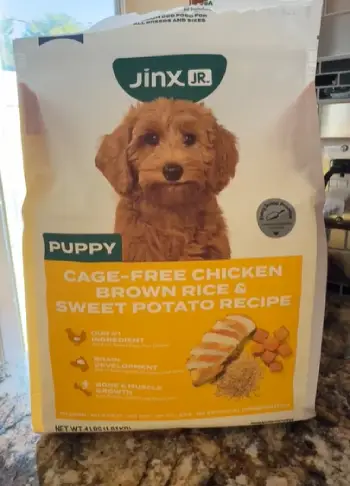
When I first looked at Jinx dog food, what caught my attention was how straightforward the product positioning felt.
Instead of making the food sound like some complicated nutritional formula, Jinx focuses on familiar ingredients, animal protein, and practical everyday feeding.
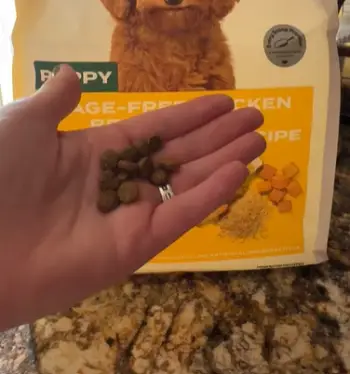
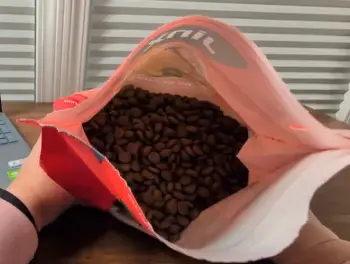
I always think the real test of dog food starts with what happens after you open the bag. My first impression of Jinx was that the kibble looked fairly conventional but had a clean, appealing appearance.
The pieces were easy to portion, and that mattered to me because accurate feeding is much easier when the kibble is consistent in size.
The smell was also noticeable without being overwhelmingly strong. I’ve encountered dog foods that have such a powerful odor that opening the bag becomes an event.
Jinx felt more restrained. My dog showed interest almost immediately, which is always a promising sign.
I didn’t switch food abruptly. I prefer gradually replacing the previous food with the new recipe over several days.
That gave me a better opportunity to notice changes in appetite, stool consistency, energy, and overall tolerance.
The biggest positive for me was palatability. My dog was willing to eat Jinx without needing toppers or extra encouragement.
That might sound like a small thing, but if you’ve ever dealt with a picky eater, you know how valuable that can be.
I also paid attention to digestion. A food can have impressive ingredients on the label, but if your dog consistently develops loose stools, excessive gas, or other digestive problems, the ingredient list becomes much less impressive in practical terms.
Jinx worked reasonably well from that perspective. Still, I wouldn’t make the mistake of assuming my experience will automatically match yours. Dogs respond differently to proteins, fats, fiber sources, and recipe formulations.
Overall, my experience left me with the impression that Jinx is designed to sit comfortably between basic supermarket kibble and more specialized premium diets.
It aims to give everyday dog owners better ingredients and balanced nutrition without making feeding unnecessarily complicated.
Pros Of Jinx Dog Food
- Quality-Focused Ingredient Selection
One of the strongest points I see with Jinx is its emphasis on recognizable ingredients.
When I read a dog food label, I don’t expect every ingredient to sound like something from my kitchen. Commercial pet food requires nutritional formulation, preservation, vitamins, minerals, and functional ingredients.
Still, I appreciate when the primary ingredients are easy to identify.
Jinx generally presents itself as a more premium everyday option rather than a bare-bones kibble.
- Strong Focus on Animal Protein
Protein is a major selling point for me.
Dogs need quality protein to support muscle maintenance and many physiological processes. Recipes that place identifiable animal protein prominently in the formulation are appealing for that reason.
This doesn’t mean “more protein” automatically means “better.” The dog’s age, activity level, health status, and total calorie intake all matter.
But as a general feature, a meaningful animal-protein focus is a positive.
- Good Palatability
Food that your dog refuses to eat isn’t useful.
I found Jinx appealing from a palatability standpoint, and that’s one of the reasons I can understand why some dogs may respond well to it.
Of course, taste is highly individual. One dog may devour a recipe while another turns up its nose.
- Convenient Everyday Feeding
Jinx is practical for normal household feeding.
You don’t necessarily need complicated preparation, refrigeration, or elaborate meal assembly. I can measure a portion, serve it, and get on with my day.
For busy dog owners, that simplicity matters.
- Reasonable Premium Positioning
I see Jinx as occupying an interesting middle ground.
It isn’t positioned like the cheapest kibble on the shelf, but it also doesn’t necessarily require the kind of spending associated with highly specialized diets.
For someone looking to upgrade from a very basic food, that can make sense.
Cons Of Jinx Dog Food

- It May Not Suit Every Dog
This is probably the most important limitation.
There is no universal dog food.
A recipe that works beautifully for my dog may cause digestive problems for another dog. Protein sources, fat levels, fiber, and individual sensitivities can all influence tolerance.
- Premium Pricing Can Add Up
Jinx isn’t necessarily the cheapest option.
If you have a small dog, the difference may be manageable. But if you’re feeding multiple large dogs, the monthly food bill can become significant.
I think the value is better judged by the cost per feeding and nutritional formulation rather than simply the price of the bag.
- Recipe Differences Matter
I wouldn’t assume that because you like one Jinx recipe, you’ll automatically love every product in the range.
Different recipes can have different protein sources, calories, and ingredient profiles.
Always inspect the specific formula you’re purchasing.
- Not Designed as a Universal Therapeutic Diet
If your dog has a diagnosed medical condition requiring a therapeutic diet, ordinary commercial food shouldn’t automatically replace your veterinarian’s nutritional recommendation.
Jinx may be perfectly appropriate for a healthy dog, but that doesn’t make it a substitute for a veterinary therapeutic formula when one is medically indicated.
- Picky Dogs Can Still Reject It
Even though my experience with palatability was positive, no brand can guarantee acceptance.
Some dogs are simply extremely selective.
Maintenance Tips For Jinx Dog Food
- Store the Food Properly
Once I open a bag of kibble, I don’t treat it like an ordinary pantry item.
I keep it sealed tightly and store it somewhere cool and dry. Heat, moisture, and air exposure can gradually affect freshness.
I also avoid leaving the bag open for extended periods.
- Measure Portions Carefully
Portion control is one of the easiest things to overlook.
I recommend using a consistent measuring method rather than casually scooping food into the bowl.
If your dog is gaining weight, the solution isn’t automatically to switch brands. Sometimes the portion is simply too large.
Likewise, highly active dogs may need more calories than the basic feeding guide suggests.
- Transition Gradually
When switching to Jinx, I would not replace the old food overnight unless a veterinarian specifically tells you to do so.
A gradual transition gives your dog’s digestive system time to adjust.
I usually think in terms of progressively increasing the new food while decreasing the previous food over several days.
If your dog develops significant digestive upset, slow the transition and consider speaking with your veterinarian.
- Keep Fresh Water Available
Dry dog food and hydration go hand in hand.
I always keep clean drinking water available.
This becomes particularly important during hot weather, after exercise, or for dogs that don’t naturally drink much.
- Clean the Food Bowl
A bowl that looks clean isn’t always actually clean.
I wash food bowls regularly rather than letting old food residue accumulate.
This is an easy habit, but it’s one I wouldn’t skip.
Comparison Of Jinx Dog Food With Other Brands
- Jinx vs Purina Pro Plan
Purina Pro Plan has a much broader range of specialized formulas, including options aimed at different ages, sizes, activity levels, and health considerations.
I see Jinx as appealing to owners who want a straightforward premium everyday food, while Pro Plan has an advantage when you need a very specific nutritional profile.
If my dog had a particular nutritional requirement, I’d pay more attention to the exact formulation than brand popularity.
- Jinx vs Hill’s Science Diet
Hill’s Science Diet is particularly strong in targeted nutrition.
What I like about Hill’s is the extensive range for different life stages and specific nutritional needs.
Jinx feels more lifestyle-oriented to me.
For a healthy adult dog without special dietary requirements, Jinx can be an appealing everyday option. For a dog needing carefully targeted nutritional support, Hill’s may offer more appropriate choices.
- Jinx vs Blue Buffalo
Blue Buffalo is another recognizable premium dog food brand with a wide range of recipes.
The comparison gets interesting because both brands appeal to owners who care about ingredient quality.
For me, the decision would come down to the individual recipe, protein source, nutritional profile, price, and how my dog responds.
I wouldn’t choose simply based on which package looks more premium.
- Jinx vs Royal Canin
Royal Canin stands out for its highly targeted breed-, size-, age-, and condition-specific formulas.
If you want a highly specialized nutritional approach, Royal Canin has an advantage.
Jinx is more attractive if you’re looking for an everyday commercial food without needing that degree of specialization.
- Jinx vs Iams
Iams generally offers a more budget-friendly approach.
If you’re working with a tight food budget, Iams can be easier to maintain financially.
Jinx appeals more to me when ingredient presentation and premium positioning are priorities.
However, affordability matters. The best food isn’t helpful if its price makes consistent feeding difficult.
Also Read: Comparison Of Badlands Ranch And Sundays
Frequently Asked Questions (FAQ)
Yes. Jinx is a solid option for many healthy dogs, particularly owners seeking a premium everyday food with an emphasis on animal protein and recognizable ingredients.
Is Jinx dog food vet recommended?
It can fit a healthy dog’s diet, but veterinarian recommendations depend on the individual dog’s age, health, activity, and nutritional requirements.
Yes, Jinx can be appropriate for dogs when the specific recipe is nutritionally suitable for the dog’s life stage and individual needs.
It can be. The key is choosing an appropriate recipe, measuring portions carefully, and making sure the kibble size and calorie density work for your small dog.
Final Verdict
After looking at the ingredients, nutrition, usability, advantages, limitations, and everyday practicality, I think Jinx dog food deserves consideration from dog owners who want a more premium-feeling everyday diet without jumping straight into highly specialized nutrition. I especially like its emphasis on animal protein and straightforward feeding. Still, I would choose the specific recipe based on my dog’s age, size, activity, digestion, and health rather than buying purely because of the brand name.
Recent Posts
I tried Meltoway Hair Dissolving Cream because I wanted a quick way to deal with unwanted body hair without reaching for a razor every few days. If you are looking for a convenient at-home...
If you’re considering a saffron-based supplement to support mood, appetite control, and everyday wellness, Happy Saffron Plus is worth considering.I like that it takes a familiar botanical...