
If you want a silicone-based scar gel that is easy to apply, dries relatively quickly, and can fit into a consistent scar-care routine, I think Kelo-Cote Advanced Formula Scar Gel is worth considering.
I especially like it for people dealing with healed surgical scars, injury scars, or raised scars who want a simple topical option.
It is not an instant scar remover, though, and your results will depend heavily on the type and age of your scar. In my experience, consistency matters far more than expecting overnight changes.
My First Experience With Kelo-Cote Advanced Formula Scar Gel
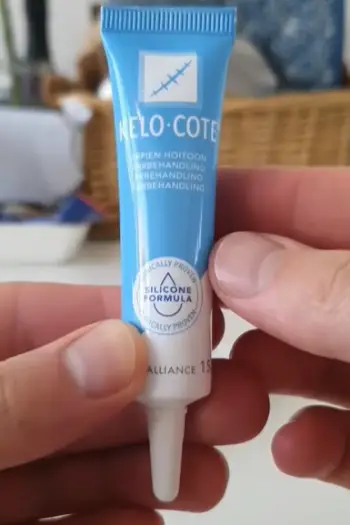
When I first look at a scar treatment, I ask one simple question: can I realistically use it every day for months?
That matters because scar care is rarely about applying something twice and expecting a dramatic transformation.
Most topical scar products require patience, and Kelo-Cote Advanced Formula Scar Gel is no different.
What caught my attention about Kelo-Cote was its silicone-based formula. Silicone gel is widely used in scar management because it forms a thin protective layer over the skin.
Instead of feeling like a heavy cream, Kelo-Cote is designed to leave a lightweight film that sits over the scar.
I found that application was fairly straightforward. I only needed a small amount, and spreading a thin layer over the scar made more sense than applying a thick coating.
In fact, using too much product seemed unnecessary because the goal is to create a thin layer rather than cover the area with a blob of gel.
One thing I appreciated was the convenience. If I’m going to use a scar product consistently, I don’t want something greasy that transfers onto my clothes or makes me uncomfortable throughout the day. Once the gel dries, it becomes much less noticeable.
I also paid attention to how the scar looked over time rather than judging the product after a few applications.
That is important because scars naturally change as they mature. A scar that looks red, dark, raised, or firm today can gradually become flatter and less noticeable even without a dramatic intervention.
So I would not attribute every improvement automatically to Kelo-Cote.
What I can say is that the product makes sense as part of a disciplined scar-care routine. It is convenient, relatively simple to apply, and based on silicone, which is one of the more established topical approaches for scar management.
My biggest takeaway was this: don’t buy Kelo-Cote expecting a magic eraser. Buy it if you’re prepared to apply it consistently and give your skin time to respond.
What Is Kelo-Cote Advanced Formula Scar Gel?
Kelo-Cote Advanced Formula Scar Gel is a topical silicone gel marketed for the management of scars. The product is intended for healed scars rather than open wounds.
The central idea behind silicone scar therapy is simple. Once applied, the silicone forms a flexible layer over the skin. This helps create a controlled environment at the surface of the scar.
That is quite different from ordinary moisturizers.
A moisturizer may soften the surrounding skin, but a silicone scar gel is specifically designed around scar management. That distinction is important when you’re comparing Kelo-Cote with everyday creams or oils.
I also think the word “gel” can be misleading if you’re expecting something similar to an aloe gel. Kelo-Cote is designed to be applied in a very thin layer, and once dry, it should become relatively discreet.
Pros Of Kelo-Cote Advanced Formula Scar Gel
- Silicone-Based Scar Management
The biggest advantage for me is the silicone-based approach.
Silicone isn’t a trendy ingredient that suddenly appeared in scar care. It has been used for years in scar-management products.
That gives Kelo-Cote a stronger foundation than products that simply promise to “erase” scars using vague cosmetic claims.
I prefer treatments where I understand what the main mechanism is supposed to be.
- Lightweight Application
I don’t enjoy thick creams on scars, particularly when the scar is located somewhere that gets covered by clothing.
Kelo-Cote is designed to be applied in a thin layer. That makes it easier to incorporate into a morning or evening routine.
For me, convenience isn’t a minor feature. If a product is uncomfortable, greasy, or difficult to use, I’m less likely to keep applying it.
- Dries Into a Protective Layer
Another advantage is that the gel is intended to dry into a thin layer.
That makes it more practical than a very oily scar product. You can apply a small amount and allow it to dry before covering the area.
I still wouldn’t expect it to become completely invisible under every circumstance, but the thin-film concept is useful.
- Suitable for Different Scar Situations
Kelo-Cote isn’t limited to one particular type of injury.
The product is used for various healed scars, including surgical scars and scars caused by injuries or burns. That versatility makes it easier to consider when you’re dealing with a scar from a completely different situation than someone else.
- Easy to Add to a Routine
This is perhaps the most underrated benefit.
A good scar treatment routine doesn’t have to be complicated.
I can clean the area, dry it, apply a thin layer, let it dry, and continue with my day. That simplicity makes regular use much more realistic.
- Doesn’t Require Aggressive Rubbing
I don’t think scar treatment should involve aggressively massaging a sensitive scar.
With Kelo-Cote, the emphasis is on applying a thin layer rather than vigorously rubbing the product into the tissue.
That’s particularly useful when the skin is still sensitive after healing.
Cons Of Kelo-Cote Advanced Formula Scar Gel
- It Won’t Erase Every Scar
This is the biggest limitation.
If you’re expecting an old, deeply indented, or dramatically pigmented scar to vanish, Kelo-Cote may disappoint you.
Scar improvement and scar removal are two very different concepts.
I would judge success by gradual improvement in appearance, texture, thickness, or symptoms rather than complete disappearance.
- Consistency Is Essential
You can’t realistically expect much from sporadic application.
If you use the gel once every few days and forget about it for a week, you’re not giving the routine a fair opportunity.
This can be frustrating because scar care requires patience.
- Results Can Take Time
Scar maturation itself can take months.
That means you may need to use Kelo-Cote consistently for an extended period before deciding whether it’s helping.
For someone who wants immediate cosmetic improvement, that can feel disappointing.
- Cost Can Be a Concern
Silicone scar gels can cost more than ordinary moisturizers.
And because scar treatment may continue for weeks or months, the overall expense can add up.
I would therefore consider the size of the scar and how much product I actually need before buying.
- Not Appropriate for Open Wounds
This is important.
I would never treat Kelo-Cote as a wound-healing cream for fresh, open, infected, or actively draining wounds. Scar gels are intended for appropriate healed skin.
If you’re unsure whether your wound has healed enough, ask your healthcare professional.
Maintenance Tips Of Kelo-Cote
- Apply It Consistently
If you want to give Kelo-Cote a fair test, consistency should be your priority.
I would establish a fixed routine rather than applying the gel whenever I remember.
For example, tying scar care to an existing morning or evening skincare routine can make it easier to remember.
The objective isn’t to use a huge amount.
A thin layer is generally the approach with silicone gels. More product doesn’t automatically mean better results.
- Keep the Scar Clean and Dry
Before application, I would make sure the area is clean and dry.
That gives the gel a suitable surface and helps prevent unnecessary buildup.
I wouldn’t apply it over dirty, sweaty skin and then expect optimal results.
- Don’t Overapply
This is an easy mistake to make.
When I want faster results, my instinct can be to use more product. But scar gel doesn’t work like that.
A thin coating is generally more practical. If you’re applying so much that the product remains excessively wet or tacky, you’re probably using more than necessary.
- Give the Scar Time
This is probably the hardest tip to follow.
I wouldn’t inspect the scar every morning looking for a dramatic difference.
Instead, I would take occasional photographs under similar lighting. That gives you a more objective way to compare changes over several weeks.
Daily visual inspection can make gradual improvements almost impossible to notice.
- Protect the Scar From Sun Exposure
Sun protection is an important part of scar care.
A healing scar can be more vulnerable to noticeable discoloration from ultraviolet exposure. I would therefore take sun protection seriously, particularly if the scar is in an exposed area.
Depending on the location and stage of healing, appropriate clothing or sunscreen may help protect the area.
- Avoid Picking or Scratching
If your scar itches, scratching can be tempting.
I would avoid repeatedly irritating the area because unnecessary trauma can interfere with normal healing.
If itching is persistent or severe, that’s something worth discussing with a healthcare professional rather than simply applying more gel.
- Watch for Irritation
Even products designed for sensitive skin can cause problems for some people.
If I developed significant redness, burning, swelling, rash, or worsening discomfort after application, I would stop using it and seek professional advice if needed.
Don’t assume irritation means the product is “working.”
- Be Realistic With Older Scars
Newer scars may have more potential for visible change because they are still maturing.
That doesn’t mean older scars cannot improve, but expectations should be more conservative.
If a scar is several years old, deeply indented, or significantly raised, I would consider professional options alongside topical products.
Comparison Of Kelo-Cote With Other Brands

- Kelo-Cote vs ScarAway
ScarAway is another well-known silicone-based scar-care brand, and that’s why the comparison is interesting.
Both approaches center around silicone rather than relying solely on botanical extracts or ordinary moisturizers.
The practical difference often comes down to product format, application preference, location of the scar, price, and how consistently you can use the product.
ScarAway offers silicone sheets as well as topical products, while Kelo-Cote is particularly associated with silicone gel.
Personally, I would choose the format I can maintain.
If I have a scar in a location where a sheet is difficult to keep attached, a gel may be much easier. If I prefer a physical silicone sheet and can comfortably wear it for the recommended period, that format may appeal more.
So I wouldn’t automatically call one universally superior.
- Kelo-Cote vs Dermatix
Dermatix is another silicone-based scar treatment that frequently comes up when comparing scar gels.
The fundamental similarity is significant: both products use silicone-based scar management rather than approaching scar care like conventional moisturizing.
For me, the decision would come down to formulation, availability, price, texture, and personal tolerance.
If two products have similar intended purposes, the product that I can apply consistently without irritation is often the more sensible choice.
I also wouldn’t assume that paying more automatically means getting dramatically better results.
Scar biology is complicated, and individual response varies.
- Kelo-Cote vs Mederma
Mederma is widely recognized in the scar-care market and uses a different ingredient strategy in some of its products, including formulations featuring onion extract.
That creates an interesting contrast.
Kelo-Cote is centered around silicone, whereas Mederma products can use other active approaches depending on the specific formulation.
If my priority were specifically silicone-based scar management, Kelo-Cote would make more sense to me.
If I were considering Mederma, I’d look carefully at the exact product rather than judging the entire brand based on one formula.
Also Read: Is Mullend Teeth Repair Gel Worth It?
Frequently Asked Questions (FAQ)
Kelo-Cote may help improve the appearance and texture of some scars, particularly raised scars, but results vary and it won’t completely erase every scar.
Neither is universally better. Both use silicone-based scar management, so your preferred format, price, scar location, and consistency matter.
There isn’t one universally best scar gel, but silicone-based products such as Kelo-Cote are among the commonly used options for scar management.
Both are silicone-based scar products. The better choice depends on your skin, scar type, product texture, price, and how consistently you can use it.
Wrapping Up
If you’re looking for a practical silicone scar gel, I think Kelo-Cote Advanced Formula Scar Gel is worth considering.
I like its straightforward application and the fact that it can fit easily into a daily routine. Just remember that scar improvement takes patience.
If your scar is unusually raised, painful, expanding, or difficult to manage, I’d speak with a dermatologist instead of relying on a topical gel alone.
For a healed scar and realistic expectations, Kelo-Cote is a sensible option to consider.
Recent Posts
NESCO VS-12 Deluxe Review: Is This Vacuum Sealer Worth Buying?
After using and comparing different food preservation methods, I found the NESCO VS-12 Deluxe particularly interesting because it combines strong vacuum performance, multiple sealing options, and a...
Schick Hydro Silk Sensitive Care Review: Is It Worth Buying?
If you have sensitive skin and want a razor that focuses on comfort rather than simply getting the closest possible shave, I think the Schick Hydro Silk Sensitive Care is worth considering.I like...