
I spent months sorting through my own thinning hair and the endless options online before settling on a clear path.
My goal here is simple: give you a straightforward real-user breakdown of Nutrafol versus minoxidil so you can decide which approach or combination fits your situation budget and lifestyle without the usual marketing noise.
| Factor | Nutrafol | Minoxidil |
| Type | Oral dietary supplement (nutraceutical) | FDA-approved topical medication (foam or solution); oral form available off-label |
| How it works | Multi-ingredient blend targeting stress hormones, inflammation, nutrition, and mild DHT influence from within | Vasodilator that increases blood flow to follicles and extends the active growth phase of the hair cycle |
| Form and use | 4 capsules daily | Applied to scalp once or twice daily (topical); once-daily tablet (oral) |
| Evidence level | Smaller company-supported clinical trials showing reduced shedding and modest thickness gains | Extensive randomized trials and decades of data for pattern hair loss |
| Typical timeline | Reduced shedding in 1–2 months; visible thickness in 3–6 months | Initial shedding possible in first 2–8 weeks; noticeable regrowth in 3–6 months |
| Monthly cost | $79–$99 | $10–$30 (generic topical); higher for brand or compounded oral |
| Side effects | Mild digestive upset, rare ingredient sensitivities | Scalp irritation, dryness, temporary shedding, possible unwanted facial hair |
| Best suited for | Stress-related, postpartum, nutritional, or mild thinning | Androgenetic (pattern) hair loss in men and women |
Key Differences Between Nutrafol And Minoxidil
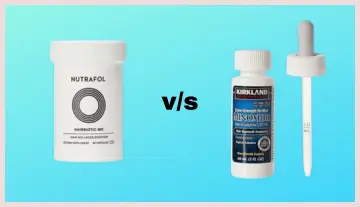
- Mechanism of action: Nutrafol works from inside the body and targets stress hormones along with inflammation and nutritional gaps that can send hair into the resting phase.
Minoxidil works directly at the follicle because it opens potassium channels and increases blood flow while it also lengthens the active growth phase of the hair cycle.
- Regulatory status and evidence strength: Minoxidil holds FDA approval for pattern hair loss and rests on large independent trials that involve thousands of people.
Nutrafol is sold as a dietary supplement so it faces lighter oversight and its studies are smaller even though the results for reduced shedding remain positive.
- Daily routine and convenience: Nutrafol asks only for four capsules taken with food each day and that simple step fits easily into most schedules.
Minoxidil needs consistent scalp application that can feel sticky or leave residue and oral forms remove the application step yet they still require a prescription plus monitoring.
- Cost over time: A full year of Nutrafol often climbs past nine hundred dollars while generic topical minoxidil stays under three hundred dollars for the same period.
That gap matters because both products need continuous use if the gains are to stay in place.
- Side-effect profile: Nutrafol most often causes mild stomach discomfort or rare reactions to marine collagen and other botanicals.
Minoxidil commonly triggers an early shedding phase plus scalp dryness or itching and oral versions can also stimulate unwanted facial or body hair.
- Ideal candidate profiles: People whose shedding links to stress or postpartum changes or nutritional shortfalls usually respond better to Nutrafol.
Those who show clear patterned thinning at the crown or temples and who carry a family history of the same pattern tend to see stronger results from minoxidil.
Key Features Of Nutrafol
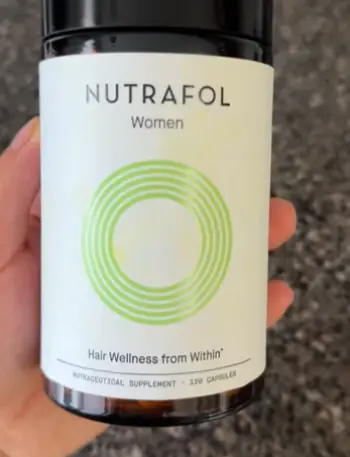
- Synergen Complex: The core blend centers on saw palmetto that modestly influences DHT conversion and Sensoril ashwagandha that helps regulate cortisol while marine collagen peptides supply amino acids for keratin production.
Curcumin adds anti-inflammatory support and tocotrienols which are a form of vitamin E appear in studies that track hair density gains.
- Gender- and life-stage formulas: Separate versions exist for men and for women and for women over forty-five or in menopause and for the postpartum period and a vegan option is also available.
Men’s formulas usually carry higher saw-palmetto levels while women’s versions place more emphasis on adaptogens and collagen.
- Clinical support claims: Company trials report reduced shedding within two months and measurable increases in hair count and thickness by six months among women who notice self-perceived thinning.
Independent reviews place its evidence among the stronger nutritional interventions yet the data still sit below pharmaceutical standards for classic pattern hair loss.
Drug-free positioning: The product is marketed as free of hormones and gluten and artificial additives and that claim appeals to users who prefer to avoid pharmaceuticals.
Third-party testing for purity forms part of the brand’s quality message.
Pros Of Nutrafol
- Addresses multiple internal contributors at once: Stress and hormone fluctuations and inflammation and nutrient shortfalls can all influence shedding. A single daily dose attempts to cover several of these pathways at the same time rather than focusing on only one mechanism.
- Minimal daily hassle: Users swallow four capsules with food and they avoid messy application or waiting for product to dry or the risk of transfer to pillows and clothing. Many people find the capsule routine easier to keep up over the long term.
- Generally mild side-effect profile: Most people tolerate the product without scalp irritation or the dramatic early shed that is linked to minoxidil. Digestive complaints when they occur are usually temporary and settle after a short adjustment period.
- Suitable for certain sensitive situations: Postpartum users and those who want a non-pharmaceutical option often prefer this route. Formulas that are tailored to different life stages allow more personalized selection.
- Potential whole-body benefits: Ingredients such as ashwagandha and curcumin may support stress resilience and inflammation control beyond the scalp itself.
Cons Of Nutrafol
- Higher ongoing cost: The monthly price sits roughly three to eight times higher than generic minoxidil and the financial commitment adds up quickly especially when results require continuous use.
- Less robust evidence for classic pattern baldness: The product can help with diffuse or stress-related thinning yet the magnitude of regrowth in androgenetic alopecia trials is typically smaller than the gains seen with minoxidil.
- Variable individual response: People who already eat a nutrient-dense diet or who manage stress effectively may notice little additional benefit. Some ingredients can interact with medications or affect lab results and biotin is a known example.
- Subscription model pressure: The brand leans heavily on auto-ship programs and that structure can make it harder to pause or cancel without careful attention to the account settings.
- Not a rapid or dramatic fix: Visible changes take months and expectations of thick dense regrowth may lead to disappointment if the underlying cause is strongly genetic.
Key Features Of Minoxidil
- Dual delivery options: Topical two-percent solution or foam for women and five-percent strength for men remain the standard over-the-counter choices.
Low-dose oral tablets that usually range from zero point two five to five milligrams are prescribed off-label when topical application feels inconvenient or irritating.
- Clear mechanism on the hair cycle: Minoxidil shortens the resting phase and prolongs the growth phase so follicles cycle more productively.
The early shed that many users experience is actually a sign that resting hairs are being pushed out to make room for new growth.
- Decades of real-world and trial data: Multiple large randomized trials confirm increases in terminal hair density and visible results typically appear between three and six months of consistent use.
Efficacy is highest on the crown while the frontal hairline often responds less dramatically.
- Accessibility and generics: Topical forms are available without a prescription at most pharmacies and online retailers.
Generic versions deliver the same active ingredient at a fraction of brand-name prices.
Pros Of Minoxidil
- Strong consistent clinical track record: Decades of data and FDA approval give it the clearest evidence base among widely available treatments for pattern thinning.
- Measurable increases in hair density: Trials show average gains of roughly ten to fifteen terminal hairs per square centimeter after six months in many users and that improvement translates into noticeable coverage for most people.
- Affordable long-term option: Generic topical versions keep annual costs low and that lower price makes sustained treatment realistic for a larger group of users.
- Flexible formats: Foam and liquid and oral versions let users choose based on lifestyle and scalp sensitivity and preference for systemic versus local action.
- Can be combined with other approaches: Dermatologists frequently pair it with finasteride or low-level laser therapy or nutritional support for additive benefit.
Cons Of Minoxidil
- Initial shedding phase: Many users experience increased hair fall in the first weeks to two months. Although the shed is temporary and a sign the product is working it can feel alarming and cause people to quit early.
- Scalp irritation and residue: Alcohol-based liquids can dry or itch the scalp while foam is gentler yet it still requires twice-daily application for best results in men. Consistency remains non-negotiable if results are to appear and stay.
- Lifelong commitment: Benefits reverse within three to four months of stopping and this pattern holds for nearly all current medical treatments for pattern hair loss yet it remains a practical drawback.
- Possible unwanted hair growth: Topical transfer or oral use can stimulate facial or body hair and that outcome is especially bothersome for some women.
- Limited effect on frontal recession: Results are strongest on the vertex or crown while the hairline often responds less dramatically.
How I Weighed The Two Options In Real Life?

When my own hair began thinning after a prolonged stressful period I first tried minoxidil because of its stronger evidence.
The early shed was unsettling and the twice-daily application felt tedious. After three months I added Nutrafol on the advice of a dermatologist who suggested the combination for its complementary pathways.
Within another two months shedding slowed noticeably and the new growth from minoxidil appeared denser. That personal experience shaped my view. Neither product is universally superior.
The right choice depends on the dominant cause of your thinning and your tolerance for daily routines and how much you are willing to spend month after month.
For pure androgenetic alopecia with a clear pattern minoxidil remains the more evidence-backed starting point.
For diffuse shedding linked to stress or postpartum recovery or midlife hormonal shifts Nutrafol’s multi-ingredient approach can feel more targeted.
Many people ultimately do both using minoxidil for local stimulation and Nutrafol for internal support.
Who Should Consider Starting With Nutrafol?
If bloodwork shows no major deficiencies yet you still shed heavily during high-stress seasons or if you prefer to avoid pharmaceuticals or if you are in a postpartum or perimenopausal window Nutrafol is a reasonable first experiment.
Give it a full six months before judging results and track shedding with a simple monthly photo series under consistent lighting.
Who Should Lean Toward Minoxidil First?
Anyone with progressive patterned thinning especially men with receding temples or crown loss or women with a widening part will usually see more reliable density gains from minoxidil. The lower cost also makes it easier to commit for the year or longer that most people need to evaluate true benefit.
Also Read: Is Nutrafol DHT Inhibitor Worth It?
Frequently Asked Questions (FAQ)
Jennifer Lopez has publicly stated she has used minoxidil for years after learning about it from her hairstylist early in her career. She partnered with a brand offering a 2% minoxidil topical solution.
The main drawbacks are its relatively high monthly cost and the fact that evidence for classic pattern baldness is less robust than for pharmaceuticals and the possibility of mild digestive side effects or ingredient sensitivities.
Yes many people and clinicians combine them because the products target different pathways. Topical minoxidil stimulates follicles locally while Nutrafol supports internal factors. Consult a healthcare provider before starting both.
Sephora exited the oral supplement category entirely as part of a broader merchandising shift away from ingestible wellness products that did not align well with its visual experiential retail model. Nutrafol was among the brands removed during that category-wide change.
Final Thoughts
After testing both approaches and comparing the available data I see Nutrafol and minoxidil as tools with distinct strengths rather than direct rivals.
Minoxidil offers stronger more predictable follicle-level results for pattern hair loss at a lower price.
Nutrafol provides a broader internal support system that can complement minoxidil or serve as a gentler entry point when stress or hormones or nutrition play larger roles.
You will get the most value by matching the product to your specific type of thinning and committing for at least six months and staying realistic about the gradual nature of hair regrowth.
If you start with one and later add the other you may find the combination delivers the fuller outcome many of us are looking for.
Whatever path you choose consistent use and professional guidance remain the factors that matter most.
Recent Posts
Blood Balance Plus Reviews: Is This Blood Support Supplement Worth Buying?
Blood Balance Plus is marketed as a natural supplement designed to support healthy blood sugar levels, blood pressure, and metabolic wellness.However, after examining its product information,...
Lemme Play Gummies Review: Do They Really Support Women's Intimacy?
Lemme Play Gummies are marketed as daily intimacy supplements designed to support women's libido, arousal, sexual satisfaction, and healthy blood circulation.Although the formula contains...