
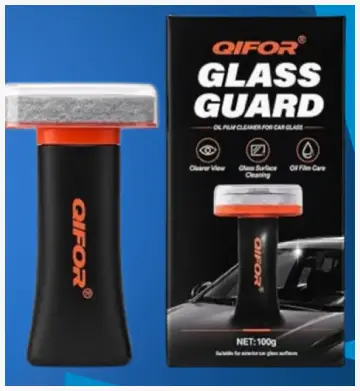
Qifor Glass Cleaner is marketed as a convenient solution for removing stubborn oil films, road grime, water stains, and smudges from automotive glass.
However, its mixed customer feedback raises questions about its actual cleaning performance and value.
After evaluating its advertised features, customer complaints, and available marketplace ratings, I would not recommend rushing to buy it.
There are more established glass-cleaning alternatives worth considering.
My Personal Experience With Qifor Glass Cleaner
When I evaluate a glass cleaner, I look beyond attractive product descriptions and promises of crystal-clear windows.
What matters most is whether the product performs consistently, removes stubborn dirt, leaves a streak-free finish, and offers reasonable value for money.
These are particularly important qualities when choosing something intended for automotive windshields, where clear visibility directly affects driving safety.
Qifor Glass Cleaner attracts attention because of its claims. It is promoted as an automotive glass treatment that can remove oil films, greasy residue, road grime, insect marks, and water stains.
Some versions are also advertised as offering water-repellent or hydrophobic properties. On paper, these features sound appealing, especially if you regularly drive through dusty areas, rainy weather, or busy roads.
However, I would separate marketing promises from independently demonstrated performance.
The available customer feedback presents a mixed picture. Some buyers appreciate the convenient application and report satisfactory cleaning results.
Others express disappointment because the product does not remove stubborn marks as effectively as expected.
Problems involving overall functionality and differences between advertised and actual performance are particularly worth considering.
One marketplace analysis covering QIFOR glass-cleaning products identified functionality as a major source of negative feedback. It also highlighted complaints about the product not working as advertised.
These concerns matter because a glass cleaner should deliver dependable results rather than simply create an impressive first impression.
Another important consideration is that Qifor products appear in different formats. Depending on the listing, you may encounter a roll-on cleaning compound, a handheld oil-film remover, or a cream-style automotive glass cleaner.
Their packaging, application methods, and advertised benefits are not necessarily identical. Therefore, I would not assume that positive feedback for one version automatically applies to another.
I also pay attention to application convenience. A product that requires several attempts, excessive rubbing, or repeated wiping can become frustrating, particularly when cleaning a large windshield.
Even if a cleaning compound removes some surface contamination, it should not leave behind cloudy patches or greasy-looking residue that requires additional work.
For me, consistency is more important than impressive advertising. I would rather choose a straightforward glass cleaner with a dependable performance record than spend money on a specialized product with uncertain results.
Another concern is the importance of realistic expectations. Ordinary dust and fingerprints are relatively easy to remove, but mineral deposits, hardened water spots, and accumulated road film can require different cleaning methods.
A product advertised as an all-in-one solution should be evaluated carefully before assuming it can handle every type of contamination.
My overall assessment is cautious. Qifor Glass Cleaner has some appealing features, but the available complaints make it difficult to consider it a dependable first choice.
If your primary objective is maintaining a clear windshield, I would prioritize a product with a stronger and more consistent customer satisfaction record.
Pros Of Qifor Glass Cleaner
- Designed Specifically for Automotive Glass
One positive aspect is its automotive-focused positioning.
Many ordinary household window cleaners are designed for indoor glass surfaces. Automotive windshields, however, regularly encounter oil residue, road grime, insect marks, and environmental contamination.
Qifor is marketed specifically for these conditions.
I appreciate the idea of having a dedicated cleaning product for automotive glass because vehicle windows sometimes require more specialized attention than household mirrors.
However, the product’s intended purpose does not automatically guarantee superior performance.
- Targets Greasy Residue
Greasy windshield films can be particularly irritating because they may remain visible even after ordinary cleaning.
Qifor advertises its ability to address oil films and related contamination.
If a cleaner can effectively loosen these deposits, it may reduce the amount of repeated wiping required.
This is potentially useful for people who frequently drive in congested areas or park their vehicles outdoors.
Still, the available complaints about inconsistent functionality make this benefit less convincing than the marketing suggests.
- Convenient Application Formats
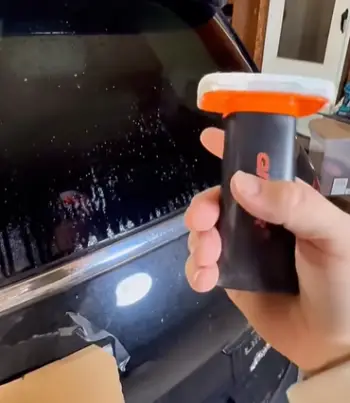
Certain Qifor versions come in compact containers or handheld application formats.
This design may appeal to people who prefer keeping automotive cleaning products inside their vehicles or garages.
A compact cleaner can also be easier to store than a large bottle.
However, convenience should never outweigh cleaning performance. If a product requires excessive effort to produce acceptable results, its packaging becomes less important.
- Multiple Advertised Cleaning Applications
Another attractive feature is its advertised versatility.
Depending on the version, Qifor is promoted for treating oil films, road grime, insect residue, water spots, and other windshield contaminants.
Having one product intended for several cleaning tasks sounds practical.
However, I would distinguish between advertised versatility and proven effectiveness. Different stains have different causes, and no single cleaner should automatically be expected to remove all of them.
- Potentially Useful for Routine Automotive Care
Keeping vehicle glass clean is an important part of regular maintenance.
A suitable glass cleaner can help remove fingerprints, everyday dirt, and environmental residue before they become more difficult to address.
Qifor’s automotive focus may make it attractive to vehicle owners looking for a dedicated cleaning treatment.
Nevertheless, I would compare its performance and price with established alternatives before considering it.
Cons Of Qifor Glass Cleaner
- Mixed Customer Feedback
The biggest concern is inconsistent customer satisfaction.
Available marketplace information includes both positive and negative experiences. Some customers appear satisfied, while others question whether the cleaner performs as advertised.
A product intended to improve windshield visibility should provide reliable results.
When buyers repeatedly report disappointing functionality, I consider that a reason to investigate alternatives rather than purchase immediately.
- Questions About Actual Cleaning Performance
Qifor makes several attractive cleaning claims, but customer complaints suggest that its performance may not consistently match expectations.
Some buyers report that stubborn contamination remains after application.
This is especially frustrating when someone purchases a specialized cleaner specifically because ordinary products have failed.
I would not want to spend additional money on another cleaning treatment only to discover that the original problem remains.
- Uncertainty Between Different Product Versions
Another drawback is the presence of different Qifor cleaning products and marketplace listings.
Some are described as oil-film removers, while others are presented as roll-on glass compounds or automotive cleaning creams.
This makes it important to examine the exact product description, package size, application instructions, and customer reviews.
Without doing so, you could mistakenly purchase a different formulation from the one you originally intended to buy.
- Potentially Disappointing Value for Money
Price alone does not determine whether a cleaner is worthwhile.
A reasonably priced product can still be poor value if it requires repeated applications or fails to remove the contamination it promises to address.
I would compare the total cost with established automotive glass cleaners that have more recognizable product histories and clearer performance expectations.
- Marketing Claims Require Careful Evaluation
Claims involving hydrophobic protection, anti-freeze properties, improved visibility, and long-lasting cleanliness can make a product sound particularly impressive.
However, these claims should not be treated as independently established benefits without suitable testing.
For example, a water-repellent effect is not necessarily the same as a durable windshield treatment.
I would also avoid assuming that a cleaner can prevent ice accumulation or replace proper winter vehicle maintenance.
Maintenance For Qifor Glass Cleaner
- Start With a Clean Microfiber Cloth
Always begin with a clean microfiber cloth.
Ordinary towels may contain loose fibers, detergent residue, or dirt particles that can create additional streaks.
A microfiber cloth is generally preferable because it lifts dirt effectively and helps reduce visible wiping marks.
I recommend keeping separate cloths for the exterior and interior of your windshield.
This prevents greasy dashboard residue from transferring onto freshly cleaned glass.
- Remove Loose Dust Before Applying Cleaner
Never begin rubbing heavily contaminated glass without removing loose dirt first.
Dust and small particles can create unnecessary friction during cleaning.
Start by rinsing the exterior glass with clean water when appropriate or gently removing loose debris.
This simple step helps make the cleaning process more controlled.
- Follow the Product Instructions
Different glass cleaners have different application requirements.
A conventional spray cleaner may need to be sprayed directly onto a cloth or glass surface, while a concentrated compound may require controlled application and additional wiping.
If you purchase Qifor, read the instructions for the exact version you receive.
Do not assume every Qifor product uses the same method.
Avoid mixing it with other cleaning chemicals unless the manufacturer explicitly confirms compatibility.
- Clean in Manageable Sections
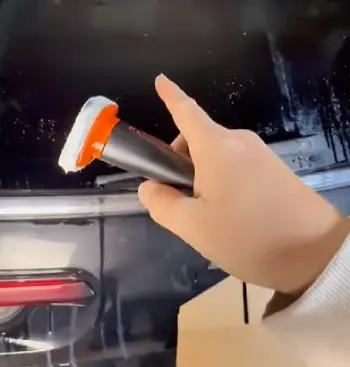
I find that cleaning one section at a time is more practical than attempting to cover an entire windshield immediately.
Apply the appropriate amount of cleaner and work across a manageable area.
This makes it easier to identify missed spots and avoid allowing cleaning residue to dry unevenly.
It also gives you better control over the amount of pressure applied.
- Avoid Cleaning Under Direct Sunlight
Direct sunlight can cause cleaning solutions to evaporate quickly.
When this happens, streaks and residue may become more noticeable.
Whenever possible, park your vehicle in a shaded location or clean the windows during cooler parts of the day.
This is a simple way to improve the overall cleaning experience.
- Use Separate Cloths for Different Cleaning Stages
Using one cloth for every step can spread contamination instead of removing it.
I recommend keeping one microfiber cloth for initial cleaning and another clean, dry cloth for the final wipe.
If the first cloth becomes heavily soiled, replace it rather than continuing to spread dirt across the glass.
- Pay Attention to Windshield Edges
The edges of a windshield often collect dust, moisture, and cleaning residue.
These areas can be difficult to reach with larger cloths.
Use a clean microfiber cloth to carefully wipe around the edges, taking care not to damage surrounding rubber seals.
Regular attention to these areas helps maintain a more consistently clean appearance.
Comparison Of Qifor Glass Cleaner With Other Brands
- Qifor vs. Windex
Windex is a recognizable household glass-cleaning brand commonly used for mirrors, windows, and other compatible glass surfaces.
Its main advantage is familiarity and straightforward everyday cleaning.
Qifor, on the other hand, is positioned more specifically toward automotive glass contamination, particularly oil films and road residue.
However, the distinction in marketing does not establish that Qifor performs better.
For ordinary household glass and routine cleaning, Windex may be a more familiar option. For vehicle windshields, I would select a dedicated automotive glass cleaner rather than automatically using a household formula.
My preference would be to choose based on surface compatibility and consistent cleaning results.
- Qifor vs. Invisible Glass
Invisible Glass is an established name in automotive glass cleaning.
It is designed around removing everyday contaminants and helping maintain clear automotive windows.
Compared with Qifor, Invisible Glass has a more recognizable position in the automotive detailing category.
I particularly value straightforward products that focus on cleaning rather than making numerous additional promises.
Qifor advertises specialized oil-film removal and other benefits, but mixed feedback makes it harder to establish whether those features provide a meaningful advantage.
For someone prioritizing automotive window maintenance, I would consider Invisible Glass before taking a chance on Qifor.
- Qifor vs. Rain-X
Rain-X is widely associated with automotive glass treatments and water-repellent products.
Its product range includes conventional glass cleaners as well as treatments designed to encourage water to bead and move across glass surfaces.
Qifor also advertises hydrophobic benefits on certain listings.
However, cleaning and water-repellent protection are two different functions.
A cleaner removes contamination, while a water-repellent treatment is intended to change how water behaves on the treated surface.
I would not assume that Qifor delivers the same durability or performance as a dedicated Rain-X treatment.
For drivers who frequently encounter rain, I would consider a dedicated automotive glass cleaner and a compatible water-repellent treatment from an established manufacturer.
- Qifor vs. Chemical Guys
Chemical Guys offers automotive detailing products for different vehicle surfaces, including glass.
Its range may appeal to people who regularly maintain their vehicles and want products designed for detailing applications.
Qifor’s main selling point is its specialized oil-film removal positioning.
However, a specialized product is not automatically a better product.
I would compare the exact formulations, surface compatibility, application requirements, and customer feedback before deciding.
For regular vehicle maintenance, I would lean toward an established detailing brand with a product specifically intended for automotive glass.
- Qifor vs. Meguiar’s
Meguiar’s is another familiar automotive care brand with products covering exterior cleaning, interior maintenance, paint care, and glass cleaning.
Its broad automotive focus makes it a practical alternative for vehicle owners who prefer purchasing cleaning products from established manufacturers.
Qifor may appeal to shoppers looking for a specialized oil-film remover, but its inconsistent customer feedback makes the purchasing decision less straightforward.
I would prioritize a glass cleaner that delivers reliable results without requiring excessive effort.
For that reason, Meguiar’s deserves consideration before experimenting with a less consistently reviewed option.
Frequently Asked Questions (FAQ)
There is no single best glass cleaner for every situation. Invisible Glass, Rain-X, and Meguiar’s are established options worth comparing. The right choice depends on whether you need everyday window cleaning, automotive glass maintenance, or water-repellent protection.
Qifor may provide satisfactory results for some users, but customer feedback is mixed. Complaints involving cleaning effectiveness and advertised performance make it difficult to recommend confidently.
QIFOR products have appeared on online marketplaces such as Amazon, Walmart, eBay, and TikTok Shop. Availability varies by product version and seller. Check the exact listing, return conditions, seller information, and recent verified reviews before ordering.
Customer feedback varies across listings. Some shoppers report satisfactory experiences, while others express concerns about product functionality and cleaning results. The QIFOR Shop listing on TikTok Shop has displayed mixed ratings, so I recommend checking the latest feedback before purchasing.
Final Verdict
After considering Qifor Glass Cleaner’s advertised benefits, product variations, and available customer feedback, I would not recommend it as a first-choice automotive glass cleaner.
Its oil-film removal claims sound appealing, but inconsistent performance reports create reasonable doubts about its overall value.
If you want dependable windshield maintenance, I would choose an established alternative such as Invisible Glass, Rain-X, or Meguiar’s instead.
Recent Posts
Keeping your washing machine clean is just as important as keeping your clothes fresh. Even when your laundry looks spotless, detergent residue, fabric softener, dirt, and moisture can build...
Clean Nutra Women's Creatine is marketed toward women who want to support muscle strength, exercise performance, and fitness goals without making their supplement routine complicated.I believe it...