
I have spent more time than I care to admit standing in showrooms, reading product specs, and talking with installers while deciding between quartz and laminate countertops for real homes.
The main intent of this piece is to give you a clear, side-by-side view of how these two materials actually perform day after day so you can choose with confidence rather than regret.
I will cover durability, cost, maintenance, looks, and the quiet trade-offs that rarely show up in glossy ads.
| Feature | Quartz | Laminate |
| Material Composition | Engineered stone (90%+ quartz + resin) | Paper/plastic layers over particleboard |
| Average Cost (installed) | $50–$120 per sq ft | $15–$40 per sq ft |
| Heat Resistance | Good but not extreme | Poor – can scorch or melt |
| Scratch Resistance | High | Moderate – edges chip easily |
| Stain Resistance | Excellent (non-porous) | Good if sealed, but seams and edges vulnerable |
| Maintenance | Wipe with mild soap and water | Wipe clean, avoid abrasives |
| Lifespan | 25+ years with care | 10–20 years depending on use |
| Design Flexibility | Wide range of colors and patterns | Extremely wide, including wood and stone looks |
| Repairability | Difficult; often needs professional work | Possible with kits for small damage |
| Weight | Heavy – may need cabinet reinforcement | Lightweight – easy on existing cabinets |
Key Differences Between Quartz And Laminate
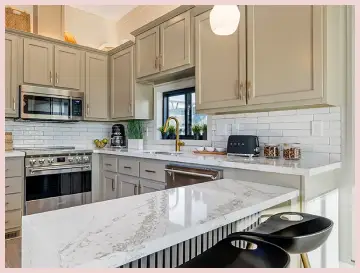
- Composition and feel under the hand: Quartz is mostly crushed natural quartz bound with resins and pigments.
When you run your fingers across it, the surface feels cool, dense, and solid.
Laminate starts as kraft paper saturated with resins, topped with a decorative layer and a wear surface, then pressed onto particleboard or MDF. It feels warmer and slightly softer to the touch.
- How they handle daily abuse: Quartz shrugs off most knife slips and dropped pans better than laminate.
Laminate can dent or chip if you drop something heavy near an edge or cut directly on it.
I have watched laminate edges fray after a few years of kids leaning on them, while quartz edges stay sharper longer under the same conditions.
- Water and stain behavior: Quartz is non-porous, so coffee, wine, and oil sit on the surface until you wipe them away.
Laminate relies on the protective top layer for defense. Once that layer wears or a seam opens, moisture can reach the core and cause swelling that becomes hard to reverse.
- Installation and structural demands: Quartz slabs are heavy and often require skilled handling.
Older cabinets sometimes need extra bracing before the material can sit safely. Laminate sheets are light and can go over existing surfaces with far less disruption to the rest of the kitchen.
- Long-term appearance: Quartz keeps its color and finish with almost no extra effort over the years.
Laminate can fade in strong sunlight or develop a tired look once the wear layer thins.
Both can look premium when new, yet only one tends to still look premium a decade later in most homes.
Key Features Of Quartz Countertops
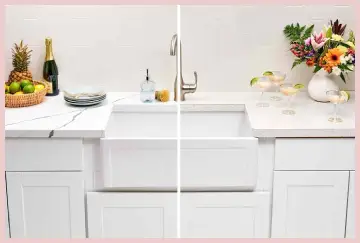
- Engineered consistency: Every slab is manufactured under controlled conditions.
You get the same pattern and strength from piece to piece, which makes matching seams and islands easier than with natural stone that varies by nature.
- Non-porous surface: No sealing is required at any point. Spills stay on top of the material instead of soaking in.
This is the feature that sells most homeowners once they have lived with a porous surface that stained over time.
- Color and pattern range: Manufacturers can create pure whites, deep blacks, subtle veining that mimics marble, and bold solid colors.
The patterns are usually more uniform than natural stone, and that predictability appeals to many people who want a clean look.
- Hardness and impact resistance: Quartz ranks high on the Mohs scale for everyday use. Ordinary knives and cookware rarely leave marks on the surface.
Extreme force can still crack a slab, but normal kitchen life rarely produces that level of impact.
Low daily upkeep: A soft cloth and mild dish soap handle almost everything that lands on the counter.
Harsh chemicals are unnecessary and sometimes discouraged by the manufacturer because they can affect the finish over long periods.
Pros Of Quartz Countertops
- Exceptional stain resistance: Because the surface is non-porous, common kitchen liquids do not penetrate into the material. I have left red wine overnight on a quartz sample and found no lasting mark after a simple wipe the next morning.
- Consistent durability across the slab: There are no soft spots or fissures like you sometimes find in natural stone. The material behaves the same from edge to edge, so you do not discover weak points after installation.
- Minimal maintenance routine: No annual sealing is needed at any stage. No special cleaners are required for everyday use either. That alone saves time and product cost over the full life of the counter.
- High resale appeal: Buyers recognize quartz as a step up from basic surfaces. In many markets it helps a kitchen feel current without looking trendy in a way that dates quickly and hurts future value.
- Wide temperature tolerance for normal use: Hot pans can rest briefly without damage in most cases if you are careful. Manufacturers still recommend trivets for extreme heat to protect the resin binders that hold the material together.
- Hygienic surface: Bacteria have nowhere to hide inside the material itself. This matters in busy households and for anyone concerned about food prep safety on a daily basis.
Cons Of Quartz Countertops
- Higher upfront cost: Material and installation together can easily triple or quadruple the price of laminate for the same area. For large kitchens the difference becomes significant and can stretch a renovation budget.
- Weight and installation complexity: Slabs require skilled handling and sometimes cabinet reinforcement before they can be set in place. DIY is rarely realistic for most homeowners who lack the tools and experience.
- Limited repair options: A deep chip or crack usually means professional repair or full slab replacement. Color matching later can be tricky if the original batch is discontinued and no longer available.
- Heat sensitivity at the extremes: Sudden extreme heat can damage the resin that binds the quartz. Leaving a hot cast-iron skillet in one place for too long has left faint marks in some homes I have visited over the years.
- Seam visibility: Large kitchens need seams because slabs have size limits. Even good installers cannot make them completely invisible on busy patterns that draw the eye.
Key Features Of Laminate Countertops
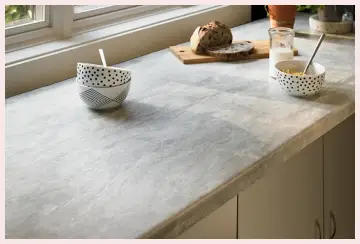
- Affordable design variety: You can get convincing wood grains, concrete looks, marble patterns, and solid colors at a fraction of the cost of real materials.
Retailers update collections frequently, so current trends appear on store shelves quickly and stay accessible.
- Lightweight construction: The finished counter weighs far less than stone of the same size.
This makes it practical for older homes or rental units where structural upgrades are not wanted or simply not possible.
- Factory-applied wear layer: Modern high-pressure laminates include a tough clear coat that resists fading and light scratching better than older versions did.
The layer gives the surface a fighting chance against normal daily wear.
- Seamless sheet options: Many post-formed laminates arrive with the front edge already shaped and the backsplash integrated into one piece.
Installation can be faster and cleaner when the edges are already finished at the factory.
- Repair-friendly for minor damage: Small chips and scratches can often be filled with color-matched kits that homeowners can buy.
Larger damage usually means replacing a section rather than the whole surface, which keeps costs lower.
Pros Of Laminate Countertops
- Budget-friendly entry point: You can cover a full kitchen for the price of a single quartz island in many cases. That frees money for appliances, flooring, or other priorities that matter just as much.
- Enormous design selection: Patterns change with fashion and stay affordable. If you want a specific wood look or concrete texture this year, laminate almost certainly offers it in several shades.
- Easy and fast installation: Many homeowners or general contractors can handle the work without specialized stone tools. The lighter weight reduces labor time and keeps the overall cost lower.
- Surprising everyday durability when treated kindly: Modern laminates handle normal cooking and cleaning well if you avoid extreme heat and standing water. I have seen ten-year-old laminate kitchens that still look respectable with basic care and attention.
- Simple partial replacement: Damaged sections can sometimes be swapped without tearing out the entire counter. This keeps repair costs manageable when only one area fails.
Cons Of Laminate Countertops
- Vulnerability to heat and moisture: A hot pan can leave a permanent scar on the surface. Standing water near a seam can swell the core over time, and these two issues remain the most common failure points I encounter.
- Edge and seam wear: The decorative layer is thin compared with solid materials. Once it chips or peels, the brown core shows and the damage is hard to hide without replacement.
- Shorter expected lifespan under heavy use: High-traffic family kitchens tend to show age faster than quartz does. Replacement becomes likely within fifteen years for many households that cook every day.
- Perceived value: Even attractive laminate rarely impresses buyers the same way quartz does during a home sale. Some resale agents treat it as a temporary surface that future owners will want to change.
- Limited repair depth: Surface scratches can be polished or filled with kits. Deep damage usually requires replacement of the affected piece because the core cannot be restored easily.
Real Kitchen Performance Over Time
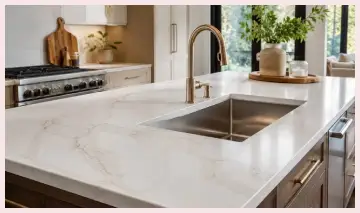
I have tracked several homes that chose one material or the other and revisited them after three, five, and ten years.
Quartz kitchens still looked close to new when the owners wiped them regularly and used cutting boards without fail.
Laminate kitchens showed more variation across the same time span. Those with careful habits and good sealing around the sink held up well for many years.
Those with kids who cut directly on the surface or left wet sponges overnight developed soft spots and peeling edges that became noticeable.
Heat remains the biggest practical difference between the two. Quartz owners learn to use trivets out of habit after a short time.
Laminate owners learn the same lesson faster, often after the first scorch mark appears. Both materials reward the same basic habits of cutting boards, hot pads, and prompt spill cleanup.
The difference is how forgiving the surface is when those habits slip for a day or two.
Cost Reality Beyond The Square-Foot Price
The sticker price of the material is only part of the story you need to consider.
Quartz usually needs professional templating and installation by trained crews. That labor can add thousands to the final bill.
Laminate can sometimes be installed by a competent handyman or the homeowner with basic tools. Cabinets may need reinforcement for quartz because of the weight.
They rarely need that extra work for laminate. Over a twenty-year period the total cost of ownership still favors laminate for many households, even after one full replacement, unless the higher resale value of quartz is factored into the equation.
Design And Lifestyle Fit
If your kitchen is the heart of a busy household with kids, pets, and frequent cooking, quartz’s toughness and low maintenance often win the decision.
If the kitchen is used more lightly or the budget is tight from the start, laminate can deliver a polished look without the financial stretch that quartz requires.
I have also seen people choose laminate for secondary spaces such as laundry rooms, basements, and rental units.
They save the quartz budget for the main kitchen where the family spends the most time. That hybrid approach works well when both materials are chosen thoughtfully for their specific roles.
Color and pattern decisions matter more than people expect when they first start shopping. Quartz patterns are baked in and permanent once the slab is made.
Laminate patterns can be replaced more easily if tastes change after several years. Some homeowners prefer the predictability of quartz that will not shift.
Others like the option to refresh the look later without a major renovation of the entire space.
Frequently Asked Questions (FAQ)
Some markets have cooled on quartz because of higher prices and competition from improved porcelain and sintered stone slabs that offer similar looks at different price points. Demand has not disappeared. It has simply spread across more engineered options that give buyers choices.
For most primary kitchens that see heavy daily use and where the owners plan to stay long-term, yes. The durability and lower maintenance usually justify the higher cost over time. For light-use spaces or tight budgets, laminate remains a smart and practical choice.
Yes. Mild dish soaps like Dawn are commonly recommended for everyday cleaning of the surface. Avoid anything with strong abrasives or harsh solvents that could affect the finish.
High-end homes frequently use quartz, natural stone such as marble or granite, and increasingly large-format porcelain or sintered stone. The choice often depends on the desired aesthetic and the homeowner’s tolerance for maintenance over the years.
Final Thoughts
I have cooked on both surfaces, cleaned both after dinner parties, and watched both age in real houses across different budgets.
Quartz has earned its reputation for toughness and easy care that lasts. Laminate has earned its place as the practical, design-rich option that keeps projects affordable without looking cheap when chosen carefully. Neither is universally better for every kitchen.
The right choice depends on how you cook, how long you plan to stay in the home, and how much you want to spend up front versus over the full life of the surface.
Recent Posts
CertainTeed Vs. GAF Roofing Shingles: Which Brand Wins For Your Home?
I spent months comparing roofing options for my own home and talking with contractors who install both brands every week.My goal here is simple: help you decide between CertainTeed and GAF...
If you're looking for impact windows that can protect your home from hurricanes, flying debris, heavy rain, and unwanted outside noise, Caner Impact Windows may be worth considering. I...