
If you’re looking for a probiotic marketed around digestive support, regularity, and a healthier-looking body, Thin 30 Probiotic is one product worth considering.
I would recommend buying it only if your main goal is to add a convenient probiotic supplement to an already sensible diet and lifestyle—not as a quick weight-loss solution.
If you decide to try it, buy from a reputable retailer so you receive a genuine, properly stored product.
In this Thin 30 Probiotic review, I’ll explain what stood out to me, where expectations need adjusting, and how it compares with other popular probiotic supplements.
My First Exprriance With Thin 30 Probiotic
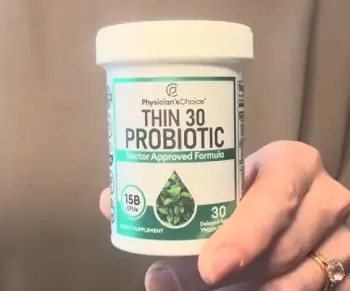
When I first looked at Thin 30 Probiotic, the biggest thing that caught my attention was its positioning.
It isn’t presented simply as another everyday digestive supplement. The Thin 30 name and marketing focus make it particularly appealing to people who connect gut health with weight-management goals.
That immediately made me cautious.
I’ve tried enough supplements to know that attractive claims can sometimes make a product sound much more powerful than it actually is.
A probiotic can be useful for supporting digestive health, but I don’t expect a capsule to erase poor eating habits, compensate for inactivity, or suddenly burn stubborn belly fat.
I approached Thin 30 with that mindset.
What I liked most was the convenience. Taking a capsule is considerably easier for me than preparing complicated drinks or remembering several different supplements throughout the day. I also appreciated that probiotics fit naturally into a broader wellness routine.
If I’m already paying attention to hydration, fiber, balanced meals, sleep, and exercise, adding a probiotic doesn’t feel particularly difficult.
The experience also reminded me that digestive supplements can be highly individual. One person may notice changes in bowel regularity or digestive comfort fairly quickly, while another may notice very little. I wouldn’t judge the product after one or two days.
That point is important when reading Thin 30 Probiotic reviews. A dramatic transformation isn’t the standard I would use. Instead, I would ask whether the product is easy to take, whether the formulation makes sense, whether it fits my routine, whether I tolerate it well, and whether it provides enough value to justify continuing.
I also wouldn’t use temporary changes in bloating or water weight as proof that a probiotic is causing fat loss. Those are completely different things.
Overall, my impression is that Thin 30 Probiotic makes more sense as a supporting product than as the star of a weight-loss plan.
If you’re expecting a convenient probiotic that can complement healthy habits, it may be interesting. If you’re expecting a shortcut to losing 30 pounds or dramatically reducing abdominal fat, I think you’ll probably be disappointed.
Pros Of Thin 30 Probiotic
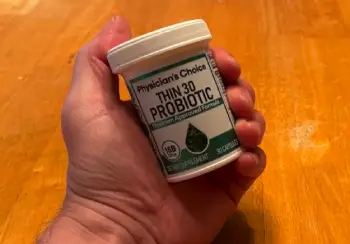
- Convenient Daily Format
One of the biggest advantages for me is convenience.
A probiotic that requires minimal preparation is easier to incorporate into a busy routine. I don’t want another complicated wellness ritual that takes ten minutes every morning.
A straightforward supplement can be much easier to maintain.
And consistency matters.
Even a potentially useful product doesn’t help much if you continually forget to take it.
- Fits Into a Broader Wellness Routine
I also like the fact that a probiotic can fit alongside other healthy habits.
I can think of it as one component of my routine rather than something that needs to dominate it.
For example, I can focus on eating more fiber-rich foods, drinking enough water, staying active, and getting adequate sleep while using a probiotic as additional support.
That’s a more realistic approach.
- Focus on Digestive Support
The digestive-health angle is more believable to me than aggressive weight-loss expectations.
Probiotics are widely used for digestive wellness, although individual results vary.
If someone is primarily interested in gut health and also happens to have weight-management goals, a product like Thin 30 may make more sense than if weight loss is literally the only reason they’re buying it.
- Potential Support for Regularity
Digestive regularity is another reason someone might consider a probiotic.
However, I wouldn’t promise a specific bowel-movement outcome because individual responses vary significantly.
Dietary fiber, hydration, physical activity, and overall eating patterns can be just as important.
- Easy to Evaluate Over Time
Another advantage is that the product can be assessed based on practical outcomes.
Instead of obsessing over the scale, I would pay attention to digestive comfort, regularity, tolerance, and whether the supplement fits naturally into my routine.
That’s a much more useful way to evaluate a probiotic.
Cons Of Thin 30 Probiotic

- Weight-Loss Expectations Can Become Unrealistic
This is my biggest concern.
The word “Thin” naturally creates an expectation that the product will make weight loss easier or faster.
If someone buys it specifically because they want rapid fat loss, they may misunderstand what a probiotic can realistically do.
I would approach those expectations carefully.
- Results Can Vary
One person’s positive experience doesn’t guarantee that you’ll have the same outcome.
The microbiome is highly individual, and digestive responses differ.
That makes it difficult to promise a universal result.
- It Isn’t a Substitute for Diet and Exercise
No matter how appealing the marketing sounds, a probiotic doesn’t replace a balanced diet or regular movement.
If your goal is meaningful fat loss, you still need to address the fundamentals.
- Possible Digestive Adjustment
Some people may experience temporary digestive changes when introducing a probiotic.
Gas, bloating, or changes in bowel habits can occur with certain probiotic products or formulations.
If symptoms are severe or persistent, I wouldn’t simply push through them.
- Cost Can Add Up
A supplement may look affordable when purchased once.
But monthly expenses accumulate.
If I don’t notice a meaningful benefit after a reasonable trial period, I have to ask whether continuing is worthwhile.
- The Product Doesn’t Work the Same Way for Everyone
This is a broader probiotic issue, but it matters.
There isn’t one universal probiotic that produces identical results for every person.
That’s why I prefer realistic expectations over dramatic promises.
Maintenance Tips For Thin 30 Probiotic
- Take It Consistently
If I decide to use a probiotic, consistency is one of the first things I focus on.
Taking it randomly makes it difficult to determine whether it’s actually helping.
I prefer attaching supplements to an existing daily habit, such as breakfast or another routine I rarely skip.
Always follow the product label regarding timing and dosage.
- Store It Correctly
Probiotics can be sensitive to environmental conditions.
I would check the packaging for storage instructions and follow them carefully.
Heat, humidity, and improper storage can potentially affect product quality depending on the formulation.
Since I live in a warm and humid environment, I would be especially careful about where I keep supplements.
I wouldn’t automatically assume the bathroom cabinet is ideal simply because it’s convenient.
- Don’t Ignore Fiber
This is a major point that I think gets overlooked.
If you’re concerned about gut health, your diet deserves just as much attention as your probiotic.
Fiber-rich foods can provide fermentable material for microorganisms in the gut.
I would gradually include foods such as vegetables, fruits, legumes, whole grains, nuts, and seeds according to my dietary needs.
Increasing fiber too quickly can itself cause bloating, so gradual changes make more sense.
- Drink Enough Water
Hydration is another basic habit I wouldn’t ignore.
If I’m increasing dietary fiber without drinking enough fluid, digestive discomfort can sometimes become worse rather than better.
I therefore view water intake as part of the overall routine.
- Don’t Chase Immediate Results
I wouldn’t expect a probiotic to produce a dramatic change overnight.
Instead, I would give myself enough time to observe whether there are consistent differences in digestive comfort and regularity.
At the same time, I wouldn’t continue indefinitely if I experience ongoing discomfort or no meaningful benefit.
- Track More Than Your Weight
If you’re using Thin 30 partly because of weight-management goals, don’t rely exclusively on the bathroom scale.
Body weight naturally fluctuates.
I would pay attention to broader indicators such as waist measurements, eating patterns, activity levels, energy, digestive comfort, and consistency.
That provides a much more complete picture.
- Maintain a Balanced Diet
A probiotic should complement your food choices rather than compensate for them.
If I eat mostly ultra-processed foods and then expect a probiotic to fix everything, I’m setting myself up for disappointment.
Whole foods, adequate protein, fiber, healthy fats, and sensible portions remain important.
- Keep Exercise in the Routine
If weight management is my goal, movement remains essential.
Walking, resistance training, cardiovascular exercise, or a combination can support overall health.
I wouldn’t expect a probiotic to replace physical activity.
- Watch Your Individual Response
This is perhaps the most important maintenance habit.
I would pay attention to how my body responds.
If I notice significant discomfort, persistent digestive problems, or other concerning symptoms, I’d stop and discuss the situation with an appropriate healthcare professional.
People with underlying health conditions or those taking medications should also consider discussing supplement use with a healthcare professional before starting.
Comparison Of Thin 30 Probiotic With Other Brands
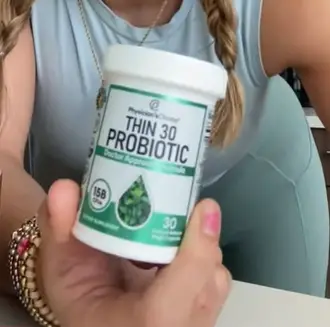
- Thin 30 Probiotic vs Culturelle
Culturelle is a recognizable probiotic brand with products designed around different digestive-health needs.
When I compare the two, I see Thin 30 as more closely connected to the weight-management conversation, while Culturelle has a broader digestive-health identity.
For someone who wants a probiotic primarily for general digestive support, a conventional digestive-health product may be easier to understand.
For someone specifically attracted to the Thin 30 concept, the positioning may be more appealing.
The key question for me isn’t which name sounds better. It’s which formulation fits my particular goal.
- Thin 30 Probiotic vs Align
Align is another established name in the probiotic category.
I would approach Align and Thin 30 differently because product formulations, strains, and intended uses can differ.
If digestive regularity or a particular gastrointestinal concern is my main priority, I would pay close attention to the specific strain and evidence behind the individual product rather than choosing based purely on branding.
Thin 30 may appeal more strongly to people searching for a connection between probiotics and weight management.
- Thin 30 Probiotic vs Renew Life
Renew Life has a broad range of probiotic products with different formulations and intended uses.
That variety can be useful because consumers can select products according to their goals.
Thin 30 is appealing because its positioning is relatively straightforward for people interested in gut wellness and weight management.
However, I wouldn’t automatically assume that a product marketed toward weight-conscious consumers is more effective for fat loss than a general probiotic.
I’d compare the actual formulation, dosage, strains, storage requirements, price, and my individual needs.
- Thin 30 Probiotic vs Physician’s Choice
Physician’s Choice is another brand frequently encountered in the probiotic category.
This comparison is particularly relevant because consumers may encounter different Physician’s Choice products with different formulations and purposes.
When comparing products, I wouldn’t judge them based solely on the company name.
I’d examine the specific supplement.
The number of strains, organisms included, serving instructions, quality controls, expiration information, and intended purpose are more useful factors.
If a product is marketed around digestive wellness while another emphasizes weight management, I would still investigate the actual formulation before deciding.
- Thin 30 Probiotic vs Generic Probiotic Supplements
Generic probiotics can be less expensive, but cheaper doesn’t automatically mean better value.
I have found that comparing probiotics based only on the number of colony-forming units can be misleading.
A larger number isn’t automatically superior.
The specific microorganisms, formulation, manufacturing practices, stability, storage, and intended use all matter.
Thin 30 may be worth considering if its formulation and purpose align with what you’re looking for, but I wouldn’t pay extra merely because the product has a weight-focused name.
Also Read: Is Digestive Advantage Probiotic Worth It?
Frequently Asked Questions (FAQ)
It may complement a healthy weight-management routine, but it should not be considered a standalone weight-loss solution.
Results can vary by person, and any benefits should be evaluated realistically rather than assuming guaranteed weight loss.
Follow the product label; taking it consistently at the recommended time is more important than choosing a particular hour.
There is no probiotic proven to specifically target belly fat. Overall diet, activity, and energy balance matter much more.
Wrapping Up
I would consider buying Thin 30 Probiotic if I wanted a convenient probiotic supplement to complement my digestive-health and weight-management routine.
I would not buy it expecting instant weight loss or targeted belly-fat reduction. For me, the smarter approach is to combine a probiotic with nutritious food, adequate fiber and water, regular exercise, and realistic expectations.
If you’re comfortable with that approach, Thin 30 could be a reasonable product to investigate from a reputable selle
Recent Posts
I tried Meltoway Hair Dissolving Cream because I wanted a quick way to deal with unwanted body hair without reaching for a razor every few days. If you are looking for a convenient at-home...
If you’re considering a saffron-based supplement to support mood, appetite control, and everyday wellness, Happy Saffron Plus is worth considering.I like that it takes a familiar botanical...