
The WonderQuest Microscope promises an entertaining way to explore microscopic details, especially for children and curious beginners.
However, attractive specifications and promotional claims don’t automatically make a product worth purchasing.
After examining its advertised features, pricing, customer feedback, and potential limitations, I have reservations about recommending it.
If you’re looking for a dependable microscope, I suggest comparing established alternatives before spending your money.
My First Experience With WonderQuest Microscope
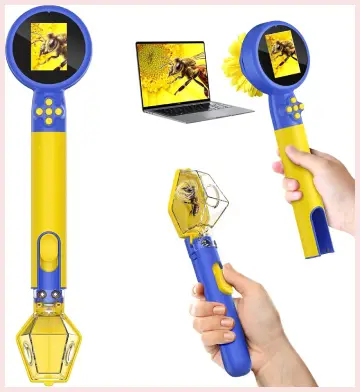
When I first came across the WonderQuest Microscope, its concept immediately caught my attention.
A portable digital microscope that allows children to examine insects, leaves, fabrics, coins, and other everyday objects sounds like an excellent educational tool.
Instead of simply reading about microscopic structures in a textbook, children can observe them directly and develop a stronger interest in science.
However, I believe there’s a considerable difference between an appealing product advertisement and a microscope that consistently delivers dependable results.
I approached this review by examining the product’s advertised specifications, available customer feedback, purchasing information, and the practical expectations someone should have before buying an inexpensive digital microscope.
I haven’t personally conducted a hands-on laboratory test of this particular device, so I won’t pretend that I have used it for weeks or independently verified its image quality.
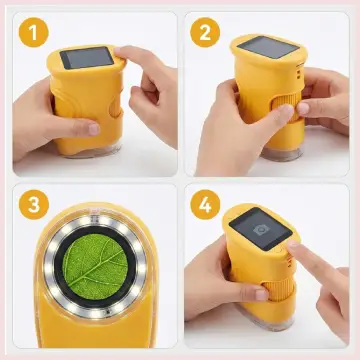
The WonderQuest 4K Discovery Microscope is marketed as a handheld digital microscope. Its advertised features include adjustable magnification, an integrated display, LED illumination, and photo and video capture capabilities.
The company promotes magnification reaching approximately 1000x, making the device sound suitable for exploring small objects and microscopic details.
On paper, these features look attractive.
Imagine giving a child the opportunity to examine the surface of a leaf, inspect the fibers in a piece of clothing, or observe the texture of a coin. These activities can turn an ordinary afternoon into an interesting science experiment.
The built-in screen is another appealing feature. Traditional microscopes generally require users to look through an eyepiece, whereas a digital microscope displays an enlarged image on a screen. This can make group activities easier because several people can observe the same subject.
Nevertheless, I wouldn’t automatically interpret a 4K marketing claim or a 1000x magnification specification as evidence of professional-quality performance. Digital image resolution, actual optical magnification, focus quality, lighting, and sensor performance are different things.
A device can advertise impressive numbers without delivering equally impressive practical results.
I also paid attention to the customer feedback available through shopping platforms. The feedback isn’t entirely negative, and some purchasers describe enjoyable experiences. However, mixed ratings, questions about value, and uncertainty surrounding product expectations are reasons I would investigate further before ordering.
One particularly important consideration is whether the product delivers consistent performance across different types of objects. A microscope that works reasonably well for examining coins might not necessarily provide the clarity needed for studying prepared biological slides.
I would also consider the purchasing experience. Shipping times, return arrangements, warranty coverage, replacement availability, and customer support can significantly affect overall satisfaction.
For me, these factors matter just as much as the advertised specifications.
My overall impression is that WonderQuest has an interesting concept, but I don’t see enough independently established evidence to recommend it confidently over better-known microscope manufacturers.
If you’re purchasing a microscope for a child, student, collector, or serious hobbyist, I would rather invest in a product with clearer specifications, a stronger track record, and dependable after-sales support.
Pros Of The WonderQuest Microscope

- Convenient Digital Viewing
One of the most interesting features is its digital viewing approach.
I appreciate products that make science less intimidating for beginners.
Looking through a traditional microscope can sometimes feel uncomfortable, particularly for younger children who haven’t developed the coordination needed to position their eyes correctly.
A built-in display provides a more approachable alternative.
Children can look at the screen while adjusting the microscope, making the experience potentially more comfortable. Parents can also observe the same image without needing to take turns looking through an eyepiece.
This is particularly useful for family activities and introductory science demonstrations.
However, the usefulness of this feature depends on screen quality, image stability, and how well the camera handles different lighting conditions.
- Portable Design
Portability is another potential advantage.
A handheld microscope can be easier to carry than a traditional laboratory microscope. Children can use this type of device to examine objects around the house, in the garden, or during outdoor activities.
For example, you could encourage a child to collect a few leaves and compare their surface textures.
You could also examine fabric fibers, paper, salt crystals, and other everyday materials.
This flexibility makes the general category of handheld digital microscopes attractive to families who want educational activities without setting up a dedicated science station.
Still, I would check the actual dimensions, weight, construction materials, and included protective accessories before assuming that this particular model is suitable for frequent outdoor use.
- LED Illumination
Lighting is extremely important when using a microscope.
Even a reasonably capable camera can produce disappointing images when the subject isn’t illuminated properly.
WonderQuest advertises an eight-LED lighting arrangement. Adjustable illumination can help users examine objects with different surface characteristics.
For example, examining a translucent object may require different lighting from inspecting a metallic coin.
Having multiple lighting options is therefore potentially useful.
However, the number of LEDs alone doesn’t establish illumination quality. Brightness control, light distribution, reflections, and color accuracy also matter.
- Photo and Video Capture
The advertised ability to capture images and videos is another appealing feature.
I think recording observations can make microscopy more engaging, especially for children completing school projects.
Instead of simply looking at an object and moving on, users can save an image and compare different observations.
For example, a child might photograph several types of fabric and discuss how their fibers appear different.
This can encourage observation, documentation, and critical thinking.
Nevertheless, buyers should verify whether a memory card is included, what recording resolution is actually supported, and whether transferring files to another device is straightforward.
Cons Of The WonderQuest Microscope
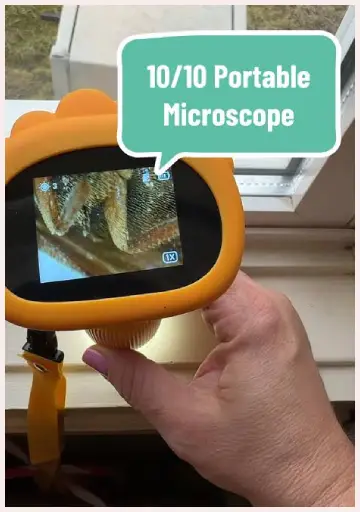
- Uncertainty About Actual Image Quality
Image quality is probably my biggest concern.
A microscope needs to produce clear, focused images. Otherwise, even an impressive magnification specification becomes relatively meaningless.
The advertised 4K terminology may sound convincing, but customers should establish whether it refers to the actual image sensor, recorded output, display, or another part of the digital system.
These specifications shouldn’t be treated as interchangeable.
I would also want to see independent sample images taken at different magnification settings.
Without those examples, it’s difficult to determine whether the microscope can consistently reveal the details buyers expect.
- Magnification Claims Can Be Misleading
The advertised 1000x magnification is another specification I would approach carefully.
High magnification doesn’t automatically mean high resolution.
Optical quality determines how much useful detail a microscope can reveal. Increasing digital enlargement can make an image appear bigger without revealing additional information.
This distinction is particularly important for anyone planning to study biological specimens.
If you’re expecting professional laboratory-level observations, a budget handheld digital microscope may not be the right choice.
- Uncertain Long-Term Durability
A portable device intended for children needs to withstand regular handling.
It may be carried around, placed on different surfaces, or accidentally knocked over.
I would want stronger independent evidence regarding the durability of its housing, display, focusing mechanism, buttons, and charging connection.
The presence of protective materials or a child-friendly design doesn’t automatically establish long-term reliability.
Before ordering, I would carefully check whether the warranty covers mechanical problems, display failures, and charging issues.
- Unclear Overall Value
The advertised price is another consideration.
The WonderQuest website has listed the 4K Discovery Microscope at approximately $49.99, with a higher crossed-out reference price. Promotional bundles and additional accessories may change the final checkout amount.
At that price, buyers have several competing options in the digital microscope category.
I would compare the complete cost, including shipping, memory cards, accessories, and warranty coverage.
A low introductory price doesn’t necessarily represent good value if the product doesn’t meet your expectations.
- Not a Replacement for a Laboratory Microscope
This is an important limitation.
A handheld digital microscope and a traditional compound microscope serve different purposes.
If you’re a student studying cell structures, a science enthusiast examining prepared specimens, or someone who needs repeatable laboratory observations, a dedicated compound microscope is generally a more appropriate investment.
WonderQuest’s portable design may be convenient for casual exploration, but I wouldn’t purchase it expecting professional laboratory functionality.
Maintenance For A WonderQuest Microscope
- Keep the Lens Clean
The lens is one of the most important parts of a microscope.
Dust, fingerprints, and small particles can interfere with image clarity.
I recommend using a clean microfiber lens cloth to remove fingerprints and surface dust.
Avoid using paper towels, clothing, or rough materials because they may scratch delicate optical surfaces.
If additional cleaning is necessary, use an appropriate optical cleaning solution according to the manufacturer’s instructions.
Never spray liquid directly onto the microscope.
- Protect the Display
Digital microscopes depend on their screens to provide a useful viewing experience.
Scratches, pressure damage, and accidental impacts can make the display difficult to use.
I would keep the device in a padded storage case whenever it isn’t being used.
Avoid placing heavy objects on top of it, and don’t allow children to throw it into a backpack without protection.
A protective screen covering may also be worth considering if the manufacturer confirms compatibility.
- Charge the Battery Properly
Battery care is particularly important for portable electronics.
Use the recommended charging cable and power source.
Avoid exposing the device to excessive heat while charging.
I would also avoid leaving it connected unnecessarily for extended periods unless the manufacturer’s instructions specifically permit that practice.
If the battery begins losing capacity unusually quickly, contact the seller rather than attempting to open the device yourself.
- Store It Away From Moisture
Microscopes contain electronic components that can be damaged by moisture.
Never use the device with wet hands or place it on a damp surface.
If you’re examining outdoor objects, make sure the surrounding area is dry.
After using the microscope outside, inspect the housing for moisture and dust before putting it away.
A dry storage location is preferable to a humid bathroom, kitchen counter, or exposed outdoor shelf.
- Handle the Focusing Mechanism Carefully
The focusing mechanism requires gentle handling.
Avoid forcing the adjustment wheel when it becomes difficult to turn.
Move it gradually until the image becomes clearer.
If the mechanism feels unusually stiff, stop and inspect the device for visible obstructions.
Applying excessive pressure can potentially damage small mechanical components.
- Avoid Excessive Heat and Direct Sunlight
Electronic microscopes should be stored away from direct sunlight and excessive temperatures.
Heat can affect battery performance and electronic components.
I would avoid leaving the microscope inside a hot vehicle or near heating equipment.
A cool, dry storage cabinet is generally a better choice.
- Check the USB Connection
If your microscope supports USB file transfers or charging, inspect the connection periodically.
Dust and debris can interfere with connectivity.
Disconnect cables gently rather than pulling them by the wire.
If the connection becomes unreliable, try an appropriate replacement cable before assuming that the microscope itself is defective.
- Organize Captured Images
Photo and video files can accumulate quickly.
I recommend transferring important observations to a computer or another secure storage location.
Create separate folders for different experiments.
For example, you could organize photographs into categories such as plants, insects, fabrics, coins, and prepared slides.
This makes it easier to compare observations and prevents unnecessary storage problems.
Comparison Of WonderQuest Microscope With Other Brands
- WonderQuest vs. AmScope
AmScope is a well-established name in the microscope category.
Its product range includes educational microscopes, compound microscopes, stereo microscopes, and digital microscope solutions.
The main advantage of considering AmScope is the availability of different microscope configurations for different applications.
For students, a compound microscope may be more appropriate than a handheld digital model.
For hobbyists, a stereo microscope can provide a more practical way to examine larger objects.
Compared with WonderQuest, AmScope is the brand I would investigate first if I wanted a microscope for structured educational use.
However, the right choice depends on the specific model and its specifications. Not every AmScope product is automatically superior for casual portable exploration.
- WonderQuest vs. Celestron
Celestron is another established manufacturer with products covering astronomy and microscopy.
Its microscope offerings include digital and traditional educational options.
What makes Celestron worth considering is its broader experience in optical equipment.
I would compare its microscope models when looking for an alternative with clearly documented specifications and an established product range.
WonderQuest emphasizes a compact, child-friendly digital experience.
Celestron offers more variety for people who may eventually want to move beyond casual exploration.
For someone purchasing a microscope for ongoing educational activities, I would lean toward investigating Celestron before committing to WonderQuest.
- WonderQuest vs. OMAX
OMAX is worth considering for students, hobbyists, and users who want more traditional microscope functionality.
Its product range includes compound and digital microscopes.
I particularly like the idea of choosing a microscope based on the actual work you intend to perform rather than buying something simply because its marketing sounds impressive.
If your goal is examining prepared slides, studying biological specimens, or conducting more structured observations, an appropriate OMAX compound microscope may be a better match.
WonderQuest may appear more approachable for casual handheld exploration, but it doesn’t automatically offer the optical capabilities of a dedicated compound microscope.
- WonderQuest vs. Plugable
Plugable is another brand worth researching when considering digital microscopy.
Its digital microscopes are designed around computer-connected viewing and inspection.
This can be useful for examining electronics, small mechanical components, coins, and other objects.
One difference is the overall viewing experience.
WonderQuest promotes a self-contained handheld format, whereas computer-connected microscope designs may depend on a compatible computer or display.
If you already have a computer available and prefer viewing larger images, I would investigate Plugable’s digital microscope options.
For casual outdoor exploration, however, a standalone handheld model may be more convenient.
Is Wonderquest A Legitimate Microscope Brand?
WonderQuest has an identifiable online storefront and lists several microscope products.
However, the existence of an online store doesn’t independently establish the company’s manufacturing background, product quality, or customer-service reliability.
I would want to verify the business’s contact information, return address, warranty terms, and independent customer experiences before placing an order.
I would also distinguish between legitimate product availability and whether a particular device offers good value.
Those are two different questions.
My advice is to avoid making a purchase based exclusively on promotional testimonials or countdown discounts.
Frequently Asked Questions (FAQ)
I wouldn’t confidently recommend it. Although its advertised features are appealing, I would compare image quality, verified customer experiences, warranty coverage, and competing models before spending money.
WonderQuest operates an identifiable online storefront, but buyers should independently verify its business information, return policy, and customer support before ordering. An online presence alone doesn’t guarantee product reliability.
The WonderQuest 4K Discovery Microscope has been advertised for approximately $49.99, compared with a higher reference price of $99.99. Promotional pricing, shipping, and additional accessories can affect the final cost.
There isn’t one universal winner. AmScope and OMAX are worth considering for traditional educational microscopes, while Celestron and Plugable offer alternatives for different optical and digital applications. Your intended use should determine your choice.
Final Verdict
After examining the WonderQuest Microscope’s advertised features, pricing, intended applications, and available customer feedback, I wouldn’t make it my first recommendation.
Its portable digital design is appealing, but I would prefer stronger independent evidence of image quality, long-term durability, and dependable customer support.
If you’re shopping for a microscope, compare established alternatives such as AmScope, Celestron, OMAX, and Plugable first. Spending a little more on a dependable model may be a better long-term decision.
Recent Posts
Plateful Warming Mat Reviews: Is This Food Warming Mat Worth Buying?
Keeping food warm without drying it out or constantly reheating it can be surprisingly difficult. That's why products like the Plateful Warming Mat have started attracting attention among people who...
HaloGrow Hair Spray Reviews: Does It Really Support Hair Growth?
Hair thinning and excessive shedding can make you feel less confident, especially when your hair no longer looks as full as it once did.HaloGrow Hair Spray promises to support healthier-looking...