
I have spent more seasons than I care to count wrestling with leaves, grass clippings, and scattered debris across my own yard, and the choice between a yard sweeper and a bagger keeps coming up every fall and every mowing cycle.
My goal here is simple: to lay out the practical differences, features, strengths, and drawbacks of both tools so you can match the right one to the size of your property, the kind of debris you face, and the amount of time you actually want to spend cleaning up.
| Aspect | Yard Sweeper | Bagger |
| Primary Job | Collects leaves, twigs, light debris across large areas | Captures grass clippings and finer debris while mowing |
| Attachment Style | Tow-behind or walk-behind hopper | Mounted directly on mower deck |
| Capacity | Often 10–26 cubic feet | Usually 2–6 bushels or dual bags |
| Best For | Heavy leaf fall, pine needles, scattered trash | Regular grass clippings, light leaf pickup |
| Power Source | Ground-driven or powered by tractor/mower | Driven by mower blades or separate motor |
| Cleanup Speed | Fast over open ground | Happens during the mow itself |
| Storage Footprint | Bulky hopper and frame | Compact bags or rear-mounted unit |
| Terrain Flexibility | Handles uneven ground better when towed | Limited by mower maneuverability |
Key Differences Between The Yard Sweeper And Bagger
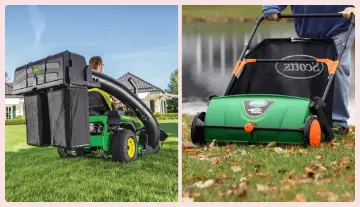
- Collection method: A yard sweeper relies on mechanical brushes that actively lift material into the hopper, and a bagger depends on air velocity created by the mower blades.
This means the sweeper works whether the grass is cut or not, while the bagger only functions while the mower runs and cuts.
- Coverage area per pass: Sweepers cover a wide path that often reaches 36 to 48 inches and keep rolling steadily.
Baggers stay limited to the width of the mower deck, so the sweeper finishes faster on open ground when the job is pure cleanup.
- Debris size tolerance: Sweepers handle twigs, small pine cones, and even light trash without choking, whereas baggers clog quickly on anything larger than a leaf or grass blade.
I once tried to bag a heavy oak leaf fall and spent more time clearing the chute than mowing.
- Independence from cutting: I can run the sweeper any time, even after the grass is already cut or in winter when nothing grows.
The bagger remains tied to the mowing schedule, so it cannot help with pure cleanup days.
- Dumping style: Most sweepers tip the entire hopper at once with a simple lever, and baggers require lifting individual bags or unzipping a large rear bag.
The sweeper wins on pure volume handling because the process stays faster and less physical.
Key Features Of Yard Sweepers
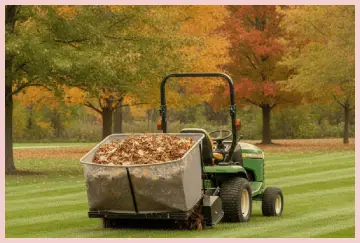
- Adjustable brush height: This lets me raise the brushes for dry leaves or drop them for wet mats, and I change the setting two or three times in a single session depending on conditions. The adjustment keeps the turf safer while still grabbing the debris.
- Large hopper capacity: My 26-cubic-foot model holds enough to clear most of the front yard before I need to dump, which cuts the number of trips dramatically. Bigger hoppers simply reduce the constant stopping that smaller tools force.
- Ground-driven or powered options: Basic models use the wheels to turn the brushes, yet higher-end ones have a powered brush that keeps spinning even when I slow down for corners. Powered versions cost more but work better on slopes where speed changes often.
- Tow hitch compatibility: The design fits most lawn tractors and many ATVs, and I switched hitches once without any lasting trouble. This flexibility lets the same sweeper serve different machines over the years.
- Mesh or solid hopper sides: Mesh lets dust and fine particles fall through so the hopper stays lighter, while solid sides hold everything including grass seed and fine dirt. I prefer mesh for dry days and solid when I want total collection.
Pros Of Yard Sweepers
- Speed on large open areas: I can clear an acre of moderate leaf cover in the time it used to take me to bag half of it, and the continuous motion is the biggest time saver. Open ground rewards the wide path and steady rolling action.
- Handles mixed debris: Leaves, pine needles, small sticks, and even the occasional paper wrapper all go into the hopper without drama. The brushes keep working through varied material that would stop a bagger cold.
- Works independently of mowing: After a wind storm I can clean up without firing up the mower deck, and that flexibility matters when the grass does not need cutting. Pure cleanup days become far simpler with this separation.
- Lower clogging risk: Brushes keep turning even if a few wet leaves stick, so I still stop for thick mud but far less often than with a bagger. Mechanical action proves more forgiving than airflow systems.
- Simple mechanical design: Fewer parts break over time, and my first sweeper lasted eight seasons with only brush replacements. Basic construction reduces long-term repair costs and downtime.
Cons Of Yard Sweepers
- Storage size: The hopper and frame take up real space in the shed, and I have to hang the brushes or store the whole unit on end to free up floor room. Compact properties feel the bulk more than larger properties do.
- Less effective on very short or delicate grass: The brushes can scuff soft turf if I set them too low, and I learned to raise them after the first spring damage. Careful height control becomes necessary on tender lawns.
- Requires a tow vehicle: The tool is useless if all you own is a walk-behind mower, and that alone rules it out for many small yards. Ownership of a tractor or riding mower is almost mandatory.
- Can leave streaks if speed is inconsistent: Driving too slow or too fast in spots creates uneven pickup, yet overlapping passes fix it after some practice. Steady throttle control improves results quickly.
- Higher upfront cost for quality models: A solid tow-behind unit costs more than most bagger kits, although the time savings eventually cover it. The initial check still feels noticeable for budget-conscious buyers.
Key Features Of Baggers
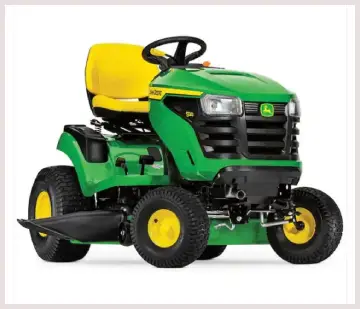
- High-velocity discharge chute: It is designed to keep clippings moving even when the grass is slightly damp, although it still clogs if the material turns heavy or the blades grow dull. Regular chute checks keep the system reliable during longer sessions.
- Dual or triple bag systems: These spread the weight and give more total capacity, yet emptying still means handling each bag separately. The extra volume helps on larger lawns where single bags fill too quickly.
- Easy-on, easy-off mounting: Most modern systems latch on in under a minute, and I leave mine attached for the entire growing season before removing it only for mulching days. Quick changes make switching between modes practical.
- Fill indicators or transparent panels: Some bags include a window so I can see when they are nearly full, and that small detail saves me from overfilling and tearing the fabric. Visible levels prevent the mess of a sudden overflow.
- Compatible with mulching kits: Many decks let me swap between bagging and mulching without tools, so I keep both options ready. This dual capability covers different grass conditions without buying extra equipment.
Pros Of Baggers
- Clean finish while mowing: No clippings left behind means the lawn looks finished the moment I stop, and neighbors often notice the difference. One-pass results keep the surface tidy without extra effort.
- Reduces thatch buildup: Removing the bulk of the clippings keeps the soil surface cleaner and helps water and air reach the roots. Long-term lawn health improves when excess material stays out of the thatch layer.
- Convenient for weekly maintenance: On a regular mowing day I never have to make a second pass for cleanup, so everything happens in one trip. Routine care stays shorter and simpler with this approach.
- Good for light leaf seasons: Early fall or light maple drop is easily handled without switching tools, and the bagger manages thin layers while the grass is cut. Seasonal transitions feel smoother under these conditions.
- Compact storage when removed: Bags fold or hang, and the chute stores in a small footprint that is easier than parking a full sweeper. Shed space remains more available during the off-season.
Cons Of Baggers
- Limited capacity forces frequent stops: On a thick lawn or after a rainy week the bags fill fast, and those stops add noticeable time to every mowing session. Larger properties feel the interruption more strongly.
- Clogs with wet or heavy material: Once leaves get damp the chute packs solid, so clearing it means shutting down, removing the chute, and digging by hand. Moisture turns a smooth job into repeated interruptions.
- Adds weight and changes mower balance: Dual bags on the rear can make the front end light on slopes, and I have to adjust driving style while sometimes adding front weights. Slope work requires extra attention for safety and control.
- Does almost nothing for large debris: Twigs and acorns either bounce off or jam the system, so I still need a rake or blower for those. The bagger stays specialized for finer material only.
- Wear on the mower deck and belts: The extra load of moving air and material shortens belt life if the system is not maintained, and I replace belts more often when bagging heavily. Ongoing care becomes part of the routine.
Choosing Based On Yard Size And Debris Type
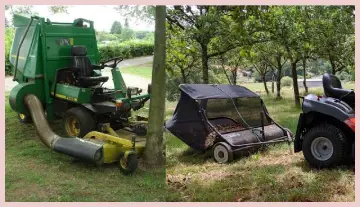
If your property is under a quarter acre and the main job is weekly grass, a bagger is usually enough.
I used only a bagger for years on a smaller lot and never felt the need for more. Once the yard grew past half an acre and oak trees started dropping heavy loads every October, the sweeper became non-negotiable.
The sweeper shines when the debris is already on the ground and you just want it gone fast. The bagger shines when you want the clippings gone the moment they are cut.
I keep both now. The bagger stays on the mower from spring through early fall. When the heavy leaf drop starts I switch to the sweeper and leave the bags in the shed.
That combination covers almost every situation I face.
Maintenance Realities I Wish Someone Had Told Me Earlier
Brush replacement on the sweeper is straightforward but messy. The old brushes shed bristles everywhere, so I do it outside on a tarp. Hopper fabric eventually tears at the stress points, and a heavy-duty repair kit or a full replacement hopper is worth keeping on hand.
For the bagger the main jobs are clearing the chute after every few uses, checking the bags for holes, and making sure the mounting hardware stays tight.
Dull mower blades kill bagging performance faster than anything else, so I sharpen more often when the bags are on.
Neither tool likes wet conditions. Wet leaves pack into both systems and turn into heavy, sticky masses. I wait for a dry afternoon whenever possible. If I have no choice, I make shorter passes and empty more often.
Cost And Longevity Observations
A decent bagger kit for a common riding mower runs less than a quality tow-behind sweeper.
Over five or six seasons the sweeper has saved me enough time that the extra cost feels justified. Cheap sweepers with thin brushes and flimsy hoppers wear out in two or three seasons. Spending more once has been cheaper for me than replacing budget gear repeatedly.
The same rule applies to bagger bags. Reinforced fabric lasts far longer than the thin stuff that comes with entry-level kits.
Frequently Asked Questions (FAQ)
Yes if you deal with heavy leaf fall or large open areas. The time savings on big cleanups usually pay for the tool within a couple of seasons.
Mulching returns nutrients and is faster when the grass is dry and not too long. Bagging is better when you want a cleaner look or the clippings are excessive.
For regular mowing on medium to large lawns, yes. It keeps the surface tidy and reduces thatch without a second pass.
It will handle light, dry leaf cover while you mow. Thick or wet leaves quickly overwhelm the system and cause clogs.
Final Thoughts
I started this comparison because I kept second-guessing which tool belonged in my shed.
After years of using both I can say the right answer depends on what your yard throws at you most often.
If leaves and mixed debris dominate, the yard sweeper will change how you feel about cleanup days.
If clean grass clippings and a finished look after every mow matter more, the bagger stays the practical choice. You might even end up like me and keep both so you can match the tool to the season.
Either way, once you stop fighting the debris with the wrong equipment, the whole process gets shorter and a lot less frustrating.
Recent Posts
Mojo Flow Bracelet may look like an attractive wellness accessory, but its promises deserve careful consideration before you spend your money. After examining its advertised benefits,...
If you want a spacious, comfortable sofa without spending a fortune on luxury furniture, the IKEA KIVIK sofa deserves your attention. I like its generous seating, modern appearance, washable...