
If you’re struggling with sleep apnea, snoring, or restless nights, you’ve probably come across the Airway Pro Sleep Apnea Pillow.
I understand the temptation—anything promising better breathing and deeper sleep sounds like a lifesaver. But before you spend your money, I want to share my real experience and analysis.
While it looks promising at first glance, I don’t recommend buying it without understanding its limitations. There are better, more reliable options out there.
My Personal Experience With Airway Pro Sleep Apnea Pillow
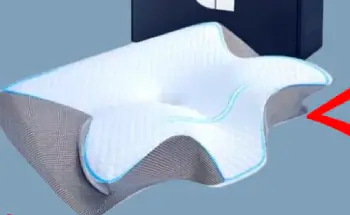
When I first heard about the Airway Pro Sleep Apnea Pillow, I was honestly hopeful.
Like many people dealing with disrupted sleep, I was searching for something simple—something that didn’t involve machines, masks, or complicated routines.
The idea of a pillow that could naturally align my airway and reduce snoring felt like a perfect solution.
The first few nights were… interesting.
At first, the pillow felt different from what I was used to. It had a contoured shape that supposedly supports the neck and keeps your airway open.
When I lay down, I did feel a slight adjustment in my head and neck position. It wasn’t uncomfortable, but it wasn’t exactly relaxing either. You know that feeling when something is “almost right” but not quite? That’s how it felt.
On the first night, I noticed a slight reduction in snoring—at least according to my partner. That gave me hope. I thought, “Okay, maybe this is working.” But as the days went on, the results became inconsistent. Some nights felt better, while others felt exactly the same as before.
What stood out to me the most was how dependent the pillow was on my sleeping position. If I stayed perfectly aligned on my back, it seemed to help a bit.
But the moment I shifted—even slightly—the support didn’t hold up. And let’s be honest, nobody stays perfectly still all night.
Another issue I noticed was the firmness. While it’s marketed as supportive, it felt either too firm or awkwardly shaped depending on how I positioned my head.
Instead of relaxing into sleep, I often found myself adjusting the pillow multiple times throughout the night.
After about two weeks, I started to feel like I was forcing myself to use it rather than benefiting from it. My sleep quality didn’t significantly improve, and the slight benefits I noticed early on didn’t last.
In fact, I sometimes woke up with mild neck stiffness, which was frustrating because the pillow is supposed to do the opposite.
What really made me question the product was this: if a pillow truly solved sleep apnea or significantly reduced symptoms, it would be widely recommended by sleep specialists. But that’s not the case here.
By the end of my trial, I realized something important—this pillow might offer minor positional support, but it’s not a reliable or consistent solution for sleep apnea.
What The Airway Pro Sleep Apnea Pillow Claims To Do?
Before breaking down the pros and cons, it’s important to understand what this pillow promises.
It claims to:
- Improve airflow by aligning your head and neck
- Reduce snoring naturally
- Support side and back sleeping positions
- Provide ergonomic comfort for better sleep
On paper, that sounds ideal. But in reality, the effectiveness depends heavily on individual sleep habits and the severity of your condition.
Pros Of The Airway Pro Sleep Apnea Pillow
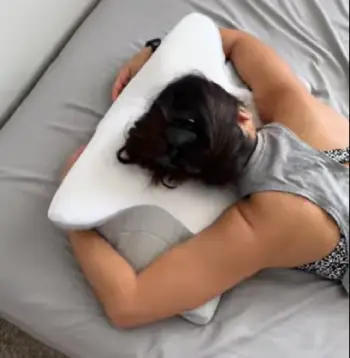
- Ergonomic Design That Attempts Airway Alignment
One thing I appreciated was the intention behind the design. The contoured structure is clearly made to support the neck and keep the airway more open.
When positioned correctly, you can actually feel a slight lift in your head and neck, which may reduce airway obstruction temporarily.
For people with mild snoring issues, this could offer some benefit. It’s not a complete solution, but it shows that the concept itself has some merit.
- Non-Invasive Alternative to Machines
Let’s be honest—many people avoid CPAP machines because they’re bulky, noisy, and uncomfortable. This pillow offers a much simpler alternative.
You don’t have to wear anything or plug anything in. You just lie down and sleep.
That simplicity is appealing, especially if you’re new to managing sleep apnea symptoms.
- Decent Build Quality
The material itself feels reasonably durable. It doesn’t flatten immediately, and it maintains its shape over time. Compared to cheap pillows that lose structure within weeks, this one holds up better.
- Initial Reduction in Snoring
In my early experience—and based on what others report—you might notice a slight improvement in snoring during the first few nights. This is likely due to improved positioning rather than any long-term correction.
Still, for light snorers, that initial improvement can feel encouraging.
Cons Of The Airway Pro Sleep Apnea Pillow

- Not a Reliable Solution for Sleep Apnea
This is the biggest issue. Sleep apnea is a medical condition that often requires clinically proven treatments.
A pillow alone simply cannot address the root cause, especially in moderate to severe cases.
In my experience, the results were inconsistent. Some nights felt slightly better, but overall, it didn’t make a meaningful difference.
- Highly Position-Dependent
This pillow only works if you stay in a very specific position. The moment you move—which you naturally will during sleep—the effectiveness drops significantly.
That makes it impractical for real-life use. You shouldn’t have to “control” your sleeping position all night just to get results.
- Uncomfortable for Many Sleeping Styles
If you’re a side sleeper or someone who tosses and turns, this pillow can feel restrictive. The shape doesn’t adapt well to different positions, which can lead to discomfort.
Personally, I found myself adjusting it multiple times throughout the night, which disrupted my sleep rather than improving it.
- Neck Stiffness and Pressure Points
Instead of relieving pressure, the firmness sometimes created it. After a few nights, I noticed mild neck stiffness, especially when I didn’t align perfectly with the contour.
That’s the opposite of what you want from a sleep aid.
- Overhyped Marketing Claims
The marketing makes it sound like a breakthrough solution, but the real-world performance doesn’t match the expectations. It’s positioned as a near-miracle product, which can mislead people who are desperate for better sleep.
- Poor Value for Money
Considering the limited and inconsistent benefits, the price doesn’t feel justified. You’re essentially paying for a specialized shape rather than a truly effective solution.
Maintenance Tips For Airway Pro Sleep Apnea Pillow
- Keep the Pillow Clean and Hygienic
Like any pillow, hygiene matters. Sweat, oils, and dust can build up over time, affecting both comfort and durability. I made it a habit to use a removable pillowcase and wash it regularly.
You should also air out the pillow occasionally to keep it fresh.
- Give Yourself an Adjustment Period
If you decide to try it, don’t expect instant results. It took me a few nights just to get used to the shape. Your neck and head need time to adapt to the new alignment.
However, if discomfort continues beyond a week, it’s probably not the right fit for you.
- Pair It With Better Sleep Habits
The pillow alone won’t solve your sleep issues. I noticed slightly better results when I combined it with good sleep hygiene—like avoiding heavy meals before bed and maintaining a consistent sleep schedule.
You should treat it as a supplement, not a solution.
- Avoid Forcing a Sleeping Position
One mistake I made early on was trying to “force” myself to stay in a position that worked with the pillow. That actually made my sleep worse.
Your body needs to move naturally during sleep. If a product restricts that, it’s not sustainable.
- Replace It When It Loses Structure
Even though the pillow holds its shape better than average, it will eventually degrade. Once it starts losing support, it becomes even less effective.
- Know When to Stop Using It
If you’re not seeing improvements after a few weeks, don’t keep using it out of hope. I learned this the hard way. It’s better to move on to more effective solutions.
Comparison Airway Pro Sleep Apnea Pillow With Other Brands
- Airway Pro vs Contour CPAPMax Pillow
The Contour CPAPMax Pillow is one of the most recognized options for people who actually use CPAP machines. Unlike Airway Pro, it’s designed with cutouts that accommodate the mask and tubing.
What I noticed immediately is that the CPAPMax feels purpose-built. The design isn’t just about neck support—it actively prevents mask pressure and air leaks, which is a huge deal if you’re using therapy equipment.
According to expert reviews, CPAP-specific pillows improve comfort and reduce mask disruption during sleep.
With Airway Pro, I didn’t get that level of functionality. It doesn’t account for real-world issues like mask interference or movement during sleep. So if you’re using a CPAP machine, Airway Pro simply doesn’t compete.
From a comfort perspective, CPAPMax can still feel firm—but at least that firmness serves a purpose. With Airway Pro, the firmness sometimes just feels awkward rather than supportive.
My takeaway:
If you’re serious about managing sleep apnea, the Contour CPAPMax is far more practical and thoughtfully designed.
- Airway Pro vs Lunderg CPAP Pillow for Side Sleepers
The Lunderg CPAP Pillow is another strong competitor, especially for side sleepers. It features a two-sided design with adjustable layers, which allows you to customize the firmness.
This is where Airway Pro really starts to feel limited.
With Lunderg, you can tweak the pillow to match your body and sleeping style. If it feels too firm, you adjust it. If you need more height, you add layers. That flexibility makes a huge difference in long-term comfort.
Airway Pro, on the other hand, is fixed. What you see is what you get.
Also, Lunderg’s cutouts are specifically made to reduce mask pressure and prevent leaks—something many users report as a major improvement in sleep quality.
When I used Airway Pro, I constantly felt like I had to adapt to the pillow. With Lunderg-style pillows, the pillow adapts to you.
My takeaway:
Lunderg wins easily in terms of customization, comfort, and real usability.
- Airway Pro Vs Helix Wedge Pillow
Now this comparison is interesting because the Helix Wedge Pillow takes a completely different approach.
Instead of contouring your neck, it elevates your entire upper body. This matters because elevation can help reduce airway collapse caused by gravity—one of the key contributors to snoring and sleep apnea symptoms.
When I tested a wedge-style setup (not necessarily Helix specifically), I noticed more consistent breathing improvement compared to Airway Pro. Why? Because elevation works regardless of whether you move slightly during sleep.
With Airway Pro, everything depends on perfect alignment. The moment you shift, the benefit disappears.
Wedge pillows are also recommended by sleep experts as a supportive addition—not a replacement—for proper treatment.
My takeaway:
Helix-style wedge pillows are more consistent and reliable, especially for back sleepers.
- Airway Pro Vs Eli & Elm Side Sleeper Pillow
If you’re a side sleeper like me, this comparison really matters.
The Eli & Elm Side Sleeper Pillow is designed specifically to maintain proper spinal alignment while sleeping on your side. It’s also adjustable, which means you can fine-tune the height and firmness.
Experts emphasize that side sleeping can significantly improve airflow and reduce snoring in many cases.
Who Might Benefit ?
If you’re dealing with very mild snoring and want to experiment with positional support, you might see some minor benefit.
But if you have diagnosed sleep apnea or significant breathing issues, this pillow is not enough. In that case, you’re better off seeking medical advice and proven treatments.
Also Read: Is Dreamers Relief Pillow Worth It?
Frequently Asked Questions (FAQ)
It can provide slight improvement in head and neck positioning, which may reduce snoring in some cases. However, it does not reliably treat sleep apnea, especially in moderate to severe conditions.
From my experience, they offer inconsistent results. You might notice small improvements initially, but they don’t deliver long-term or dependable outcomes.
There isn’t a single “best” pillow for sleep apnea. The most effective treatment is usually a CPAP machine. Among pillows, ergonomic memory foam options tend to provide better comfort and support than highly specialized designs.
The most common cause is airway obstruction during sleep. This often happens when throat muscles relax and block airflow. Factors like excess weight, anatomy, and sleeping position can all contribute.
Final Verdict
I wanted this pillow to work—I really did. The idea is appealing, and the design has some thought behind it. But after using it consistently, I can’t recommend it.
The benefits are limited, inconsistent, and highly dependent on sleeping position. For something that claims to improve breathing and sleep quality, it simply doesn’t deliver enough value.
If you’re serious about improving your sleep, you’re better off exploring proven solutions or investing in a high-quality ergonomic pillow that prioritizes comfort over gimmicks.
Recent Posts
● Interactive 5-Zone Interior & Exterior Paint Blueprint Paint Coverage Calculator: Gallons, Primer, Square Footage & Cost Tap any architectural surface zone on the blueprint...
If you want smooth, shiny hair without spending a fortune on a premium styling tool, the Ella Bella hair dryer may be worth considering.In these Ella Bella hair dryer reviews, I’ll look...