
If you are considering Aqua Mix Grout Colorant, I would think twice before buying it.
The product has some genuinely useful features, including recoloring and sealing grout, but recurring customer complaints and the amount of preparation involved make me hesitant to recommend it.
Aqua Mix describes it as a waterborne epoxy designed to restore discolored grout and improve stain resistance, but the real-world experience can be much less straightforward.
If your goal is an easy, dependable grout makeover, I would compare alternatives before spending money on Aqua Mix.
My Personal Experience With Aqua Mix Grout Colorant
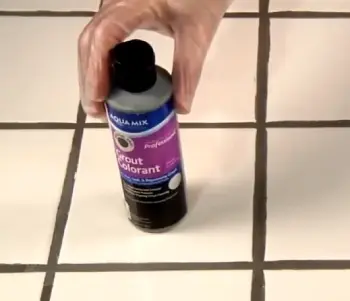
When I evaluate a grout colorant, I am not just looking at whether it can technically change the color.
I want to know whether the product makes the job easier, whether the finish looks consistent, whether it stays attractive after repeated cleaning, and whether the amount of preparation is reasonable for an average homeowner.
That is where Aqua Mix Grout Colorant becomes a mixed proposition for me.
On paper, the product sounds impressive. It is a waterborne epoxy designed to recolor and seal existing grout, and the manufacturer says it can be used on several grout types, including cement, epoxy, urethane, and single-component grout.
It also contains Microban protection intended to inhibit the growth of stain-causing mold and mildew on the cured colorant.
That sounds like exactly what I would want when an old bathroom floor or kitchen backsplash starts looking tired.
But the application process is not something I would call effortless.
The first thing I would pay attention to is surface preparation. The grout has to be clean, dry, and free from incompatible sealers or coatings.
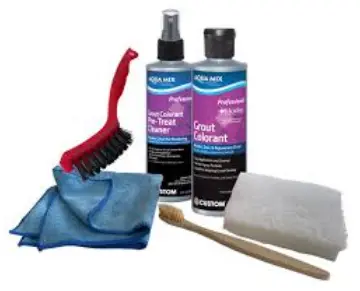
Depending on the existing grout, Aqua Mix recommends different preparation products and methods. For some surfaces, the manufacturer’s own pre-treatment cleaner is recommended to clean and lightly etch the grout so the colorant can bond properly.
In other words, I cannot simply grab the bottle, brush it over dirty grout, wipe everything down, and expect a professional finish.
I would first spend considerable time cleaning the grout lines. If the old grout contains soap residue, grease, hard-water deposits, or previous coatings, the preparation becomes even more important.
Then comes the actual application.
The manufacturer recommends shaking the product well and applying thin, even coats with an applicator brush or toothbrush. The colorant should be worked back and forth into the grout joint while keeping excess product off the tile surface. If I were changing a dark grout to a significantly lighter color, I might need more than one coat.
That sounds manageable until I imagine doing an entire tiled bathroom.
Every grout line needs attention.
Every intersection needs attention.
Every corner needs attention.
And every little mistake on the tile surface potentially creates another cleanup job.
For a small backsplash, I could tolerate that. For a large tiled floor, I would become much less enthusiastic.
Another issue is consistency. When I use a colorant, I want the finished grout to look uniform from one end of the room to the other. A patchy or uneven color immediately makes the tile installation look older rather than newer.
I also pay attention to the cleanup requirements. After the colorant has dried for the specified period, the manufacturer’s instructions call for lightly misting the surface, allowing it to stand briefly, and then removing excess colorant from the tile with water and a white nylon scrub pad.
That is an important part of the process because leaving residue on the tile can create an unattractive appearance.
The curing requirements also make me cautious. The product can become ready for surface traffic relatively quickly, but the instructions still require the area to remain dry for at least 24 hours and recommend avoiding direct scrubbing of the grout joints for 20 days to allow full curing.
That tells me something important: this is not simply a quick cosmetic touch-up.
It needs patience.
It needs preparation.
And it needs careful aftercare.
I also noticed that the manufacturer’s documentation specifically warns against solvent-based cleaners, abrasive equipment, and high-pressure washing on recolored grout.
For me, that restriction matters. If I am refreshing grout in a high-use bathroom, I want to know that regular cleaning will not turn into a complicated maintenance routine.
This is ultimately why my Aqua Mix Grout Colorant review is cautious. I can see why professionals or experienced DIY users might appreciate the product’s capabilities. However, I would not automatically recommend it to someone who simply wants to make old grout look fresh again with minimal hassle.
There are also user discussions showing concerns about colorant application on porous tile and the amount of labor involved in carefully painting grout joints.
So, if I were standing in a tile aisle deciding whether to purchase it, I would not make the decision based only on the manufacturer’s feature list. I would consider the condition of my grout, the type of tile, the size of the area, the cleaning routine I normally use, and how much time I am willing to spend on preparation.
For a tiny project, I might consider it.
For a large project, I would probably look elsewhere.
Pros Of Aqua Mix Grout Colorant
- It Can Transform the Appearance of Old Grout
The strongest argument in favor of Aqua Mix is its ability to change the visual appearance of existing grout without requiring complete grout removal.
That can be a big deal.
I have seen tile installations where the tiles themselves still look perfectly good but the grout makes everything appear dirty and dated. If the grout has darkened over time, a fresh color can make the entire room look cleaner.
This is particularly useful when the existing grout color no longer works with the tile.
- It Combines Color and Sealing
I like the idea of getting two functions from one product.
Aqua Mix says its grout colorant recolors and seals the grout while helping guard against stains.
That can reduce the need to treat the same grout with separate products.
However, I would still pay close attention to the manufacturer’s application and maintenance requirements rather than assuming that “sealed” means maintenance-free.
- It Works With Several Grout Types
Another advantage is compatibility.
The manufacturer states that Aqua Mix Grout Colorant can be used with sanded, unsanded, epoxy, urethane, and single-component grout joints.
That gives it more flexibility than a product designed for only one specific grout category.
Still, I would identify my grout type before buying rather than assuming compatibility.
- It Offers Multiple Color Choices
Color selection matters more than many people realize.
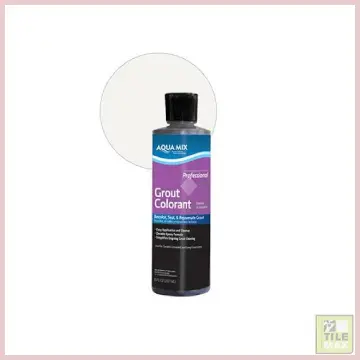
A slightly wrong grout color can completely change how tile looks. Aqua Mix offers a range of colors, including whites, grays, beige tones, browns, and darker shades.
That gives me more room to coordinate the grout with the existing tile.
- It Can Be Used for Interior and Exterior Applications
The manufacturer’s documentation lists both interior and exterior use.
That makes the product more versatile.
However, I would not confuse outdoor suitability with underwater suitability. The manufacturer specifically says it is not recommended for underwater applications such as pools and ponds or areas subject to hydrostatic pressure.
Cons Of Aqua Mix Grout Colorant
- The Preparation Can Be Time-Consuming
This is probably my biggest complaint.
The product requires clean, dry grout and appropriate surface preparation. Existing coatings may need to be removed, and different grout types may require different cleaners.
For a small area, that may be reasonable.
For a large bathroom floor, it can become a serious project.
- Application Requires Precision
I would not describe the application as completely beginner-friendly.
The colorant needs to be applied in thin, even coats while minimizing contact with the surrounding tile. That means I need patience and a reasonably steady hand.
If I rush, I could create uneven coverage or unnecessary cleanup.
- Color Consistency Can Be a Concern
Whenever I recolor grout, consistency is critical.
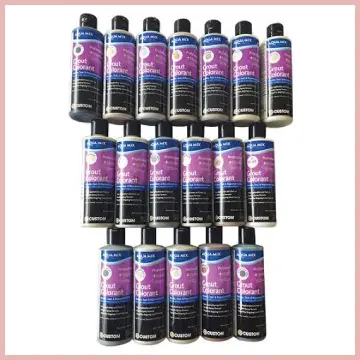
The manufacturer even recommends mixing material together when more than one bottle of the same color will be used to ensure uniform color.
That is a useful instruction, but it also highlights how important consistent application is.
- Cleaning Restrictions Matter
After application, I cannot treat the recolored grout exactly like an untreated surface.
The manufacturer warns against solvent-based cleaners, abrasive equipment, and high-pressure washing.
If you already use aggressive cleaning products, that limitation should influence your buying decision.
- Customer Feedback Makes Me Hesitant
This is the biggest reason I would not recommend buying Aqua Mix Grout Colorant despite its technically strong feature set.
When I see negative customer experiences associated with a product, I do not automatically assume every complaint is caused by a defective product. Application technique, surface preparation, grout condition, and expectations can all affect results.
Still, repeated dissatisfaction is something I take seriously.
For a product that requires substantial preparation and careful application, I want the margin for error to be small. If the finished appearance is inconsistent or the application becomes more labor-intensive than expected, the value proposition becomes weaker.
That is why I would rather consider alternatives before purchasing Aqua Mix.
Maintenance Tips For Aqua Mix Grout Colorant
- Give the Grout Enough Time to Cure
This is the first rule I would follow.
Aqua Mix’s instructions indicate that the surface can be ready for traffic after a relatively short period, but the treated area should remain dry for at least 24 hours. Direct scrubbing of the grout should also be avoided for 20 days while the product fully cures.
I would not rush this stage.
- Use Gentle Cleaning Methods
Once the grout is cured, I would use gentle, appropriate tile-and-grout cleaning methods rather than abrasive tools.
The goal is simple: remove dirt without unnecessarily attacking the colorant.
I would avoid aggressive scrubbing whenever a softer cleaning method works.
- Stay Away From Solvent-Based Cleaners
This is especially important because it is specifically mentioned in the manufacturer’s limitations.
Aqua Mix says not to use solvent-based cleaners on recolored grout joints.
So before using a new bathroom or floor cleaner, I would check the label.
- Clean Spills Quickly
I always prefer prevention to aggressive cleaning.
If something oily, colored, or acidic spills on the floor, I would wipe it up instead of letting it sit for hours.
That reduces the amount of cleaning required later.
- Keep Shower Grout Dry When Possible
In a shower, moisture is unavoidable, but ventilation makes a significant difference.
I would use the exhaust fan, allow the shower area to dry properly, and avoid leaving standing water around grout lines.
Good ventilation also helps keep the surrounding tile environment cleaner.
- Test New Cleaning Products First
If I wanted to introduce a new cleaner, I would test it on a small inconspicuous section first.
That is a simple step that can prevent a much bigger problem.
Comparison Of Aqua Mix Grout Colorant With Other Brands
- Aqua Mix vs. MAPEI
MAPEI has a strong reputation in tile installation products, and I would consider its grout and color-related solutions when evaluating alternatives.
My main consideration would be the specific application rather than choosing a brand simply because it is popular.
If I need to recolor existing grout, I would compare the preparation requirements, compatibility, color selection, and maintenance instructions carefully.
For a homeowner who is concerned about Aqua Mix’s reported user dissatisfaction, MAPEI would at least be worth investigating before making a purchase.
- Aqua Mix vs. LATICRETE
LATICRETE is another established name in tile and stone installation.
When I compare the two, I would focus on the exact product rather than assuming one entire brand is automatically better. Grout restoration, grout replacement, sealing, and color modification are different jobs.
If my existing grout is badly damaged, I would rather consider replacement with an appropriate grout system than simply coating the damaged surface.
- Aqua Mix vs. Grout Renew-Type Products
Acrylic grout colorants and grout-renewal products are another category I would consider.
They can be attractive for homeowners who want to refresh cement grout without undertaking a complete regrouting project.
The important question for me would be durability versus ease of application.
Aqua Mix’s epoxy-based formulation sounds robust, but the additional preparation and application requirements make me question whether that extra complexity is worthwhile for every homeowner.
Frequently Asked Question (FAQ)
Yes, grout colorant can work, but the final result depends heavily on preparation, grout condition, application technique, and curing.
Aqua Mix specifically describes its product as a waterborne epoxy that recolors and seals existing grout.
However, I would not expect colorant to repair structurally damaged grout. If your grout is cracked, crumbling, or missing, replacement may be the better solution.
There is no single best grout colorant for every situation.
For me, the best choice would be the product that matches the grout type, tile surface, desired color, cleaning routine, and amount of labor I am willing to invest.
Aqua Mix has useful features, but because of the concerns surrounding customer experiences, I would compare other options before buying it.
I would start by thoroughly cleaning and drying the grout. The manufacturer recommends appropriate preparation depending on the grout and existing coatings. After shaking the product, apply thin, even coats with an applicator brush or toothbrush while keeping excess material off the tile.
If a lighter color is being applied over a darker grout, multiple coats may be necessary.
After the appropriate drying period, excess colorant on the tile should be removed according to the manufacturer’s instructions. The area should then remain dry for at least 24 hours, with direct scrubbing of the grout avoided during the curing period.
I would always test a small hidden section first.
Aqua Mix has several sealing products, and the answer depends on which specific sealer you mean.
For Aqua Mix Grout Colorant, the product itself is designed to recolor and seal grout. The manufacturer states that it provides stain resistance and protection after curing.
However, I would not automatically assume that every Aqua Mix sealer is suitable for every tile or grout situation. I would match the sealer to the surface and intended use.
Final Verdict
After considering the product’s features, application requirements, maintenance restrictions, and customer concerns, I would not recommend Aqua Mix Grout Colorant as my first choice.
I understand why the product is attractive. Recoloring and sealing old grout in one step sounds convenient, and the manufacturer provides broad grout compatibility and a variety of colors.
But convenience is not just about what happens after opening the bottle.
For me, convenience means preparation is manageable, application is forgiving, the finish is consistent, and maintenance does not become complicated.
Aqua Mix does not completely deliver that experience.
If I had a very small grout restoration project and was comfortable spending time on careful preparation, I might consider it.
But if I were spending my own money and wanted a predictable, beginner-friendly result, I would compare alternative grout colorants before purchasing.
Recent Posts
● Interactive 5-Zone Interior & Exterior Paint Blueprint Paint Coverage Calculator: Gallons, Primer, Square Footage & Cost Tap any architectural surface zone on the blueprint...
If you want smooth, shiny hair without spending a fortune on a premium styling tool, the Ella Bella hair dryer may be worth considering.In these Ella Bella hair dryer reviews, I’ll look...