
I decided to write this comparison after months of testing both the AquaTru Carafe and the Classic in my own kitchen. Tracking covered daily use.
Taste stayed consistent. Refill frequency varied by model. Long-term costs differed clearly.
My main intent is to help you decide which countertop reverse osmosis system fits your household size. Space constraints matter. Preference for glass versus plastic storage guides the choice.
Marketing fluff stays absent here.
| Feature | AquaTru Carafe | AquaTru Classic |
| Filtration stages | 4-stage Ultra RO | 4-stage Ultra RO |
| Contaminants reduced | 84 (NSF certified) | 84 (NSF certified) |
| NSF certifications | 42, 53, 58, 401, P473 | 42, 53, 58, 401, P473 |
| Clean water storage | 64 oz borosilicate glass carafe | 0.75-gallon BPA-free plastic tank |
| Tap water reservoir | 0.66 gallon (2.5 L) | 1 gallon |
| Storage material | Glass | Plastic |
| Fridge-ready | Yes – carafe removes easily | Needs separate container |
| Pre-filter capacity | 300 gal / ~6 months | 600 gal / ~6 months |
| RO membrane capacity | 600 gal / ~2 years | 1,200 gal / ~2 years |
| Filter compatibility | Carafe-only | Classic / Classic Smart / Under Sink |
| Approx. annual filter cost | $80–$110 | $100–$120 (covers more volume) |
| Best for | 1–2 people, small kitchens | Families, higher daily volume |
| Approx. upfront price | Around $375 | Around $475 |
| Footprint | More compact | Larger |
Key Differences Between The AquTru Carafe And Classic
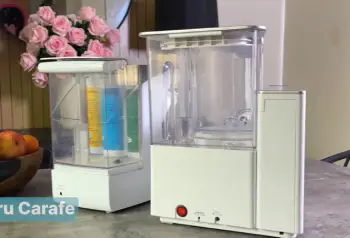
- Capacity and daily volume handling: The Classic holds more purified water at once. It processes larger batches with fewer refills.
I filled the Carafe more often during cooking sessions. Multiple bottles required extra cycles. The Classic kept pace for a household of three.
Constant attention stayed unnecessary.
- Storage material and contact after filtration: The Carafe collects water in glass. Purified water never sits in plastic. The Classic uses a plastic tank.
This difference mattered more after side-by-side tasting. Long-term contact concerns grew clearer over weeks of use.
- Filter longevity and cost per gallon: Classic filters rate for roughly double the volume. Carafe versions wear faster under similar loads.
Moderate use over one year made the Classic cheaper per gallon. Annual filter spend looked similar on paper. Actual volume coverage shifted the math.
- Footprint and portability: The Carafe sits lower. It measures narrower overall. Sliding under a cabinet proved simple.
Counter space freed up easily. Moving the unit for cleaning took one hand. The Classic claims more real estate. It feels more substantial on the surface.
- Dispensing style: Carafe functions as a pour pitcher. Classic features a push-button dispenser on the tank.
The button fills glasses one-handed. Wet hands posed no issue. The carafe works better for table service. Fridge transfer stays direct.
- Upfront price versus long-term economics: Carafe costs less to buy initially. Classic costs less to run above two liters daily.
My spreadsheet after six months showed break-even near the one-year mark. Two-person households hit that point first.
These differences leave water quality unchanged. Both systems use the same patented four-stage process. Independent certifications match exactly. Daily interaction with the machine drives the real choice.
Key Features Of The AquaTru Carafe
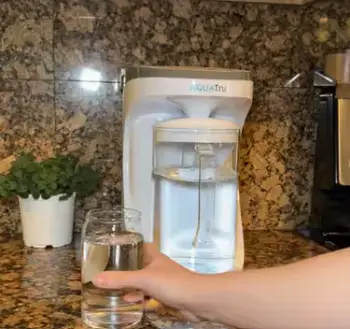
- Four-stage Ultra Reverse Osmosis filtration: Stages one and two combine sediment capture with carbon reduction. Chlorine drops early.
Stage three employs the RO membrane. Dissolved solids leave the water. Metals reduce sharply. Many chemicals disappear.
Stage four applies a final carbon block. VOCs drop further. Taste compounds clear out. The process matches the Classic exactly.
- 64-ounce borosilicate glass carafe: Clean water ends in a sturdy glass pitcher. Handle design feels secure.
Pour spout controls flow. One carafe stays in the fridge most days. A fresh batch swaps in quickly. Plastic contact ends after the filters finish.
- Compact countertop footprint: Height reaches about thirteen inches. Width stays narrower than the Classic. Tight kitchens gain usable space.
A cutting board fits beside it. Permanent placement causes less crowding.
- Optional remineralization filter: Standard VOC post-filter swaps for a mineral-boost version. Calcium returns in measured amounts.
Magnesium adds mild balance. pH rises slightly. Daily drinking improved with this option. Both versions received testing.
- Filter-change indicators: Lights signal the pre-carbon stage. RO membrane status shows clearly.
VOC stage alerts appear on schedule. Calendar guessing ends. Timing stays accurate.
- No plumbing required: Top reservoir fills with tap water. Power cord plugs into a standard outlet. Start button begins the cycle.
Wastewater gathers in a separate tray. Sink emptying finishes the process.
Pros Of The AquaTru Carafe
- Glass storage eliminates post-filter plastic contact: Water leaves the membrane. It sits only in glass. Microplastic concerns drop away. Plastic taste never develops. Fridge storage kept water fresher longer. Clarity held steady over days.
- Smaller size suits apartments and tight counters: Permanent placement felt natural. Workspace remained open. Guests commented on the sleek appearance. Large plastic boxes drew fewer questions.
- Lower entry price: Upfront cost sits about one hundred dollars below the Classic. Jump from a simple pitcher filter feels smaller. Budget pressure eases at purchase time.
- Easy to refrigerate the entire carafe: Glass pitcher pulls free. Fridge placement takes seconds. Cold purified water stands ready. Transfer steps stay absent.
- Quieter and lighter overall: Smaller pump runs with less noise. Nighttime cycles stayed unobtrusive. Cleaning moves require one hand. Weight difference shows quickly.
- Same high-level contaminant reduction as the larger model: Lab results match the Classic. Certifications align fully. Lead levels fall. Fluoride reduces. PFAS compounds drop. Arsenic clears. Chromium-6 declines. Dozens of VOCs reach non-detect or near-zero.
Cons Of The AquaTru Carafe
- Smaller batch size means more frequent filling: Sixty-four ounces limit each cycle. Cooking demands extra runs. Coffee preparation adds volume needs. Bottle filling multiplies cycles. Busy days required three to four refills of the tap tank.
- Filters wear out sooner on a volume basis: Three-hundred-gallon ratings apply to pre-filters. Six-hundred-gallon ratings cover the RO membrane. Cost per gallon rises above one to two liters daily. Two-year totals show the difference clearly.
- Glass can break: Borosilicate material resists heat well. Impact against a sink edge still risks cracks. Replacement carafe becomes necessary after one hard knock. Plastic tanks avoid this vulnerability.
- Slightly slower feel for high-volume households: Filtration rate stays similar. Smaller tanks stretch the process. Large water needs feel delayed. Quick demand exposes the limit.
- Filters are model-specific: Classic filters refuse to fit. Under-sink cartridges stay incompatible. Stock orders must target the Carafe line alone.
Key Features Of The AquaTru Classic
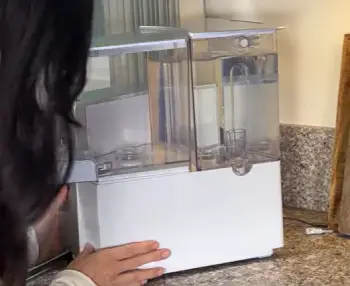
- Identical four-stage Ultra Reverse Osmosis system: Sediment-carbon pre-filter starts the sequence.
RO membrane follows directly. Final carbon stage completes the work. NSF/ANSI certifications remain the same. The list of eighty-four contaminants reduced stays identical.
- Larger 0.75-gallon clean-water tank: Several glasses fill from one cycle. Cooking sessions draw enough volume.
Restart frequency drops. The tank lifts out for fridge storage. Cold water stays available on demand.
- Higher-capacity filters: Pre-filter rates to six hundred gallons. RO membrane reaches twelve hundred gallons.
Daily use above two liters stretches intervals. Replacement frequency falls accordingly.
- Push-button dispenser: One touch fills a glass. Bottles fill cleanly. Multitasking in the kitchen becomes simpler. Wet hands create no delay.
- Optional alkaline mineral filter: Upgrade path matches the Carafe. Minerals return after the RO stage. Flat taste disappears.
Balance improves for regular drinking.
- Built-in filter life tracking: Indicator lights monitor each stage. Smart version adds app connectivity. Reminders arrive on schedule. Basic lights alone prevented missed changes.
Pros Of The AquaTru Classic
- Higher capacity reduces daily labor: One full cycle covers morning coffee. Lunch bottles fill next. Dinner cooking draws from the remainder. Extra starts stay rare. Machine presence fades into the background.
- Better long-term filter economics: Double rated gallons on the pre-filter extend life. RO membrane covers more volume. Family use lowers cost per liter. Heavy drinkers gain the same advantage. Purchase frequency drops.
- Durable plastic tank that is hard to damage: Breakage worries disappear. Button dispensing avoids spills. Full glass carafe pours sometimes overflow. Plastic construction prevents that issue.
- Shared filter ecosystem with other AquaTru models: Under-sink units accept some of the same cartridges. Smart versions share parts. Needs change over time. Flexibility remains available.
- Solid performance under continuous use: Multiple cycles ran back to back. Overheating never appeared. Slowdowns stayed absent. Steady household demand met no resistance.
- Same certified contaminant reduction: Independent testing shows identical removal rates. Purity levels match the Carafe. No compromise occurs with the larger tank choice.
Cons Of The AquaTru Classic
- Plastic tank keeps purified water in contact with plastic: BPA-free Tritan material still raises questions for some users. Long-term storage of drinking water prefers glass. Preference grows after extended comparison.
- Larger footprint: Counter real estate expands. Small kitchens force appliance rearrangement. Permanent placement requires planning.
- Higher purchase price: Extra capacity raises the initial cost. Tank design adds expense. Single-person use or couple use may not justify the difference.
- Tank is less convenient for fridge storage: Removal remains possible. Bulk exceeds the glass carafe. Table pouring lacks elegance. Transfer steps increase.
- Slightly higher absolute annual filter spend: Cost per gallon stays lower. Scheduled replacements cost more in total dollars. Volume coverage offsets only part of the figure.
Real-World Daily Experience With Both
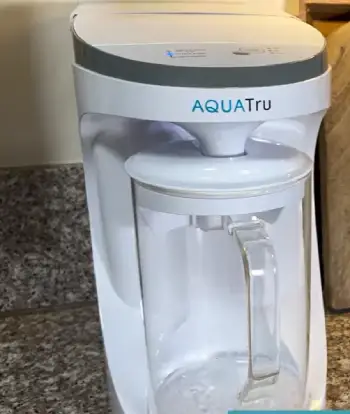
The Carafe served as sole drinking and cooking source for three months. The Classic followed for the next three.
Taste proved indistinguishable. Both produced crisp water. Chlorine notes vanished. Metallic notes from municipal supply disappeared.
Mineral-boost filters on either model added subtle smoothness. Black coffee improved. Plain drinking gained balance.
Noise levels stayed low. Pump runtime lasts ten to fifteen minutes per cycle.
Dishwasher volume exceeds it. Wastewater ratio improves on traditional under-sink RO systems. Waste tray emptied into the sink. Plant watering used the remainder.
Maintenance matches closely. Three filter cartridges twist out. New ones twist in. Indicators reset. Flush cycle runs. Process finishes under five minutes. Carafe filters feel lighter. Classic filters last longer between changes.
Who Should Choose The Carafe?
Solo living or one other person favors this model. Glass storage ranks high. Counter dominance stays unwanted.
Lower upfront cost helps. Fridge-friendly carafe supports morning routines. Higher cost per gallon appears only above the one-to-two-person range.
Who Should Choose The Classic?
Family size increases demand. Large meal preparation raises volume needs.
Frequent refills become tiresome. Larger tank solves those issues. Longer-lasting filters keep the machine quiet.
Plastic storage acceptance tips the balance. Economics and convenience favor this unit.
Taste And Mineral Balance
Pure RO water can taste flat. Minerals leave with the contaminants. Both units offer an optional alkaline post-filter.
Measured calcium returns. Magnesium follows. Side-by-side tastings involved friends. Most preferred the mineral version for everyday drinking.
Standard version suited tea better. Neutral water lets leaves shine. Neither filter restores full hardness. TDS rise stays modest. Intention remains clear.
Setup And First-Week Notes
Unboxing either unit takes minutes. Tanks rinse clean. Three color-coded filters install. Reservoir fills. Recommended flush cycles run.
Carafe felt ready faster. Smaller tanks fill quickly. Emptying finishes sooner. Clear manuals arrived with both.
Filter-life charts print on the cartridges. Tools stay absent. Drilling stays absent. Plumber stays absent.
Durability Observations
Continuous use left the glass carafe free of clouding. Mineral deposits wiped away. Classic plastic tank remained clear.
Odor never developed. Seals on both units stayed tight. Filter changes covered routine care. Occasional descaling handled hard-water stretches. Vinegar rinse follows the manual outline.
Frequently Asked Questions (FAQ)
Both deliver strong RO performance. The Carafe edges ahead for many users. Certified contaminant reduction stands out. Glass storage adds value. Lower long-term filter cost per gallon appears. Bluevua offers a glass carafe. UV stage is present. Ongoing filter expenses typically run higher.
Owners praise the clean taste. Glass carafe draws positive notes. Compact size receives approval. Easy setup appears often. Solid contaminant removal gets mention. Some note more frequent refills versus larger systems.
The standard model lacks it. An optional mineral-boost VOC filter is available. Calcium adds after the RO stage. Magnesium follows. pH rises slightly.
The unit itself supports years of regular use. Filters change on schedule. Pre-carbon filters last about six months or three hundred gallons. VOC filters match that span. RO membrane lasts About Two Years Or Six Hundred Gallons. Whichever Limit Arrives First Applies.
Wrapping Up
Living with both systems confirmed identical water quality. High standard holds across models. Decision rests on daily interaction. Glass storage ranks high for some.
Smaller footprint matters. Lower entry price appeals. Carafe becomes the daily companion in those cases. Fewer refills matter for others.
Longer filter life ranks higher. Busier households need volume. Classic earns its counter space. Either path delivers certified reverse-osmosis water.
Contaminants of common concern reduce. Under-sink plumbing stays unnecessary. Match the machine to kitchen rhythm. Water thoughts fade. Enjoyment remains.
Recent Posts
I spent months comparing budget options against established names after my last set of tires wore out sooner than expected.My goal here is to share what I learned from putting Dextero and...
Baker's Volume Enhancer Reviews: My Honest Take Before You Buy
After researching Baker’s Volume Enhancer and looking closely at its formula, marketing claims, and available feedback, I would not recommend buying it.The product is marketed as a natural way...