
If you’re searching for an inexpensive freezer and have come across Arctic Wind, I understand the attraction.
The brand offers compact chest freezers and larger upright models at prices that can look tempting.
However, after examining the available customer feedback, specifications, and common complaints, I would not recommend buying an Arctic Wind freezer unless the low price is your overriding concern and you have a very convenient return option.
Some owners are happy with the capacity and freezing performance, but complaints about damaged deliveries, lid or door sealing problems, and customer-service frustrations make me cautious.
My Personal Experience With Arctic Wind Freezer
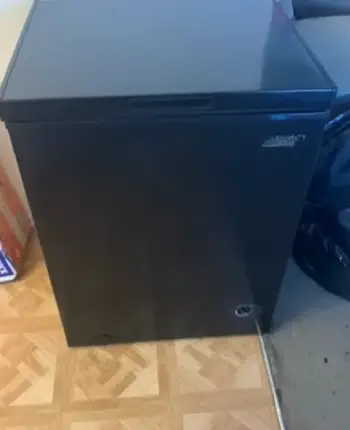
When I evaluate a freezer, I don’t look at the price tag alone.
I ask a much more practical question: would I trust this appliance with several hundred dollars’ worth of meat, frozen vegetables, prepared meals, or other food for years?
That is where my assessment of Arctic Wind becomes complicated.
I can see why someone would initially choose this brand. Arctic Wind has offered compact chest freezers in sizes such as 3.4, 5, and 7 cubic feet, making the lineup attractive for apartments, small homes, garages, utility rooms, and anyone who simply needs some extra frozen-food storage.
Customer feedback also shows that some owners genuinely like the compact dimensions and storage capacity.
One customer described the 3.4-cubic-foot model as a good fit for limited space, while other positive reviews mention that the freezer reaches temperature quickly and keeps food frozen.
So, at first glance, Arctic Wind seems to solve a straightforward problem: I get additional freezer space without spending as much as I might on a premium appliance.
But I wouldn’t stop my evaluation there.
What concerns me is the inconsistency in the customer experience. On Walmart’s review page for the Arctic Wind 3.4-cubic-foot chest freezer, the overall rating is around four stars, but the breakdown includes both strong five-star reviews and a noticeable group of one- and two-star reviews. Recent complaints include units arriving damaged, a damaged lid, and a freezer whose top-left portion of the door did not seal properly.
That sealing complaint is particularly important to me.
A freezer doesn’t need to have Wi-Fi, fancy controls, an ice maker, or a beautiful touchscreen.
I can happily live without those things. What I absolutely need is reliable cooling and a door or lid that seals properly.
If the seal doesn’t close correctly, cold air can escape continuously. The compressor may have to work harder, energy consumption can increase, frost can develop, and the freezer may struggle to maintain a stable internal temperature.
More importantly, if the problem isn’t noticed quickly, the food inside becomes the real casualty.
That’s why I wouldn’t judge Arctic Wind simply by asking whether it freezes food. A freezer that works perfectly on day one isn’t necessarily a freezer I want to own for years.
I also noticed another issue in the customer feedback that made me more cautious: delivery and replacement frustrations.
One negative Walmart review described receiving a heavily damaged unit and then experiencing difficulty getting the promised pickup and refund resolved.
To be fair, not every negative experience means the freezer itself is mechanically defective. Shipping damage can happen with almost any major appliance.
However, from my perspective as a buyer, the entire ownership experience matters. If I receive an appliance that arrives damaged, I need the retailer and manufacturer to make the return process painless.
That’s especially important with freezers because they aren’t small parcels I can casually carry to a post office.
Another reason I remain cautious is that Arctic Wind has a fairly broad product history
. It isn’t limited to one little chest freezer. For example, an Arctic Wind 21-cubic-foot upright freezer, model AUFW210ETH-LK, appears in ENERGY STAR’s database, with an annual energy-use figure of 492 kWh compared with a federal standard of 547 kWh.
That tells me something useful: Arctic Wind isn’t simply an unknown name with no legitimate appliance presence. At least some of its freezer products have been evaluated under recognized efficiency standards.
Still, efficiency certification doesn’t automatically answer the reliability question.
My overall experience evaluating Arctic Wind is therefore mixed. I can appreciate the compact designs, accessible pricing, and positive reports about freezing performance.
But when I put those advantages beside complaints involving physical damage, sealing, and after-sales support, I don’t feel comfortable recommending the brand as my first choice.
If I were buying a freezer for long-term food storage today, I’d rather spend a little more on a brand with a stronger reputation for appliance reliability and service.
Pros Of Arctic Wind Freezer
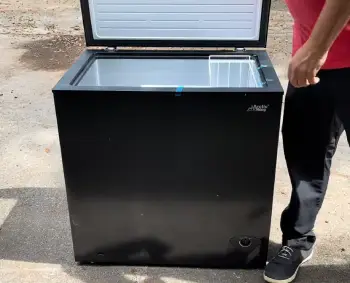
- Affordable Entry Price
The biggest advantage I see is affordability.
Arctic Wind products are positioned toward buyers who don’t necessarily want to spend heavily on an additional freezer. If I’m furnishing a small home, adding storage to a garage, or looking for a basic chest freezer, the lower upfront cost can be attractive.
For someone on a tight budget, this matters.
But I would still compare the final cost rather than only the purchase price. If a cheaper appliance requires an inconvenient return, replacement, repair, or food-loss risk, the initial savings can disappear quickly.
- Compact Design
The smaller Arctic Wind chest freezers make sense when space is limited.
I can imagine placing one in a utility room, basement, garage, pantry area, or another location where a full-size upright freezer would simply be excessive.
The compact footprint is one of the recurring positives in customer feedback.
For me, that’s a genuine strength.
- Useful Capacity
Small doesn’t necessarily mean useless.
A freezer in the three-to-seven-cubic-foot range can provide meaningful additional storage. I could use that space for frozen meat, vegetables, ice cream, meal-prep containers, bread, or other foods that overwhelm a standard refrigerator freezer.
This is especially useful for households that shop less frequently or buy certain foods in bulk.
- Simple Operation
I appreciate appliances that don’t make me study a complicated manual before using them.
Arctic Wind freezers generally focus on straightforward frozen storage rather than an abundance of smart features.
That simplicity can be useful for people who want to plug in a freezer, set the temperature, and get on with their day.
- Some Positive Customer Experiences
I don’t think it would be fair to describe every Arctic Wind freezer as bad.
There are clearly satisfied customers.
Some reviews praise the freezer’s size, capacity, quick cooling, and ability to keep food frozen. Walmart’s customer review data also includes a substantial proportion of four- and five-star ratings.
That means the product can work well for some buyers.
My concern is not that every Arctic Wind freezer fails. My concern is whether the risk is attractive enough compared with competing brands.
For me, the answer is no.
Cons Of Arctic Wind Freezer
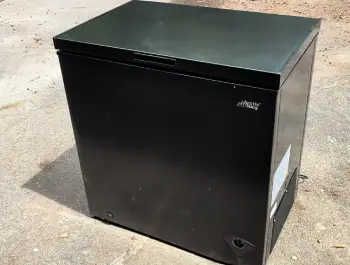
- Quality-Control Concerns
The biggest issue I see is inconsistency.
Some customers receive a freezer they are happy with, while others report physical damage or functional problems.
Recent Walmart reviews include complaints about damaged units and a door that did not seal correctly.
Even if some of these issues are related to shipping rather than manufacturing, the customer ultimately has to deal with the problem.
That’s enough to make me hesitate.
- Door and Lid Sealing Problems
This is the issue I take most seriously.
A freezer lid or door needs to close tightly. If it doesn’t, maintaining a cold temperature becomes more difficult.
One recent review specifically reported that the upper-left area of the door didn’t seal.
That’s not the sort of complaint I casually ignore.
Before buying, I would inspect the gasket, lid alignment, hinges, and closing mechanism immediately after delivery.
- Shipping Damage
Several negative reviews mention damaged products arriving at the customer’s home. One review described a damaged lid, while another reported substantial dents, scratches, and bending.
Again, shipping damage isn’t necessarily proof of poor refrigeration engineering.
But it’s still a purchasing risk.
I would be particularly cautious if I were ordering from a retailer with a difficult return process.
- Customer-Service Frustration
A product can be imperfect and still be worth buying if the manufacturer stands behind it.
That’s why customer support matters so much to me.
The negative feedback I found includes complaints about difficulty resolving damaged-product returns and pickups.
Even one such story doesn’t prove that every customer will experience poor service. But when I’m comparing several freezer brands, it’s a factor I take seriously.
- Questionable Long-Term Value
This is where my analysis ultimately lands.
If Arctic Wind were dramatically cheaper than every competing option, I might understand accepting the risk.
But if the price difference is relatively small, I’d rather choose a freezer from a manufacturer with a stronger track record for refrigeration appliances, parts availability, service, and long-term reliability.
Maintenance Tips For Arctic Wind Freezer
- Keep the Freezer Level
When I install a freezer, I make sure it sits level and stable.
An uneven appliance can place unnecessary stress on the lid, hinges, gasket, and internal components.
I wouldn’t simply push the freezer into position and forget about it.
- Check the Door or Lid Seal Regularly
This is particularly important with Arctic Wind given the customer complaints concerning sealing.
I would periodically inspect the gasket for gaps, cracks, deformation, dirt, or areas that aren’t making proper contact.
A simple paper test can also help identify a weak seal. Close the lid or door over a piece of paper and gently pull. If the paper slides out extremely easily in multiple areas, I’d investigate further.
- Don’t Overload the Freezer
I know the temptation.
Once I have additional freezer space, I want to fill every available inch.
But airflow still matters.
I would arrange food so cold air can circulate and avoid packing items tightly against vents or other critical areas.
- Avoid Frequent Lid Opening
Every time I open a freezer, warm air enters.
Opening the lid repeatedly isn’t catastrophic, but unnecessary opening makes the compressor work harder and can encourage frost formation.
I prefer to organize the contents so I can find what I need quickly.
- Keep the Exterior Clean
Dust and dirt can accumulate around ventilation areas and the exterior.
I would periodically wipe the appliance down and keep the surrounding area reasonably clean.
I also wouldn’t place objects directly against areas that need ventilation.
- Defrost When Necessary
If the freezer accumulates significant frost, storage space decreases and efficiency can suffer.
For a manual-defrost chest freezer, I’d follow the manufacturer’s instructions and defrost it safely rather than attempting to scrape thick ice aggressively.
Using sharp objects to break ice is a bad idea because I could damage the freezer interior or cooling components.
- Don’t Put Hot Food Inside
I would allow freshly cooked food to cool appropriately before placing it into the freezer.
Putting large quantities of very hot food inside can raise the internal temperature and force the appliance to work harder.
I prefer dividing food into smaller portions and using suitable freezer-safe containers.
- Monitor Temperature
I wouldn’t rely entirely on whether food “feels frozen.”
A dedicated freezer thermometer gives me a much better indication of what’s actually happening.
If I notice temperatures fluctuating unexpectedly, excessive frost, unusual compressor behavior, or food becoming softer, I would investigate immediately.
- Inspect It After Delivery
This is one maintenance step I consider especially important with Arctic Wind.
Because customer reviews include reports of damaged deliveries, I would inspect the entire freezer before accepting it as ready for food storage.
I would check the lid, hinges, gasket, cabinet, power cord, interior liner, and controls.
I would also photograph any damage immediately.
That documentation could become extremely useful if I need to return or replace the appliance.
- Give It Adequate Clearance
I wouldn’t wedge a freezer tightly between walls, boxes, or other appliances.
The appliance needs appropriate ventilation and access to dissipate heat.
Before installation, I’d check the manufacturer’s clearance recommendations for the exact model rather than guessing.
Comparison Of Arctic Wind Freezer With Other Brands
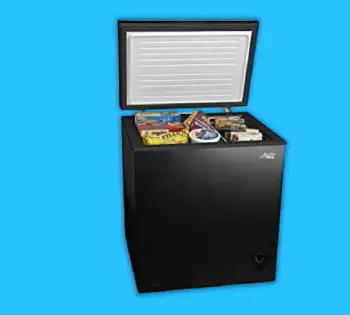
- Arctic Wind vs Frigidaire
When I compare Arctic Wind with Frigidaire, my main consideration isn’t simply the number of features.
It’s confidence.
Frigidaire has a much broader presence in household refrigeration, giving me more confidence when I’m thinking about service, replacement parts, model availability, and long-term ownership.
Arctic Wind can be attractive when the price is significantly lower.
But if the price gap is modest, I’d lean toward Frigidaire.
For a freezer holding hundreds of dollars of food, I value reliability more than saving a relatively small amount at checkout.
- Arctic Wind vs GE
GE is another brand I would consider before Arctic Wind when long-term ownership is the priority.
I generally feel more comfortable putting a large appliance purchase behind an established appliance manufacturer.
That doesn’t mean every GE freezer will be flawless. No brand is immune to failures.
However, when I evaluate risk, brand history and service infrastructure matter.
Arctic Wind wins mainly when the purchase price and compact design are more important than those considerations.
- Arctic Wind vs Whirlpool
Whirlpool is another familiar name in refrigeration.
If I were buying a freezer for regular household use, I’d be more inclined to investigate Whirlpool before choosing Arctic Wind.
The reason isn’t that Arctic Wind cannot work.
It’s that I want more confidence in the appliance after the return period ends.
A freezer is an appliance I expect to keep for years, not something I want to replace every few seasons.
- Arctic Wind vs Midea
Midea is interesting because it also competes heavily in the value-oriented appliance market.
When I compare the two, I would look closely at the exact model rather than assuming the brand alone tells me everything.
I’d compare warranty terms, retailer return policies, capacity, energy consumption, customer reviews, and local service availability.
This is one situation where I wouldn’t automatically choose the cheapest freezer.
- Arctic Wind vs Insignia
Insignia can also appeal to shoppers searching for affordable refrigeration.
The comparison comes down to the same basic question for me: which specific model offers the better combination of price, reliability, warranty, and return protection?
If I had to choose solely on the evidence I found for Arctic Wind, I wouldn’t give Arctic Wind an automatic advantage simply because it costs less.
Also Read: Comparison Of Maytag And Frigidaire Refrigerator
Frequently Asked Questions (FAQ)
I would describe Arctic Wind as a budget-oriented brand with some genuinely satisfied customers, but I wouldn’t rank it among my first choices for freezer reliability. Customer feedback includes positive reports about size, capacity, and freezing performance, but there are also complaints involving damaged units, door or lid sealing, and return-related frustrations.
For me, that makes Arctic Wind a brand worth researching rather than a brand I would automatically recommend.
I wouldn’t recommend buying any freezer simply because it’s cheap. I would avoid models with consistently poor reliability reports, repeated complaints about temperature maintenance, defective door seals, excessive frost, difficult warranty service, or poor parts availability.
I would also be careful with any freezer that arrives damaged.
If the cabinet is bent or the lid doesn’t seal correctly, I would contact the retailer immediately rather than hoping the problem will disappear.
There isn’t one universally reliable freezer brand for every model and every household.
When I shop, I would investigate established manufacturers such as Frigidaire, GE, Whirlpool, and other major appliance brands, then compare the exact freezer model, warranty, customer feedback, energy use, and service availability.
The specific model matters just as much as the logo on the front.
Arctic King and Arctic Wind are different brand names, so I wouldn’t treat them as the same product line simply because their names sound similar.
For Arctic King, I would evaluate the exact model and current customer feedback independently.
The same buying principles apply: examine reliability reports, warranty coverage, return policies, temperature performance, energy consumption, and customer service before purchasing.
Final Verdict
My final Arctic Wind freezer review is mixed, but my buying recommendation is negative.
I understand the appeal. Arctic Wind offers compact freezer options, useful storage capacities, simple operation, and a price that can make sense for budget-conscious shoppers. Some owners clearly have good experiences, particularly when they need a small freezer that can fit into a tight space.
There is also evidence that Arctic Wind has produced ENERGY STAR-certified freezer models, so I wouldn’t dismiss the brand as completely unestablished. One listed 21-cubic-foot upright model is certified at 492 kWh of annual energy use.
However, the negative customer experiences are what stop me from recommending it.
Reports of damaged deliveries, damaged lids, poor door sealing, and frustrating return experiences are difficult for me to overlook.
When I buy a freezer, I’m not merely buying cold storage. I’m trusting the appliance with my food, my money, and my time.
That’s why I’d personally spend a little more on a competing freezer from a manufacturer with a stronger reputation for reliability and support.
If Arctic Wind is dramatically cheaper and you have an easy return option, it may still make sense for a buyer who understands the trade-off. But if you’re asking me whether I’d choose it as my first option, my answer is no.
Recent Posts
I tried Meltoway Hair Dissolving Cream because I wanted a quick way to deal with unwanted body hair without reaching for a razor every few days. If you are looking for a convenient at-home...
If you’re considering a saffron-based supplement to support mood, appetite control, and everyday wellness, Happy Saffron Plus is worth considering.I like that it takes a familiar botanical...