
I spent months testing both the Keekaroo Peanut Changer and the Bumbo changing pad in my own home with two active babies, tracking messes, cleanup time, comfort, and how each held up under daily use.
My goal here is simple: give you a clear, honest breakdown of how these two wipe-clean pads actually perform so you can decide which one fits your budget, space, and daily routine without the usual marketing fluff.
| Feature | Keekaroo Peanut Changer | Bumbo Changing Pad |
| Price range | $130–$150 | $50–$80 |
| Length | 31–32 inches | About 27 inches |
| Width | 17 inches | About 17 inches |
| Height / side walls | 4 inches | Up to 5 inches |
| Weight | Around 7 lbs | Around 3 lbs |
| Material | Proprietary shell-over-foam, fully impermeable | Contoured foam with wipeable surface |
| Cleaning | Wipe only, no covers ever | Wipe only, no covers needed |
| Safety strap | Yes | Yes |
| Non-slip base | Strong | Limited |
| Warranty | 5 years | 1 year |
| Made in | USA | South Africa |
| Max weight | 30 lbs | 30 lbs |
My First Experience With Keekaroo And Bumbo Changing Pad
I still remember the day both pads arrived. The Keekaroo came in a plain box that felt heavier than I expected.
When I pulled it out, the peanut shape looked bigger on my dresser than the product photos suggested.
The surface felt soft yet firm under my hand, and a faint new-material smell hung in the air for the first afternoon.
I wiped it down with a damp cloth, strapped my six-week-old son in for the first change, and watched as a small pee accident simply sat on top instead of soaking anywhere. Cleanup took ten seconds.
That single moment sold me on the idea of never washing another cover again.
The Bumbo arrived two days later in a lighter package. I lifted it with one hand and set it on the guest-room bed.
The deeper side walls felt reassuring right away, and the foam carried a warmer touch than the Keekaroo. My daughter, who was already rolling at five months, stayed centered during her first change even while she kicked. The strap clicked easily, and a mild mess wiped clean without drama.
I noticed the pad shifted a little when she arched her back, so I made a mental note to keep closer watch on raised surfaces.
Those first sessions showed me the core trade-off. The Keekaroo felt solid, secure, and almost maintenance-free from minute one. The Bumbo felt friendlier, lighter, and more forgiving for a wriggly baby, yet it demanded a bit more attention to keep it steady.
Both made me wonder why I had spent months fighting stained fabric covers. After that first week I already knew I would keep both in the house for different jobs.
Key Differences Between The Keekaroo And Bumbo Changing Pad
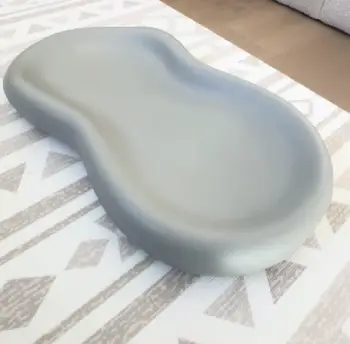
- Shape and length: The Keekaroo uses a distinct peanut outline that cradles the torso and lets liquids slope toward the foot end.
The Bumbo is more oval and shorter, so longer toddlers start hanging off the end sooner.
- Surface construction: Keekaroo’s solid shell sits over foam and blocks every drop from soaking in.
Bumbo’s foam is wipeable but open-cell enough that heavy messes can leave faint marks over time.
- Portability: Bumbo weighs roughly half as much, so I move it from dresser to bed to floor without thinking.
The Keekaroo stays put once I place it.
- Longevity feel: After two years the Keekaroo still looks almost new.
The Bumbo shows more surface wear and starts to feel less premium.
- Price versus time saved: Keekaroo costs more up front yet eliminates every cover and liner purchase.
Bumbo gets you into the wipe-clean game for less cash but may need replacement sooner.
Key Features Of The Keekaroo Peanut Changer
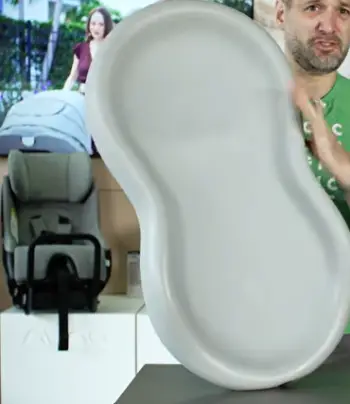
- Fully impermeable shell: Nothing soaks through.
A blowout or mid-change pee sits on the surface until I wipe it.
- Contoured peanut shape: Raised edges and a slight dip under the head keep a squirmy baby centered better than a flat pad.
- Soft-yet-firm Dura-Soft feel: It compresses just enough under a newborn’s weight yet stays supportive for a 25-pound toddler.
- Slip-resistant bottom: Once I set it on a dresser.
It barely shifts even when the baby kicks hard.
- Safety strap included: Simple buckle that I can work with one hand while the other steadies the baby.
- Five-year warranty and JPMA certification: This gives real peace of mind if anything fails under normal use.
- Color range: Vanilla, gray, and a few brighter options that match most nurseries without looking clinical.
Pros Of The Keekaroo Peanut Changer
- Zero laundry from covers: I stopped buying and washing changing-pad covers the day it arrived. That alone cut weekly laundry by one full load.
- Hygiene that actually lasts: Bacteria and mold have nowhere to hide because fluid never enters the material. After two years of daily use the surface still looks and smells clean.
- Durability under real abuse: Toddlers kick, toys get dropped, and the occasional hard object lands on it. The shell has not cracked or peeled.
- Better liquid control: The peanut shape and slope keep pee from running up the baby’s back during those surprise mid-change accidents.
- Made in the USA with transparent materials: I know exactly what sits under my child and that the manufacturing standards match medical-grade claims.
- Long service life across multiple kids: I plan to hand it to a second child or sell it later still looking respectable.
Cons Of The Keekaroo Peanut Changer
- High upfront cost: One hundred fifty dollars feels steep when a basic foam pad sells for twenty-five. The math only works if you keep it for years.
- Cool surface temperature: In winter the shell feels chilly until the baby’s body warms it. A thin cloth solves it but adds one extra step.
- Heavier to move: At seven pounds it stays where I put it, which is great on a dresser but annoying if I want to change the baby on the floor downstairs.
- Occasional surface marks: Some parents report faint scuffs or swirls that appear during manufacturing or normal use. They do not affect function but can bother perfectionists.
- Initial chemical smell: Mine needed two days of airing out before the odor disappeared completely.
Key Features Of The Bumbo Changing Pad

- Deep contoured walls: Sides rise higher than most pads, creating a nest that keeps even determined rollers inside the pad.
- Lightweight foam body: I can carry it under one arm while holding the baby in the other.
- Built-in safety restraint: Strap attaches permanently so I never hunt for a missing belt.
- Gentle slope design: Liquids run toward the foot end instead of pooling under the baby’s back.
- Soft, warm-to-the-touch surface: Babies settle faster because the foam does not feel cold the way some plastic shells can.
- Multiple color choices: Cool gray, powder blue, and softer pastels that blend into different room styles.
- Compact footprint: Fits dressers that are a few inches shorter than the Keekaroo needs.
Pros Of The Bumbo Changing Pad
- Lower price of entry: You get a wipe-clean, contoured pad for roughly half the cost of the Keekaroo. That matters when the baby budget is already stretched.
- True portability: I keep one upstairs and carry the same pad downstairs or to a guest room without strain.
- Excellent side containment: The higher walls give me more confidence with a baby who has just learned to roll.
- Soft, non-cold feel right out of the box: No cloth needed in cooler months. Babies settle faster on the warmer foam.
- Easy one-handed strap use: The restraint stays attached and buckles quickly even when the baby is mid-kick.
- Attractive color options: These hide minor marks better than pure white or cream.
Cons Of The Bumbo Changing Pad
- Weaker non-slip performance: The smooth underside slides more easily on wood or laminate. I have to watch it carefully on a changing table.
- Shorter usable length: By fifteen months my taller toddler’s legs dangled off the end, making changes less comfortable for both of us.
- Less transparent materials: Bumbo does not publish the exact foam composition the way Keekaroo does, which leaves some parents uneasy.
- Surface can discolor over time: Heavy messes occasionally leave faint stains that wipe clean but never fully vanish.
- Shorter warranty and perceived lifespan: One year of coverage versus five, and the foam shows wear faster under heavy daily use.
Real-World Performance: Messes, Cleanup, And Daily Routine
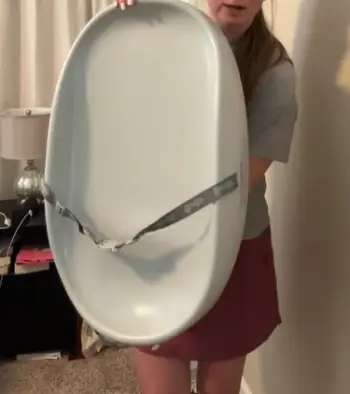
I ran the same tests on both pads for six months. A full blowout on the Keekaroo wiped away with a damp cloth and mild soap in under thirty seconds.
The same mess on the Bumbo also wiped clean, yet a faint shadow remained after the third or fourth heavy incident.
Overnight pee accidents told the same story: Keekaroo stayed completely dry underneath; Bumbo’s surface handled it but the open cells seemed to hold a tiny bit of moisture longer.
Comfort scores stayed close. Newborns looked equally content on both. Once rolling started, the Bumbo’s higher walls won more often.
Once the baby stretched past twenty-seven inches, the Keekaroo’s extra length became the clear winner.
I never needed covers for either, which removed the constant laundry cycle that ruined my first year with traditional pads.
Safety felt solid on both when I used the strap and kept one hand on the baby. The Keekaroo’s weight and better grip gave me more confidence on a raised dresser. The Bumbo felt safer on the floor or a bed because I could move it quickly if needed.
Who Should Choose The Keekaroo?
You want one pad that lasts through two or three children and never requires a cover. You value USA manufacturing and a long warranty.
Your changing station is a fixed dresser and you rarely move the pad. Budget allows the higher investment and you hate laundry more than you hate spending money up front.
Who Should Choose The Bumbo?
You need something lighter that travels from room to room. Your budget sits under one hundred dollars.
Your baby is still under twelve months or you prefer deeper side walls for containment. You accept that the pad may need replacing sooner or show more wear.
Long-Term Cost Reality
A traditional pad plus three or four covers plus liners can easily reach eighty to one hundred dollars in the first year. Add the time spent washing and drying.
The Keekaroo starts higher but ends lower if you keep it three years. The Bumbo sits in the middle: cheaper entry, moderate longevity, still zero cover costs. I calculated my own numbers after twenty-four months and the Keekaroo had already paid for itself in saved covers and laundry hours.
Also Read: Comparison Of Skip Hop Changing Pad And Keekaroo
Frequently Asked Questions (FAQ)
Yes if you plan to use it for more than one child or hate laundry. The wipe-clean surface and five-year durability make the higher price feel reasonable over time.
The Bumbo changing pad itself is the closest lower-cost option. Leander Matty is another strong contender if you want a similar wipeable style with a different shape.
Parents love the zero-cover convenience, the way liquids stay on the surface, and the fact that it still looks good after years of daily messes.
You pay for the proprietary impermeable shell, USA manufacturing, higher material standards, and a five-year warranty that most foam pads do not match.
Final Thoughts
After living with both pads I still reach for the Keekaroo most mornings because the cleanup is faster and the surface never lets me down.
The Bumbo stays in the guest room and travels downstairs when I need something lighter. Neither is perfect, yet both beat traditional fabric-covered pads by a wide margin.
You now have the real differences, the daily performance data, and the cost math. Pick the one that matches how you actually change diapers, not the one that looks prettiest in a product photo.
Your back, your laundry basket, and your future self will thank you for choosing carefully.
Recent Posts
BulkSupplements Casein Protein Powder Reviews: Is It Worth Buying?
If you're looking for an affordable protein powder that supports overnight muscle recovery, BulkSupplements Casein Protein Powder is worth considering.I like the idea of having a slow-digesting...
CeraVe Psoriasis Moisturizing Cream Reviews: Does It Really Work
If you're struggling with psoriasis-related dryness, itching, and stubborn flakes, choosing the right moisturizer can make a noticeable difference in your daily routine.CeraVe Psoriasis...