
The Arhaus Kipton sofa looks luxurious, offers customizable designs, and features an inviting silhouette.
However, its premium price and concerning customer feedback make me hesitant to recommend it.
While the materials and construction specifications sound impressive, reports of inconsistent cushions, quality-control problems, and frustrating customer service raise important questions.
If you’re considering this sofa, I recommend comparing alternatives before spending thousands of dollars on a piece that may not deliver the experience you expect.
My First Experience With Arhaus Kipton Sofa
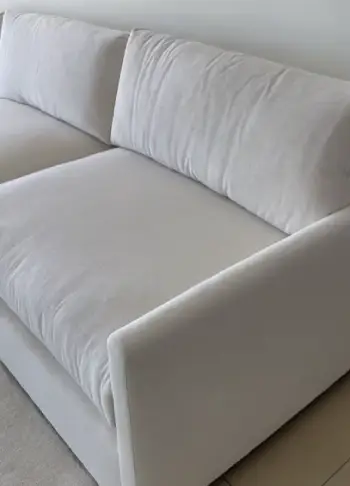
When I evaluate a premium sofa, I look beyond its showroom appearance.
I want to know whether it offers lasting comfort, dependable construction, practical maintenance, and genuine value for the money.
The Arhaus Kipton sofa checks several boxes on paper, but customer experiences suggest that the final product does not always meet expectations.
The first thing that attracts attention is its relaxed, sophisticated appearance.
The Kipton collection has a welcoming design that works in traditional, transitional, and contemporary living rooms.
Its generously padded cushions, clean lines, and different arm styles make it appealing to people who want a comfortable centerpiece without sacrificing interior design.
However, I wouldn’t judge this sofa entirely by its appearance. A couch costing several thousand dollars should provide consistent comfort and reliable construction. That’s where I see reasons to be cautious.
Arhaus describes the Kipton as a handcrafted collection made by upholstery artisans in North Carolina using materials sourced from around the world.
Its product specifications mention hardwood laminate frames, recycled-steel no-sag springs, foam cushions, sterilized down and feathers, and interconnected steel coils.
These details suggest that the company has considered both structural support and softness.
The sofa is also available in different configurations. Depending on the particular model, buyers can select different widths, standard or deep seating, and various upholstery options.
This flexibility is useful because not every living room has the same dimensions or design requirements.
Nevertheless, customization does not automatically guarantee better quality. I found customer feedback that makes the buying decision more complicated.
One particularly concerning issue involves cushion consistency. Some customers have reported differences between the cushions displayed in showrooms and the cushions delivered to their homes.
One customer described purchasing a Kipton sectional and receiving cushions that felt different from the showroom version.
According to the customer’s account, resolving the problem involved repeated replacement attempts and a lengthy customer-service process.
Another reported experience involved cushion covers coming undone and exposing the inserts. The customer described difficulty getting a satisfactory response after submitting a warranty claim.
These complaints matter because cushions are among the most important parts of a sofa. Even a beautiful frame cannot compensate for uncomfortable seating or poorly finished upholstery.
I also consider the company’s overall service experience when evaluating expensive furniture. Buying a sofa is a substantial investment, and customers reasonably expect assistance if something arrives damaged, defective, or different from what they ordered.
Unfortunately, some Arhaus customers have expressed dissatisfaction with communication, warranty follow-ups, and the time required to resolve problems.
These reports do not prove that every Kipton sofa has defects, but they highlight risks worth considering before placing an order.
Comfort is another area where I would avoid making assumptions. Arhaus describes the Kipton as having a soft, welcoming, sink-in feel.
However, cushion preferences vary, and reports of differences between showroom and delivered products make it particularly important to test the exact configuration you intend to purchase.
I would also pay attention to seat depth. Standard configurations are generally shallower than deep configurations, so your height, preferred sitting position, and available room space should influence your decision.
Overall, my impression is mixed. The Arhaus Kipton has attractive styling, customizable options, and construction features that look promising. Unfortunately, customer complaints about quality consistency and after-sales support make it difficult to justify recommending it confidently at its premium price.
For me, a luxury sofa should provide more than an attractive appearance. It should offer dependable comfort, careful finishing, and support when something goes wrong. The Kipton’s reported customer-service and quality-control concerns prevent it from meeting that standard consistently.
Also Read: Is Bassett Furniture Sofa Worth It?
Pros Of The Arhaus Kipton Sofa
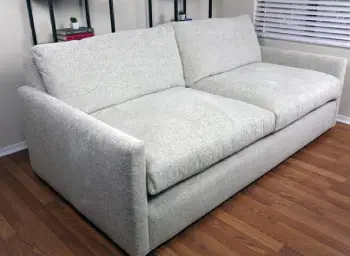
- Attractive and Timeless Appearance
The Kipton’s biggest advantage is its appearance. It has a relaxed, elegant silhouette that can complement different interior styles.
I particularly like the versatility of its design. Whether your living room features neutral colors, wooden furniture, contemporary decorations, or traditional accents, the sofa can fit into the overall arrangement.
Its different arm styles also provide more design flexibility than a sofa with only one configuration.
However, appearance should not be the deciding factor when you’re investing thousands of dollars in furniture.
- Multiple Customization Options
Customization is another appealing feature.
Depending on the model, Arhaus offers different upholstery materials, colors, dimensions, and seating depths. This allows buyers to coordinate their sofa with existing furniture and room dimensions.
For example, someone with a spacious living room might prefer a wider configuration, while someone with a smaller space could consider a more compact option.
I appreciate having these choices because furniture should complement the room rather than force homeowners to redesign everything around it.
Still, customization can make the purchasing process more complicated. You need to check fabric availability, measurements, delivery expectations, and the terms governing customized orders before committing.
- Promising Frame Construction
The hardwood laminate frame is another positive feature.
Arhaus describes the frame as craftsman-built using cross-directional hardwood laminate. The sofa also uses a no-sag spring support system made from recycled steel.
These construction details suggest that the company has considered structural stability.
For a sofa that will be used daily, frame support is particularly important. Nobody wants a couch that develops uncomfortable dips or loses its structural integrity after a relatively short period.
Nevertheless, I would want stronger evidence of consistent long-term performance before treating the construction specifications as proof of exceptional durability.
- Combination of Foam, Down, and Feather Cushions
The cushion materials are designed to create a comfortable seating experience.
The dense foam provides a supportive foundation, while sterilized down and feathers add softness. Interconnected steel coils are also incorporated into the seat cushions.
This combination can appeal to people who prefer a relaxed, cushioned seating style rather than a particularly firm sofa.
However, comfort is subjective. Some people enjoy sinking into plush cushions, while others prefer firmer seating that makes standing up easier.
I would also be concerned about reported differences between showroom cushions and delivered products. A comfortable display model does not guarantee that the sofa arriving at your home will feel identical.
- Multiple Arm Styles
The Kipton collection includes different arm designs, which is useful for homeowners with particular decorating preferences.
Slim arms can create a cleaner, more contemporary appearance, while rolled and sloped arms offer a softer, more traditional impression.
This variety allows customers to choose a design that works with their existing furniture.
I consider this a genuine advantage because the arm design influences both the sofa’s appearance and the amount of usable seating space.
Cons Of The Arhaus Kipton Sofa
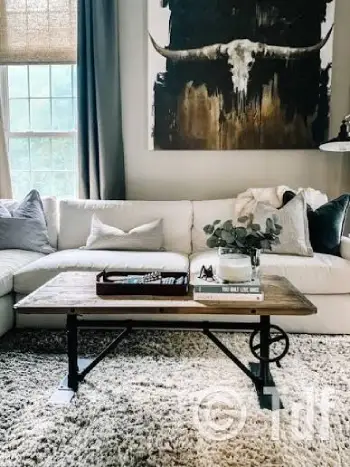
- Expensive Purchase Price
The first major disadvantage is the cost.
The Kipton slim-arm sofa has listed starting configurations around $4,700, with other sizes and upholstery combinations costing considerably more. Certain configurations can exceed $7,000.
That is a substantial investment for a living room sofa.
At this price level, I expect consistent craftsmanship, excellent upholstery finishing, comfortable cushions, and dependable after-sales support.
If you’re paying luxury-furniture prices, you shouldn’t have to spend months chasing a company to resolve a problem.
The Kipton may appeal to buyers who prioritize its appearance, but I don’t think its price is easy to justify when customer experiences are inconsistent.
- Reported Cushion Quality Problems
Cushion quality is one of the most concerning issues I found in customer feedback.
Some owners have reported that their delivered cushions did not match the comfort or construction of the showroom versions.
A particularly concerning complaint described a Kipton sectional whose replacement cushions still did not fully reproduce the showroom experience.
This is important because cushions directly affect how comfortable a sofa feels.
If the seating becomes too firm, uneven, or uncomfortable, the entire purpose of buying a premium couch is undermined.
- Cushion Covers May Develop Problems
Another reported concern involves cushion covers coming undone and exposing the inserts.
I find this particularly disappointing for a sofa positioned in the luxury category.
Upholstery should be properly finished, and cushion covers should remain securely fitted during normal use.
Of course, an individual complaint does not establish that every Kipton has this problem. Nevertheless, the report raises a legitimate quality-control concern that buyers should investigate.
- Inconsistent Showroom and Delivered Products
I consider this one of the biggest purchasing risks.
When you visit a furniture showroom, you’re evaluating the actual sofa displayed there. You naturally expect the product delivered to your home to provide a comparable experience.
However, customer reports have described differences in cushion firmness and overall comfort.
That creates uncertainty.
You could spend considerable time selecting the perfect upholstery and configuration, only to discover that the delivered sofa doesn’t feel the way you expected.
I would not make a purchase based solely on a showroom demonstration.
- Frustrating Customer-Service Experiences
A luxury furniture purchase should include dependable customer support.
Unfortunately, some Arhaus customers have complained about delayed responses, repeated follow-ups, and difficulty obtaining satisfactory warranty assistance.
One reported Kipton purchase involved a customer seeking help after several cushion covers came undone. The customer described numerous calls and emails without a timely resolution.
Another owner reported an extended process involving replacement cushions.
These experiences are concerning because furniture problems can be expensive and inconvenient to resolve independently.
- Uncertainty About Long-Term Durability
Although the frame and cushion specifications appear promising, I would like to see more consistent evidence of how the sofa performs over several years.
Questions about cushion shape, upholstery seams, cover construction, and structural stability deserve attention.
A premium price should come with confidence that the furniture will withstand everyday use.
When customer feedback raises concerns about these areas, I become less comfortable recommending the product.
Also Read: Is Ashley Frohn Reclining Sofa Worth It?
Maintenance For The Arhaus Kipton Sofa
- Fluff the Cushions Frequently
Cushion maintenance should be part of your regular routine.
The Kipton uses foam, down, and feather components, which can shift during everyday use. Repeated sitting in the same location may also create temporary differences in cushion appearance.
I recommend gently fluffing the cushions and redistributing their filling regularly.
Pay attention to the corners and edges because these areas can appear compressed after repeated use.
Avoid aggressively hitting or twisting the cushions. Gentle handling is preferable.
- Rotate the Seat Cushions When Possible
If your particular configuration has removable and interchangeable cushions, rotating them can help distribute everyday wear.
For example, you might occasionally exchange the positions of cushions that experience different levels of use.
However, check whether the cushions are designed to be interchangeable before doing this. Some configurations may have specific dimensions or orientations.
Rotating them without checking could affect their fit.
- Vacuum the Upholstery Regularly
Dust, crumbs, pet hair, and other debris can accumulate between cushions and along upholstery seams.
I recommend using a vacuum with an appropriate upholstery attachment.
Move slowly across the seat, backrest, and crevices. Pay special attention to areas where crumbs and dust tend to collect.
Avoid using excessive suction or rough attachments that could damage delicate fabrics.
Regular vacuuming helps prevent debris from becoming embedded in the upholstery.
- Clean Spills Immediately
Spills are unavoidable in a frequently used living room.
If something spills on your Kipton, address it as soon as possible.
Use a clean, absorbent cloth to blot the affected area. Avoid rubbing aggressively because that may push the liquid deeper into the fabric or spread the stain.
Before applying any cleaning product, check the upholstery’s specific cleaning instructions.
Different fabrics and leathers require different treatment methods. A cleaning solution suitable for one material could discolor or damage another.
- Protect the Sofa From Direct Sunlight
Sunlight can gradually affect upholstery color.
If your sofa sits near a large window, consider using curtains or blinds to reduce prolonged direct exposure.
I would also avoid positioning the sofa where one side receives considerably more sunlight than the other.
Uneven exposure can create visible differences in color over time.
This is particularly important when choosing lighter upholstery shades.
- Avoid Sitting on the Armrests
Although the sofa may look substantial, its armrests are not intended to function as additional seats.
Putting excessive weight on them can place unnecessary stress on the frame and upholstery.
I recommend using the actual seating area and avoiding activities that place concentrated pressure on the arms.
This small habit can help prevent avoidable damage.
- Keep Pets’ Claws Away From the Upholstery
Pet claws can snag fabric, scratch leather, and gradually damage upholstery.
If you have cats or dogs, consider placing a protective throw over the areas they use most frequently.
Keep pets’ nails appropriately trimmed and discourage them from scratching the sofa.
I would also vacuum pet hair regularly to prevent it from accumulating around seams and cushion edges.
Comparison Of Arhaus Kipton Sofa With Other Furniture Brands
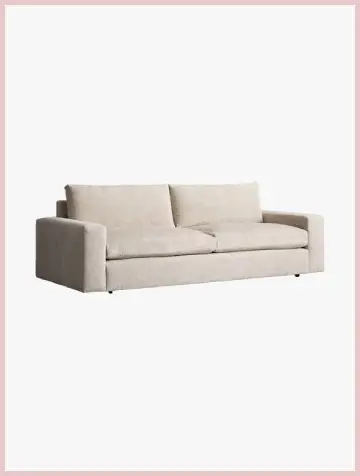
- Arhaus Kipton vs. Pottery Barn
Pottery Barn is worth considering if you want a comfortable sofa with different upholstery and configuration options.
Like Arhaus, the brand offers traditional and contemporary furniture styles. Its sofas come in different sizes, fabrics, and seating arrangements, making it possible to find something suitable for different living spaces.
I particularly like having alternatives in terms of cushion firmness and overall design. This is useful if you’re not completely satisfied with the relaxed, plush seating profile associated with the Kipton.
Pottery Barn also offers a broad range of price points, although some premium configurations can still be expensive.
I would compare the exact models rather than assuming every Pottery Barn sofa is cheaper or better constructed. Nevertheless, I would investigate its options before committing to the Kipton, especially if customer-service reliability is a major concern.
- Arhaus Kipton vs. Crate & Barrel
Crate & Barrel is another brand I would consider when shopping for a premium living room sofa.
Its Lounge collection, in particular, appeals to people who appreciate generous seating and a relaxed appearance.
Compared with the Kipton, Crate & Barrel offers a different selection of silhouettes and upholstery choices. You can explore more streamlined designs or oversized seating arrangements depending on your preferences.
I would pay close attention to cushion construction because the overall seating experience can vary significantly between models.
One advantage of comparing these brands is that you can evaluate how much comfort, upholstery quality, and customization you’re getting for your money.
I wouldn’t automatically assume Crate & Barrel is perfect, but it deserves consideration before spending several thousand dollars on a Kipton with unresolved customer-experience concerns.
- Arhaus Kipton vs. Room & Board
Room & Board is a particularly interesting alternative if you prioritize practical construction and understated design.
Its sofa selection includes contemporary and transitional styles that can work in different homes.
I like the idea of comparing its more structured seating options with the Kipton’s plush, relaxed profile.
For someone who spends several hours sitting on a sofa every day, cushion support and seat depth matter just as much as appearance.
Room & Board is worth considering if you prefer a more tailored look and want to evaluate different seating-support options.
I would still inspect the specific model, upholstery, warranty, and delivery terms before making a decision.
- Arhaus Kipton vs. Joybird
Joybird is another option for buyers who want customization without necessarily choosing a traditional luxury-furniture design.
The brand offers different upholstery colors, materials, and sofa configurations.
I find this appealing because customization allows you to coordinate your furniture with the rest of your home.
Compared with the Kipton, Joybird has a different aesthetic, with options ranging from mid-century-inspired furniture to contemporary designs.
Price should be considered carefully because customization, fabric selection, and dimensions can influence the final cost.
I would compare the construction details and customer feedback for the exact model rather than relying on the brand’s general reputation.
- Arhaus Kipton vs. West Elm
West Elm is worth exploring if you prefer modern furniture with a relaxed appearance.
Its sofa collections offer different silhouettes, upholstery materials, and seating arrangements.
Some designs have the soft, inviting appearance that attracts people to the Kipton.
I would compare seat depth, cushion firmness, and upholstery performance before deciding which model is more appropriate.
West Elm may provide more suitable choices for buyers who want a contemporary look without automatically moving into the highest luxury price category.
However, I would still investigate delivery experiences and customer complaints because a lower price does not automatically guarantee better service.
Also Read: Is Sixpenny Neva Sofa Worth It?
Frequently Asked Questions (FAQ)
The Kipton is one of Arhaus’s prominent and popular sofa collections, particularly for its customizable designs and relaxed seating. However, the best option depends on your comfort preferences, room dimensions, and budget. The Remington and other Arhaus collections are also worth comparing.
Customer opinions about the Kipton collection vary. Some owners appreciate its appearance and comfort, while others have raised concerns about cushion consistency, product quality, and customer service. I would verify the specifications of the particular sleeper configuration before purchasing because sleeper mechanisms and mattress comfort require separate consideration.
Common complaints in customer feedback include expensive pricing, inconsistent product quality, cushion problems, upholstery concerns, delayed deliveries, and difficulties obtaining satisfactory customer-service or warranty assistance. These experiences vary, and they do not mean every Arhaus purchase will have problems.
According to Arhaus, the Kipton sofa is crafted by its upholstery artisans in North Carolina using materials sourced from around the world. The company does not publicly identify one specific individual manufacturer for every Kipton configuration.
Final Verdict
I appreciate the Arhaus Kipton sofa’s attractive design, customizable configurations, and promising construction specifications.
However, its premium price and customer complaints about cushions, upholstery, and warranty support make me hesitant to recommend it.
I would compare Room & Board, Pottery Barn, and Crate & Barrel before purchasing.
Ultimately, I believe buyers deserve consistent quality and dependable service, not just an impressive showroom appearance.
Recent Posts
Nolan Interior sofa covers promise an easy way to refresh your furniture, protect upholstery, and improve your living room without buying a new sofa.However, customer dissatisfaction and negative...
Hot Mop Vs. Shower Pan: Which Waterproofing Actually Holds Up In A Real Bathroom?
I spent weeks researching and talking with installers before my last bathroom remodel, and the choice between a hot mop shower pan and a modern shower pan system kept coming up as the biggest...