
I spent weeks researching and talking with installers before my last bathroom remodel, and the choice between a hot mop shower pan and a modern shower pan system kept coming up as the biggest decision under the tile.
My goal here is to walk you through both options so you can pick the one that actually fits your space, climate, budget, and tolerance for mess without guessing.
| Feature | Hot Mop | Modern Shower Pan (PVC liner, sheet membrane, or foam kit) |
| Core material | Hot asphalt + felt layers | PVC/CPE sheet, bonded membrane, or preformed foam |
| Installation | Specialist only, kettle and mop | Pro or careful DIY possible |
| Seam situation | Fully seamless monolithic | Seams or folds that need careful sealing |
| Water path | Sub-pan (mortar stays damp) | Often topical (assembly can dry out) |
| Best shape flexibility | Excellent for custom and odd layouts | Good, but limited by sheet size or kit dimensions |
| Odor and safety during install | Strong fumes, hot material risk | Minimal odor, no open heat |
| Typical lifespan claim | 30+ years when done right | 15–25+ years depending on system and install |
| Relative cost range | Competitive in West Coast markets | Often higher materials, sometimes lower labor elsewhere |
| Code familiarity | Long history in California and West | Widely accepted nationwide |
Key Differences Between The Hot Mop And Shower Pan
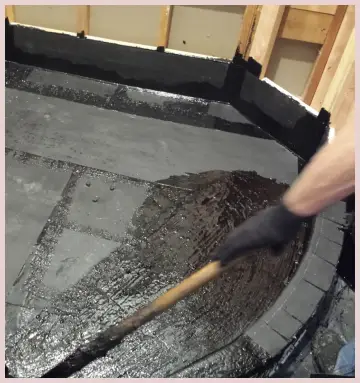
- Location of the waterproof layer: Hot mop sits under a thick mud bed that stays damp after every shower.
Modern systems often keep the barrier right under the tile or foam so the assembly can dry between uses.
- Seam strategy: Hot mop creates none once the layers cool and fuse.
Sheet liners and membranes rely on careful overlaps, folds, or taped joints that must stay perfect for years.
- Labor skill set required: Hot mop demands a specialist who owns the kettle and knows the temperature window.
Many modern systems allow a skilled tile setter to follow the manufacturer instructions and finish the job.
- Response to movement and settling: The thick asphalt membrane flexes with the house over time.
Thin membranes depend more on the substrate quality and the strength of the thin-set bond.
- Drainage philosophy: Hot mop counts on weep holes that stay open under a saturated mud bed.
Topical systems direct water into the top of the drain and keep the substrate dry from the start.
Key Features Of Hot Mop
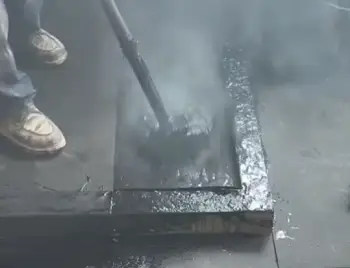
- Seamless continuous membrane: The hot asphalt bonds every layer into one solid piece.
No glued seams or folded corners remain that might open later under daily use.
- Custom shape tolerance: Odd angles, benches, and wide curbs receive full coverage on the same day
. Special-order pieces become unnecessary when the layout turns complex.
- Thickness and toughness: Multiple layers create a relatively thick barrier.
This resists puncture during the mud-bed stage better than most thin sheet products.
- Proven regional track record: Decades of use in high-volume California construction give installers and inspectors a clear picture of success.
Many pans still perform after thirty years of service.
Quick field application once the crew is on site: A standard residential pan finishes in a couple of hours after the pre-slope sits ready.
The next trade can move forward without long delays.
Pros Of Hot Mop
- Extreme shape flexibility: Any custom footprint or bench configuration receives full coverage without special ordering or splicing. The liquid asphalt flows into every corner and forms one continuous barrier.
- Long field history in seismic and coastal areas: Many pans installed thirty or forty years ago still perform when the surrounding framing opens during a later remodel. The material has proven itself under real house movement.
- Competitive pricing where specialists are common: In Southern California the labor and material cost often lands in the same range as other methods once the full assembly is counted. Local crews keep the numbers practical.
- Fast turnaround for the waterproofing step: Once the pre-slope is set, the mopping itself finishes quickly. The surface is ready for the next mud bed the same day or the following morning.
- Forgiving of minor substrate imperfections: The hot liquid fills small voids and irregularities that might challenge a rigid sheet. Small dips or rough spots disappear under the first coat.
Cons Of Hot Mop
- Strong odor and fumes during and shortly after installation: Windows stay open and fans run hard. The house may need to sit empty for a few hours while the strongest smell clears.
- High heat and burn risk: Material arrives at several hundred degrees. This remains a specialist job only, and the crew must control the site carefully at every step.
- Dependence on a dwindling specialist trade: Outside the West Coast it can be hard to find experienced hot-mop crews. Price and schedule risk rise when the right person must travel long distances.
- Perpetually damp mud bed: Water sits in the mortar until it reaches the weeps. If those holes clog with soap or grit, the pan can hold water and create odor or staining over time.
- Limited repair options once buried: Fixing a failed area usually means opening the entire floor. Spot repairs rarely stay reliable under the finished tile.
Key Features Of Modern Shower Pan Systems
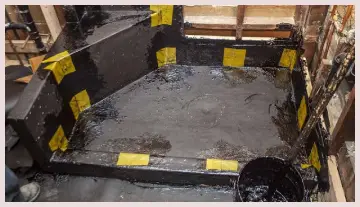
- Topical or near-surface waterproofing: Water never soaks a thick mortar bed for days.
This reduces the chance of lingering dampness and musty smells inside the assembly.
System components designed to work together: Matching drains, corners, and sealants lower the number of field improvisations.
One product line covers most of the critical details.
- Lower odor and no open flame or kettle: Installation stays cleaner and safer for the rest of the house.
Family members can remain nearby while the work proceeds.
- Easier inspection and repair paths: Many systems stay accessible or at least more visible until the final tile goes down.
Problems surface earlier than they do under a buried hot-mop layer.
- Wider availability outside the West Coast: Trained installers and materials appear in almost every market.
You no longer depend on a specialist who may live hours away.
Pros Of Modern Shower Pan Systems
- Cleaner, lower-odor installation: No kettle and no open heat appear on the job. Materials stay mild enough that most people can remain in the house while the work happens.
- Drier assembly overall: Topical membranes keep moisture out of the substrate. This cuts the risk of mold inside the walls or under the floor after years of daily showers.
- Clear manufacturer instructions and warranties: Systems arrive with detailed steps and often a ten-year or longer warranty when certified installers complete the work. The rules stay consistent from job to job.
- Easier coordination with other trades: A tile setter can often handle the entire waterproofing package. A separate specialty crew no longer needs a separate schedule slot.
- Better suited to curbless and low-profile designs: Foam trays and thin membranes make zero-threshold entries simpler to detail. The finished height stays low without extra buildup.
Cons Of Modern Shower Pan Systems
- Seams and folds remain potential weak points: Corners and transitions need perfect technique every time. A single missed fold can create a leak path that appears years later.
- Higher material cost in some markets: Full kits with drains, boards, and membranes can exceed the price of a local hot-mop job. The numbers shift depending on region and product line.
- Strict adherence to product rules: Deviating from the published system voids the warranty and often the performance. Installers must follow every step without improvisation.
- Less thickness for heavy abuse during construction: Thin membranes can be punctured by dropped tools or sharp debris. Protection must stay in place until the tile covers everything.
- Regional code or inspector unfamiliarity in some traditional markets: Occasional push-back still appears in areas where hot mop has been the default for generations. Extra documentation sometimes becomes necessary.
Installation Realities From A Homeowner’s View
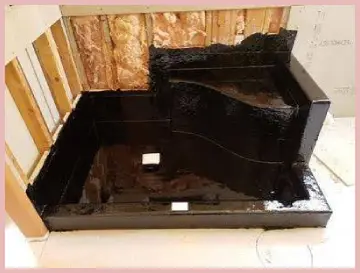
I stood in the room while the hot-mop crew worked.
The pre-slope had to be perfect first. Then the asphalt arrived hot, the felt went down in sequence, and the whole pan was finished before lunch. The smell was real but manageable with good ventilation.
The next day the tile setter floated the final mud bed and we were rolling.
On the membrane jobs the process felt more like following a recipe. Pre-slope or foam tray, membrane sheets cut and pressed into thin-set, corners pre-formed or taped, drain sealed, flood test, then tile.
The work took longer in total hours but required less specialized equipment and produced almost no odor.
Both methods demand a flood test before the final mortar or tile covers everything. Skipping that step is the fastest way to discover a problem after the walls are closed.
Cost Considerations
In markets where hot mop is still common, a standard residential pan often falls in the mid-range of waterproofing costs.
Outside those markets the price climbs because the specialist has to travel or the method is simply unavailable.
Modern systems show a wider spread: basic PVC liners stay inexpensive, full foam-and-membrane kits sit higher, and labor rates vary by region.
Material alone for a Schluter-style package can exceed a local hot-mop quote, yet the overall project cost sometimes balances out because one crew handles more of the work.
I always ask for an apples-to-apples number that includes the pre-slope, the waterproofing, the final mud bed if needed, and the flood test. That is the only way the two approaches can be compared fairly.
Durability And Long-Term Performance
A correctly installed hot mop can last decades. I have opened showers that were thirty years old and found the asphalt layer still intact and the framing dry.
Failures usually trace back to clogged weeps, punctures during the mud stage, or poor slope rather than the material itself.
Modern systems also deliver long service when the installer follows the book. Their advantage is the ability of the assembly to dry out, which reduces the chance of hidden mold or mineral deposits.
Their risk is any compromise at a seam or penetration.
Neither method is magic. Both rely on the quality of the person holding the tools more than the brand name on the bag.
When Hot Mop Still Makes Sense?
If you live in California or the broader West Coast, if your shower has an unusual shape or multiple benches, and if you can hire an experienced local specialist, hot mop remains a strong contender. The seamless nature and the thick protective layer give real peace of mind under heavy tile or stone.
When a Modern Shower Pan System Fits Better?
If you want lower odor, a drier substrate, easier coordination with a single tile crew, or a design that includes a curbless entry, the newer systems usually win. They also travel better to regions where hot-mop specialists are scarce.
Frequently Asked Questions (FAQ)
The method grew popular there decades ago because it produced a seamless, durable pan that handled local construction volume and seismic movement well. Many builders and inspectors still prefer the familiar process.
Yes. It remains common in Southern California and other West Coast markets for both new construction and remodels, though modern membranes have gained share everywhere else.
Neither is automatically better. Hot mop offers a thicker seamless barrier under a traditional mud bed. Schluter and similar systems keep the waterproofing closer to the tile and allow the assembly to dry. Choice depends on shape, local labor, and whether you want a saturated or dry substrate.
In active West Coast markets a standard residential pan often runs between roughly one thousand and three thousand dollars depending on size and access. Quotes outside those markets climb because specialists are harder to find. Always get local numbers that include the pre-slope and flood test.
Final Thoughts
I went into my own remodel leaning toward the method I saw most often in my area, then compared the real-world trade-offs side by side.
Hot mop still delivers a rugged, custom-fit barrier that has protected thousands of California showers for decades.
Modern shower pan systems give you cleaner installation, a drier structure, and wider availability.
Your decision should rest on the shape of the space, the skill of the people available to you, and how much you value a completely dry assembly versus a time-tested seamless one.
Talk to local installers, insist on a flood test, and choose the approach that matches the house you actually live in rather than the one that sounds newest on paper.
That is the practical path that keeps water where it belongs for the life of the tile.
Recent Posts
Arhaus Kipton Sofa Review: Is This Expensive Couch Worth Buying?
The Arhaus Kipton sofa looks luxurious, offers customizable designs, and features an inviting silhouette.However, its premium price and concerning customer feedback make me hesitant to recommend...
Nolan Interior sofa covers promise an easy way to refresh your furniture, protect upholstery, and improve your living room without buying a new sofa.However, customer dissatisfaction and negative...