
As someone who’s spent countless hours tending to indoor plants in my apartment, I wanted to share my thoughts on Auk and AeroGarden.
These two systems have transformed how I grow fresh herbs and veggies without stepping outside.
In this article, I’ll compare them head-to-head, highlighting what makes each unique so you can pick the right one for your space and lifestyle.
Whether you’re a beginner or a seasoned grower, understanding their strengths and weaknesses will help you make a smart choice.
| Feature | Auk | AeroGarden |
| System Type | Open hydroponic with coco fiber | Closed hydroponic with pods |
| Seed Options | Use your own or certified seeds | Proprietary seed pods |
| Noise Level | Silent, no pumps | Noticeable water circulation |
| Design | Scandinavian, minimalist | Modern, functional |
| App Integration | None | Yes, with alerts |
| Plant Capacity | Up to 4-6 plants (Mini model) | Varies, up to 9 in Bounty |
| Price Range | $200-$300 | $100-$400 |
| Sustainability | Made in Europe, eco-friendly | Plastic-heavy, relaunch focus on improvements |
| Ease of Setup | Quick, no tools | Simple, but pod-based |
| Growth Speed | Fast, 4-6 weeks to harvest | Very fast, 3-5 weeks |
Key Differences Between Auk And Aerogarden
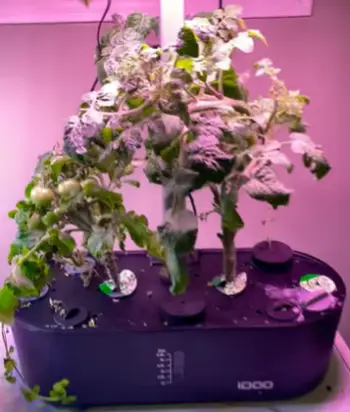
When I stack them up, the contrasts become clear, influencing which one I recommend.
- Seed Freedom Vs. Convenience: Auk allows any seeds, giving me control and savings. AeroGarden’s pods are plug-and-play but limit choices and increase costs.
- Noise And Simplicity: Auk’s passive wicking is silent and hands-off.
AeroGarden’s active pump ensures oxygenation but adds sound and complexity.
- Design Philosophy: Auk emphasizes minimalism and sustainability, fitting my eco-conscious setup.
AeroGarden focuses on tech and speed, suiting gadget fans.
- Maintenance Style: Auk requires basic refills without apps.
AeroGarden’s notifications make it interactive but demand more attention to alerts.
- Scalability And Price: Auk starts higher but scales affordably with custom seeds.
AeroGarden offers budget models but ongoing expenses for pods.
These distinctions helped me decide based on my daily routine—quiet mornings with Auk or tech-savvy efficiency with AeroGarden.
Key Features Of Auk
I’ve always appreciated how Auk keeps things straightforward. It’s designed for people like me who want fresh produce without complicated setups.
- Open-System Design: This lets me plant any seeds I choose, from heirloom varieties to store-bought packets.
No restrictions mean more experimentation in my kitchen.
- LED Grow Lights: Energy-efficient lights mimic sunlight, adjustable for different growth stages.
They run quietly, which is a relief in my small living room.
- Coco Fiber Medium: Instead of soil or pods, it uses coconut husks that hold nutrients well.
I add water to a tank, and it wicks up naturally—no mess.
- Sustainable Build: Crafted from aluminum and bio-plastics, it’s durable and feels premium.
tank holds about three liters, lasting a week or so.
- Compact Size: The Mini model fits on my countertop without overwhelming the space, perfect for apartments.
These elements make Auk feel like a natural extension of traditional gardening, but indoors and automated.
Pros Of Auk
After trying Auk for several months, I’ve found plenty to like. It’s become my go-to for quiet, reliable growth.
- Quiet Operation: No humming pumps disturb my evenings, unlike some systems.
I can place it anywhere without noise complaints from roommates.
- Flexibility With Seeds: Planting my own saves money long-term.
I’ve grown exotic herbs that aren’t available in pods, adding variety to my meals.
- Aesthetic Appeal: The sleek Scandinavian look blends with my decor.
not just functional; it’s a conversation starter.
- Low Maintenance: Refill the tank weekly, add nutrients monthly.
No pH testing or tubing means less hassle for busy days.
- Eco-Friendly: Made in Europe with sustainable materials, it aligns with my values.
Less plastic waste compared to pod-based alternatives.
Overall, these advantages make Auk ideal if you value simplicity and style in your indoor setup.
Cons Of Auk
That said, no system is perfect. I’ve run into a few drawbacks that might sway your decision.
- Higher Upfront Cost: At around $250 for the Mini, it’s pricier than entry-level options. I had to budget for it, but the quality justifies it over time.
- Limited Plant Capacity: Only handles a handful of plants.
If I want a bigger harvest, I need multiple units, which adds up.
- No App Features: Lacks smart reminders, so I track everything manually.
Fine for me, but tech enthusiasts might miss the connectivity.
- Uneven Growth Potential: Taller plants can shade smaller ones.
I’ve had to rearrange occasionally to ensure even light distribution.
- Slower Initial Setup For Custom Seeds: Preparing your own takes a bit more effort than popping in pods.
Patience is key here.
These issues are minor in my experience, but they’re worth considering based on your needs.
Key Features Of AeroGarden
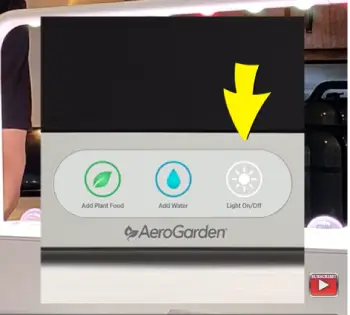
AeroGarden caught my eye years ago with its tech-forward approach. It’s like having a mini farm that reminds you what to do.
Pre-Seeded Pods: Everything comes ready-to-go, with sponges that expand in water.
I love how it simplifies starting basil or lettuce.
App Connectivity: Tracks water levels and nutrients, sending reminders to my phone.
Vacation mode adjusts settings when I’m away.
Adjustable LED Lights: High-output lights promote rapid growth, extendable up to 24 inches in larger models like the Bounty.
Water Pump System: Circulates oxygenated water, boosting root health.
Models vary from 3-pod Sprout to 9-pod Bounty.
Nutrient Delivery: Liquid food included, dosed automatically.
It’s foolproof for someone juggling work and home.
This setup appeals to my gadget-loving side, making gardening feel more like managing a smart device.
Pros Of AeroGarden
AeroGarden has been a staple in my home for longer, and its reliability keeps me coming back.
Rapid Growth: Plants sprout in days and are ready to harvest sooner.
had salads from seed to table in under a month.
User-Friendly For Beginners: The guided system holds your hand through the process.
Perfect if you’re new to hydroponics like I was initially.
Variety Of Models: From compact to large, there’s one for every space.
The Bounty fits my counter while growing enough for weekly meals.
App Integration: Alerts for water and food keep things on track. I appreciate not guessing when to refill.
Consistent Yields: Oxygenated water leads to healthy roots and bountiful produce.
I’ve shared extras with neighbors regularly.
It’s a solid choice if you want results without much guesswork.
Cons Of Aerogarden
Despite its strengths, AeroGarden has some quirks that I’ve learned to work around.
- Noise from Pump: The constant circulation can be annoying in quiet rooms.
I moved mine to the kitchen to avoid it during movie nights.
- Proprietary Pods: Locked into their ecosystem, which gets expensive.
Refills add up, pushing me to seek alternatives.
- Bright Lights: The LEDs are intense, sometimes glaring.
Dimming helps, but it’s not ideal for all living spaces.
- Plastic Construction: Feels less premium and generates more waste.
With the recent changes, I’m hopeful for improvements.
- Dependency On Electricity: Power outages disrupt the cycle more than passive systems.
Backup plans are a must.
These factors make it less appealing if silence and flexibility are priorities.
Why I Chose To Compare These Two
Living in a city apartment with limited outdoor space, I’ve relied on indoor systems to keep fresh greens on my table year-round.
Auk entered my radar recently with its fresh take, while AeroGarden has been a reliable old friend.
Both use hydroponics to grow without soil, delivering nutrients directly to roots for faster results.
But as I experimented, I noticed how their approaches cater to different users.
If you’re like me, craving homegrown basil for pasta or lettuce for salads, picking between them boils down to your priorities: do you want effortless tech or serene simplicity?
Exploring The Setup Process

Let me walk you through how I got started with each. For Auk, unboxing felt premium—the box was recyclable, and assembly took minutes.
I soaked the coco fiber, inserted seeds into the plant chips, added nutrients to the water, and filled the tank.
The LED lights turned on automatically, and that was it.
No wiring or apps to download. Within a week, sprouts appeared, and I only checked the water level occasionally.
With AeroGarden, it’s similarly quick but more guided.
I plugged in the unit, inserted the pods, poured in water and the included food, and set the light schedule via the control panel or app.
The pump kicked in right away, bubbling gently—or not so gently, depending on the model.
The app prompted me for plant types, adjusting settings accordingly.
It’s satisfying for someone who enjoys fine-tuning, but I found myself adjusting the noise early on.
Both setups encouraged me to think about placement: near a window for ambient light boost, but not direct sun to avoid algae.
I placed my Auk on the kitchen counter for easy access, while the AeroGarden went in the living room for its display appeal.
Growth And Harvest Experiences
Nothing beats clipping fresh herbs right before cooking.
With Auk, growth felt organic—seeds I chose from my local store germinated reliably, though not as uniformly as pods.
I harvested basil leaves weekly, noticing how the coco medium kept roots healthy without overwatering risks. One batch of arugula grew so lush I made multiple salads.
The system’s efficiency meant minimal waste; excess water stayed in the tank.
AeroGarden impressed with speed. Pods for thyme and mint exploded with growth, filling the air with aromas.
I pruned regularly to encourage bushiness, and the app’s tips helped maximize yields. In the Bounty model, nine plants provided enough for family meals.
However, I dealt with root tangles occasionally, requiring careful cleaning between cycles.
Comparing harvests, AeroGarden edged out in volume, but Auk won for flavor variety since I could mix seeds.
I’ve frozen extras from both, extending the bounty through winter.
Maintenance Tips For Auk And Aerogarden
I’ve pulled together these practical, bullet-point maintenance tips from my own hands-on time with both systems, plus insights from other users and updated guides .
Keeping things clean and consistent is what turns a good harvest into a great one—whether you’re team quiet simplicity (Auk) or tech-guided speed (AeroGarden).
Daily Checks For Both
- Glance at water levels each morning to catch low tanks early.
- Snip off any yellow or dead leaves to keep airflow strong and prevent mold.
- Prune aggressively on fast-growers like basil to encourage bushiness and even light exposure.
- Listen for unusual noises (more relevant for AeroGarden’s pump) and check for pests with a quick visual scan.
Maintenance Tips For Auk
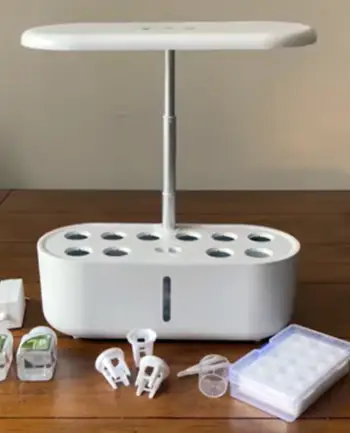
- Refill the water tank weekly (or as needed—about 3 liters for mature plants) with room-temperature filtered water to avoid mineral buildup.
- Mix in nutrients during refills; follow the bottle guidelines or use compatible hydroponic alternatives for savings.
- Raise the LED light bar manually as plants grow to keep it 4-6 inches above the tops for even coverage.
- Harvest regularly from the top to keep plants productive and prevent overcrowding.
- Rotate pots occasionally if one side gets more light, ensuring balanced growth.
- Wipe down the base and light bar with a damp cloth weekly to remove dust or splashes.
- Replace or rinse coco fiber medium between crops for fresh starts (it’s biodegradable and easy to swap).
- Use hydrogen peroxide (1:10 ratio with water) sparingly if algae appears in the tank—rare in this passive system.
- Clean fully between cycles with a quick rinse and mild soap; most parts are dishwasher-safe.
Maintenance Tips For AeroGarden
- Follow app or panel alerts for water refills and nutrient additions—usually every 1-2 weeks.
- Add liquid nutrients precisely as prompted; the relaunch formulas are more efficient.
- Clean the pump intake screen weekly by rinsing under warm water to prevent clogs.
- Prune and pollinate flowering plants (like tomatoes) manually for better yields.
- Sanitize with mild vinegar or hydrogen peroxide solution weekly to fight bacteria and algae.
- Detach and clean the pump thoroughly monthly—newer models have easier access.
- Rinse the grow deck and bowl after each harvest; many parts are now dishwasher-safe.
- Descale the reservoir quarterly in hard-water areas with a vinegar soak.
- Monitor pH occasionally if growth slows (aim for 5.5-6.5), though the system buffers well.
- Deep clean between plantings: empty, soak in sanitizer, scrub roots residue, and air dry.
These habits have kept my setups running smoothly for months. Auk feels like low-effort serenity, while AeroGarden rewards the extra steps with faster, fuller growth.
Pick what matches your vibe, and you’ll be snipping fresh greens in no time!
Frequently Asked Questions (FAQ)
Yes, if you value quiet, sustainable design and seed flexibility; it’s a long-term investment for regular growers.
It closed operations on January 1, 2025, but relaunched in spring with updated products and better user focus.
Click & Grow edges out for ease, but Auk excels in simplicity and AeroGarden in speed—depends on your needs.
It’s produced in Europe, using local sustainable materials.
Wrapping Up
Reflecting on my journey with these systems, I’ve grown to appreciate how they bring nature indoors effortlessly.
Auk suits my preference for calm, customizable gardening, while AeroGarden delivers quick, tech-assisted results.
You might find Auk perfect if silence and style matter, or AeroGarden if guidance and volume are key.
Whichever you choose, you’ll enjoy fresher meals and a greener home. Give one a try—you won’t look back.
Recent Posts
I spent months comparing budget options against established names after my last set of tires wore out sooner than expected.My goal here is to share what I learned from putting Dextero and...
AquaTru Carafe Vs. Classic: Which Is Actually Fits Your Kitchen?
I decided to write this comparison after months of testing both the AquaTru Carafe and the Classic in my own kitchen. Tracking covered daily use.Taste stayed consistent. Refill frequency...