
If you’re serious about tracking your heart health at home, Amazon, Beurer’s official website, and major pharmacies or medical retailers are where you should be looking to purchase a Beurer blood pressure monitor.
They offer the widest model selection, genuine warranty support, and competitive pricing — everything you need to start your monitoring journey the right way.
My Real Experience With The Beurer Blood Pressure Monitor
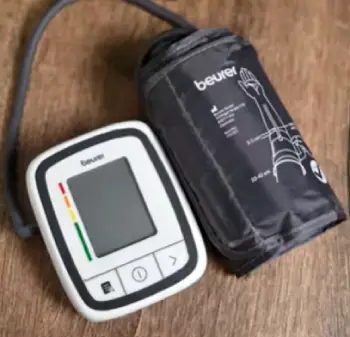
I’ve been using the Beurer BM 53 for several months now, and I want to walk you through what that’s actually been like — not the brochure version, but the day-to-day reality.
- Setting It Up the First Time
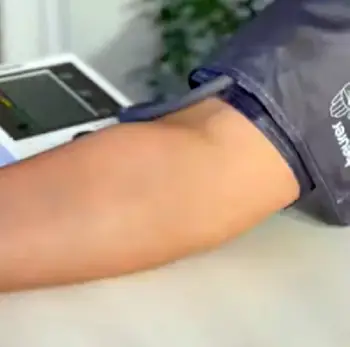
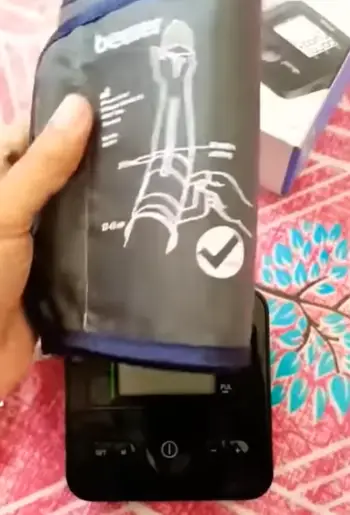
Setup was straightforward. You wrap the cuff around your upper arm, making sure the artery marker aligns with the inside of your elbow.
The device asks you nothing complicated. You press one button, sit still for 30 seconds, and you’re done. I was up and running within about three minutes of opening the box.
The XL display — and I mean genuinely large — showed my systolic, diastolic, and pulse readings clearly. Even in low-light conditions, the numbers were easy to read without squinting.
- The Triple Measurement Feature Changed Things
What genuinely surprised me was the triple measurement function. Instead of giving you a single snapshot reading, the BM 53 takes three consecutive measurements and calculates an average.
This is actually the method recommended by cardiologists for home monitoring, and the fact that a consumer device bakes it in automatically is impressive.
My clinic readings started matching my home readings much more closely once I switched to this approach.
- Day-to-Day Usability
You get a color-coded risk indicator on every reading — green for normal, yellow for borderline, red for elevated.
It sounds gimmicky, but it’s genuinely useful when you’re tired and just want a quick visual confirmation that everything’s okay.
The device also stores readings in memory, so I can scroll back and track trends across days and weeks.
The Beurer HealthManager Pro app connects via Bluetooth on the BM 54 and higher models, giving you a full dashboard of your health data.
I found the app clean and intuitive, though I’ll admit getting past readings through the device’s physical buttons alone is slightly less convenient — the app is the better route for data review.
- What Surprised Me About Accuracy
I cross-referenced my Beurer readings against a clinical-grade device at my pharmacy on multiple occasions. The variation stayed within 2–3 mmHg, which is well within the clinically acceptable range.
The published validation study for the Beurer BM 28 showed a mean difference of just 0.4 mmHg for systolic and 0.5 mmHg for diastolic pressure compared to reference measurements — those are clinical numbers, not marketing claims.
The Pros Of Beurer Blood Pressure Monitor
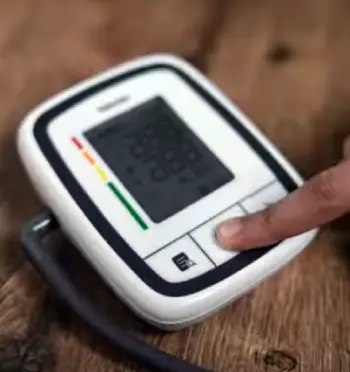
- Clinical Validation You Can Actually Trust
Beurer isn’t throwing the word “accurate” around loosely.
Multiple models — including the BM72, BM82, BM69, and BC54W — have been officially validated and listed through independent validation programs including STRIDE BP and ValidateBP.
org, meeting ISO 81060-2 clinical validation criteria. This is the same standard hospitals and clinics use when evaluating monitoring equipment.
When a brand can point to published peer-reviewed validation studies and not just self-declared specs, that’s when you know you’re in safe territory.
- The XL Display Is a Genuine Accessibility Win
I’ve recommended Beurer to my mother, who is in her 70s and has mild vision difficulties. She can read every number on the display without her reading glasses.
That’s not a small thing. Many budget monitors use tiny, dim screens that require you to hold the device at arm’s length under bright lighting.
Beurer’s XL display is a real, meaningful improvement in everyday usability, especially for older users or anyone monitoring their blood pressure in the early morning when you’re not fully alert.
- Arrhythmia Detection as a Preventive Health Tool
The arrhythmia detection isn’t just a feature checkbox — it’s a clinical safeguard. Atrial fibrillation (AFib) is one of the most under-diagnosed cardiac conditions, and it dramatically increases stroke risk.
Beurer’s monitors are designed to flag irregular heartbeat patterns during measurement, which means you’re not just tracking blood pressure — you’re getting a secondary layer of cardiac monitoring every single time you use the device.
For people with a family history of heart disease, this alone can be the difference between early intervention and a serious health event.
- German Engineering Meets Thoughtful Design
Beurer is headquartered in Ulm, Germany, and the engineering philosophy shows.
The brand is the market leader in Germany for blood pressure monitors, which tells you something about how the domestic market — where precision and reliability are cultural expectations — has responded to the product.
You feel this in the cuff construction, the firmness of the display housing, and the intuitiveness of the one-button operation.
- The HealthManager Pro App Adds Real Value
The companion app isn’t just a repository for data — it gives you trend graphs, morning and evening averages, and can flag patterns that a standalone device might not make obvious.
Models like the BM69 can store up to 200 readings for two users, and the app syncs wirelessly via Bluetooth.
If you’re managing blood pressure as part of a broader health plan alongside your doctor, this kind of longitudinal data is invaluable.
- Value for Money Across the Range
Beurer offers a tiered range from basic single-user models to premium wireless devices. Whether you want a no-frills everyday monitor or a full-featured device with app connectivity, triple measurement, and arrhythmia detection, there’s a model that fits your budget. And critically, even the entry-level models don’t cut corners on accuracy.
The Cons Of Beurer Blood Pressure Monitor
- Navigation Without the App Can Be Clunky
This is probably my biggest frustration.
On several models, including the BM76, accessing past readings directly from the device requires button combinations that aren’t immediately intuitive.
If you’re comfortable using the smartphone app, this is a non-issue. But if you or someone in your household isn’t a smartphone user, you might find yourself fumbling through readings more than you’d like.
- The Display Auto-Shuts Off Too Quickly
The screen on the BM 53 powers off automatically after a short idle period.
It’s designed to conserve battery life, which is sensible, but if you’re writing down your reading or showing it to someone else, you might lose the display before you’ve finished.
It’s a minor but real inconvenience that you’ll notice regularly.
- Wrist Models Require Precise Positioning
Beurer’s wrist blood pressure monitors — like the BC 87 and BC54W — require you to hold your wrist at heart level during measurement.
If you don’t, the readings can be unreliable. This is a limitation of wrist-based monitoring in general, not exclusive to Beurer, but it’s worth flagging.
For most users, especially those new to home monitoring, an upper arm model is the safer and more consistent choice.
- Memory Management on Entry-Level Models
The basic models store around 60 readings per user. For active daily monitoring, this means you’ll cycle through your memory relatively quickly.
Higher-end models like the BM69 offer up to 200 readings, which is more appropriate for long-term tracking.
If you’re monitoring intensively — say, twice a day — plan your model selection accordingly.
Maintenance Tips For Beurer Blood Pressure Monitor
Your blood pressure monitor is only as good as you treat it. A well-maintained device can serve you reliably for years. Here’s what you need to do to keep it performing at its best.
- Cleaning the Device and Cuff
Always clean both the monitor body and the cuff with a slightly damp, soft cloth.
That’s damp, not wet — you’re wiping away surface dust and skin oils, not washing the device.
Never use cleaning agents, detergents, alcohol-based solvents, or any harsh chemicals on the main unit, as these can degrade the plastic housing and damage internal components.
For the cuff specifically, Beurer recommends disinfecting it twice a week using a cloth lightly moistened with 75–90% ethyl alcohol, then allowing it to air dry completely before storage.
This is particularly important if multiple people are using the same device.
- Never Submerge the Device in Water
This sounds obvious, but it’s worth saying clearly: never hold the device or cuff under running water, and never immerse any part of the monitor in any liquid.
Blood pressure monitors are precision instruments with sensitive pressure sensors.
Even a small amount of moisture entering the device can cause permanent damage and — more dangerously — inaccurate readings.
- Proper Cuff Storage and Handling
When you’re not using the monitor, store the cuff without sharp bends or kinks in the air tube.
A kinked tube reduces airflow during measurement, which leads to incorrect inflation and unreliable readings.
It’s best to keep the cuff loosely coiled, ideally in the storage pouch that comes with the device.
Also, never place heavy objects on top of the stored monitor or cuff — pressure on the cuff can distort its shape over time.
- Battery Management
When storing the device for extended periods — anything longer than a week or two without use — remove the batteries.
Batteries left in a device can leak, causing corrosive damage to the battery compartment that is expensive and sometimes impossible to repair.
If a battery does leak, put on gloves before handling the device, and clean the compartment with a dry cloth.
Always replace all batteries at the same time, and use the battery type specified in your model’s instruction manual.
- Calibration and Periodic Accuracy Checks
No blood pressure monitor stays perfectly calibrated forever. Beurer recommends having your device checked for accuracy every two years, or more frequently if you suspect the readings have drifted.
A simple way to check this is to bring your home monitor to your next clinic visit and take back-to-back readings with your doctor’s device.
If the readings are consistently off by more than 5 mmHg, it may be time to have the device serviced or replaced. Don’t ignore a discrepancy and assume the cheaper device is the accurate one.
- Cuff Size Matters More Than You Think
Use the correct cuff size for your arm circumference. Most standard Beurer cuffs fit upper arms from 22–42 cm. If the cuff is too small, the readings will be artificially high.
If it’s too large, they’ll be artificially low. Neither scenario gives you useful health data. Beurer offers different cuff sizes across its range, so make sure you’re using the one appropriate for your arm.
Check your cuff size before you assume your readings are abnormal.
- Positioning Consistency for Reliable Readings
This isn’t strictly a maintenance tip, but it’s essential for measurement accuracy.
Always take readings in the same position — sitting upright, feet flat on the floor, arm resting at heart level, and staying still and quiet for at least five minutes before measuring.
Inconsistent positioning is the most common reason for wildly variable home readings, and it’s entirely preventable.
Beurer Compares To Other Blood Pressure Monitor Brands
Choosing a blood pressure monitor means navigating a crowded market. Let me walk you through how Beurer stacks up against the names you’ll likely encounter.
- Beurer vs. Omron
Omron is Beurer’s most direct competitor in terms of quality and credibility.
The Omron Platinum currently ranks as one of the most accurate blood pressure monitors in independent lab testing, with no readings varying 10 mmHg or more from a control device.
Omron models like the Platinum also offer dual LCD screens and up to 200 reading storage for two users. However, Beurer holds its own firmly on accuracy — the clinical validation studies speak to that — and often comes in at a lower price point for comparable feature sets.
Beurer’s triple measurement feature and the availability of advanced arrhythmia detection across a wider range of price tiers also gives it an edge for users focused on cardiac monitoring rather than just blood pressure.
- Beurer vs. Withings
Withings takes a tech-forward approach, with their BPM Connect model integrating deeply into smartphone health ecosystems including Apple Health and Google Fit.
If you live inside the Apple ecosystem and want seamless data integration, Withings is a compelling option.
Beurer’s HealthManager Pro app is capable and functional, but it doesn’t have the same third-party integration depth as Withings.
Where Beurer wins is in the breadth of its physical device range — from basic entry-level monitors to fully wireless wrist models — whereas Withings focuses on a smaller portfolio of premium connected devices.
- Beurer vs. Microlife
Microlife is another clinically validated brand with a strong reputation in atrial fibrillation detection.
The Microlife BP A100 Plus, for instance, offers AFib detection, 2×99 memory, and simple operation.
In terms of clinical credibility, both Beurer and Microlife are at the same tier. Beurer differentiates itself through design polish, the app ecosystem, and a broader product range that gives users more options depending on their budget and monitoring style.
Microlife is the more understated option; Beurer is the more feature-rich one.
- Beurer vs. Budget or No-Name Brands
This is the most important comparison to make.
If you’re tempted by a no-name blood pressure monitor at a fraction of the price, the question you should be asking is: can it back up its accuracy claims with clinical validation? In almost every case, the answer is no.
Budget brands typically do not submit to independent validation protocols, which means the numbers on the screen may or may not reflect your actual blood pressure.
Beurer’s clinical validations — meeting ESH, ISO 81060-2, and US Validated Device Listing criteria — mean you’re not guessing.
For a health device you’re relying on for potentially life-altering decisions, that validation gap matters enormously.
Also Read: Is Ezwell Remedy Massage System Worth It?
Frequently Asked Questions (FAQ)
Yes. Beurer is the market leader for blood pressure monitors in Germany and has an internationally recognized reputation for accuracy and build quality.
Absolutely. Beurer devices are clinically validated, meet international accuracy standards including ISO 81060-2, and have earned independent validation listings in both Europe and the US.
Omron Platinum scores highest in independent lab testing, but Beurer’s validated models are close behind and considered equally reliable for home use, with peer-reviewed studies confirming mean differences under 1 mmHg from reference devices.
Yes. Several Beurer models — including the BM72, BM82, BM69, and BC54W — are listed on the US Validated Device Listing and validated under internationally recognized clinical protocols.
Wrapping Up
If you’re looking for a clinically validated, reliable, and genuinely user-friendly home blood pressure monitor, Beurer earns its place at the top of your shortlist.
You can confidently pick one up from Amazon, the Beurer official website, or your nearest pharmacy — just make sure you’re choosing a model with clinical validation, and you’ll be in good hands for years to come.
Recent Posts
● Interactive 5-Zone Interior & Exterior Paint Blueprint Paint Coverage Calculator: Gallons, Primer, Square Footage & Cost Tap any architectural surface zone on the blueprint...
If you want smooth, shiny hair without spending a fortune on a premium styling tool, the Ella Bella hair dryer may be worth considering.In these Ella Bella hair dryer reviews, I’ll look...