
If your vehicle is leaking transmission fluid, BlueDevil Transmission Sealer may look like an affordable alternative to expensive repairs.
I would consider this product for minor leaks caused by aging seals and gaskets, especially when replacing them immediately isn’t practical. However, I wouldn’t treat it as a permanent fix for serious transmission damage.
In this review, I’ll examine its benefits, limitations, application, maintenance requirements, and how it compares with competing transmission sealers.
My First Experience With BlueDevil Transmission Sealer
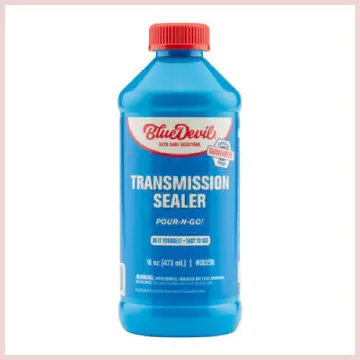
When I look at a product like BlueDevil Transmission Sealer, my first concern is simple: can it help stop a transmission fluid leak without requiring an expensive repair?
Transmission problems can become stressful quickly, particularly when you notice reddish fluid underneath your vehicle or discover that the transmission fluid level keeps dropping.
What makes BlueDevil interesting is its approach to addressing leaks associated with worn or deteriorated seals.
Over time, transmission seals can become hard, brittle, or less flexible. Heat, friction, mileage, and normal aging all contribute to this deterioration. When seals lose their ability to maintain a tight connection, transmission fluid can gradually escape.
BlueDevil Transmission Sealer is marketed as a treatment intended to help address certain seal-related leaks.
Rather than requiring you to immediately disassemble the transmission, the product is added to the transmission fluid according to its specific instructions.
I particularly appreciate the convenience of this approach. Nobody wants to spend money on major transmission work if a relatively minor seal problem is responsible for the leak. However, I would first want to establish where the fluid is coming from.
A leaking transmission pan gasket, damaged cooler line, loose fitting, cracked housing, or worn axle seal may require a different solution.
A chemical sealer cannot reliably repair physical damage or mechanical failures.
My biggest takeaway is that BlueDevil Transmission Sealer should be viewed as a possible treatment for compatible seal-related leaks, not a substitute for diagnosing transmission problems.
If your transmission is slipping, overheating, making unusual noises, or losing fluid rapidly, professional inspection should come before trying any additive.
What Is BlueDevil Transmission Sealer?
BlueDevil Transmission Sealer is an automotive treatment designed to help address certain transmission fluid leaks associated with deteriorated seals. It is intended for vehicles experiencing seal-related leakage rather than major internal transmission failures.
Transmission systems depend on several seals and gaskets to keep fluid contained. These components are exposed to heat, pressure, vibration, and constant movement. As a vehicle gets older, the rubber materials used in certain seals can lose flexibility. Small openings may develop, allowing transmission fluid to escape.
This is where a transmission seal conditioner or sealer may be useful. Products in this category are formulated to work with transmission fluid and help improve the condition of compatible seals.
The important distinction is that BlueDevil is not a mechanical repair product. It cannot replace a damaged gasket, fix a broken transmission housing, or restore worn-out internal components. Its potential usefulness depends heavily on the source and severity of the leak.
Pros Of BlueDevil Transmission Sealer
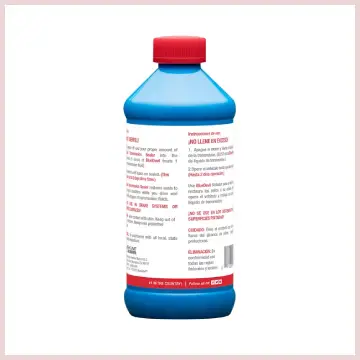
- Potentially Reduces Minor Seal-Related Leaks
The biggest potential advantage is its intended purpose: helping address certain leaks associated with deteriorated transmission seals.
As vehicles age, sealing materials can become less flexible. This may create small gaps that allow fluid to escape. A compatible seal treatment may help improve sealing performance in situations where deterioration is responsible for the leakage.
For someone dealing with a minor seep, that possibility can be appealing.
I would still avoid expecting immediate results. Seal-related problems can vary considerably, and a product that helps one vehicle may not produce the same outcome in another.
- May Help Avoid Immediate Repair Expenses
Transmission repairs can become expensive, especially when labor-intensive components need to be removed.
Even a relatively straightforward seal replacement can involve substantial labor depending on its location. If a leak comes from a difficult-to-access component, repair costs may increase further.
This explains why products such as BlueDevil attract attention.
A transmission sealer may offer a relatively inexpensive option to consider when the problem is minor and the product is appropriate for the vehicle. However, I would never recommend using the price of an additive as the main reason to postpone a necessary repair.
If the transmission is losing significant fluid, delaying proper maintenance could create much larger expenses.
- Convenient Application
Another appealing feature is the convenience of an additive-based treatment.
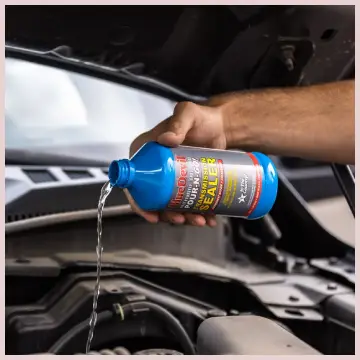
Unlike traditional mechanical repairs, which may involve removing components and replacing seals, a transmission treatment is generally introduced through the appropriate fluid service point.
This makes the process less complicated than disassembling a transmission.
However, convenience should not encourage guesswork. You need to identify the correct transmission, check fluid compatibility, and follow the manufacturer’s dosage and application instructions.
Some vehicles also have sealed transmission systems that require specialized equipment or procedures for fluid servicing.
- Useful Consideration for Older Vehicles
Older vehicles often experience age-related deterioration in rubber sealing components.
If you own a vehicle with considerable mileage, you may notice small fluid spots even when the transmission still operates normally.
In that situation, I can understand why an owner might consider a seal treatment before committing to a costly repair.
BlueDevil may be worth evaluating if the leak has been diagnosed as a compatible seal-related problem.
Still, mileage alone does not establish whether the product is appropriate. A high-mileage vehicle with a healthy transmission may not need an additive, while a relatively newer vehicle can develop a damaged gasket or leaking connection.
- May Provide a Temporary Maintenance Option
I would consider the possibility of reduced leakage a maintenance benefit rather than a guarantee of permanent repair.
If a treatment helps with a minor seal-related seep, it may reduce the inconvenience of fluid spots and the need for frequent fluid top-ups.
That can be useful for someone trying to manage an aging vehicle responsibly.
However, you should continue checking the transmission fluid level and inspecting for leaks. Even if the visible leakage decreases, the underlying component may still need replacement eventually.
Cons Of BlueDevil Transmission Sealer
- It Cannot Repair Every Type of Leak
This is probably the most important limitation.
A transmission can leak for numerous reasons, including damaged gaskets, loose fittings, cracked housings, worn seals, and leaking fluid lines.
A chemical treatment designed for seal-related leakage cannot reliably repair all these problems.
If your transmission pan is damaged, adding a sealer is unlikely to solve the underlying issue. The same applies to a cracked transmission casing or a severely damaged component.
You should identify the source of the leak before deciding whether the product is appropriate.
- Results Are Not Guaranteed
I would not purchase BlueDevil expecting guaranteed results.
Some leaks may respond to a compatible treatment, while others may continue regardless of how carefully the product is applied.
The condition of the sealing material, the size of the leak, the transmission design, and the product’s compatibility all influence the outcome.
A vehicle with a slightly deteriorated seal is not comparable to one with a badly damaged sealing surface.
- May Not Be Appropriate for Every Transmission
Modern transmissions can have very specific fluid requirements.
Automatic transmissions, continuously variable transmissions, dual-clutch systems, and manual transmissions do not necessarily use interchangeable fluids or additives.
Using an incompatible product may interfere with the transmission’s intended operating characteristics.
Before purchasing, I would verify the exact product formulation, vehicle application, and manufacturer’s compatibility instructions.
Never assume that an additive is suitable simply because it says transmission sealer on the container.
- Does Not Fix Internal Mechanical Damage
A transmission that slips, struggles to change gears, makes grinding noises, or experiences delayed engagement may have a mechanical or hydraulic problem.
A seal treatment cannot restore worn clutch packs, repair damaged gears, or fix a failing transmission pump.
This is where expectations become especially important.
If your transmission is already showing serious symptoms, spending money on a sealer without diagnosing the issue may simply delay necessary repairs.
- May Delay Proper Diagnosis
One disadvantage I would take seriously is the temptation to use an additive before finding the actual leak.
Imagine noticing transmission fluid underneath your vehicle. You purchase a sealer, add it, and wait for the leak to disappear.
If the real problem is a damaged fluid line, the treatment may accomplish very little.
Meanwhile, the transmission may continue losing fluid.
I would rather spend time identifying the problem first than rely on an additive to solve something it was never designed to address.
Maintenance Tips For BlueDevil Transmission Sealer
- Check Transmission Fluid Levels Regularly
Checking the transmission fluid level is one of the simplest ways to monitor the condition of your vehicle.
Transmission fluid lubricates moving components, helps manage operating temperatures, and supports hydraulic functions in automatic transmissions. When the fluid level becomes too low, the transmission may struggle to operate properly.
I recommend following the checking procedure in your vehicle’s owner’s manual rather than using a universal method. Some vehicles have dipsticks, while others require specialized equipment to check the fluid.
Pay attention to unusual changes. If the fluid level keeps dropping after using BlueDevil, the leak may still be present.
Never ignore a consistently low fluid level. Driving with insufficient transmission fluid can contribute to serious damage.
- Inspect Your Parking Area for Fluid Leaks
One maintenance habit I find particularly useful is checking the ground underneath the vehicle.
After parking overnight, look for fresh spots or puddles. This can help you notice changes in leakage before they become more serious.
Transmission fluid is often reddish or pink when relatively fresh, but its appearance can change with age and contamination. Other automotive fluids may also resemble transmission fluid.
If you notice a new stain, do not automatically assume it is coming from the transmission.
Check the location and have the fluid identified if necessary. A mechanic can help determine whether the leak is associated with a transmission seal, gasket, cooler line, or another component.
- Follow the Recommended Transmission Fluid Service Schedule
Transmission fluid does not last forever.
Over time, heat, friction, and normal operation can affect its condition. Following the manufacturer’s recommended service schedule helps maintain the transmission’s lubrication and operating performance.
I would avoid using a sealant as a replacement for routine fluid maintenance.
Check your owner’s manual to determine the correct fluid specification and service interval. Some transmissions require periodic fluid replacement, while others have different manufacturer-specific maintenance recommendations.
Using the wrong fluid can cause shifting problems and potentially damage internal components.
- Avoid Overheating the Transmission
Excessive heat is one of the major factors that can contribute to transmission wear.
Repeated heavy towing, aggressive driving, excessive loads, and operating with insufficient fluid can increase transmission temperatures.
If your vehicle is frequently exposed to demanding driving conditions, follow the manufacturer’s recommendations for maintenance and cooling-system inspections.
I would also pay attention to warning signs such as burning smells, slipping gears, unusual noises, or transmission temperature warnings.
A sealer cannot solve overheating problems. If your transmission is getting too hot, the underlying cause needs attention.
- Avoid Mixing Unverified Additives
It may be tempting to combine different transmission treatments in the hope of getting better results.
I would avoid doing that.
Different additives can contain different chemical formulations, and combining products without manufacturer approval introduces unnecessary uncertainty.
Use only products that are explicitly approved for your transmission and application.
If you have already added another treatment, check compatibility before introducing BlueDevil.
- Maintain Records of Transmission Repairs
Keeping a basic maintenance record can help you understand whether the treatment is making a difference.
Write down when you first noticed the leak, the approximate fluid level, the date of any service, and whether the leakage changed afterward.
I find this approach useful because it gives you something more reliable than memory when discussing the issue with a mechanic.
You can also compare the vehicle’s condition before and after treatment.
If the leak continues, your records may help identify whether it is getting worse or remaining relatively stable.
Comparison Of BlueDevil Transmission Sealer With Other Brands
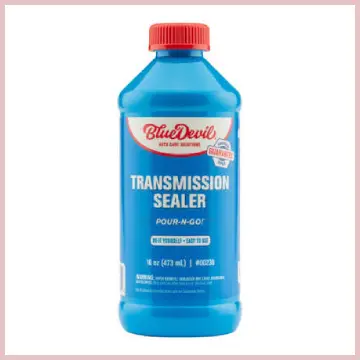
- BlueDevil vs. K-Seal
A comparison of two different automotive leak-treatment approaches.
BlueDevil and K-Seal are not interchangeable products.
BlueDevil Transmission Sealer is intended for certain transmission seal-related leaks. K-Seal products are primarily associated with cooling-system leak repair, including certain radiator, coolant, and engine cooling-system applications.
That distinction is extremely important.
If your vehicle is leaking transmission fluid, I would not choose a cooling-system product simply because it advertises leak-stopping capabilities.
For a compatible transmission seal problem, BlueDevil is the more relevant product to investigate.
K-Seal may be worth considering for an appropriate cooling-system issue, but it is not a direct substitute for a transmission sealer.
- BlueDevil vs. Lucas Transmission Fix
Lucas Transmission Fix is another product that vehicle owners may encounter when looking for help with transmission-related concerns.
The two products have different positioning and intended uses.
BlueDevil Transmission Sealer focuses on addressing certain leaks associated with deteriorated seals. Lucas Transmission Fix is marketed as a transmission treatment intended to help with issues such as rough shifting and transmission performance concerns.
I would not automatically use either product to address every transmission problem.
If the main issue is a small seal-related leak, I would investigate BlueDevil’s compatibility with the vehicle.
If the concern involves shifting behavior, I would first determine whether Lucas Transmission Fix is appropriate for the specific transmission and whether the symptoms indicate a mechanical problem.
Neither product should be considered a replacement for proper diagnosis.
- BlueDevil vs. ATP AT-205 Re-Seal
ATP AT-205 Re-Seal is another name worth considering when researching automotive seal treatments.
Its intended application is broader, covering certain automotive sealing materials and systems.
BlueDevil Transmission Sealer is more specifically positioned around transmission seal-related leakage.
What I find important here is product compatibility. A treatment designed for multiple automotive applications is not automatically suitable for every transmission.
I would compare the exact instructions, compatible fluids, recommended quantities, and intended sealing materials before choosing between them.
For me, the better option is the one that matches the actual leak and the manufacturer’s requirements, not necessarily the one with the most impressive advertising.
- BlueDevil vs. Bar’s Leaks
Bar’s Leaks is another established name in the automotive leak-treatment category.
The brand offers different products for different vehicle systems, so it is important to compare the specific formulation rather than the brand name alone.
Some Bar’s Leaks products are designed for engine cooling systems, while others address different automotive leak problems.
BlueDevil Transmission Sealer is the more directly relevant option when researching a product specifically intended for certain transmission seal leaks.
I would not purchase a Bar’s Leaks cooling-system treatment for a transmission problem.
Always match the product to the vehicle system and follow the stated application requirements.
- BlueDevil vs. Traditional Transmission Seal Replacement
Although this is not a brand comparison, I think it is the most important comparison to make.
A chemical sealer offers convenience, but replacing a damaged seal addresses the physical component responsible for the leakage.
If a seal has become severely deteriorated or physically damaged, replacement is generally the more dependable repair approach.
A mechanic can inspect the component, remove the damaged seal, and install an appropriate replacement.
The downside is that labor and parts can be expensive, particularly when the leaking seal is difficult to access.
BlueDevil may be worth considering for a compatible minor seal-related leak, but I would choose proper mechanical repair when the problem requires it.
Ultimately, the right decision depends on the severity of the leak, the vehicle’s condition, and the cost of a proper repair.
Is BlueDevil Transmission Sealer Worth Buying?
Whether BlueDevil Transmission Sealer is worth buying depends on what is happening with your vehicle.
I would consider it when the transmission has a relatively minor leak that has been identified as a compatible seal-related problem. In that situation, an additive-based treatment may be worth evaluating before committing to more extensive work.
However, I would not purchase it simply because my vehicle is leaking transmission fluid.
A leak from a damaged gasket, loose fitting, broken cooler line, or cracked housing requires a different solution.
I would also consider the vehicle’s overall condition. If the transmission is already slipping, overheating, or experiencing serious shifting problems, I would prioritize professional diagnostics instead of relying on a sealer.
The cost of the product may be relatively modest compared with a transmission repair, but that does not automatically make it the most economical decision.
A treatment that fails to address the underlying problem can waste money and delay necessary maintenance.
My recommendation is to identify the leak, verify compatibility, follow the application instructions, and monitor the results. If the problem continues, arrange a proper repair.
Also Read: Comparison Of Jiffy Lube And Take 5
Frequently Asked Questions (FAQ)
The time can vary depending on the product formulation, application, and condition of the seals. Follow the manufacturer’s instructions and monitor the leak.
It may help with certain seal-related leaks, but results are not guaranteed. It cannot repair damaged gaskets or broken transmission components.
Some can help with minor leaks caused by deteriorated seals. However, they cannot replace mechanical repairs when components are damaged.
For transmission seal-related leaks, BlueDevil is the more relevant choice. K-Seal is primarily designed for cooling-system leaks.
Final Verdict
I would consider BlueDevil Transmission Sealer if your vehicle has a minor, compatible seal-related transmission leak and you want to explore a less expensive treatment option. Its convenience is appealing, but it cannot replace proper repairs. Identify the leak, verify compatibility, and follow the instructions before purchasing. If your transmission has serious mechanical symptoms, choose professional diagnosis instead.
Recent Posts
Ark Design doors are worth considering if you want to upgrade your home with stylish, modern doors that combine attractive designs with everyday functionality.I believe they can be a good option...
If you need an affordable, space-saving storage solution that keeps your books, decorations, and everyday essentials organized, the Gianna 4-Tier Bookshelf is worth considering.I like the idea of...