
I have spent years rotating between quick-lube chains whenever my oil light starts flashing or the mileage hits the next service mark.
My main intent with this piece is simple: to break down Jiffy Lube versus Take 5 from the perspective of someone who has sat in both waiting rooms and stayed behind the wheel at both.
You can decide which one actually fits your schedule. Budget. Tolerance for add-ons.
| Feature | Jiffy Lube | Take 5 |
| Service Model | Traditional bay or limited drive-thru. Customer usually waits inside | Stay-in-your-car drive-thru focused |
| Typical Oil Change Time | 15–30 minutes once service starts | Around 10 minutes for most vehicles |
| Service Range | Broad. Oil. Filters. Tires. Brakes. Batteries. Fluids. Inspections | Narrow focus. Oil change plus limited add-ons. Filters. Wipers. Fluid top-offs |
| Network Size | Larger national footprint | Growing but smaller footprint |
| Pricing Tendency | Conventional often starts mid-$50s. Synthetic higher. Frequent coupons and upsells | Conventional often $40–50 range. Synthetic $70–100+. Convenience premium |
| Customer Experience | Lounge wait. More conversation about extra services | Minimal interaction. Remain in vehicle |
| Strength | Versatility for multiple needs in one stop | Speed and convenience |
My Real-World Experience With Both Chains
I have walked into Jiffy Lube locations across different states when I needed more than just oil. I have also pulled into Take 5 bays when the clock was against me.
The only thing that mattered was getting fresh oil without leaving the driver’s seat. Both chains solve the same basic problem. Keeping your engine lubricated. They approach it from opposite directions.
One tries to be a one-stop maintenance shop. The other tries to be the fastest possible oil stop. That difference shapes almost everything else.
Key Differences Between Jiffy Lube And Take 5
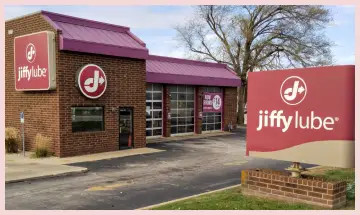
- Service delivery style: Jiffy Lube mostly operates like a traditional quick-lube. You park. Step out.
Wait while technicians work in a bay. Some locations offer limited drive-thru options. The core experience still involves leaving the car.
Take 5 built its entire model around staying in the vehicle. Technicians work from a pit underneath while you sit behind the wheel.
That single choice changes the entire feel of the visit.
- Breadth of available services: Jiffy Lube positions itself as more than an oil-change shop. You can often get tire rotations. Brake inspections.
Battery testing and replacement. Air and cabin filter swaps. Various fluid services under the same roof. Take 5 keeps the menu tight.
Oil change sits at the center. Supported by a short list of quick add-ons.
If you only need oil. Take 5 stays focused. If you want several items checked at once. Jiffy Lube gives you more options.
- Time commitment: Take 5 advertises and generally delivers the shorter clock time for a pure oil change.
Ten minutes is a realistic average when the bay is ready. Your vehicle is straightforward. Jiffy Lube’s Signature Service aims for fifteen minutes or less once work begins.
Total time from arrival to departure often stretches longer because of wait times. Inspections. The conversation about recommended extras.
- Upselling culture and transparency: Both chains make money beyond the base oil change.
At Jiffy Lube I have experienced longer conversations about air filters. Cabin filters. Fluid top-offs. At Take 5 the interaction is shorter.
The posted prices for synthetic packages can still surprise first-time visitors who expected budget-shop numbers.
The difference lies more in duration of the pitch than in the existence of the pitch.
- Location density and accessibility: Jiffy Lube maintains a larger network in many regions. This makes it easier to find when you are traveling.
Living in a smaller market. Take 5 continues expanding. Coverage remains thinner in some areas.
Convenience of the nearest location sometimes outweighs every other factor on the list.
Key Features Of Jiffy Lube
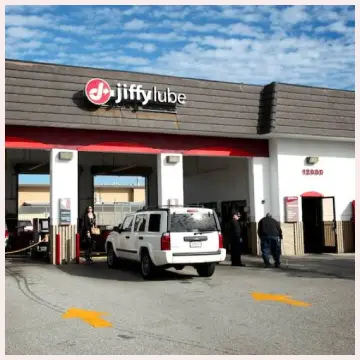
- Signature Service oil change package: This forms the core offering. It includes draining the old oil. Installing a new filter.
Filling with the selected oil type. Performing a multi-point inspection that covers fluid levels. Filters. Basic under-hood and under-car items.
The package is designed to move vehicles through quickly while still checking for obvious issues.
- Expanded maintenance menu: Beyond oil. Many locations handle tire rotations. Battery services.
Wiper blade replacement. Coolant services. Transmission fluid exchanges. This matters when your maintenance calendar lines up several items at once.
You prefer not to visit separate shops.
- Coupon and membership tools: Jiffy Lube regularly runs national and local coupons that shave money off the base price.
Some locations also push loyalty or membership programs that lock in discounts for return visits.
These tools can bring the effective price closer to budget competitors when used consistently.
- Training and standardization claims: The company emphasizes its internal training program.
Positions technicians as following standardized processes across franchises. In practice.
The quality of execution still varies by location. By the specific crew on duty that day.
- Waiting-area experience: Most shops provide a lounge with seating. Sometimes with coffee or screens.
This becomes relevant when the visit stretches past twenty minutes. When weather makes sitting outside unpleasant.
Pros Of Jiffy Lube
- Ability to handle multiple maintenance items in one visit: When your vehicle needs oil. A tire rotation. A new cabin filter at the same time. Consolidating the work saves trips. The broader menu reduces the number of separate appointments or drive-arounds.
- Larger location network: Finding a Jiffy Lube is often easier in more cities. Along more highways. For road-trip maintenance. For drivers who move between regions. The density provides a practical advantage.
- Frequent coupon availability: Regular promotions can lower the out-of-pocket cost enough to make the chain competitive with specialized oil shops. Provided you plan ahead. Bring the offer.
- Established brand recognition: Many drivers already know the name. Roughly what to expect. That familiarity lowers the decision friction when the oil light comes on unexpectedly.
- Inspection depth on the base service: The multi-point check can surface issues that a pure oil-change specialist might note more briefly. For owners who treat the oil visit as a mini health check. This adds value.
Cons Of Jiffy Lube
- Variable wait and total visit times: Even when the service itself is fast. Arrival queues. The pace of inspections can push total time well past the advertised window. Busy locations compound the problem.
- Higher likelihood of extended sales conversations: The broader service menu creates more opportunities for recommended add-ons. Some customers appreciate the suggestions. Others find them tiring. Feel pressured.
- Inconsistent location quality: Franchise operations mean one store can run smoothly. Another struggles with staffing. Cleanliness. Follow-through. Past experiences at one site do not guarantee the same outcome at the next.
- Occasional reports of overcharging or unexpected line items: Receipts can climb when extra quarts. Higher-tier filters. Fluid top-offs appear. Transparency varies by store. By how carefully the customer reviews the estimate before work begins.
- Less ideal for pure speed seekers: Drivers whose only goal is the fastest possible oil change often find the traditional model slower. More involved than a dedicated stay-in-car specialist.
Key Features Of Take 5
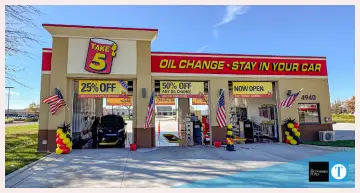
- Stay-in-your-car model: The defining feature.
You pull into the bay. Remain seated. Technicians complete the oil change from below and around the vehicle.
No need to exit. No need to manage children or pets in a waiting room. No need to stand in weather.
- Speed-focused process: The company markets and structures its workflow around roughly ten-minute oil changes for standard vehicles.
Pit design. Pre-staged materials. Limited service scope all support that target. Real-world times can stretch when extra quarts are needed.
When the bay is busy. The baseline remains faster than most traditional shops.
- Tiered oil packages: Take 5 typically offers economy/conventional. Premium or high-mileage.
Full-synthetic options. Sometimes with brand-name synthetic at the top. Prices climb with oil quality. Vehicle requirements.
Extra quarts beyond the standard five are charged separately.
- Limited but practical add-ons: Air filters. Cabin filters. Wiper blades. Fluid top-offs. Tire-pressure checks appear regularly.
These services stay within the quick-service envelope. Do not require the vehicle to leave the stay-in-car format in most cases.
- No-appointment policy: Most locations operate on a first-come basis. You drive up when ready.
This removes scheduling friction for people whose days do not follow tidy calendar blocks.
Pros Of Take 5
- Genuine time savings for straightforward oil changes: Remaining in the car. Moving through a streamlined process routinely finishes faster than sitting in a lounge. For lunch-break maintenance. Tight schedules. The difference is noticeable.
- Reduced friction of the visit: No parking hunt for a waiting-room spot. No managing belongings while the car is in a bay. Minimal small talk. The experience feels transactional in a good way when that is exactly what you want.
- Clear specialization: The company does one core thing. Designs the physical layout. Staffing around it. That focus supports consistency in the oil-change process itself.
- Comfort in poor weather or with passengers: Staying inside the climate-controlled cabin matters when rain. Heat. Cold. Children make exiting the vehicle unappealing.
- Competitive positioning on pure convenience: When measured solely on how little the oil change interrupts your day. Take 5 frequently comes out ahead of traditional quick-lube formats.
Cons Of Take 5
- Higher base prices relative to the narrow scope: Many customers walk away feeling the bill is steep for an oil change alone. Especially when synthetic oil is required. The convenience premium is real. Visible on the receipt.
- Limited ability to handle combined maintenance needs: If you also need brakes inspected. Tires rotated. You will likely make another stop elsewhere. The focused model becomes a drawback when the service calendar is fuller.
- Smaller geographic footprint in some regions: Not every city or highway corridor has a convenient Take 5. Distance can erase the time advantage if the nearest location sits far from your normal routes.
- Upselling still exists just in compressed form: Filter recommendations. Fluid top-offs appear even in the stay-in-car format. The conversation is shorter. The final total can still exceed the advertised package price.
- Dependence on bay availability: First-come operation means peak hours can create short lines that stretch the advertised ten-minute window. The model works best when demand is moderate.
Pricing Realities From Repeated Visits
I have paid conventional oil-change prices in the mid-forties to low-fifties at both chains when promotions aligned.
Full synthetic regularly lands between seventy and one hundred-plus dollars depending on oil brand.
Vehicle capacity. Local pricing. Extra quarts add several dollars each. Take 5 often feels more expensive for the same oil type because the convenience model carries a higher starting point.
Fewer deep coupons in my experience. Jiffy Lube can be brought down with online offers. The final ticket frequently grows through recommended extras.
Neither chain is the absolute cheapest option in most markets. Both sell speed. Accessibility more than rock-bottom pricing.
Location. Vehicle make. Oil specification. Current promotions swing the numbers more than the brand names themselves. Calling ahead. Checking the local digital menu remains the only reliable way to know what you will actually pay on a given day.
How I Decide Which One To Use?
When the only task is an oil change. My schedule is tight. I choose Take 5. The stay-in-car format. Shorter process match that need.
When the vehicle also needs a tire rotation. A battery check. Several filters replaced. I lean toward Jiffy Lube so the work happens in one stop. Distance to the nearest location often settles the question before any other factor.
Quality of the specific local crew matters more than national brand reputation. A well-run franchise of either chain outperforms a poorly managed location of the other.
I treat both as tools rather than default loyalties. I watch the dipstick. The mileage. Keep records of what oil went in. Verify the drain plug. Filter after the visit when possible. Neither chain eliminates the need for basic owner vigilance.
Frequently Asked Questions (FAQ)
Take 5 often costs more for a comparable oil change because of its convenience model. Coupons. Local pricing can reverse that on any given day.
Many locations perform the service correctly. Quality varies by franchise. Crew. Verifying the work. Keeping records remains wise at any quick-lube chain.
Neither consistently holds the lowest price. Budget options outside these two chains usually undercut both. Especially for conventional oil.
The price reflects premium oil options. The stay-in-car process. Trained technicians. The speed-focused business model rather than a bare-minimum oil-and-filter swap.
Final Thoughts
I wrote this comparison so you can match the service to your actual priorities instead of defaulting to whichever chain sits closest or advertises the loudest. If speed. Staying in the car matter most.
Take 5 usually delivers. If you need broader services. Denser location coverage. Jiffy Lube often makes more sense. Watch the final invoice.
Confirm the oil type. Quantity. Treat every visit as a transaction that still requires your attention. Your engine does not care about the logo on the bay. It cares about clean oil of the right grade.
Installed correctly. On a sensible schedule. Choose the shop that helps you hit that target with the least friction for your particular life. You will have used both chains the way they are meant to be used.
Recent Posts
I tried Meltoway Hair Dissolving Cream because I wanted a quick way to deal with unwanted body hair without reaching for a razor every few days. If you are looking for a convenient at-home...
If you’re considering a saffron-based supplement to support mood, appetite control, and everyday wellness, Happy Saffron Plus is worth considering.I like that it takes a familiar botanical...