
If you’re looking for a compact way to cool yourself without spending heavily on a conventional air conditioner, Breeze Box AC may look tempting.
I understand the appeal: small size, simple setup, and a promise of quick personal cooling. However, after weighing the product claims against the negative customer feedback associated with similar listings, I would not recommend buying Breeze Box AC.
For me, dependable cooling, durability, and value matter more than an attractive low price. If you need genuine room cooling, I would put your money toward a properly rated air conditioner from an established brand instead.
My First Experience With Breeze Box AC
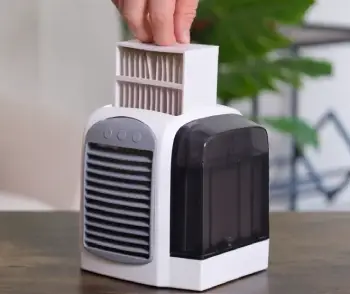
When I assess a compact cooling product like Breeze Box AC, the first thing I ask myself is what it is actually designed to do.
That’s important because the word “AC” can create an expectation that a small box-shaped device will perform like a conventional air conditioner.
In my view, that’s where potential buyers need to slow down and look carefully at the product rather than the marketing language.
A conventional air conditioner removes heat from indoor air and transfers that heat outside.
A small personal cooler generally works on a much smaller scale. Depending on its design, it may use a fan, evaporative cooling, chilled water, or some combination of these methods.
That can produce a noticeable stream of cool air close to the device, but it isn’t necessarily enough to lower the temperature of an entire bedroom or living room.
That’s the first issue I would consider with Breeze Box AC.
If I were sitting at a desk on a hot afternoon, I might appreciate having cool air directed toward my face or upper body.
But if I expect the entire room to become substantially cooler, I would have very different expectations. A compact device simply doesn’t have the same cooling capacity as a properly sized room air conditioner.
The second issue is consistency.
A product can feel impressive for the first few minutes because you’re sitting directly in front of the airflow.
That’s not the same thing as sustained room cooling. When I evaluate a cooling appliance, I care about what happens after an hour, two hours, or an entire evening—not just whether the air immediately in front of it feels cooler.
This distinction is especially important in Bangladesh, where hot and humid conditions can make cooling much more demanding.
Evaporative-style cooling can also become less effective when humidity is already high. So even if Breeze Box AC produces a cool sensation under certain conditions, I wouldn’t automatically interpret that as air-conditioning performance.
Then there is the question of customer satisfaction.
The reason I am cautious about Breeze Box AC is that the product has attracted unfavorable feedback across ecommerce listings.
Negative reviews don’t automatically prove that every unit is defective, but a pattern of complaints should make you more careful. When people repeatedly report disappointing cooling, poor durability, weak airflow, misleading expectations, or difficulty getting satisfactory value, I don’t think it’s sensible to ignore those signals simply because the purchase price looks attractive.
For me, price is only one part of value.
If I spend less initially but end up replacing the product, returning it, or purchasing a proper air conditioner afterward, the bargain disappears quickly.
I also wouldn’t overlook the practical side of ownership. A compact cooler may require regular water filling if it relies on evaporative cooling. Filters or cooling pads can accumulate dust.
Water reservoirs need cleaning. And if the device has a small fan motor, pump, or electronic controls, those components still have to survive repeated use.
That’s why my overall assessment is cautious rather than enthusiastic.
I can understand why Breeze Box AC attracts attention. It looks convenient, compact, and accessible. Someone who only wants personal airflow may find the concept appealing. But if you’re shopping specifically for an air conditioner, I think you’re better off separating the marketing promise from the actual cooling requirement.
I would rather buy a properly rated air conditioner from an established manufacturer than gamble on a compact product with questionable customer satisfaction.
Pros Of Breeze Box AC
- Compact and Easy to Place
The biggest advantage I see is portability.
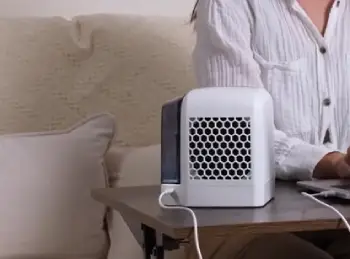
A compact cooling device doesn’t require the installation process associated with a split AC. You can potentially place it on a desk, bedside table, workstation, or another convenient surface.
For renters or people who don’t want permanent installation, that sounds attractive.
I also appreciate products that don’t consume much physical space. In a crowded bedroom or small workspace, a large appliance can become inconvenient.
However, portability only becomes a genuine advantage if the cooling performance is satisfactory.
- Lower Initial Cost
Compared with a conventional air conditioner, a small cooling appliance can look inexpensive.
For someone working with a tight budget, that’s naturally appealing.
But I wouldn’t judge value solely by purchase price. My preferred question is: “How much useful cooling will I get for the money?”
If the product doesn’t meet your cooling needs, even a cheap purchase can be expensive in hindsight.
- Simple Concept
There is something appealing about a cooling device that doesn’t appear complicated.
A small unit that you can place where you need it is easier to understand than a full HVAC installation. For personal comfort, simplicity can be useful.
The problem is that simplicity doesn’t compensate for inadequate cooling capacity.
- Useful for Localized Airflow
If you sit directly in front of the unit, you may experience a stronger cooling sensation than someone sitting several feet away.
That can be useful when you’re working at a desk, studying, gaming, or sleeping nearby.
I would consider this one of the more realistic expectations for a compact cooler.
- Convenient for Temporary Use
I can see why someone might want a small cooler for temporary situations.
Perhaps you’re working in a warm room for a few hours or need airflow in a location where installing an AC isn’t practical.
In that narrow role, a compact cooling appliance can make sense.
The problem begins when buyers expect it to replace a full-size air conditioner.
Cons Of Breeze Box AC

- The Biggest Problem: Cooling Expectations
This is the issue I would put first.
If the product is marketed or perceived as a full air conditioner, expectations can become unrealistic.
I wouldn’t purchase Breeze Box AC expecting it to cool a whole room in the same way as a properly sized split AC.
That’s simply not what a small personal cooling appliance is designed to do.
- Negative Customer Feedback Is a Warning Sign
The unfavorable feedback associated with Breeze Box AC listings is another reason I wouldn’t recommend it.
Again, I don’t believe one negative review tells the whole story. Every product can have an occasional defective unit or dissatisfied customer.
But when you see repeated complaints about performance, reliability, product expectations, or overall value, I think you should pay attention.
For me, customer feedback is especially important for inexpensive appliances because repair and replacement can quickly erase the initial savings.
- Humidity Can Affect Performance
This matters greatly in warm, humid environments.
Evaporative cooling generally works better in relatively dry conditions. When the air already contains a lot of moisture, the ability of additional evaporation to provide cooling becomes limited.
That’s a major consideration for buyers in Bangladesh.
If you live in a humid environment, I wouldn’t assume that a small water-based cooler will perform as advertised simply because the room feels extremely hot.
- Small Coverage Area
A compact unit naturally has limitations in how much air it can influence.
You may feel comfortable sitting right beside it while another person across the room feels almost no difference.
That’s not necessarily a manufacturing defect; it’s a limitation of the product category.
- Water and Cleaning Requirements
If the particular Breeze Box model uses a water reservoir, you need to maintain it.
Standing water can become unpleasant if the reservoir isn’t cleaned regularly. Dust can also accumulate in filters and airflow channels.
So although the appliance looks simple, it still requires routine care.
Maintenance For Breeze Box AC
- Keep the Unit Clean
If you already own Breeze Box AC, cleaning should be one of your priorities.
Dust can accumulate around the intake and outlet areas. When airflow becomes restricted, cooling performance can decline.
I would unplug the device before cleaning and follow the manufacturer’s cleaning instructions. For exterior surfaces, a soft, slightly damp cloth is usually more appropriate than soaking the appliance.
Never pour water into electrical components.
- Clean the Water Reservoir Regularly
If your model has a water tank, don’t let old water sit there indefinitely.
I would empty unused water rather than allowing it to remain stagnant for long periods.
Regular cleaning helps prevent unpleasant odors and buildup.
This is especially important if you’re using the appliance frequently during hot weather.
- Check Filters and Cooling Components
If your unit contains a filter or evaporative cooling pad, inspect it periodically.
A dirty filter can restrict airflow, while a clogged cooling component can reduce effectiveness.
I wouldn’t wait until airflow becomes obviously weak before checking it.
- Don’t Overfill the Water Tank
More water doesn’t necessarily mean more cooling.
Always follow the indicated water level.
Overfilling can cause spills and potentially expose electrical components to moisture. I’d rather refill the reservoir when necessary than risk damaging the appliance.
- Keep the Air Intake Unblocked
Placement matters.
If you push the unit against a wall, cover its intake, or place objects directly around it, airflow can suffer.
I would give the unit enough open space to draw and release air properly.
- Avoid Using Dirty Water
If the manufacturer provides water-quality guidance, follow it.
Clean water can help reduce residue and buildup. If you’re using the device frequently, replacing the water regularly is a simple habit that can make maintenance easier.
- Store It Properly
When the hot season ends, I wouldn’t simply unplug the device and throw it into a cupboard.
If the unit uses water, empty and dry the reservoir first. Clean removable components as recommended and make sure everything is completely dry before storage.
That can help prevent unpleasant odors and moisture-related problems.
- Watch for Unusual Sounds
A new buzzing, rattling, grinding, or clicking sound deserves attention.
I wouldn’t continue running an appliance indefinitely if the motor or pump suddenly sounds different.
Unusual noise can indicate a mechanical problem, obstruction, or component wear.
- Don’t Expect Maintenance to Fix Insufficient Capacity
This is an important point.
Cleaning can improve airflow and preserve performance, but maintenance cannot transform a small personal cooler into a high-capacity air conditioner.
If the device isn’t capable of cooling your room adequately, no amount of cleaning will change its basic design limitations.
Comparison Of Breeze Box AC With Other Brands
- Breeze Box AC vs Established Split AC Brands
For serious room cooling, I would choose an established split AC brand over Breeze Box AC.
A proper split system generally offers substantially greater cooling capacity and is designed specifically to reduce room temperature.
The installation is more involved, and the initial investment is higher, but I’m paying for actual room-cooling capability.
If I need to cool a bedroom every night during summer, that’s the direction I would take.
- Breeze Box AC vs Window Air Conditioners
Window ACs also have a clear advantage when the goal is room cooling.
They are larger and less portable, but their entire design is built around moving heat out of the room.
If installation is possible, I would rather have a properly sized window AC than rely on a small personal cooling gadget.
- Breeze Box AC vs Portable Air Conditioners
A genuine portable AC is another category entirely.
It usually has a compressor-based refrigeration system and requires heat exhaust through a suitable vent arrangement.
It’s less convenient than a tiny cooler, but it offers a fundamentally different level of cooling.
If I need genuine temperature reduction rather than localized airflow, I’d choose the more capable category.
- Breeze Box AC vs Personal Air Coolers
This is probably the fairest comparison.
A compact personal air cooler may be useful for someone sitting close to it. Both products can appeal to people who want inexpensive localized cooling.
Here, I would compare actual airflow, water capacity, noise, construction quality, replacement parts, warranty support, and customer feedback rather than simply looking at the advertised cooling claim.
- Breeze Box AC vs Fans
A fan may sound like an underwhelming alternative, but I wouldn’t dismiss it.
A good fan can provide strong airflow, consume relatively little electricity, and require minimal maintenance.
If your primary goal is personal comfort rather than lowering room temperature, a fan may actually offer better value.
I would especially consider this if the room already has reasonable ventilation.
Also Read: Is Vissani Portable AC Worth It?
Frequently Asked Questions (FAQ)
A compact breeze-style cooling device can produce airflow and, depending on its technology and environmental conditions, may provide localized cooling. However, that doesn’t mean it can cool an entire room like a conventional compressor-based air conditioner. I would treat it as a personal cooling device rather than a full room AC.
BreezaMax appears to be marketed as a compact cooling product, but I would be cautious about treating marketing claims as proof of conventional AC performance. If you’re considering purchasing it, check the exact specifications, seller information, warranty, return terms, and independent customer feedback before paying. I would not rely solely on promotional claims.
There isn’t one universally best brand for every buyer in Bangladesh. I would prioritize established manufacturers with dependable service support, suitable models for Bangladesh’s climate, appropriate cooling capacity, reasonable energy efficiency, and accessible after-sales service. The right choice also depends on your room size and budget.
Reviews vary by model, price range, location, and individual experience, so I wouldn’t declare one manufacturer the permanent winner. When I compare ACs, I look beyond the overall star rating and pay attention to recurring comments about cooling performance, noise, electricity use, durability, installation quality, and after-sales service.
Final Verdict
I understand why Breeze Box AC looks attractive. It’s compact, convenient, and positioned as an inexpensive answer to uncomfortable heat.
But when I look past the appeal and consider actual cooling requirements, customer satisfaction concerns, humidity, durability, and long-term value, I wouldn’t recommend it.
If you only want localized airflow, a compact cooling appliance may have a place in your setup.
But if you want your bedroom or living space genuinely cooler, I’d put the money toward a properly sized air conditioner from an established manufacturer.
Recent Posts
I tried Meltoway Hair Dissolving Cream because I wanted a quick way to deal with unwanted body hair without reaching for a razor every few days. If you are looking for a convenient at-home...
If you’re considering a saffron-based supplement to support mood, appetite control, and everyday wellness, Happy Saffron Plus is worth considering.I like that it takes a familiar botanical...