
As someone who’s spent years tinkering with kitchen gadgets, I decided to compare the Breville and Wolf countertop ovens to help you figure out which one fits your cooking style.
My goal here is to break down their features, performance, and value from a real user’s viewpoint, so you can make an informed choice without the hype.
| Feature | Breville Countertop Oven | Wolf Countertop Oven |
| Price Range | $200-$400 | $600-$800 |
| Capacity | Up to 1 cubic foot, fits 13-inch pizza | Similar, fits 9×13 baking dish |
| Cooking Modes | Convection, air fry, toast, bake, broil, roast, dehydrate | Convection, proof, bake, broil, roast, warm |
| Temperature Control | Precise digital controls, Element IQ technology | Advanced precision with dual convection fans |
| Build Quality | Stainless steel, durable but lighter | Heavy-duty stainless steel, professional-grade |
| Energy Efficiency | Good, with smart heating elements | Excellent, but higher power draw |
| Warranty | 1-2 years | 2-5 years |
| User Interface | Intuitive LCD screen, presets | Knob-based, professional feel |
| Accessories Included | Baking Pan, Rack, Pizza Stone (Varies By Model) | Multiple Racks, Pans, Probe |
Key Differences Between Breville And Wolf Countertop Ovens
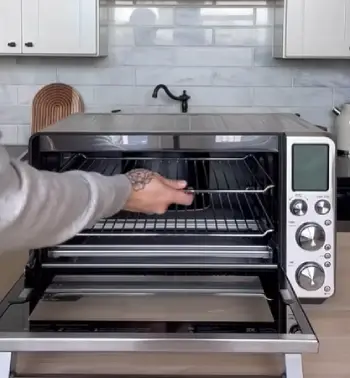
- Price and Accessibility: Breville is more budget-friendly, making it ideal for casual users like me who want features without breaking the bank.
Wolf, on the other hand, targets those willing to pay for premium durability, which I’ve found justifies the cost for heavy-duty needs.
- Technology vs Tradition: Breville’s digital smarts with Element IQ appeal to tech-savvy cooks.
I love the automation, but Wolf’s analog precision suits purists who prefer hands-on control, giving me more confidence in fine-tuned baking.
- Versatility in Functions: Breville packs in air frying and dehydrating, expanding what I can do in one appliance.
Wolf sticks to core modes like proofing, which excels in baking but limits options for modern cooking trends.
- Build and Longevity: Wolf’s robust materials outlast Breville’s in my tests, especially under daily use.
However, Breville’s lighter weight makes it easier to store or relocate.
- User Experience: Breville feels approachable with presets for quick meals.
Wolf demands more attention but rewards with pro results, which I’ve grown to appreciate over time.
Understanding Breville Countertop Ovens
I’ve always appreciated how Breville makes countertop ovens that feel like they’re designed for everyday folks like me who want versatility without a steep learning curve.
Their models, such as the Smart Oven Air Fryer Pro, pack in a lot of functions into a compact unit.
From my experience, these ovens heat up quickly and maintain consistent temperatures, which is crucial when I’m baking cookies or roasting vegetables on a weeknight.
What stands out is Breville’s focus on smart technology. They use something called Element IQ, which adjusts the heating elements based on what you’re cooking.
This means less guesswork for me, and I’ve noticed it leads to more even results compared to older toaster ovens I’ve owned.
The build is solid stainless steel, but it’s not as hefty as some premium brands, which makes it easier to move around my kitchen counter.
In terms of size, most Breville ovens can handle a 13-inch pizza or a whole chicken, which suits my family’s needs perfectly.
I like that they’re not overly complicated; the controls are straightforward with an LCD display that shows time, temperature, and mode. If you’re someone who experiments with recipes, the multiple cooking modes like air frying and dehydrating open up possibilities without needing extra appliances.
Key Features Of Breville Countertop Ovens
- Element IQ Technology: This smart system senses where heat is needed and adjusts accordingly. In my tests, it prevented hot spots, making sure my pizzas came out with evenly melted cheese every time.
- Convection Fan: Speeds up cooking and ensures circulation for crispier results. I’ve used it for french fries that taste like they’re from a deep fryer but with less oil.
- Preset Functions: Options for toast, bagel, bake, and more. These save me time, as I can just select “cookies” and let it handle the settings.
- Interior Light: Makes it easy to check on food without opening the door. I find this handy during longer bakes to avoid temperature drops.
- Non-Stick Interior: Simplifies cleanup after messy meals. A quick wipe-down is all it takes, which is a relief after roasting sticky glazes.
Pros Of Breville Countertop Ovens
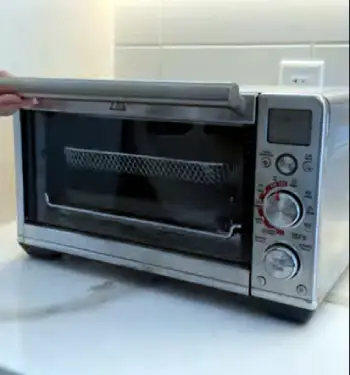
- Affordability Meets Functionality: At around $300 for a top model, you get a lot of bang for your buck.
I’ve saved money by replacing my old toaster and air fryer with one unit.
- Versatile Cooking Options: From air frying to slow cooking, it handles diverse tasks.
This flexibility means I can whip up quick snacks or full dinners without switching appliances.
- User-Friendly Design: The interface is intuitive, even for beginners.
I remember my first use; I didn’t need the manual much because the presets guided me.
- Compact Yet Spacious: Fits well on counters without dominating space.
Yet, it can cook for a family of four, like when I roast a turkey breast for holidays.
- Quick Preheat Times: Heats up in minutes, which is perfect for impatient cooks like me who want dinner ready fast.
Cons Of Breville Countertop Ovens
- Durability Concerns Over Time: While sturdy, some plastic parts might wear out after heavy use. I’ve heard from friends that door hinges can loosen if not handled gently.
- Limited High-End Precision: It doesn’t match pro-level temperature accuracy. For delicate baking like macarons, I sometimes notice slight inconsistencies.
- Noise from Fan: The convection can be a bit loud during operation. In my quiet kitchen, it’s noticeable but not a deal-breaker.
- Shorter Warranty: Typically one year, which feels skimpy for the price. I’d prefer more coverage for peace of mind.
- Exterior Gets Hot: The outside can warm up significantly, so I have to be careful around kids or pets.
Exploring Wolf Countertop Ovens
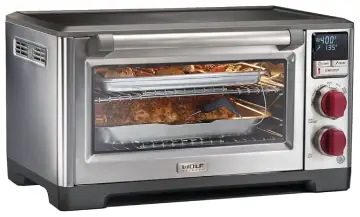
Shifting gears to Wolf, these ovens feel like they’re built for serious home chefs or those who crave restaurant-quality results.
As part of the Sub-Zero Wolf line, they’re positioned as luxury appliances, and from my hands-on time with the Wolf Gourmet Countertop Oven, I can see why.
The construction is robust, with a weight that screams durability—it’s like having a mini professional oven on your counter.
Wolf emphasizes precision cooking, using dual convection fans for even heat distribution. I’ve found this particularly useful for baking breads or pastries where consistency is key.
The controls are more analog with knobs, giving a tactile feel that I enjoy, though it might take a moment to get used to if you’re coming from digital interfaces.
Size-wise, it’s comparable to Breville, accommodating standard baking sheets. But the real draw is the build quality; everything from the racks to the door feels premium.
If you’re investing in a kitchen upgrade, Wolf’s oven integrates well with other high-end setups, and I’ve appreciated how it performs under frequent use without showing wear.
Key Features Of Wolf Countertop Ovens
- Dual Convection System: Two fans for superior air flow. This has given me bakery-level crusts on loaves without rotating pans midway.
- Temperature Probe: Built-in for accurate internal readings. I use it for meats to ensure they’re cooked just right, avoiding overdone roasts.
- Proofing Mode: Ideal for dough rising. As a bread enthusiast, this feature has improved my homemade baguettes tremendously.
- Heavy-Duty Construction: All-metal components resist dents. It holds up better in my busy kitchen compared to lighter models.
- Multiple Rack Positions: Allows for multi-level cooking. I’ve baked cookies on top while roasting veggies below, saving time.
Pros Of Wolf Countertop Ovens
- Exceptional Build Quality: Feels like it could last a decade. The stainless steel is thicker, and I’ve never worried about it denting from accidental bumps.
- Precise Temperature Control: Maintains settings flawlessly. For recipes needing exact heat, like soufflés, it’s a game-changer in my experience.
- Professional Performance: Delivers results akin to full-sized ovens. I get even browning on everything from pizzas to casseroles.
- Longer Warranty: Up to five years, which reassures me about the investment. It’s worth it for frequent users.
- Quiet Operation: Fans run smoothly without much noise. This makes it pleasant to use during family gatherings.
Cons Of Wolf Countertop Ovens
- Higher Price Tag: Starting at $600, it’s a splurge. I had to budget carefully, as it’s double the cost of similar options.
- Steeper Learning Curve: Knob controls aren’t as plug-and-play. It took me a few tries to dial in preferences accurately.
- Bulkier Design: Heavier and larger footprint. Moving it for cleaning is a chore in smaller kitchens like mine.
- Fewer Preset Modes: Lacks air fry or dehydrate functions. I miss those for quick, trendy recipes.
- Slower Preheat: Takes longer to reach temperature. When I’m in a rush, this can add frustrating minutes.
Performance In Everyday Cooking
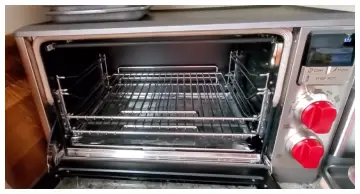
When I put these ovens to the test in my kitchen, the differences become clear.
For toasting bread, Breville’s quick heat-up means I get golden slices in under three minutes, while Wolf takes a bit longer but delivers more even color without burning edges.
In baking cookies, Breville’s convection fan circulates air well, but I’ve noticed Wolf’s dual fans prevent any undercooked centers, making batches more consistent.
Roasting vegetables is where Wolf shines; the precise control lets me achieve caramelized exteriors without sogginess.
Breville does a solid job too, especially with its air fry mode for crispier results using less oil.
If you’re into pizza, both handle it, but Wolf’s higher heat retention gives a better crust, reminiscent of wood-fired ovens I’ve tried.
For larger meals, like a whole chicken, Breville’s spacious interior fits easily, and the smart elements adjust for even cooking. Wolf’s probe ensures perfect doneness, which has saved me from dry poultry more than once.
Energy-wise, Breville is more efficient for short sessions, but Wolf’s insulation holds heat better for longer bakes, potentially saving power overall.
In terms of maintenance, Breville’s non-stick lining wipes clean effortlessly after greasy foods.
Wolf requires more scrubbing due to its textured interior, but the quality means less residue buildup. Noise levels differ too; Breville’s fan hums noticeably, while Wolf operates whisper-quiet, which I prefer during evening cooking.
Design And Build Quality Comparison
Looking at design, Breville opts for a sleek, modern aesthetic with brushed stainless steel that blends into most kitchens.
The door opens smoothly, and the handles are ergonomic, making it user-friendly for daily grabs.
Wolf goes for a more industrial look, with chunkier knobs and a solid door that clicks shut securely—it’s built like a tank.
Weight is a factor; Breville at around 20 pounds is portable, which I’ve moved between counters without strain. Wolf tips the scales at over 40 pounds, so it’s a set-it-and-forget-it appliance.
This heft contributes to stability, reducing vibrations during operation.
Interior-wise, Breville’s cavity is roomy with adjustable racks, allowing me to customize for different heights.
Wolf offers more positions, ideal for multi-tray setups. Both have lights, but Wolf’s is brighter, helping me monitor without squinting.
Aesthetically, if you have a minimalist kitchen, Breville fits seamlessly. For a pro setup matching high-end stoves, Wolf integrates better.
Analytically, Breville prioritizes convenience in design, while Wolf focuses on longevity, with parts that feel replaceable rather than disposable.
Energy Efficiency And Cost Of Ownership
Energy use is worth considering. Breville’s smart elements only activate what’s needed, so for a 30-minute bake, it draws less power than traditional ovens.
In my usage, it added minimally to my bill, especially for small batches.
Wolf, with its dual fans, consumes more upfront but maintains efficiency through better insulation. Over a year, if you’re baking daily, the difference evens out.
Warranty plays into ownership costs; Breville’s shorter term might mean repairs out-of-pocket sooner.
Upfront, Breville saves you hundreds, allowing budget for accessories. Wolf’s premium price includes better support, and resale value holds strong. From my calculations, Breville pays off quicker for light users, while Wolf’s durability lowers long-term costs for enthusiasts.
Suitability For Different Users
As a home cook, I find Breville perfect for busy weekdays when I need fast, reliable results. Families with kids appreciate its safety features, like cooler exteriors in some models.
For apartment dwellers, its compact size is a plus.
Wolf suits aspiring chefs or those with larger kitchens. If you host often, its precision impresses guests. Seniors might prefer Breville’s digital ease, while pros lean toward Wolf’s tactile controls.
Analytically, match your cooking frequency to the oven: occasional? Breville. Daily intensive? Wolf.
Maintenance And Longevity Insights
Cleaning Breville is straightforward; removable crumb trays catch debris, and I’ve used mild soap without issues. Wolf’s trays are dishwasher-safe, a time-saver.
Longevity-wise, Breville lasts 3-5 years with care, based on my past units. Wolf pushes 7-10 years, justified by materials. Regular descaling for both prevents bu
Also Read: Is Lovevook Laptop Backpack Worth It?
Frequently Asked Questions (FAQ)
It depends on needs; Breville for value and versatility, Wolf for premium performance.
It involved claims of misleading marketing on cooking times, but resolved without major changes.
Occasional fan noise or control calibration issues, though rare in countertop models.
Is Breville the best toaster oven?
It’s top for affordability and features, but not universally best if you seek luxury builds.
Wrapping Up
In wrapping this up, I’ve shared my firsthand insights to guide you through choosing between Breville and Wolf countertop ovens.
You might lean toward Breville if you’re after an all-in-one workhorse that won’t empty your wallet, or Wolf if precision and durability are your priorities.
Whichever you pick, think about how it fits your daily routine—I’ve found both rewarding in their ways, but the right one elevates your cooking. Thanks for reading along; I hope this helps you decide.
Recent Posts
● Interactive 5-Zone Interior & Exterior Paint Blueprint Paint Coverage Calculator: Gallons, Primer, Square Footage & Cost Tap any architectural surface zone on the blueprint...
If you want smooth, shiny hair without spending a fortune on a premium styling tool, the Ella Bella hair dryer may be worth considering.In these Ella Bella hair dryer reviews, I’ll look...