
If hard water leaves cloudy marks on your car’s paint, windows, or glass, Chemical Guys Water Spot Remover may be worth considering.
I would recommend it to car owners who want to remove mineral deposits without immediately paying for professional detailing.
However, the results depend on how long the spots have been sitting and whether they have etched into the surface.
Before buying, I would check that the formula is suitable for my vehicle’s finish and use it as directed.
It can be a practical detailing solution, but it is not a miracle fix for every stain.
My First Experience With Chemical Guys Water Spot Remover
When I evaluate a water spot remover, I look beyond how shiny a vehicle appears immediately after cleaning.
I want to know whether the product removes mineral residue, how much effort it requires, whether it leaves streaks, and how safely it works on the intended surface.
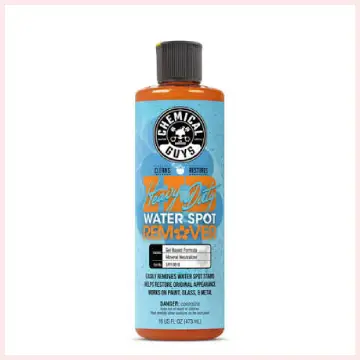
Chemical Guys Water Spot Remover is designed to address stubborn water spots caused by mineral deposits left behind when water evaporates.
These marks commonly appear after washing a car in direct sunlight, parking near sprinklers, or allowing rainwater to dry on the bodywork.
They can be especially frustrating on dark-colored vehicles because even small white spots become noticeable.
My first consideration would be the condition of the affected surface. If I were dealing with fresh mineral residue, I would start with a proper wash and dry before reaching for a specialized product.
Fresh spots may disappear with ordinary cleaning, so using a stronger solution immediately would be unnecessary.
For older spots, I would test the remover on a small, inconspicuous area first. I would follow the product’s specific instructions, use an appropriate applicator, and work gently rather than applying excessive pressure.
That approach helps me determine whether the marks are removable deposits or something more serious.
I would also inspect the surface under different lighting. A spot that seems to disappear in the shade might still be visible under direct sunlight. Checking the finish from several angles gives me a more realistic picture of the result.
One important distinction is that I would not describe these steps as proof of a personal, hands-on product test. They are the practical evaluation method I would use to judge this product responsibly.
Overall, Chemical Guys Water Spot Remover is worth considering when ordinary washing cannot remove persistent mineral marks. My expectations would remain realistic: it may help with surface deposits, but deeper water-spot etching can require polishing or professional correction.
Pros Of Chemical Guys Water Spot Remover
- Targets Stubborn Mineral Deposits
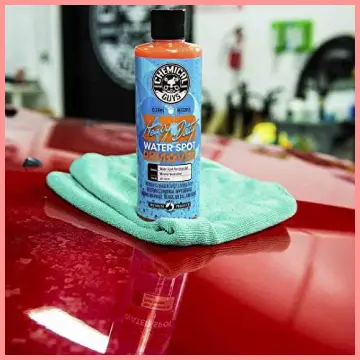
The main advantage is its specific purpose. When mineral residue remains after a normal wash, repeating the same washing process may not solve the problem.
A dedicated remover gives you another option before moving to more intensive correction methods.
For someone who washes a vehicle frequently but continues to notice chalky spots, that targeted approach can save time.
I would start with the least aggressive suitable cleaning method and use the specialized product only where needed. That reduces unnecessary chemical exposure and helps preserve the finish.
- Can Improve the Appearance of Paintwork
Water spots can make otherwise attractive paint look neglected. This is particularly noticeable on black, navy, dark gray, and other glossy finishes.
When the marks consist of removable mineral deposits, successful cleaning can restore a more uniform appearance. The improvement may be obvious on a hood, roof, trunk lid, or side panel that receives regular exposure to rain and sprinklers.
I would not judge the product only by how much shine it creates, though. Removing residue and correcting paint defects are two different jobs. A clean surface may look better without becoming perfectly flawless.
- May Reduce the Need for Immediate Polishing
Polishing can remove a thin layer of clear coat to correct certain surface defects. Although it can be effective, it should not be the automatic first response to every water spot.
If the marks are mineral deposits rather than etching, a suitable water spot remover may eliminate the problem without requiring paint correction.
I appreciate that distinction because preserving the vehicle’s original finish is important. Clear coat is not an unlimited resource, and unnecessary polishing is not a good long-term strategy.
Still, I would avoid assuming that the remover always eliminates the need for polishing. The outcome depends on the severity and type of the marks.
- Supports Targeted Detailing
You may not need to treat an entire vehicle when only a few panels are affected. A specialized cleaner can be useful for addressing isolated spots rather than repeatedly washing every surface.
For example, if sprinkler water reaches one side of your car, I would focus on the affected area after cleaning it appropriately. That makes the process more controlled and helps me assess the results before treating additional panels.
Targeted application also gives you an opportunity to identify whether a particular surface responds well to the product.
- Helps With Routine Vehicle Appearance Maintenance
Keeping water spots under control is easier when you address them early. A dedicated cleaner can fit into a broader maintenance routine that includes regular washing, proper drying, and protection against future contamination.
I would see it as a problem-solving product rather than something to use automatically after every wash.
That distinction can help you avoid unnecessary applications while keeping your vehicle presentable.
Cons Of Chemical Guys Water Spot Remover
- It Cannot Guarantee Removal of Deep Etching
This is the most important limitation. Water spots are not always deposits that can be dissolved or cleaned away.
When minerals or acidic contaminants have damaged the clear coat, removing the remaining residue may leave a visible ring or dull patch.
A chemical cleaner cannot reliably restore missing or permanently altered surface material.
If the spots remain after careful treatment, I would stop rather than repeatedly applying the product. A professional detailer can assess whether polishing or another repair method is appropriate.
- Surface Compatibility Requires Attention
Automotive finishes vary considerably. A cleaner that works on one approved surface may be unsuitable for another.
I would never assume that a product designed for automotive detailing is safe on every part of a vehicle. Unapproved plastics, delicate trim, matte finishes, protective films, and aftermarket coatings deserve particular caution.
Always check the exact formulation’s directions and warnings before use.
- Results Depend on the Age of the Spots
Fresh deposits are generally easier to address than marks that have remained on a vehicle for weeks or months. Sun exposure, repeated contamination, and environmental conditions can make the situation more complicated.
If you expect an older vehicle with severe spotting to look flawless after one application, you may be disappointed.
I would evaluate the condition of the surface first and set expectations accordingly.
- Incorrect Application Can Create Additional Problems
Using too much product, allowing it to dry when the instructions prohibit that, working on a hot panel, or scrubbing aggressively can increase the risk of surface damage or residue.
I would work in suitable conditions, use a clean applicator, and follow the label’s directions exactly. More product and more pressure do not automatically produce better results.
- It Does Not Prevent Every Future Water Spot
Even if the treatment removes existing marks, new deposits can form whenever mineral-rich water dries on the vehicle.
If you regularly park outdoors or wash your car with hard water, the problem may return. Prevention requires changes to your washing and drying routine, not just another bottle of cleaner.
Maintenance Tips For Chemical Guys Water Spot Remover
- Wash the Vehicle Before Treating Water Spots
I would never start by rubbing a specialized cleaner over a dusty or dirty panel.
Road grit and loose particles can scratch the finish when moved across the surface. First, wash the affected area with an automotive shampoo and rinse it thoroughly.
Use clean washing materials and avoid dragging contaminated towels across the paint. Once the surface is clean, inspect the remaining spots to determine whether a dedicated treatment is necessary.
- Work in the Right Conditions
Heat and direct sunlight can cause cleaning products to dry too quickly. That may lead to uneven application, streaking, or difficulty removing residue.
Whenever possible, I would work in a shaded, well-ventilated area with the vehicle’s surface cool to the touch.
The manufacturer’s instructions should determine the appropriate application conditions. I would not assume that every water spot remover can be used in exactly the same way.
- Use the Correct Applicator
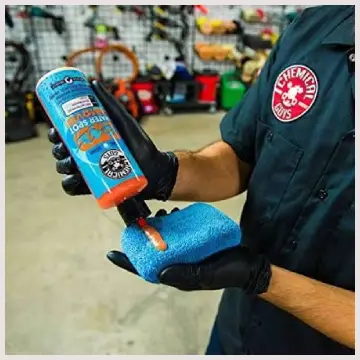
The applicator should be compatible with both the product and the surface. A clean microfiber applicator may be suitable when the directions allow it, but the label takes priority.
I would avoid abrasive pads, dirty towels, and improvised scrubbing tools. They can create scratches or introduce contaminants that make the finish look worse.
I would also keep separate towels for applying the cleaner and removing residue, when the instructions call for them.
- Follow the Directions for Application and Removal
Different formulas may have different requirements for application time, rinsing, wiping, and repeat treatment.
I would follow the exact instructions on the bottle instead of relying on a generic detailing routine. In particular, I would not allow the product to dry on the surface unless the manufacturer explicitly directs that procedure.
After treatment, I would remove the residue as instructed and inspect the panel under good lighting.
If the spots remain, I would not assume that a longer application or repeated scrubbing is safe.
- Dry the Vehicle Properly After Washing
Prevention is easier than repeatedly removing deposits.
After washing, I would use a clean, soft drying towel suitable for automotive paint. A vehicle-safe drying blower can also help reduce the amount of water left in crevices and on exterior surfaces.
I would pay special attention to mirrors, trim, windows, door handles, and horizontal panels where droplets can collect.
The faster you remove standing water safely, the less opportunity it has to evaporate and leave visible mineral residue.
- Avoid Sprinkler Water and Unnecessary Exposure
If your car is parked outdoors, check whether garden sprinklers reach the driveway or parking area. Repeated exposure can create stubborn spots, particularly during warm, sunny weather.
Whenever practical, I would park away from sprinkler spray and avoid allowing mineral-rich water to dry on the finish.
If accidental exposure occurs, I would clean and dry the vehicle appropriately rather than letting deposits accumulate.
- Consider Suitable Paint Protection
A compatible wax, sealant, or ceramic coating may make routine cleaning easier and reduce how strongly some contaminants adhere to the surface.
However, protection is not a guarantee against water spots. Mineral-rich droplets can still leave deposits, and some deposits can become difficult to remove even on protected paint.
I would select a protection product suitable for the vehicle’s existing finish and maintain it according to its instructions.
If your car already has a ceramic coating or paint protection film, check compatibility before applying a water spot remover. Some coatings may require a coating-safe product or professional assessment.
- Store the Product Correctly
I would keep the bottle tightly closed and store it according to the manufacturer’s temperature and handling recommendations.
Avoid leaving automotive chemicals in extreme heat or cold, and keep them away from children and pets. Do not transfer the product into an unlabeled container.
If the bottle becomes damaged, the product changes appearance unexpectedly, or the label is unreadable, I would avoid guessing about its condition or suitability.
- Inspect the Finish Regularly
After washing, I would check the vehicle under diffuse daylight and stronger angled lighting. This helps distinguish ordinary dirt from persistent mineral marks.
If spots return repeatedly on the same panels, I would investigate the water source or drying process rather than automatically repeating the treatment.
A consistent routine is usually more effective than reacting only when the car looks heavily spotted.
Comaprison Of Chemical Guys Water Spot Remover With Other Brands
- Chemical Guys vs. Meguiar’s
Both brands offer automotive detailing products, but I would compare the specific formulas rather than assuming every cleaner from either brand performs identically.
Chemical Guys may appeal to drivers who already use its detailing products and want a specialized solution for stubborn mineral deposits.
Meguiar’s is another familiar option for people who prefer to build a car-care routine around established automotive cleaning products.
For me, the deciding factor would be the exact product’s compatibility with my vehicle and the kind of spots I need to remove.
I would also compare the application directions and whether the product is intended for paint, glass, or another surface.
I would not automatically declare either brand the winner without comparing the specific formulations.
- Chemical Guys vs. 3D Car Care
3D Car Care is another option worth investigating if you regularly handle stubborn automotive contaminants.
When comparing it with Chemical Guys, I would focus on whether the particular product is intended for ordinary mineral deposits or more persistent water spotting. I would also look at its surface restrictions and application requirements.
I would choose Chemical Guys if its exact formula better matches my needs and instructions are straightforward. I would consider 3D if its product specifications better suit the affected surface.
Neither brand should be assumed to repair etched paint simply because its product is marketed for water spots.
- Chemical Guys vs. Griot’s Garage
Griot’s Garage is another brand I would consider when putting together a detailing kit. Its broader car-care range makes it relevant to drivers who want to maintain a vehicle’s appearance between professional detailing appointments.
My comparison would center on the specific product designed for the problem at hand. A general-purpose cleaner, paint preparation product, and dedicated mineral deposit remover are not interchangeable.
If Chemical Guys offers the more appropriate surface-specific treatment, I would lean toward it. If another product has clearer compatibility guidance for my finish, that could be the better choice.
I would prioritize safe, effective treatment over loyalty to any brand.
- Chemical Guys vs. Professional Water Spot Removal
Professional detailing is not a brand comparison in the traditional sense, but it is an important alternative.
For light deposits, I would try an appropriate at-home treatment first. If the marks remain, however, a professional detailer can inspect the finish and determine whether the problem is mineral buildup, clear-coat etching, or another defect.
Professionals may use specialized chemicals, machine polishing, or a combination of methods depending on the surface. These approaches require judgment because excessive correction can damage the finish.
I would choose professional assistance when the spots are extensive, the paint is delicate, or the surface has a protective coating that could be affected by an unsuitable chemical.
The additional cost may be worthwhile if it prevents an unsuccessful DIY attempt from making the problem worse.
Who Should Buy Chemical Guys Water Spot Remover?
I would consider this product if you frequently wash your car, live in an area with hard water, or regularly notice mineral marks after rain or sprinkler exposure.
It may also suit enthusiasts who prefer handling basic detailing tasks themselves instead of immediately booking a professional appointment.
However, I would be more cautious if the vehicle has matte paint, a specialized coating, or visible damage. In those situations, I would verify compatibility before purchasing.
If your water spots are fresh and minor, improving your washing and drying technique may be enough. If they are deeply etched, a dedicated cleaner might not provide the result you want.
The best purchase is the product that matches the actual condition of your vehicle, not simply the one with the most appealing packaging or strongest marketing.
Frequently Asked Questions (FAQ)
It can help remove mineral deposits when used correctly on compatible surfaces. It may not eliminate deep water-spot etching or permanent finish damage.
Not all detailers dislike the brand. Opinions vary based on product performance, value, consistency, and individual professional preferences.
The best option depends on the surface and severity of the spots. Choose a compatible product specifically intended for the type of water spotting you have.
I can’t reliably identify a specific lawsuit from that description alone. The parties, allegations, and case details would need to be verified before drawing conclusions.
Wrapping Up
I would recommend Chemical Guys Water Spot Remover to car owners dealing with stubborn mineral deposits who want to try a targeted cleaning solution before considering professional detailing.
Its usefulness depends on surface compatibility and the condition of the marks. For removable deposits, it may be a practical addition to your car-care routine; for etched paint, you may need a different approach.
If you decide to buy it, follow the label, test a small area, and improve your drying habits to help prevent future spots.
Recent Posts
● Interactive 5-Zone Interior & Exterior Paint Blueprint Paint Coverage Calculator: Gallons, Primer, Square Footage & Cost Tap any architectural surface zone on the blueprint...
If you want smooth, shiny hair without spending a fortune on a premium styling tool, the Ella Bella hair dryer may be worth considering.In these Ella Bella hair dryer reviews, I’ll look...