
If you want free local TV channels without paying monthly cable bills, the Clear TV indoor antenna might seem like an attractive option.
However, after considering its advertised benefits, common limitations of indoor antennas, and reported customer complaints, I wouldn’t recommend buying it without careful research.
Reception can be inconsistent, especially in areas far from broadcast towers or with thick walls. In my view, you should compare better-established antenna options before spending your money.
My First Experience With The Clear TV Indoor Antenna
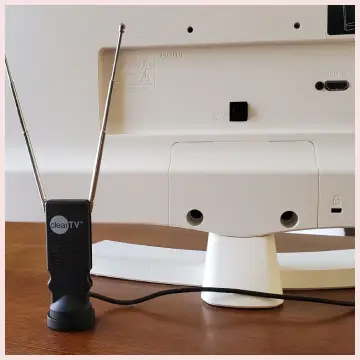
When I evaluate a product like the Clear TV indoor antenna, I focus on the things that matter most in everyday use: picture quality, channel availability, installation, signal stability, and overall value.
An antenna can look promising in advertisements, but its real usefulness depends on whether it consistently brings in the channels you actually want to watch.
One important clarification is that this review is an analytical assessment, not a claim that I personally purchased, installed, or tested a Clear TV antenna.
Individual results depend on location, broadcast coverage, antenna placement, and the specific model being sold.
That distinction matters because advertised performance doesn’t guarantee the same experience in every home.
I understand why the Clear TV antenna attracts budget-conscious shoppers. Traditional cable and satellite subscriptions can become expensive, particularly when you mainly watch local news, weather reports, sports broadcasts, and popular network programs.
An indoor antenna offers a simpler alternative. You connect it to a compatible television, scan for available over-the-air channels, and watch any supported broadcasts that your antenna can receive. In suitable reception areas, this can provide access to free television without a recurring subscription.
The problem is that the benefits of free television aren’t unique to Clear TV. Many indoor antennas perform the same basic function, so the real question is whether this particular product offers dependable reception and good value compared with competing options.
I would want convincing evidence of consistent performance before choosing it over alternatives with clearer specifications, established customer feedback, and straightforward return policies.
Pros Of The Clear TV Indoor Antenna
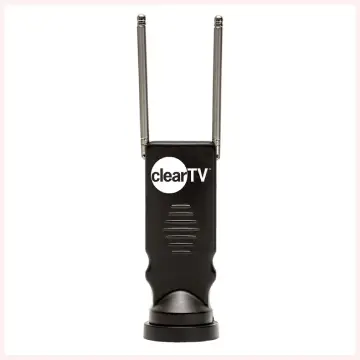
- No Monthly Antenna Subscription
The biggest advantage of an ordinary indoor TV antenna is the possibility of watching free over-the-air broadcasts without paying a recurring antenna service fee.
Once you have purchased and installed a compatible antenna, you generally don’t need to pay a monthly subscription to receive free local broadcasts.
You can watch supported stations whenever they are transmitting and your television can receive their signals.
For someone who mainly watches local news, weather forecasts, and free network programming, this can be a meaningful saving over time.
However, the potential savings apply to indoor antennas generally, not uniquely to Clear TV. I would compare the purchase price with the performance of competing products before deciding which model deserves your money.
- Compact Design for Small Spaces
Indoor antennas are often compact enough to fit in apartments, bedrooms, home offices, and smaller living rooms.
Depending on the model, you may be able to place one on a shelf, beside a window, or near your entertainment center without installing a large outdoor structure.
This is useful if you rent your home, have limited wall space, or don’t want to drill holes into exterior walls.
Still, a compact antenna isn’t automatically a better antenna. Smaller designs may be convenient, but placement and reception characteristics remain important. I would check the actual dimensions and mounting arrangements instead of relying solely on product photographs.
- Relatively Simple Setup
Conventional indoor antennas generally require fewer installation steps than rooftop antennas. Most connect directly to a television’s antenna input, after which you scan for available channels.
You don’t usually need professional installation for a basic indoor model.
This can make an indoor antenna appealing to people who prefer straightforward equipment and don’t want to arrange an installer.
However, you should confirm the exact connection requirements before buying Clear TV. Some antennas have different cable arrangements or include amplification equipment that requires a separate power connection.
- No Need for a Separate Streaming Subscription
An antenna can complement the streaming services you already use or reduce your reliance on them.
For example, you might use free broadcasts for local news and selected network programs while reserving streaming subscriptions for films and exclusive series.
That combination can help keep entertainment costs under control.
There is an important limitation, though: the antenna does not provide the same selection as a streaming library. You cannot assume that a particular film, channel, or on-demand program will be available through an over-the-air broadcast.
- Potentially Useful for Backup Television
I also see value in keeping a suitable antenna available as a secondary television option.
If your internet connection becomes unavailable, a working antenna may still receive local broadcasts, provided the television has power and the stations are transmitting.
This can be useful when you want local information without depending on internet access.
The benefit depends on your actual broadcast reception, so I would test any antenna before relying on it for important news or emergency information.
Cons Of The Clear TV Indoor Antenna
- Reception May Be Inconsistent
The first issue I would consider is signal reliability.
Indoor antennas are affected by their surroundings. Thick walls, metal structures, nearby buildings, hills, and other obstructions can interfere with reception. A position that works well in one room might perform poorly in another.
If you live far from broadcast towers, a small indoor antenna may struggle to receive some stations.
I would be cautious about purchasing Clear TV if you need dependable access to several specific channels and cannot easily return the product if it fails to meet expectations.
- Advertised Channel Counts Can Be Misleading
A large advertised channel count can create the impression that an antenna will provide dozens of useful stations in every location.
That isn’t how broadcast reception works.
The number of channels you receive depends on local coverage, antenna placement, signal strength, and the stations available in your region. Some channels may also be subchannels carrying additional programming from the same broadcaster.
I would judge Clear TV by the stations you can realistically receive, not by a generalized marketing promise.
- Poor Reception Can Make Troubleshooting Frustrating
An antenna may require several adjustments before it works satisfactorily.
You might move it near a window, change its height, rotate it, and run another channel scan. Even then, reception may vary between stations.
This can be annoying if you expected a quick plug-and-play experience.
If customer reviews repeatedly describe disappointing results after reasonable setup attempts, I would take those reports seriously. I would also compare the return policy and warranty before buying any alternative.
- Indoor Placement Can Limit Performance
A major drawback of indoor antennas is that their placement options are constrained by your living space.
The best reception point may be near a window facing the broadcast towers, while your preferred television location might be on the opposite side of the room.
You may have to compromise between signal quality and appearance.
If you need to run a long cable or keep the antenna visible, the setup may be less convenient than expected.
Maintenance Tips for an Indoor TV Antenna
- Find the Best Antenna Position
Placement is one of the most important factors in indoor antenna performance.
I would start by placing the antenna near a window, preferably on the side of the home facing the relevant broadcast towers. If that location doesn’t work, try a higher shelf or another room with fewer obstructions.
Avoid assuming that the antenna must sit directly beside the television. The best reception location and the most convenient location aren’t always the same.
Make small adjustments and test the results after each change. This makes it easier to identify which position actually improves reception.
- Rescan for Channels After Moving the Antenna
Moving an antenna can change which stations your television receives reliably.
After repositioning it, open your television’s settings and run the automatic channel scan again. The exact menu names depend on your TV, but the option is commonly found under channel, broadcast, or tuner settings.
A fresh scan helps the television update its list of receivable stations.
I wouldn’t repeatedly scan without making any changes, though. First improve the antenna’s position or check the connections, then scan again to see whether the adjustment made a difference.
- Keep the Antenna and Cable Clean
Dust can accumulate on the antenna surface, cable, and connectors over time.
I recommend wiping the antenna gently with a dry, soft cloth and checking that the cable remains free from damage. Avoid soaking the device or applying household cleaning chemicals unless the manufacturer specifically permits them.
Pay attention to the coaxial connector. It should fit securely without excessive force, and the cable should not be sharply bent or crushed behind furniture.
Although cleaning won’t fix a weak broadcast signal, keeping the equipment in good condition can prevent avoidable connection problems.
- Inspect Cable Connections Regularly
A loose cable can cause reception issues that resemble a faulty antenna.
Check that the cable is connected securely to both the antenna and the television. If your setup includes an amplifier or power adapter, confirm that it is connected as instructed.
If reception suddenly becomes worse, inspect the connections before replacing the entire antenna.
You should also look for frayed cables, bent connectors, or damaged insulation. Replace damaged components rather than attempting unsafe repairs.
- Reduce Nearby Interference
Some electronic devices and household materials can affect reception, depending on the antenna, frequency, and environment.
If the signal becomes unreliable, try moving the antenna away from large metal objects, metal blinds, and dense electronic equipment. Experiment with different positions rather than assuming a particular device is always responsible.
The effect of interference varies, so I would test changes individually.
You should also remember that reception can change when people move around a room, doors close, or furniture is rearranged. If a channel is particularly sensitive, finding a stable position may take a little experimentation.
Comparison Of Clear TV Indoor Antenna With Other Brands
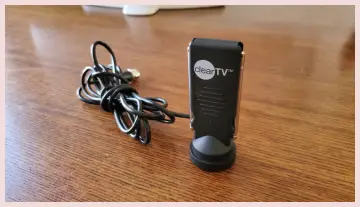
- Clear TV vs. Mohu
Mohu is a recognizable name in the indoor antenna category, with products designed for different installation preferences and reception needs.
Compared with Clear TV, I would investigate Mohu’s model-specific specifications, mounting options, cable arrangements, and available independent performance information before choosing one.
The key consideration is whether a particular Mohu antenna is suitable for your local stations. Brand recognition alone doesn’t guarantee better reception, and I wouldn’t claim that every Mohu model outperforms Clear TV.
My preference would be to consider a Mohu model if its documented features and credible customer feedback provide greater confidence than the Clear TV option being offered.
- Clear TV vs. Winegard
Winegard offers antenna products for different reception environments, including indoor and outdoor applications.
When comparing Winegard with Clear TV, I would pay attention to the intended installation type, frequency coverage, signal requirements, and available technical specifications.
A well-suited indoor Winegard model may be a more reassuring option if it provides clearer information about its design and intended use. However, you should confirm that the specific model is designed for indoor installation rather than assuming every product from the brand is interchangeable.
For households struggling with reception, Winegard’s broader range may also make it easier to investigate a different antenna configuration if a basic indoor model is insufficient.
- Clear TV vs. RCA
RCA is another established consumer electronics brand with indoor television antenna options.
I would compare the specific RCA model with Clear TV by examining its supported reception bands, cable length, placement options, amplification features, and return policy.
One useful advantage of choosing a product with accessible documentation is that you can more easily determine whether its specifications match your needs before purchasing it.
Still, I wouldn’t recommend an RCA antenna solely because of the brand name. A basic RCA model may perform poorly in a challenging reception environment, just as any other indoor antenna can.
The better choice is the model that fits your location and provides the strongest evidence of reliable performance.
- Clear TV vs. Philips
Philips-branded indoor antennas are also worth considering when shopping for a straightforward television accessory.
I would compare the exact products rather than relying on broad claims about either brand. Features such as adjustable placement, cable length, amplification, and compatibility with your television can make a practical difference.
If you’re choosing between a Philips model and Clear TV, look for independent reviews that discuss actual channel reception rather than simply praising packaging or ease of setup.
I would lean toward whichever product offers clearer technical details, a reasonable return policy, and credible evidence of satisfactory results under conditions similar to yours.
- Clear TV vs. GE Indoor Antennas
GE indoor antennas may be worth investigating if you want a conventional antenna with clearly documented installation and connection requirements.
I would start by identifying the local stations you want to receive and then comparing the relevant GE model’s specifications with those of Clear TV.
Don’t assume that a model with a larger advertised range will automatically work better in your home. Range claims are not a guarantee of channel availability, and buildings, terrain, and antenna positioning can all affect reception.
For me, the strongest reason to consider an alternative is not a brand name alone. It is the opportunity to choose a model with more convincing evidence of performance and a purchasing policy that reduces the risk of disappointment.
Which Alternative Would I Choose?
I would not declare one brand the universal winner without testing specific models under comparable conditions.
Instead, I would shortlist products from Mohu, Winegard, RCA, Philips, and GE, then narrow the choices according to local signal conditions, verified specifications, customer feedback, and price.
For someone living relatively close to broadcast towers, a basic indoor antenna may be sufficient. For someone facing weak signals or substantial obstructions, a larger or differently positioned antenna may be more appropriate.
If indoor reception remains poor, a properly installed outdoor antenna could be worth investigating, subject to your building, installation options, and local requirements.
My main recommendation is to avoid buying Clear TV just because its advertising makes receiving free television sound effortless. Compare the actual alternatives and choose the one best suited to your home.
Frequently Asked Questions (FAQ)
Clear TV may receive local broadcasts in areas with suitable signal strength, but results can vary considerably. Given the negative customer feedback mentioned in this review, I would compare better-documented alternatives before purchasing it.
Yes. Indoor antennas can work very well when local broadcast signals are strong enough. Mohu, Winegard, RCA, Philips, and GE offer options worth comparing. The best choice depends on your location, antenna placement, and the stations you want to receive.
The channels depend on local broadcast availability and reception conditions. You may receive local news, weather, and network programming, along with other free stations in your area. Clear TV does not guarantee a specific channel count or provide paid cable channels.
I wouldn’t identify a single model as Consumer Reports’ top-rated indoor antenna without checking its current ratings and testing. When comparing products, look for independent reception tests, model-specific specifications, and feedback from users in similar locations. A high-performing antenna in one area may not be the best option elsewhere.
Final Verdict
I wouldn’t recommend Clear TV as my first choice because the negative customer feedback raises concerns about whether it offers dependable value.
Although indoor antennas can provide free local television, Clear TV’s advertised convenience isn’t unique.
Before buying, compare alternatives from established brands, check your local broadcast coverage, and review the return policy carefully.
My recommendation is to skip Clear TV unless you find convincing evidence that the specific model will meet your reception needs.
A well-matched alternative is a more sensible investment than taking a chance on disappointing performance.
Recent Posts
Wet and Forget is primarily associated with outdoor stain removal, especially the green, dark, or discolored patches that develop when moisture encourages moss, mold, mildew, and algae to...
● Interactive 5-Zone Interior & Exterior Paint Blueprint Paint Coverage Calculator: Gallons, Primer, Square Footage & Cost Tap any architectural surface zone on the blueprint...