
I have spent years hanging drywall in everything from single-family homes to light commercial builds, and the single most common question I still get from friends and clients is which screw to reach for.
My goal with this piece is to give you a clear, practical breakdown of coarse thread versus fine thread drywall screws so you can match the fastener to the framing and avoid loose panels, stripped holes, or failed inspections later.
| Feature | Coarse Thread Drywall Screws | Fine Thread Drywall Screws |
| Thread spacing | Wider, deeper grooves, fewer threads per inch | Narrower, closely spaced, more threads per inch |
| Primary framing material | Wood studs and plates | Metal studs and tracks |
| Holding power in wood | Excellent grip, resists pull-out | Adequate but more prone to stripping over time |
| Holding power in metal | Can strip thin gauge metal | Secure bite without stripping |
| Drive speed | Faster into softwood | Smoother into metal, slower into dense wood |
| Common lengths | 1-1/4″, 1-5/8″, 2″ | 1-1/4″, 1-5/8″, 2″ |
| Typical gauge | #6 most common, #8 for heavier loads | #6 most common |
| Risk of stripping | Low in wood, higher in metal | Low in metal, moderate in wood |
| Best for | Residential wood-frame walls and ceilings | Commercial or residential metal-frame work |
Key Differences Between Coarse Thread And Fine Thread Drywall Screws
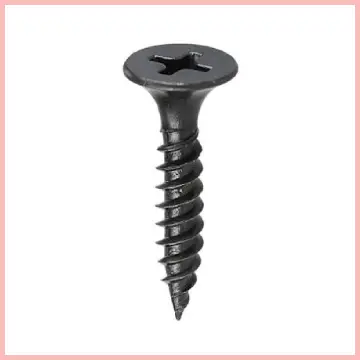
- Thread geometry and pitch: Coarse versions leave larger gaps so wood fibers can fill them and create lasting lock.
Fine versions pack more threads into the same length for thin metal walls.
The design difference drives nearly every performance gap between the two.
- Intended substrate match: Coarse thread is engineered for wood.
Fine thread is engineered for metal. Mixing them lowers long-term performance and invites future problems.
Matching the screw to the stud is the core rule.
- Installation feel and tool response: A coarse screw climbs with positive aggressive advance that feels strong through the gun.
A fine screw feels more controlled and less grabby on every turn. Clutch settings must change to match each type.
- Long-term stability under movement: Wood moves with temperature and humidity over the seasons. Coarse threads accommodate that better and keep contact.
Fine threads rely on a precise fit that can loosen when the wood shifts.
- Cost and market availability: Coarse thread dominates residential shelves and arrives in large bulk boxes.
Fine thread appears wherever metal studs are sold and costs a bit more per unit. Everyday jobs favor the coarser option for price and stock.
- Risk profile by material: Coarse risks stripping metal and leaving oversized holes. Fine risks gradual pull-out from wood as the fibers move.
Matching the thread prevents both failure modes and protects the finished wall.
- Drive speed variation: Coarse advances faster in softwood and moves the board into place quickly. Fine moves more smoothly through steel and feels steadier under the bit.
The right choice speeds the work without forcing the tool.
- Ceiling versus wall behavior: Both work on walls when matched correctly to the framing.
Coarse gives extra security against sag on wood-frame ceilings and holds heavier boards more reliably.
Fine keeps metal-frame ceilings flat and stable.
Key Features Of Coarse Thread Drywall Screws
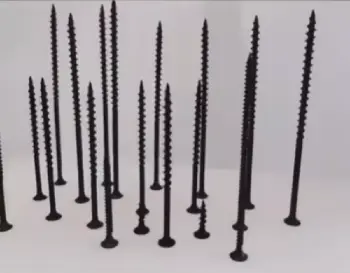
- Wider thread pitch: This cuts cleanly into softwood and engineered lumber. It creates a strong mechanical lock that holds firm from the first turn.
The deeper grooves give the wood fibers more surface to grip over time.
- Bugle head design: The head seats flush without tearing the paper face of the drywall. This keeps the surface smooth and ready for joint compound.
Finish work stays cleaner and requires less sanding later.
- Sharp starting point: It begins easily without a pilot hole in most framing. Installation moves faster on site and reduces the chance of the screw wandering off line.
You save time on every sheet.
- Standard coating options: Phosphate or black oxide coating offers basic corrosion resistance for interior use.
It holds up well in normal home conditions and protects against everyday moisture. Long-term rust risk stays low inside the wall.
- Common tip styles: Available in both standard and self-drilling versions. The standard tip works best for wood and drives with consistent pressure.
Self-drilling options appear less often but still fit some specialty needs.
- Consistent diameter range: Most come in #6 with #8 options for heavier needs. They fit standard screw gun bits without issue and feel familiar in the hand.
Switching between sizes stays simple on mixed jobs.
- Good length variety: Easy to find in 1-1/4 inch, 1-5/8 inch, and 2 inch sizes. This covers walls and ceilings for most board thicknesses. You can match penetration depth without special orders.
Pros Of Coarse Thread Drywall Screws
- Superior withdrawal resistance: Deep threads displace more material and lock into the grain. Boards stay tight even after years of house movement and seasonal shifts. Pull-out strength remains high under normal loads.
- Faster installation on wood: The aggressive thread advances quickly under light pressure. Large walls go up in less time and the gun feels responsive. Crews finish more sheets per day with less fatigue.
- Lower spin-out risk: Once seated the screw rarely spins freely. This keeps the drywall firm through seasonal changes and humidity swings. Connections hold their set depth for the life of the wall.
- Wide availability: Found at every lumberyard and big-box store in common lengths. No special ordering needed for most jobs and bulk boxes arrive quickly. Stock stays reliable across suppliers.
- Tool compatibility: Works with standard drywall screw guns and clutch settings. No extra adjustments required and bits last longer under normal use. Setup stays simple from the first sheet.
- Strong ceiling performance: Holds heavier boards well against gravity. Sagging becomes less of a concern on longer spans and the panel stays flat. Finish work looks better with fewer corrections.
- Cost effective for residential work: Bulk boxes usually cost less per screw. Budget stays under control on big projects and waste remains low. The value shows clearly on full-house jobs.
Cons Of Coarse Thread Drywall Screws
- Poor fit in thin metal: Can tear or strip light-gauge metal studs if forced in. The connection ends up loose and the board may shift later. Repair work becomes more likely in metal-frame sections.
- Higher driving torque in dense wood: Harder woods demand more power from the tool. Battery life drops faster on long days and the gun works harder. Extra batteries become useful on dense framing.
- Fiber buildup risk: Threads can collect wood fibers and slow the gun if the bit is worn. Cleaning becomes necessary and progress slows when debris packs the flutes. Sharp bits prevent most of this issue.
- Not ideal for mixed framing: Performs poorly when wood and metal appear in the same wall. Switching screws mid-job is better and keeps each connection proper. One type cannot serve both materials well.
- Possible over-penetration: Aggressive advance can drive the head too deep if the clutch is set high. Paper face damage follows and holding power drops. Careful depth control remains essential.
- Limited use in commercial metal work: Rarely the right choice for pure steel stud buildings. Fine thread wins there and delivers cleaner results. Coarse screws create more problems than they solve in metal.
Key Features Of Fine Thread Drywall Screws
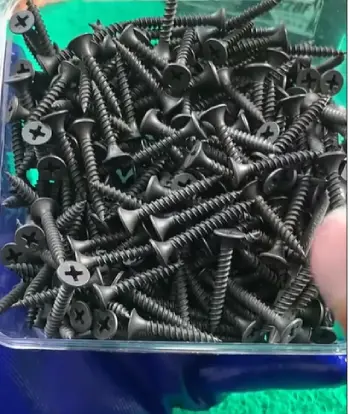
- High thread count per inch: Matches the thin wall of metal studs perfectly. Multiple contact points share the load and reduce stress on any single area.
The fit stays secure without enlarging the hole.
- Optimized point geometry: Pierces steel cleanly without excessive deformation. Starts true and stays on line even on slick surfaces.
Placement accuracy improves across long runs of track.
- Standard bugle head: Protects the drywall paper during installation. Surface stays smooth for finishing and the head seats flush every time.
Mud and tape work becomes easier afterward.
- Improved coating options: Often better corrosion resistance for commercial or higher-humidity settings.
Longevity improves and the screws hold up in tougher interior environments. Rust risk drops further.
- Consistent shank diameter: Works with the same #2 Phillips or square-drive bits used for coarse screws.
Tool changes stay simple and the feel remains familiar. One set of bits handles both types.
- Smooth drive characteristics: Feels controlled rather than grabby. Overhead work becomes less tiring and depth stays consistent.
The gun responds evenly through the full drive cycle.
- Reliable length selection: Common sizes match those of coarse screws. Stocking both types is straightforward and coverage stays complete. You can switch without hunting for special lengths.
Pros Of Fine Thread Drywall Screws
- Excellent grip in light-gauge steel: Creates a secure bite without enlarging the hole. Connections stay firm for years and the board remains tight to the stud. Movement under normal loads stays minimal.
- Reduced walking on metal: Less likely to wander when starting on slick surfaces. Placement accuracy improves and each screw lands where intended. Layout lines stay true through the full wall.
- Smoother drive feel: Many installers prefer this for long days of overhead work. Fatigue stays lower and control remains high. The gun feels balanced through repeated cycles.
- Better in dense hardwoods: Can perform acceptably if wood framing is unusually hard. Still secondary to its main role yet useful in mixed situations. The finer threads cut without excessive force.
- Lower dimpling risk: Less chance of twisting or denting the metal stud under the head. Walls remain flatter and the finish shows fewer imperfections. Mud work covers the surface more evenly.
- Precise long-term fit: Holds well in dimensionally stable metal framing. Movement issues are rare and the connection stays consistent. Commercial buildings benefit most from this stability.
- Cleaner commercial results: Matches the needs of most steel-stud buildings. Inspection passes become easier and callbacks drop. The finished wall looks professional from day one.
Cons Of Fine Thread Drywall Screws
- Weaker hold in softwood: Shallow threads displace less material. Grip can loosen as lumber moves with humidity and temperature. Long-term security drops compared with coarse options.
- Higher stripping risk in wood: Expands and contracts with humidity changes. Gradual loss of engagement is common and the board may work loose over seasons. Wood-frame jobs need the coarser alternative.
- Slower feel in wood: Can tempt users to overdrive and break the paper face. Depth control needs care and the gun requires a lighter touch. Progress feels less aggressive than with coarse screws.
- Slightly higher cost: Price per pound can run above coarse thread in some markets. Demand is lower and bulk savings appear less often. Budget planning should account for the difference.
- Less ideal for treated lumber: Aggressive bite is preferred in those cases. Coarse thread handles it better and grips the denser material more securely. Fine threads struggle to lock in fully.
- Narrower everyday stock: Length options sometimes feel limited compared with coarse versions. Planning ahead helps and special orders may be needed for less common sizes. Availability varies by supplier.
How I Choose Between Them On Real Jobs
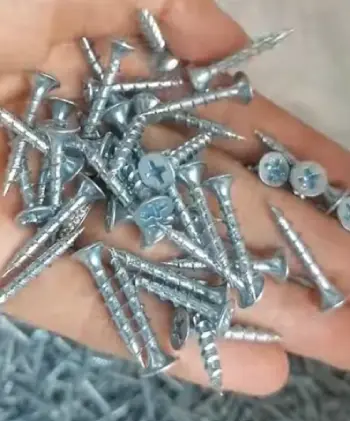
I start every project by identifying the framing.
If the walls and ceilings are wood, the decision is already made: coarse thread.
If the building uses metal studs, fine thread goes in the pouch.
On hybrid jobs I carry both and switch as needed.
I also look at the thickness of the drywall and the direction of the board.
Ceilings demand better holding power, so I prefer the strongest available match for the framing.
For 5/8-inch Type X on a ceiling I often step up to a longer screw or a heavier gauge to keep the extra weight secure.
Checking the stud type first saves time and prevents callbacks later.
Gauge And Length Considerations
Most drywall screws are #6. That diameter works for the majority of 1/2-inch and 5/8-inch boards. When I hang heavier boards or need extra strength on a ceiling I reach for #8.
The thicker shank resists bending and provides more steel in the connection. Length follows a simple rule: the screw should penetrate the framing by at least 5/8 inch and preferably a full inch.
For 1/2-inch drywall on wood that means 1-1/4-inch screws. For 5/8-inch board or for ceilings many installers prefer 1-5/8-inch so the tip is deeper into the wood or metal.
I keep both gauges on the truck so the choice stays flexible.
Common Mistakes I See And How To Avoid Them
Using fine thread on wood is the error I encounter most often.
The board goes up fine, the mud looks good, and six months later hairline cracks appear along the seams because the screws have lost some grip.
The opposite mistake, coarse thread into light metal, creates oversized holes that never tighten properly. Another frequent problem is overdriving.
A screw gun with the clutch set too high drives the head through the paper face, destroying the holding power of the board itself.
I set the depth so the head sits just below the surface and the paper remains intact. Worn bits cause cam-out and ruined screw heads. Replacing bits early keeps the work clean.
Real-World Performance Over Time
Houses move. Temperature and humidity change. In wood-frame construction the coarse thread continues to hold even as the stud shrinks or expands a fraction of an inch.
Fine thread in the same situation can gradually lose engagement. In metal-frame commercial work the building is more dimensionally stable, so the fine thread’s precise fit remains reliable for decades.
I have opened walls twenty years after installation and found coarse screws still tight in wood and fine screws still locked in metal.
The reverse combinations rarely look as good. Matching the thread type to the framing pays off in fewer repairs down the road.
Installation Tips That Make A Difference
Keep the bit sharp. A worn Phillips tip cams out and ruins the head. Use a drywall-specific screw gun or a clutch driver with the depth stop adjusted correctly.
Drive screws perpendicular to the board. Angled screws reduce holding power and can create a bulge that shows through the finish.
Space field screws twelve inches on center for walls and closer for ceilings. Edges need screws every eight inches.
Stagger joints so the screws do not line up in a continuous vertical line that concentrates stress. These habits produce tighter, flatter walls with less finishing work.
Material Compatibility Beyond Framing
Both screw types work with standard gypsum board, moisture-resistant board, and Type X fire-rated board.
When the project involves cement board or other specialty panels the manufacturer usually specifies a different fastener, so I follow that guidance rather than defaulting to drywall screws.
In high-humidity areas I look for screws with better corrosion resistance, but for ordinary interior work the standard black phosphate coating is sufficient.
Always check the board maker’s recommendations when the material is not ordinary drywall.
Cost Versus Performance Trade-Offs
On a pure cost basis coarse thread usually wins for residential work because the boxes are larger and the price per screw is lower.
Fine thread costs a bit more per unit but prevents expensive callbacks on metal-frame jobs. The real savings come from choosing correctly the first time.
Replacing a failed section of drywall after the finish is complete costs far more than the difference between the two screw types. Buying the right screw up front is the cheaper path.
Frequently Asked Questions (FAQ)
Use coarse thread for wood studs and fine thread for metal studs. Matching the thread to the framing gives the strongest long-term hold.
Choose based on the stud material. Coarse works best in wood. Fine works best in metal. Using the wrong type reduces holding power over time.
The best screw is the one that matches the framing. Coarse thread for wood-frame drywall and fine thread for metal-frame drywall produce the most reliable results.
#6 is standard and sufficient for most ceilings. Step up to #8 when hanging heavier 5/8-inch board or when extra strength is needed against sagging.
Final Thoughts
After installing thousands of sheets I trust the simple rule: match the thread to the framing material. Coarse for wood, fine for metal. Everything else is secondary. When you follow that principle the drywall stays tight, the joints stay solid, and the finish looks professional for years. You will spend less time on repairs and more time enjoying solid walls that perform as they should.
Recent Posts
I spent months comparing budget options against established names after my last set of tires wore out sooner than expected.My goal here is to share what I learned from putting Dextero and...
AquaTru Carafe Vs. Classic: Which Is Actually Fits Your Kitchen?
I decided to write this comparison after months of testing both the AquaTru Carafe and the Classic in my own kitchen. Tracking covered daily use.Taste stayed consistent. Refill frequency...