
If you are considering a Culligan salt-free water conditioner, I recommend thinking carefully before buying one.
I like the idea of reducing scale without adding salt, but customer feedback has made me cautious about recommending this system. In my experience, salt-free conditioning can be useful for certain homes, but it does not soften water in the traditional sense.
If your main goal is to remove hardness minerals and get genuinely soft-feeling water, I would look at a conventional water softener or a better-reviewed alternative before spending money on a Culligan salt-free conditioner.
My Personal Experience With The Culligan Salt-Free Conditioner
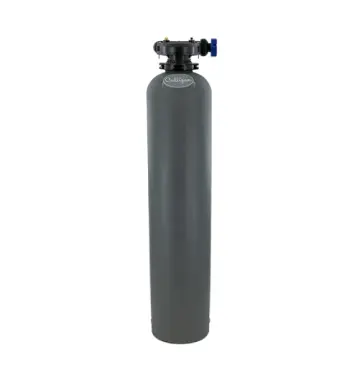
When I first looked at the Culligan salt-free conditioner, the concept immediately made sense to me.
I understand why someone would want the benefits of water conditioning without constantly handling bags of salt.
Salt-free systems are generally marketed as a lower-maintenance solution, and that sounds appealing when you are already dealing with household chores, plumbing maintenance, and water-quality concerns.
What caught my attention most was the distinction between conditioning and softening. Before considering this type of system, I think you need to understand that difference.
A traditional salt-based softener uses ion exchange to remove calcium and magnesium from water. A salt-free conditioner generally does not remove those hardness minerals.
Instead, depending on the technology being used, it attempts to alter how those minerals behave so they are less likely to form hard scale on plumbing and fixtures.
That distinction changed how I evaluated the Culligan system.
I was not expecting the water to suddenly feel silky or behave exactly like water produced by a traditional softener. Instead, I was looking for signs of reduced scale, easier fixture cleaning, and fewer deposits around faucets and showerheads.
The results of salt-free conditioning can also vary considerably from one household to another. Water chemistry matters. The incoming hardness level matters. Flow rate matters. Installation matters. Even the specific conditioning technology used matters.
That is one reason I would not automatically tell someone to purchase this system simply because it comes from a recognizable water-treatment company.
Culligan has a long history in the water-treatment industry, but brand recognition alone would not convince me to buy a particular product.
When I look at customer feedback, I pay attention to complaints involving performance, installation expectations, maintenance, pricing, and whether the buyer felt the system delivered what was promised.
I found enough negative and disappointing customer experiences surrounding salt-free conditioning products to make me hesitant.
One issue I think shoppers can easily overlook is expectations. If you have very hard water and you expect a salt-free conditioner to make that water genuinely soft, you may be disappointed.
You could still have calcium and magnesium in the water after treatment. Soap may still behave differently than it does with softened water, and you may not experience that familiar soft-water sensation.
For me, that is a major consideration.
I also think the installation side deserves attention. A whole-house water treatment system is not something I would purchase casually.
The equipment needs to be correctly sized for the home’s water usage and installed in an appropriate location. If you get the sizing or installation wrong, even a good conditioning technology can perform poorly.
Another thing I noticed is that the value proposition becomes less attractive when the system costs substantially more than I initially expected. Once I start spending serious money on a whole-house water treatment system, I want measurable benefits and reliable long-term performance.
That is where I become more critical of the Culligan salt-free conditioner.
I can appreciate the convenience of avoiding salt bags, but convenience alone is not enough for me. If I am primarily concerned about hardness, scale, soap performance, and overall water quality, I want a solution designed around those specific problems.
My overall experience has therefore been mixed. I like the salt-free concept, but I would not personally make the Culligan salt-free conditioner my first recommendation. The potential benefits do not completely outweigh my concerns about customer satisfaction, expectations, and value.
If you are shopping for one, I would compare several systems first and test your water before making a decision.
Pros Of A Culligan Salt-Free Conditioner
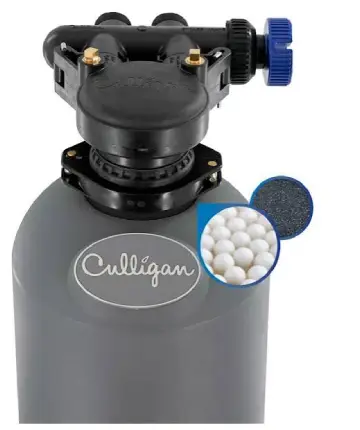
- No Salt Bags to Carry
The biggest advantage for me is obvious: there is no regular supply of softener salt to purchase and haul around.
If you have ever moved a heavy bag of salt from the car to a basement, garage, or utility area, you know that this can become annoying.
A salt-free system removes that chore.
That makes it particularly attractive for homeowners who do not want to monitor salt levels or repeatedly purchase replacement salt.
- No Traditional Salt Regeneration
Traditional softeners periodically regenerate their resin using salt and water. That process can consume water and requires the system to replenish its capacity.
A salt-free conditioner does not operate in exactly the same way.
For me, this is appealing because there is less involvement with the traditional regeneration cycle. It can also make the system easier to integrate into a household where simplicity is a priority.
- Can Help With Scale Management
The strongest reason I would consider a salt-free conditioner is scale control.
If your main complaint is mineral buildup on plumbing fixtures, a properly selected and installed conditioner may help reduce scale formation.
However, I would keep my expectations realistic. I would not assume every home will see identical results.
Water chemistry varies, and a conditioner that performs well in one household may not produce equally noticeable results in another.
- Lower Day-to-Day Involvement
Once properly installed, a salt-free conditioner can require less routine attention than a traditional salt-based softener.
I like that idea.
Instead of checking salt levels every few weeks, I can focus more on general system inspection and filter replacement if the particular installation uses filtration components.
That convenience is a legitimate advantage.
- No Need for Softener Salt
Some homeowners specifically want to avoid adding sodium through a conventional softening process. A salt-free conditioner provides an alternative approach.
That can be appealing if you are trying to minimize the use of salt in your water-treatment setup.
Still, I would not buy a salt-free system solely because the word “salt-free” sounds healthier. The right choice depends on what is actually in your water and what you want the system to accomplish.
Cons Of A Culligan Salt-Free Conditioner
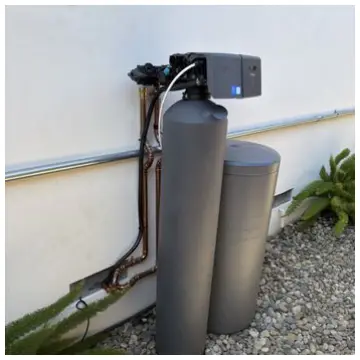
- It Does Not Actually Remove Hardness
This is the biggest drawback in my opinion.
If you want calcium and magnesium removed from your water, a salt-free conditioner is not equivalent to a conventional ion-exchange softener.
The minerals can remain in the water.
So, if your goal is genuinely soft water for bathing, laundry, cleaning, and appliances, I would think twice before choosing this type of system.
- Results Can Vary
I am also cautious because salt-free conditioning does not produce identical results in every household.
The incoming water chemistry can influence performance. If you have unusually hard water or other water-quality problems, a conditioner alone may not address everything you are experiencing.
That means water testing should come before buying.
- It May Not Produce the Soft-Water Feel
This is another expectation issue.
People often associate softened water with a slippery or silky feeling. Salt-free conditioning generally does not create that same experience because the hardness minerals are still present.
If you want that traditional soft-water sensation, this probably is not the solution I would choose.
- Customer Feedback Concerns
The reason I am reluctant to recommend the Culligan salt-free conditioner is not simply the technology.
I am also concerned by negative customer feedback associated with products and services in this category.
When I see complaints about disappointing performance, installation experiences, or perceived value, I take them seriously.
Not every negative review means a product is bad. Some problems can result from incorrect installation, improper sizing, unrealistic expectations, or unsuitable water chemistry. But when enough buyers report dissatisfaction, I would rather acknowledge the concern than automatically recommend the product because of the brand name.
- Price Can Be Difficult to Justify
Whole-house water treatment can become expensive quickly.
The equipment is only one part of the cost. Installation, plumbing modifications, replacement components, service, and other requirements can increase the final price.
For that reason, I would compare the total installed cost against other conditioning and softening options before making a decision.
Maintenance Tips For Culligan Salt-Free Conditioner
- Test Your Water First
This is the first thing I would do.
Before buying any water-treatment system, I want to know what I am dealing with.
A basic water test can tell you about hardness and may identify other issues that influence which treatment method makes sense.
If you skip testing, you are essentially choosing equipment without knowing whether it addresses your actual problem.
- Follow the Recommended Service Schedule
Even a low-maintenance system needs attention.
I would inspect the equipment periodically for leaks, unusual noises, damaged connections, or visible problems.
If the particular system includes prefilters or other replaceable components, I would replace them according to the manufacturer’s recommendations.
Ignoring routine maintenance can reduce performance over time.
- Watch Your Fixtures
One of the easiest ways to judge whether a scale-control system is helping is to pay attention to your faucets, showerheads, sinks, and other fixtures.
I would take a few photographs before installation and compare them after several months.
That gives you something more useful than simply relying on memory.
If mineral deposits remain just as heavy, I would reconsider whether the treatment method is appropriate for my water.
- Keep the Installation Area Accessible
I would avoid installing any whole-house treatment equipment where it becomes difficult to inspect or service.
You want enough room to access connections and components.
A neat installation is not just about appearance. It makes future maintenance much easier.
- Do Not Ignore Other Water Problems
A salt-free conditioner is not a universal water-treatment solution.
If your water has iron, sediment, unpleasant odors, bacteria concerns, or other contaminants, you may need additional treatment.
I would rather solve each problem appropriately than expect one piece of equipment to handle everything.
- Monitor Performance Over Time
I recommend keeping simple notes.
Record when the system was installed, when components were replaced, and whether you notice changes in scale buildup.
This gives you a practical way to determine whether you are getting enough value from the equipment.
If I spend substantial money on water treatment, I want to know that the system is actually doing something useful.
Comparison Of Culligan Salt-Free Conditioner With Other Brands

- Culligan vs. Aquasana
Aquasana is another name I would investigate when shopping for whole-house water treatment.
The important thing for me is not simply which brand sounds more familiar. I would compare the specific technology, filtration capabilities, installation requirements, replacement costs, and customer feedback.
If I am primarily concerned with chlorine, sediment, and other water-quality issues, a filtration-focused system may make more sense than a conditioner designed mainly for scale management.
- Culligan vs. SpringWell
SpringWell is another brand I would put on my comparison list.
I would look carefully at the exact system rather than assuming every product from either brand performs the same way. Whole-house filtration and scale-control systems can differ substantially in what they are designed to address.
For my money, I would choose the system that matches my water test results instead of choosing purely based on brand reputation.
- Culligan vs. Traditional Salt-Based Softeners
This is the comparison I consider most important.
A conventional salt-based softener actually removes hardness minerals through ion exchange. That makes it fundamentally different from a salt-free conditioner.
If I have severe hard-water problems and want softer-feeling water, better soap performance, and reduced hardness throughout the house, I would lean toward a properly sized traditional softener.
The downside is that I would have to deal with salt, regeneration, and additional maintenance.
But if genuine water softening is my objective, those compromises may be worthwhile.
- Culligan vs. Other Salt-Free Conditioners
If I specifically wanted salt-free treatment, I would not stop with Culligan.
I would compare several technologies and look beyond marketing claims. I would examine independent customer experiences, warranty coverage, replacement requirements, installation costs, and how the system is expected to perform with my particular water chemistry.
That comparison is especially important because salt-free conditioning is not one single technology. Different systems can use different approaches to scale control.
Frequently Asked Questions (FAQ)
Yes, salt-free conditioners can work for scale-control purposes, but I would not describe them as true water softeners.
They generally do not remove calcium and magnesium from water. Instead, they are designed to reduce the tendency of those minerals to form certain types of scale.
The effectiveness depends on the water chemistry, system technology, installation, and other conditions.
So, if your goal is scale reduction, a salt-free conditioner may be useful. If your goal is removing hardness, I would look at a conventional water softener.
The price can vary significantly depending on the specific system, home size, installation requirements, location, and any additional filtration or treatment equipment.
That is why I would not rely on a single advertised equipment price when calculating the real cost.
I would ask for a complete installed quote and find out whether the price includes installation, replacement components, service, warranties, and other fees.
Before committing, I would compare that total with several competing systems.
I would not say there is one universally best salt-free conditioner.
The best option depends on your water hardness, chemistry, household water usage, scale problems, budget, and installation requirements.
If I were shopping today, I would compare multiple reputable systems, check independent customer experiences, and test my water before deciding.
Most importantly, I would make sure I actually need a salt-free conditioner. If I wanted genuine water softening, I would choose a technology designed to remove hardness rather than simply control scale.
The phrase “salt-free water softener” can be misleading because salt-free systems generally condition rather than soften water in the traditional ion-exchange sense.
Instead of exchanging calcium and magnesium ions for sodium ions, a salt-free conditioner typically uses a scale-control process intended to change how hardness minerals behave in the water.
The minerals remain present, but the treatment may make them less likely to attach themselves as conventional hard scale.
That is why I would distinguish between “scale control” and “water softening” before purchasing one.
Final Verdict
After considering the technology, potential advantages, drawbacks, maintenance requirements, and customer feedback, I would not personally recommend the Culligan salt-free conditioner as my first choice.
I understand the appeal. No salt bags, less day-to-day involvement, and the possibility of reducing scale are all attractive benefits.
But those advantages do not change the fact that a salt-free conditioner is not the same as a traditional water softener.
I am also hesitant because of the negative customer experiences reported around these products and services.
When I am spending substantial money on whole-house water treatment, I want strong confidence in both the technology and the overall ownership experience.
If you are mainly trying to control scale and want to avoid salt, I would compare several salt-free systems before purchasing.
If you want genuinely softened water, I would strongly consider a properly sized conventional water softener instead.
My advice is simple: test your water first, identify the actual problem, compare the total installed costs, and read recent customer feedback before signing up.
For me, that extra research is worth it. I would rather spend a little more time choosing the right system than spend a lot of money correcting the wrong one later.
Recent Posts
● Interactive 5-Zone Interior & Exterior Paint Blueprint Paint Coverage Calculator: Gallons, Primer, Square Footage & Cost Tap any architectural surface zone on the blueprint...
If you want smooth, shiny hair without spending a fortune on a premium styling tool, the Ella Bella hair dryer may be worth considering.In these Ella Bella hair dryer reviews, I’ll look...