
If you are considering D1 Glass Polishing Liquid because you want to remove windshield scratches, water spots, oil film, or wiper marks, I would personally not recommend buying it.
After examining its advertised claims alongside customer feedback, I found too much inconsistency between what the product promises and what some buyers say it actually delivers.
Some users report acceptable cleaning results, but others describe it as ineffective, especially against scratches.
For me, that uncertainty is not worth risking money or visibility on something as important as automotive glass.
My First Experience With D1 Glass Polishing Liquid
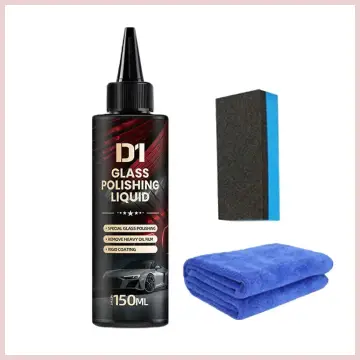
When I evaluate a glass polishing product, I do not judge it simply by whether it makes a windshield look shiny for a few minutes.
I want to know what it actually does to the glass, how difficult it is to apply, whether it leaves residue behind, and, most importantly, whether its scratch-removal claims make practical sense.
That is where D1 Glass Polishing Liquid immediately raises questions for me.
The product is marketed under several very ambitious descriptions. Depending on the seller, it is promoted as a glass polish, oil-film remover, water-spot cleaner, scratch remover, anti-fog treatment, hydrophobic coating, and windshield polishing compound. Some listings also suggest that it can address wiper marks and improve visibility.
On paper, that sounds excellent. Who would not want one small bottle to handle all those problems?
The trouble starts when I compare those promises with the customer experiences I found.
One listing currently shows a particularly unfavorable customer report in which the buyer says the product did not remove scratches when applied by hand or even with a polisher. According to that review, a conventional cutting compound produced more noticeable results.
That type of feedback matters to me because scratch removal is the biggest reason many people would consider buying a product like this in the first place.
I also found another listing describing customer dissatisfaction with greasy film and haze after application. That is exactly the opposite of what I want from a windshield product. A glass polish should leave me with a cleaner, clearer surface, not another layer that I have to fight against.
At the same time, I would not pretend every buyer hates the product. There are positive comments on some marketplaces, and some buyers say the product helped with cleaning or polishing. One eBay listing, for example, contains positive buyer feedback describing the product as effective.
That inconsistency is actually one of the biggest things that bothers me.
When I buy a specialized glass-care product, I want predictable performance. If one person uses it and gets acceptable results while another person says it does virtually nothing, I need to know why. With D1, the problem is that the product appears across multiple marketplaces under different sellers, brands, packaging, and specifications.
One current marketplace listing identifies a D1 product as a generic item manufactured by Gahwa International, while another listing identifies a similar D1 product under a completely different brand.
That makes my buying decision even harder.
I also noticed that some versions are marketed as containing abrasive materials such as aluminum oxide, while others describe the formula more generally as an abrasive emulsion.
For me, that creates another concern: I would rather know exactly what polishing system I am buying before putting it on a windshield.
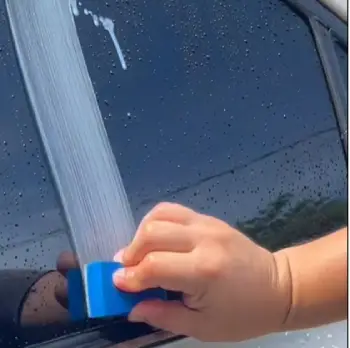
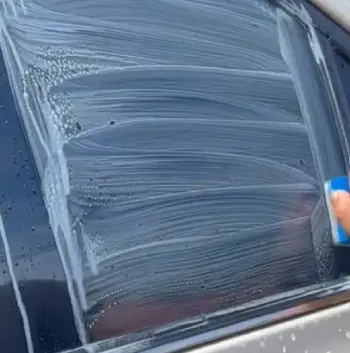
The application itself is another consideration. Some customer commentary indicates that the product can require considerable effort and works better with a polishing machine and suitable pad than with casual hand application.
That is not necessarily a problem for a professional detailer. But if you are an ordinary car owner expecting a simple wipe-on solution, your expectations could be very different from reality.
My overall experience assessing D1 is therefore mixed at best. I can understand why the product looks attractive when you first see the advertising. It promises an impressive number of benefits in a single bottle. But once I compare those promises with the more critical buyer feedback, I do not think the product gives me enough confidence to recommend it.
And when we are talking about a windshield, I would rather spend a little more on a product with a clearer track record than gamble on an inexpensive polish that may or may not solve the problem.
Pros Of D1 Glass Polishing Liquid
- Multi-Purpose Concept
The biggest advantage is the idea behind the product.
I like the convenience of having one product intended to address several common glass problems. If I have oil film, water spots, mild haze, and wiper residue on the same windshield, a dedicated polishing product can be more appealing than keeping several bottles in the garage.
D1 is marketed around exactly that convenience.
Instead of thinking about a separate product for every contamination type, the buyer is presented with one polishing liquid intended to clean and improve the glass surface.
That is a good concept.
The issue is whether the product consistently performs all those jobs.
- Potential Help With Surface Contamination
Some versions of D1 are specifically marketed for oil film and water spots. That is a more realistic application than expecting a liquid to erase deep physical scratches.
I can see why this category of product might appeal to someone whose windshield has developed a slightly greasy appearance after months of driving.
Road oils, traffic pollution, washer-fluid residue, and mineral deposits can make glass look cloudy even when it appears clean after an ordinary wash.
A dedicated polishing compound may help with that type of contamination.
- Compact and Relatively Simple Product Format
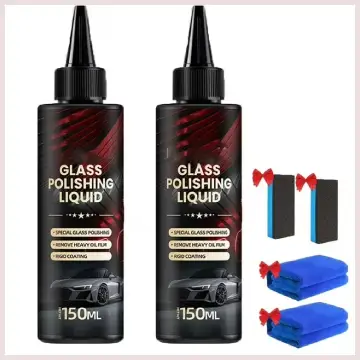
D1 is generally sold as a small bottle or kit, sometimes with a sponge or cloth.
That makes it relatively easy to store and potentially convenient for occasional vehicle maintenance.
I do not need a large detailing setup just to keep a small bottle in the garage.
For someone who enjoys doing basic car care at home, that convenience can be appealing.
- Some Positive Customer Experiences
I also think it is important to acknowledge that not every review is negative.
Some marketplace listings contain buyers who say the product worked well or arrived as expected. One eBay listing includes several positive comments from buyers describing the product as effective.
That tells me the product may provide satisfactory results under certain circumstances.
Perhaps the user is dealing with light contamination rather than deep scratches. Perhaps application technique makes a difference. Perhaps different D1-branded listings contain different formulations.
Whatever the reason, I would not describe the product as universally useless.
Cons Of D1 Glass Polishing Liquid
- Scratch-Removal Claims Are My Biggest Concern
This is the issue that makes me hesitate the most.
Some product descriptions create the impression that D1 can remove scratches from automotive glass. But customer feedback suggests that this is not consistently achieved.
One review specifically reports that the product failed to remove scratches even after both hand application and machine polishing.
That is a serious weakness because scratch correction is likely to be one of the primary reasons someone purchases it.
Glass scratches are physical damage. A surface treatment cannot automatically make every scratch disappear.
Light surface marks may sometimes respond to polishing, but deeper scratches require considerably more work and, depending on their severity and location, professional assessment or glass replacement.
- Inconsistent Results
Another major drawback is inconsistency.
Some users appear satisfied while others are disappointed. When the outcome varies that dramatically, I cannot confidently tell you that buying D1 will solve your particular problem.
For me, that uncertainty lowers the product’s value.
- Possibility of Residue or Haze
I found feedback describing greasy film and haze after application.
That is particularly frustrating with windshield products.
If I polish my windshield because I want better visibility, I do not want to finish the job and discover streaks that become especially obvious when headlights hit the glass at night.
A product that requires extensive cleanup afterward defeats some of the convenience it initially promises.
- Application May Require More Work Than Expected
Although some sellers portray the product as easy to apply, other feedback suggests that getting meaningful results may require careful application, moisture control, and mechanical polishing.
That means the average driver may not get professional-looking results simply by rubbing the product onto the windshield.
- Confusing Product Listings
This is an underrated problem.
I found D1 products listed under different sellers and brand names, with different specifications and ratings. One marketplace listing describes a product as generic, while another lists an Auiepet version.
That makes me uncomfortable as a buyer.
If I cannot easily determine whether two bottles are actually the same formulation, comparing reviews becomes difficult.
Maintenance Tips For D1 Glass Polishing Liquid
- Wash the Glass Before Polishing
I would never start polishing a dirty windshield.
First, wash the glass thoroughly and remove loose dirt.
If you begin rubbing abrasive material across dusty glass, you risk dragging contaminants over the surface.
A clean starting point gives you a much better chance of producing a consistent finish.
- Use a Dedicated Glass Microfiber Towel
I recommend keeping separate microfiber towels specifically for glass.
Do not use the same towel you used on wheels, tires, or greasy bodywork.
A glass towel should be clean, soft, and free from heavy detergent residue.
Even tiny particles can produce streaking.
- Inspect the Windshield Under Different Lighting
This is one of my favorite detailing habits.
A windshield can look perfect in the shade but reveal haze and marks when direct sunlight or headlights hit it.
Before deciding that a product has solved the problem, inspect the glass from multiple angles.
At night, pay particular attention to glare from oncoming headlights.
- Do Not Polish Every Time You Clean
Polishing is not something I would treat as routine cleaning.
Abrasive correction should be reserved for situations where ordinary cleaning is not enough.
For everyday maintenance, a suitable glass cleaner and clean microfiber towel are usually more appropriate.
Overworking the glass simply because you want it to look extra shiny is unnecessary.
- Keep Your Wiper Blades Clean
Dirty wiper blades can quickly undo your hard work.
I recommend periodically wiping the rubber blades with a clean damp cloth and checking them for cracking or deterioration.
If the blades are worn, replace them.
There is little point polishing the windshield if damaged blades continue dragging contamination across it.
- Replace Bad Wiper Blades Promptly
If your wipers leave repeated streaks, chatter, or unexplained lines, I would not automatically blame the glass.
The wipers may be the problem.
Old rubber can become hard and uneven, which can contribute to poor wiping performance and additional marks.
Fresh blades can make a surprisingly noticeable difference.
Comparison Of D1 Glass Polishing Liquid With Other Brands
- D1 vs Rain-X
Rain-X has a much clearer identity in automotive glass care.
When I think about water repellency, Rain-X is one of the names that naturally comes to mind. Its product category is more clearly established around improving water behavior on automotive glass.
D1 tries to combine polishing, cleaning, scratch correction, anti-fogging, and hydrophobic protection.
That sounds impressive, but I prefer specialization when visibility is involved.
If my primary goal is water repellency, I would rather use a dedicated glass treatment than buy D1 based on a broad list of claims.
- D1 vs Cerium Oxide Glass Polishing
Cerium oxide is a different proposition.
For serious glass polishing, cerium oxide is widely associated with professional glass-polishing processes. It is abrasive and can be used with appropriate polishing equipment to address certain surface defects.
That does not mean I would automatically recommend doing aggressive polishing yourself.
Glass polishing requires control. Too much pressure or uneven polishing can create optical distortion or uneven areas.
Still, if scratch correction is my priority, I would rather investigate a known glass-polishing system than depend on a generic all-in-one liquid making broad promises.
- D1 vs Meguiar’s Glass Products
Meguiar’s has a long-established presence in automotive detailing.
What I appreciate about products from an established detailing manufacturer is the clearer separation between cleaning, polishing, correction, and protection.
D1’s appeal is simplicity, but simplicity becomes less attractive when the performance is unpredictable.
If I am already investing time into detailing my car, I want products that have clearly defined purposes.
- D1 vs Professional Glass Polishing
Professional glass correction is the option I would consider when the damage is genuinely serious.
A professional detailer can inspect the glass first and determine whether polishing is appropriate.
That matters because not every scratch should be treated the same way.
If the defect is too deep or sits in a problematic area of the windshield, replacement may make more sense than aggressive polishing.
For me, professional assessment wins over experimentation when visibility is affected.
Frequently Asked Questions (FAQ)
There is no single glass cleaner that is objectively the highest rated for every vehicle and situation. I would choose based on the actual problem. For routine cleaning, a dedicated automotive glass cleaner is usually more appropriate than a scratch-polishing compound. If your windshield has oily film, water spots, or coating residue, choose a product specifically formulated for that contamination.
Yes, a properly formulated glass coating or water-repellent treatment can change how water behaves on automotive glass. However, a coating does not repair scratches or structural damage. I would treat cleaning, polishing, scratch correction, and coating as separate processes rather than expecting one product to perform all four jobs.
The answer depends on the depth of the scratch. Very light surface marks may respond to appropriate glass polishing, while deeper scratches may require professional correction or replacement. I would not choose a product solely because its packaging claims to remove deep scratches. The severity and location of the damage matter much more.
Cerium-oxide-based glass polishing compounds are commonly used for certain types of glass correction, particularly when paired with suitable polishing equipment. However, glass polishing requires care because excessive or uneven correction can cause optical distortion. For windshield damage that affects your view, I would consider professional assessment before attempting aggressive polishing.
Final Verdict
After reviewing the advertised features, available product listings, and customer feedback, I would not recommend D1 Glass Polishing Liquid as my first choice.
I like the idea of an affordable all-in-one glass product. I also understand why the promise of removing scratches, water spots, oil film, wiper marks, and haze from one bottle is attractive.
But I am more interested in predictable results than impressive claims.
The feedback I found is simply too inconsistent. Some buyers report satisfactory experiences, while others say the product failed to remove scratches or left them dissatisfied.
For me, that is enough to pass.
If your windshield only needs ordinary cleaning, buy a dedicated glass cleaner. If you need water repellency, choose a dedicated glass treatment. If you have actual scratches, investigate a proper glass-polishing compound or professional correction.
I would rather pay for the right product for the specific problem than gamble on D1’s broad promises. When I am dealing with windshield visibility, reliability matters more than convenience, and that is why I cannot recommend buying D1 Glass Polishing Liquid.
Recent Posts
I tried Meltoway Hair Dissolving Cream because I wanted a quick way to deal with unwanted body hair without reaching for a razor every few days. If you are looking for a convenient at-home...
If you’re considering a saffron-based supplement to support mood, appetite control, and everyday wellness, Happy Saffron Plus is worth considering.I like that it takes a familiar botanical...