
I have spent years washing dishes after family dinners, weekend breakfasts, and the occasional kitchen disaster that left pans looking hopeless.
My main goal here is to share what I learned testing Dawn Ultra against Dawn Platinum so you can decide which bottle belongs by your sink without wasting money or time on the wrong choice.
| Feature | Dawn Ultra | Dawn Platinum |
| Concentration | Standard concentrated | Higher concentration |
| Grease-cutting power | Strong for daily use | Faster and stronger on heavy grease |
| Best for | Everyday dishes and light messes | Baked-on food, tough pots, heavy grease |
| Price per ounce | Lower | Higher |
| Amount needed per wash | Moderate | Less product required |
| Skin feel | Generally milder | Can feel stronger or drying |
| Formats available | Mostly liquid bottles | Liquid plus spray options |
| Scent variety | Solid selection | Wider range of options |
| Extra ingredients | Straightforward surfactants | Added cleaning agents for speed |
| Versatility beyond dishes | Good for stains and light cleaning | Excellent for fabric stains and surfaces |
My Real-World Experience With Both Bottles
I keep both on the counter because my household swings between light plate loads and heavy skillet nights.
Dawn Ultra handles the usual plates, glasses, and lightly oiled pans without drama. Dawn Platinum steps in when I face last night’s lasagna pan or a greasy stir-fry wok.
The difference shows up in how little scrubbing I do and how quickly the water turns clear.
Key Differences Between Dawn Ultra And Dawn Platinum
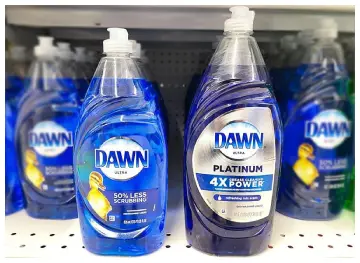
- Formula strength and concentration: Ultra delivers solid everyday performance with a reliable concentrated base that handles most meals without fuss.
Platinum packs a denser mix of surfactants and supporting agents that attack grease molecules faster and more thoroughly when the mess is serious.
- Speed on stubborn residue: Ultra loosens most messes with normal soaking and a bit of patience.
Platinum shortens that wait so baked-on cheese or dried egg comes free with less elbow work and fewer passes of the sponge.
- Cost and usage rate: Ultra costs less up front and works fine for routine loads, making it easy on the grocery budget.
Platinum costs more per ounce, yet I squeeze out less product each time so the bottle often lasts longer than expected once you adjust your habits.
- Feel on hands and surfaces: Ultra leaves my hands feeling closer to normal after a long session at the sink.
Platinum can leave a slightly tighter or drier sensation if I wash without gloves, and it demands more careful rinsing on delicate nonstick or seasoned cast iron.
- Available formats and scents: Ultra stays mostly in classic liquid form with a good range of smells that cover daily needs.
Platinum expands into spray versions and offers more fragrance choices, which helps when I want targeted application without grabbing a sponge first.
- Performance on heavy versus light loads: Ultra shines when the sink is full of plates and lightly used pans from a normal dinner.
Platinum pulls ahead the moment food has sat for hours or the pan is coated in thick oil and residue.
- Long-term value in different households: Ultra suits homes that cook simple meals most nights and want predictable spending.
Platinum rewards kitchens that regularly deal with frying, roasting, or leftover messes that would otherwise require extra scrubbing time.
Key Features Of Dawn Ultra
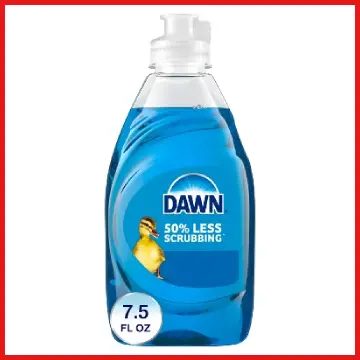
- Reliable grease removal for daily dishes: It cuts through oil from cooking sprays, butter, and light frying without needing extra steps or long soaks.
I use it for the bulk of my weeknight loads and finish with clean, film-free plates every time.
- 50 percent less scrubbing compared with older non-concentrated formulas: The claim holds up in my sink on ordinary nights.
Light residue slides off with a soft sponge instead of a hard scrubber, which saves both effort and the finish on my cookware.
- Biodegradable surfactants: The formula relies on surfactants that break down more readily in the environment, which matters to me when the water goes down the drain after every load.
- Wide availability and bottle sizes: I find Ultra in almost every store and in large family-size bottles that keep the cost per load low and make restocking simple.
- Gentle enough for frequent hand washing: After years of use I still prefer it when I know I will stand at the sink for twenty minutes or more without gloves.
- Consistent suds that rinse cleanly: The lather builds quickly and washes away without leaving a soapy film on glasses or plates, even when the water is only moderately hot.
- Solid performance on mixed loads: It handles a sink that contains both greasy pans and delicate glassware without forcing me to change products mid-wash.
Pros Of Dawn Ultra
- Budget-friendly for everyday use: The lower price per ounce means I can keep a large bottle under the sink without worrying about the grocery bill. For families that wash dishes after every meal, this adds up over the course of a month.
- Milder on skin during long sessions: My hands feel less tight after a full sink of Ultra compared with Platinum. That matters on nights when the dishwasher is full and I still have pots to finish by hand.
- Consistent results on normal messes: Plates, glasses, and lightly used cookware come out clean every time. I never feel like I am compromising when the load stays ordinary and predictable.
- Easy to find and restock: Almost every store carries Ultra in multiple sizes and scents. Running out never becomes a crisis because replacements sit on every shelf.
- Good balance of power and gentleness: It removes grease effectively without stripping seasoning from cast iron as aggressively as stronger formulas can when I am not careful.
- Predictable performance across seasons: Whether the air is dry in winter or humid in summer, Ultra behaves the same way and never surprises me with sudden changes in suds or rinsing.
- Works well with soft sponges and cloths: I can protect nonstick surfaces and still get the job done without reaching for abrasive scrubbers on most nights.
Cons Of Dawn Ultra
- Slower on heavily baked-on food: Overnight pans or dried rice stuck to the bottom need extra soak time or a second pass. I end up reaching for the other bottle when that happens more than once a week.
- Requires slightly more product for greasy loads: On nights with multiple oily pans I notice the bottle empties faster than Platinum under the same conditions, which offsets some of the lower price.
- Fewer specialized formats: No spray option means I always need a sponge or cloth for pretreatment. That slows me down when I want quick coverage on a pan that just came off the stove.
- Less impressive for non-dish cleaning tasks: It works on fabric stains and light grease, yet Platinum clears the same spots with less effort and fewer applications when I try both side by side.
- Can leave a thin film if under-dosed on very hard water: In my area the water is moderately hard, and I sometimes need an extra rinse or a bit more soap to avoid spots on glassware.
- Limited edge on protein and starch soils: Egg, cheese, and starchy residues take longer to loosen compared with the stronger formula, especially when they have dried completely.
- Less efficient when the sink is already full of greasy water: The suds break down faster once a lot of oil is present, so I sometimes add a second small squeeze mid-wash.
Key Features Of Dawn Platinum
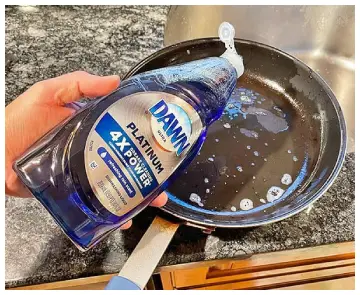
- Higher concentration for faster results: The denser formula means a smaller amount creates more cleaning power right away.
Grease lifts sooner and stays suspended so it rinses away cleanly with less effort.
- Extra cleaning agents that target tough soils: Additional surfactants and supporting ingredients tackle proteins and starches that Ultra handles more slowly.
I reach for it after roasting or frying sessions when residue has set.
- Removes up to 99 percent of tough grease and food residue: On heavy pans the claim matches what I see in practice.
The surface feels smooth after one thorough wash instead of two or three passes with the sponge.
- Spray and liquid options: The spray version lets me pretreat a messy pan while I finish cooking, then rinse later.
The liquid works the same way as Ultra but with noticeably more punch on stubborn spots.
- Strong performance beyond the dish pile: I use diluted Platinum on oily stains on clothing, greasy stovetops, and even outdoor tools.
It outperforms Ultra in those side jobs and saves me from keeping extra cleaners around.
- Long-lasting suds that trap grease: The foam holds its structure longer and keeps the dirt suspended so it does not redeposit on clean dishes already in the sink.
- Effective even in cooler water: While hot water always helps, Platinum still cuts grease when the water is only warm, which is useful on busy nights when I do not want to wait for the faucet to heat up fully.
Pros Of Dawn Platinum
- Cuts through the toughest grease faster: Fried chicken pans, cheesy casseroles, and oily woks clean up with less scrubbing and shorter soaks. I finish the job sooner and with less frustration after a heavy cooking night.
- Uses less product per load: A small squeeze creates rich suds that last through the entire sink. The higher price softens when I realize the bottle stretches further than expected once I learn the right amount.
- Versatile for household jobs: Beyond dishes I pretreat laundry stains, wipe greasy range hoods, and clean tools. One bottle covers more tasks than Ultra alone and reduces the number of products under my sink.
- Spray format adds convenience: I spray a messy pan right after cooking and let it sit while I eat. Later the residue wipes away with almost no effort and minimal water.
- Strong performance in independent and personal tests: Whether I follow published comparisons or simply watch my own sink, Platinum consistently finishes heavy jobs quicker and with cleaner results.
- Holds up better when water is only warm: On rushed evenings I do not always wait for full heat, yet Platinum still loosens grease that would slow Ultra down under the same conditions.
- Reduces the need for harsh scrubbing tools: Soft sponges and cloths handle most of the work, which helps protect the surfaces of my favorite pans over time.
Cons Of Dawn Platinum
- Higher cost per ounce: The sticker price jumps compared with Ultra. Budget-conscious households may hesitate unless they cook a lot of greasy food or value the time saved on scrubbing.
- Can feel harsher on hands: Longer washing sessions leave my skin drier, especially in winter. I reach for gloves more often or switch back to Ultra for light loads to keep my hands comfortable.
- Risk of over-cleaning certain surfaces: On well-seasoned cast iron the stronger formula can remove more oil than I want if I am not careful. Extra rinsing helps, yet I stay mindful every time I use it on those pans.
- Stronger scent that some people dislike: The fragrance lingers a bit longer on hands and in the kitchen. My household likes it, but guests have commented on the intensity after a big wash.
- Overkill for simple daily dishes: Using Platinum on a sink full of lightly used plates feels wasteful. I save it for the hard jobs and keep Ultra for the rest to stretch both bottles wisely.
- Requires more attention to rinsing: The denser formula can leave a slight residue if I rush the final rinse, especially on glassware that shows every spot.
- Less ideal for very sensitive skin without gloves: Even short sessions can leave a tight feeling if my hands are already dry, so I plan accordingly on high-volume wash nights.
How I Decide Which Bottle To Reach For?
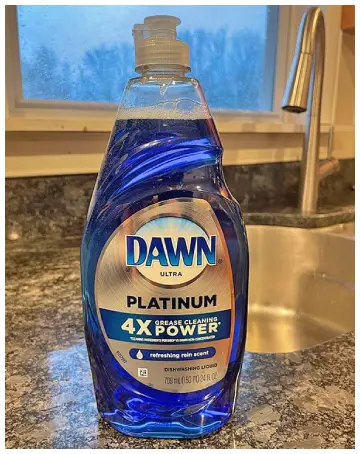
Most weeknights I grab Ultra.
The load is predictable, the price stays reasonable, and my hands stay comfortable.
When the menu includes deep frying, roasted meats with drippings, or anything that sits overnight, Platinum earns its keep.
The time I save scrubbing more than offsets the higher cost.
I also consider the rest of the house.
Platinum diluted in a spray bottle becomes my go-to for stovetop grease and laundry pretreatments.
Ultra works for those jobs too, just not as quickly.
Keeping both bottles lets me match the tool to the mess instead of forcing one formula to do everything.
Practical Tips From My Kitchen
I measure by feel rather than exact teaspoons. For Ultra a normal squeeze covers a full sink of everyday dishes. For Platinum I start with half that amount and add only if the suds thin out.
Pretreating with either soap while the pan is still warm makes a bigger difference than switching brands. Hot water helps both formulas work better, and a soft sponge protects nonstick surfaces.
Hard water changes the game slightly. I live with moderate hardness, so I sometimes add a splash of vinegar to the rinse water.
Both soaps handle it, yet Platinum seems to leave fewer spots when I under-dose.
Storage matters too. I keep the bottles upright and out of direct sunlight. The formulas stay stable for months, and I never notice separation or loss of power.
Long-Term Observations After Months Of Side-By-Side Use
After rotating the two bottles for several seasons I see clear patterns. Ultra remains the workhorse that keeps daily life simple and affordable.
Platinum acts as the specialist that rescues the nights when dinner creates chaos. Neither fails at basic dishwashing. The gap appears only when the mess climbs past ordinary.
Skin comfort becomes more noticeable in winter when indoor air is dry. Ultra keeps my hands happier during that season.
In summer when I cook more outdoor meals and face greasier pans, Platinum earns more space on the counter.
Cost tracking over three months showed that the higher price of Platinum evened out because I used less volume. Still, pure Ultra users who rarely cook heavy greasy meals will spend less overall. Households that fry or roast several times a week often come out ahead with Platinum despite the sticker price.
Also Read: Comparison Of Dawn Platinum And Platinum Plus
Frequently Asked question (FAQ)
Platinum uses a more concentrated formula with extra cleaning agents that work faster on heavy grease, while Ultra offers solid everyday performance at a lower cost.
Dawn Platinum ranks stronger and faster on tough, baked-on messes compared with Ultra.
It performs better on difficult grease and residue, yet Ultra handles normal daily dishes just as effectively for most people.
It excels at heavy dish loads, baked-on food, greasy pans, and side jobs such as fabric stains and surface cleaning.
Final Thoughts
I started this comparison because I was tired of guessing which blue bottle would finish the job faster.
After testing both in real kitchens under real conditions, I know Ultra keeps daily life simple and kind to my budget and hands. Platinum steps up when the mess turns serious and saves me time and effort.
You can decide based on how often you face tough grease versus ordinary plates. Keep Ultra for the regular nights and reach for Platinum when the pan looks hopeless.
That combination has given me the cleanest results with the least frustration, and I expect it will do the same for you.
Recent Posts
I tried Meltoway Hair Dissolving Cream because I wanted a quick way to deal with unwanted body hair without reaching for a razor every few days. If you are looking for a convenient at-home...
If you’re considering a saffron-based supplement to support mood, appetite control, and everyday wellness, Happy Saffron Plus is worth considering.I like that it takes a familiar botanical...