
I spent weeks researching and testing tile backer boards for a bathroom remodel, and the choice between DensShield and GoBoard kept coming up.
My goal here is to break down how these two products actually perform in real projects so you can pick the one that fits your timeline, budget, and skill level without second-guessing the decision later.
| Feature | DensShield | GoBoard |
| Core Material | Treated gypsum with fiberglass mats | Polyiso foam |
| Waterproofing | Built-in acrylic coating on face | Fully waterproof core |
| Weight (approx. 1/2″ 3×5) | Around 25-30 lbs | Around 5-8 lbs |
| Cutting Method | Score and snap with utility knife | Score and snap with utility knife |
| Seam Treatment | Mesh tape + thinset or silicone | Sealant or tape on joints/fasteners |
| Best For | Standard shower walls, tub surrounds | Full showers, floors, benches, speed |
| Relative Cost per Sheet | Lower to mid-range | Higher |
| Mold Resistance | Excellent (top ASTM rating) | Excellent |
| Same-Day Tile Ready | After seam treatment | Often yes after sealing |
| Steam Shower Use | Not recommended | Suitable with proper sealing |
Understanding The Core Materials
DensShield starts with a water-resistant gypsum core that sits between fiberglass mats, and it finishes with a heat-cured acrylic coating on the face that meets the tile.
That coating works as the main moisture barrier. GoBoard takes a different path with a rigid polyiso foam core that is covered by durable facers.
The foam itself does not absorb water, and this changes how you treat the board during installation.
I noticed the difference the first time I carried sheets up a flight of stairs. DensShield feels familiar if you have hung drywall.
GoBoard feels almost unreal in its lightness. That single physical difference influences nearly every step that follows.
Key Differences Between DensShield And GoBoard
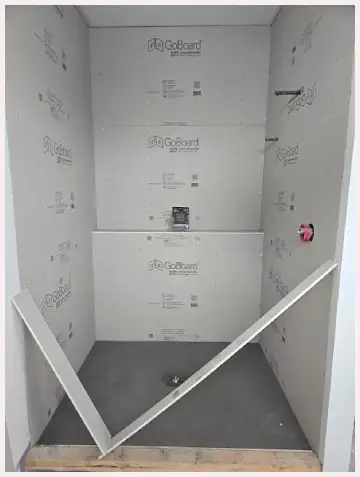
- Material composition: DensShield relies on gypsum technology that is refined for wet areas, and the acrylic face stops water at the surface while the treated core resists wicking.
GoBoard uses a foam core that blocks water through the entire thickness, so moisture never reaches the framing as long as the joints stay sealed.
- Weight and handling: A standard half-inch sheet of DensShield still needs two hands and careful moves in tight bathrooms.
GoBoard lets one person carry multiple sheets without strain, and this difference adds up quickly on upper-floor jobs because it reduces fatigue and the need for extra helpers.
- Waterproofing approach: With DensShield you treat every seam, corner, fastener head, and cut edge because the barrier lives mainly on the face.
GoBoard needs sealing only at those same points, yet the board itself stays impermeable. Both systems work when they are installed correctly, and the foam simply removes one layer of concern.
- Cutting and dust: Both boards score and snap cleanly with a utility knife.
DensShield produces a bit more edge dust that benefits from a quick rasp, while GoBoard cuts with almost no mess, which matters when you work inside a finished house.
- Structural feel: DensShield feels stiffer underfoot and under large-format tile.
GoBoard remains rigid enough for residential walls and floors, yet it flexes slightly more, and this can help on imperfect framing.
- Cost structure: DensShield usually costs less per sheet and is stocked at most big-box stores.
GoBoard carries a higher material price, but it often lowers the total project cost through faster install and the fact that you skip a separate membrane purchase.
- Thickness options and fabrication: Both come in common half-inch sizes.
GoBoard expands into thicker panels that simplify building benches, niches, and curbs without stacking multiple layers.
These differences shape daily work more than marketing claims ever will.
Key Features Of DensShield
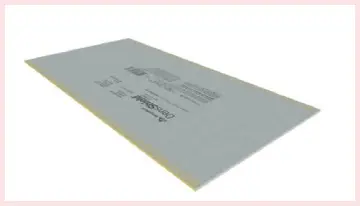
- Built-in acrylic moisture barrier: The gray coated face stops water before it reaches the gypsum.
I still seal every joint carefully, yet the board itself gives an extra layer of protection that traditional cement boards lack.
- Score-and-snap ease: A sharp utility knife and straightedge handle most cuts.
The process feels almost identical to hanging regular drywall, and this shortens the learning curve for anyone who is already comfortable with that material.
- Strong mold resistance: Lab tests give it a perfect score under common mold-growth standards.
In real bathrooms the fiberglass mats and treated core leave little organic material for mold to feed on.
- Familiar fastening: Standard corrosion-resistant drywall screws work well.
Spacing follows manufacturer guidelines, and these are usually every eight inches on walls. No specialty washers are required for basic installs.
- Fire-rated option: The five-eighths Type X version meets certain fire-resistance ratings, and this proves useful when code or insurance requires it.
- Wide availability: Most home centers carry it in multiple sizes, and these include three-by-five sheets that fit through tight stairwells more easily than full four-by-eight panels.
Pros Of DensShield
- Lower material cost: Sheets run less expensive than most foam boards, and this helps when you cover large wall areas or work to a tight budget.
- Solid, familiar feel: The board sits firmly against framing and provides a rigid surface that many tile setters prefer for heavy stone or large porcelain.
- Easy transition to surrounding drywall: Thickness matches standard half-inch gypsum, so butt joints outside the wet zone stay simple and clean.
- Proven track record in standard showers: When seams receive proper treatment, the product holds up for years in everyday residential bathrooms.
- Minimal specialized tools: A utility knife, rasp, and ordinary screws cover most needs. No extra sealant guns or proprietary fasteners are required for basic work.
Cons Of DensShield
- Weight still matters: Compared with foam it feels heavy, especially on ceilings or second-story bathrooms where every pound counts during the install.
- Seam detail is critical: Any missed silicone or poorly bedded tape creates a path for moisture. The gypsum core can wick if water reaches an untreated edge.
- Not ideal for steam: Manufacturer guidance excludes continuous high-heat and high-humidity environments such as steam showers.
- Edge treatment required: Cut edges need attention because the coating does not wrap around. A quick seal prevents problems later.
- Limited fabrication thickness: Building thick benches usually means stacking boards and adding framing, and this takes extra time on the job.
Key Features Of GoBoard
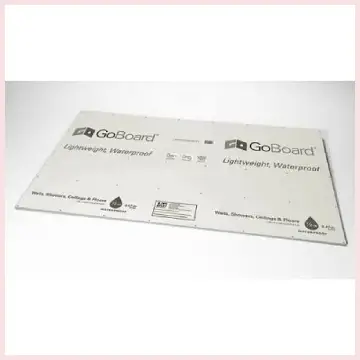
- Ultra-light foam core: Panels weigh a fraction of cement or gypsum boards.
I carried three sheets at once up stairs without feeling the strain that denser boards impose.
- Inherent waterproof core: Water simply does not pass through the polyiso.
Once joints and penetrations receive sealant, the assembly meets waterproof standards without the need to roll membrane across every square foot.
- Minimal-dust cutting: A utility knife produces clean edges with almost no airborne particles.
Cleanup stays simple, and neighboring rooms stay cleaner as a result.
- Flexible fastening choices: Approved screws, washers, or even roofing nails work.
Some installers prefer nails because the head seats cleanly without tearing the face.
- Thermal benefit: The foam adds a measurable insulation value.
Showers feel less chilly in winter, and the board helps moderate temperature swings behind the tile.
- System components: Thicker panels, pre-cut shapes, and matching sealants make complex details such as benches or niches straightforward to build.
Pros Of GoBoard
- Extreme lightness: One person handles full sheets easily. Labor hours drop, and the risk of wall damage during transport falls at the same time.
- Speed of installation: Seal the joints, fasten the panels, and often tile the same day. No waiting is needed for liquid membrane to cure across an entire wall.
- Clean work environment: Almost no dust means less protection gear and faster cleanup in occupied homes.
- Versatile thickness range: Thicker panels let you form curbs, seats, and shelves from the same material without additional lumber in many cases.
- Consistent waterproof performance: The core itself rejects water, so the system depends less on a perfect surface coating.
Cons Of GoBoard
- Higher sheet price: Material cost exceeds DensShield and basic cement board. The savings appear in labor and eliminated membrane, yet the sticker price can surprise first-time buyers.
- Slightly less rigid feel: Under very large or heavy tile some setters notice more give than gypsum or cement provides. Proper framing and full thinset coverage solve most of these concerns.
- Sealant curing time: Certain urethane sealants need hours before you can tile. Planning around that window matters if the schedule is tight.
- Availability varies: Not every local store stocks the full range of thicknesses and accessories, so special orders sometimes appear.
- Learning the system: The sealant method differs from traditional mesh-and-thinset joints. First-time users benefit from reading the instructions carefully before they start.
Installation Experience Side By Side
I started with DensShield on a standard alcove tub surround. Scoring felt natural. Screws drove cleanly.
Joints received alkaline-resistant mesh and thinset, then a bead of silicone at the tub flange.
The board accepted modified thinset without issue, and tiles stuck firmly. Total time felt shorter than cement board but longer than foam because of the careful seam work.
Later I switched to GoBoard on a full walk-in shower. Carrying the sheets alone changed the whole pace.
Cuts happened right in place with almost no mess. A continuous bead of sealant along every joint and over every fastener head created the waterproof plane.
Once the sealant skinned over, tiling began the same afternoon. The foam accepted thinset well, though I used a bit more pressure to ensure full coverage on the slightly smoother face.
Both boards required the same attention to framing flatness. Neither forgives large gaps or twisted studs.
Both demand that the bottom edge stay above the shower pan or tub lip so water never sits against an untreated cut.
Real Project Considerations
Budget-conscious remodels often lean toward DensShield because the material cost stays lower and the board is easy to find.
When labor rates run high or the bathroom sits on an upper floor, GoBoard’s speed and weight savings usually repay the extra sheet price.
For complex geometry with benches and niches, the thicker GoBoard panels reduce framing time.
Long-term performance depends more on installation quality than on the board itself.
I have seen both products succeed for a decade when seams stayed sealed and the tile assembly remained intact. Failures almost always traced back to skipped sealant, poorly supported edges, or water trapped against the bottom cut.
Choosing Based On Project Type
For a simple tub surround in a guest bath, DensShield offers solid performance at a friendly price.
For a primary bathroom with a large tiled shower, floor-to-ceiling tile, and custom seating, GoBoard’s lightness and same-day capability become hard to ignore.
Mixed projects sometimes use both: DensShield on the drier walls and GoBoard inside the wet zone.
Frequently Asked Questions (FAQ)
Yes. Apply thinset to the coated face after sealing all seams, fasteners, and edges.
Yes for standard residential showers and tub surrounds. Avoid continuous steam environments.
DensShield is lighter and cuts more easily with a utility knife, making it faster and cleaner for most wall work.
Schluter systems provide a fully integrated foam approach with strong warranties and matching accessories. DensShield costs less and works well when seams receive careful treatment. The better choice depends on budget and how much system support you want.
Final Thoughts
After living with both products through multiple installs, I see DensShield as the practical, widely available choice that rewards careful seam work.
GoBoard feels like the modern upgrade that prioritizes speed, lightness, and inherent waterproofing.
Your decision should rest on the specific demands of the space, the help available, and how much time you want to spend on the job. Measure the walls, check the framing, weigh the sheets in your hands if possible, and pick the board that removes the most friction from the project. Either one, installed with attention to detail, will support tile that lasts for years.
You now have the practical comparison needed to move forward with confidence.
Recent Posts
If you're looking for impact windows that can protect your home from hurricanes, flying debris, heavy rain, and unwanted outside noise, Caner Impact Windows may be worth considering. I...
Swash laundry detergent is worth considering if you want a convenient, concentrated formula that cleans everyday clothes without requiring large amounts of detergent. I like its simple...