
I have spent years swinging hammers, driving screws, and cutting through tough materials on job sites and around my own projects. When it comes to cordless tools, the battery makes or breaks your day. That is why I decided to put the DeWalt Powerstack against the Flexvolt head to head.The main intent of this article is to help you decide which one fits your workflow best by breaking down their real strengths, weaknesses, and practical differences from a user who actually relies on them daily. Whether you are a pro tackling heavy demolition or a weekend warrior building decks, you will walk away knowing exactly what to pick.
A Brief Comparison Table
| Feature | Powerstack | Flexvolt |
| Voltage | 20V MAX | 20V/60V MAX (auto switches) |
| Key Technology | Stacked pouch cells | Sliding cell configuration for dual voltage |
| Power Delivery | Up to 50% more power than standard 20V in compact size | Highest sustained power for demanding 60V tools and Flexvolt Advantage 20V tools |
| Runtime | Strong on high-drain tasks with efficient output | Longest overall runtime especially in 20V mode with higher Ah models |
| Weight & Size | Significantly lighter and more compact | Heavier and bulkier especially larger capacity packs |
| Lifespan | Up to 2x the charge cycles of standard packs | Excellent durability with proper care |
| Best For | Everyday 20V tools, overhead work, compact drills and impacts | Heavy-duty applications, miter saws, grinders, chainsaws, and long runtime needs |
| Compatibility | All 20V MAX tools | All 20V MAX tools plus dedicated 60V tools |
| Price Point | Higher per Ah but compact value | Premium pricing justified by versatility |
My Experience With Dewalt Powerstack
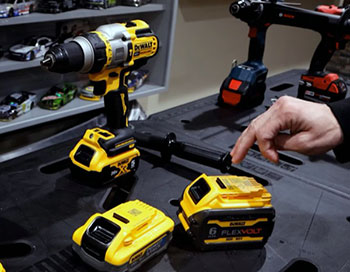
I started using the Powerstack about two years ago after growing tired of bulky batteries slowing me down on finish carpentry jobs.
The 1.7Ah version became my go-to for the impact driver and drill. It felt like the tool woke up with extra pep, driving screws faster and with less strain on my arms during overhead work.
Switching to the 5Ah model for my circular saw changed things even more. I could make multiple cuts through framing lumber without the hesitation I sometimes felt with standard packs.
The cooler operation meant no surprise shutdowns midway through a stack of boards on warm days.
What surprised me most was the longevity. After hundreds of charge cycles, the pack still delivers strong performance where older batteries would have faded.
I pair it with my oscillating multi-tool for trim work and appreciate how the compact size keeps the whole setup balanced and easy to maneuver.
There were moments on larger projects where I wished for even more runtime, but swapping in a Flexvolt for those heavy stretches created the perfect hybrid kit. Overall, Powerstack earned a permanent spot in my daily bag for its blend of power and portability.
Pros Of Dewalt Powerstack
- Enhanced Power Output: The stacked pouch cell design delivers up to 50% more power compared to traditional 20V MAX batteries of similar capacity. This means faster drilling into concrete or driving screws without the tool bogging down. I noticed the difference immediately on high-torque applications where standard packs would slow down.
- Compact And Lightweight Design: Powerstack batteries are about 25% smaller and 15% lighter than equivalent standard packs. This makes a huge difference during all-day use, especially when working overhead or in tight spaces. My wrists thank me after hours of framing.
- Improved Durability And Lifespan: DeWalt claims up to twice the charge cycles compared to older 18650 cell batteries. In my experience over repeated jobs, these packs hold up better to daily abuse and maintain performance longer before needing replacement.
- Better Heat Management: The pouch cells run cooler under load, reducing the chance of thermal throttling. I can push my tools harder without the battery cutting out prematurely on hot days.
- Faster Response In Tools: With higher continuous current delivery, tools like hammer drills and grinders perform more consistently. The 5Ah Powerstack, for instance, gives me runtime close to larger packs but with snappier feel.
- Versatility Within 20V Ecosystem: These batteries work seamlessly with every 20V MAX tool I own. No adapters or special considerations needed. I swap them between my drill, impact, and circular saw without issues.
- Rubber Overmold Protection: The impact-resistant housing adds extra defense against drops, which happen often on busy sites. I have dropped mine multiple times and it keeps going strong.
- Efficient For Light To Medium Tasks: For trim work, cabinet installation, or general carpentry, the Powerstack shines by giving enough juice without extra bulk. It strikes a great balance that many users appreciate for daily carry.
- Longer Overall Tool Life Potential: Because tools receive steady power without voltage sag, motors and components may experience less strain over time. I have seen less wear on brushes and gears when pairing with Powerstack.
- Modern Technology Appeal: The pouch cell approach represents a step forward in battery engineering, offering users a premium feel that matches DeWalt’s reputation for innovation.
Cons Of Dewalt Powerstack
- Higher Initial Cost: These batteries carry a premium price tag compared to standard 20V MAX packs. For budget-conscious users or those with light needs, the extra expense may feel steep at first.
- Slightly Reduced Runtime In Some Cases: While power is excellent, the effective amp-hour delivery can feel shorter on very low-drain tools where raw capacity matters more than output efficiency.
- Larger 5Ah Model Still Bulky For Some: Even though more compact than alternatives, the 5Ah version is not as small as the 1.7Ah, and some users find it less ideal for ultra-compact tools.
- Limited Maximum Capacity Compared To Flexvolt: You will not get the multi-hour endurance of a 9Ah or 12Ah Flexvolt when tackling marathon tasks.
- Learning Specific Use Cases: It takes time to figure out which tools benefit most, as not every application shows dramatic improvement over standard batteries.
- Price Per Amp Hour Consideration: When calculating long-term value, some users debate whether the performance gains fully offset the higher upfront investment.
- Less Ideal For Extreme Runtime Needs: Jobs requiring hours of continuous heavy cutting may still demand swapping to higher-capacity alternatives.
- Occasional Compatibility Nuances: Early reports mentioned minor tool-specific quirks, though these seem resolved in newer firmware or models.
Also Read: Comparison of Evenflo Revolve 360 And Slim
Maintenance Tips For Dewalt Powerstack
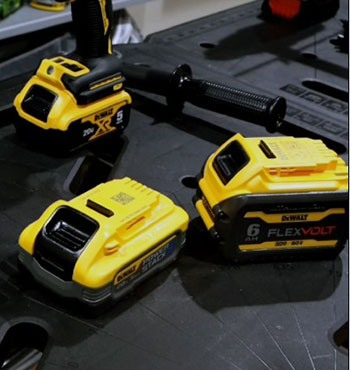
- Store In Moderate Temperatures: Keep your Powerstack batteries between 40°F and 80°F when not in use. Extreme heat or cold can degrade cells faster, so avoid leaving them in hot trucks or freezing garages.
- Avoid Full Discharge: Remove the battery from the tool once you notice a drop in power rather than running it completely flat. This preserves long-term capacity and aligns with DeWalt recommendations.
- Use Official Chargers: Always charge with genuine DeWalt chargers designed for the platform. They include maintenance modes that keep the pack healthy without overcharging.
- Clean Contacts Regularly: Wipe the metal terminals with a dry cloth to remove dust or debris. Dirty connections can cause poor performance or charging issues.
- Rotate Your Batteries: If you own multiple packs, cycle through them evenly. This prevents any single battery from sitting idle too long and helps maintain balanced health.
- Charge Before Storage: For long-term storage, bring the battery to about 50-70% charge. Check and top up every few months to avoid deep discharge.
- Inspect For Damage: Regularly look over the housing and rubber overmold for cracks. Early detection prevents moisture ingress or internal issues.
- Keep Dry: Protect from rain or excessive moisture. Although rugged, water exposure can damage electronics over time.
- Avoid Extreme Loads Continuously: While built for power, give the battery brief rests during very heavy prolonged use to manage internal heat.
- Update Tool Firmware If Applicable: Some newer tools benefit from updates that optimize power draw with Powerstack technology.
- Monitor Charge Time: If charging takes unusually long, it may indicate a need for service. Normal times are consistent with capacity.
My Experience With Dewalt Flexvolt
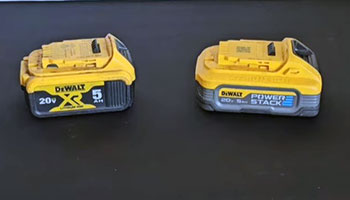
Flexvolt entered my kit when I added a 60V chainsaw and miter saw. The automatic voltage switch is pure magic. One battery powers my 20V grinder with massive runtime and then jumps to full 60V mode for the big saw without any extra steps.
On demolition days, a 9Ah Flexvolt let me run the reciprocating saw continuously through stubborn materials where standard packs would require frequent changes. The extra weight is noticeable but worth it for the endurance it provides.
I have used it on everything from concrete drilling with hammer modes to long trimming sessions. The sustained power keeps tools at peak performance longer, which translates to finishing jobs quicker.
Combining it with Powerstack gives me the best of both worlds. Light tasks stay nimble, while demanding ones get the muscle they need. After extensive use, I can confidently say Flexvolt transformed how I tackle bigger projects without relying on cords.
Pros Of Dewalt Flexvolt
- Superior Runtime And Capacity: Flexvolt batteries deliver significantly longer runtime thanks to higher amp-hour options like 6Ah, 9Ah, and 12Ah. This means I can tackle large demolition jobs or extended cutting sessions without constantly swapping packs, keeping my workflow smooth and efficient.
- Automatic Voltage Switching: The technology seamlessly shifts between 20V and 60V modes depending on the tool. I never have to worry about manual adjustments. It simply provides the right power level, making transitions between standard tools and heavy-duty 60V equipment effortless.
- High Power Output For Demanding Tasks: When paired with 60V tools or Flexvolt Advantage 20V tools, these batteries provide exceptional torque and sustained performance. My miter saw cuts through thick lumber with ease, and the reciprocating saw powers through nails and wood without bogging down even under heavy load.
- Versatile Ecosystem Compatibility: Flexvolt works with all 20V MAX tools while unlocking full 60V performance for dedicated tools. This dual capability lets me build a single battery platform that grows with my needs instead of managing separate systems.
- Excellent For Heavy-Duty Applications: For professionals handling concrete, steel, or large-scale framing, the extra power reduces job time. I have completed full-day concrete drilling sessions with consistent output that standard batteries could not match.
- Longer Overall Tool Performance: The higher capacity minimizes voltage sag, allowing motors to run at optimal speeds longer. This translates to cleaner cuts, faster driving, and less strain on the tool itself over repeated uses.
- Durable Construction: Built with robust housing and impact protection, Flexvolt packs withstand the rough conditions of daily jobsite use. I have dropped them on concrete multiple times without performance loss.
- Future-Proof Investment: As DeWalt expands the 60V line, owning Flexvolt positions you to take advantage of new high-power tools without buying additional batteries.
- Strong Cold Weather Performance: These packs maintain better output in cooler temperatures compared to many standard options, which is helpful during early morning or winter projects.
- Efficient Energy Management: The intelligent design optimizes power delivery, giving me more usable work time from each charge even on high-drain tools.
- Reduced Downtime On Site: With extended runtime, I spend less time walking back to the charger and more time completing tasks, which improves productivity on tight schedules.
- Premium Build Quality: The sliding cell mechanism feels solid and reliable, reinforcing DeWalt’s reputation for engineering excellence that holds up over years of use.
Pros Of Dewalt Flexvolt
- Superior Runtime And Capacity: Flexvolt batteries deliver significantly longer runtime thanks to higher amp-hour options like 6Ah, 9Ah, and 12Ah. This means I can tackle large demolition jobs or extended cutting sessions without constantly swapping packs, keeping my workflow smooth and efficient.
- Automatic Voltage Switching: The technology seamlessly shifts between 20V and 60V modes depending on the tool. I never have to worry about manual adjustments. It simply provides the right power level, making transitions between standard tools and heavy-duty 60V equipment effortless.
- High Power Output For Demanding Tasks: When paired with 60V tools or Flexvolt Advantage 20V tools, these batteries provide exceptional torque and sustained performance. My miter saw cuts through thick lumber with ease, and the reciprocating saw powers through nails and wood without bogging down even under heavy load.
- Versatile Ecosystem Compatibility: Flexvolt works with all 20V MAX tools while unlocking full 60V performance for dedicated tools. This dual capability lets me build a single battery platform that grows with my needs instead of managing separate systems.
- Excellent For Heavy-Duty Applications: For professionals handling concrete, steel, or large-scale framing, the extra power reduces job time. I have completed full-day concrete drilling sessions with consistent output that standard batteries could not match.
- Longer Overall Tool Performance: The higher capacity minimizes voltage sag, allowing motors to run at optimal speeds longer. This translates to cleaner cuts, faster driving, and less strain on the tool itself over repeated uses.
- Durable Construction: Built with robust housing and impact protection, Flexvolt packs withstand the rough conditions of daily jobsite use. I have dropped them on concrete multiple times without performance loss.
- Future-Proof Investment: As DeWalt expands the 60V line, owning Flexvolt positions you to take advantage of new high-power tools without buying additional batteries.
- Strong Cold Weather Performance: These packs maintain better output in cooler temperatures compared to many standard options, which is helpful during early morning or winter projects.
Cons Of Dewalt Flexvolt
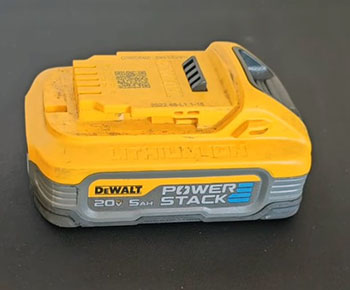
- Increased Weight And Bulk: Larger capacity Flexvolt batteries are noticeably heavier and bigger than standard 20V packs or Powerstack options. This added mass can cause fatigue during prolonged overhead or handheld work, especially with lighter tools.
- Higher Purchase Price: Flexvolt carries a premium cost compared to basic batteries, which may deter hobbyists or those with lighter usage patterns who do not need the extra runtime or power.
- Overkill For Light Tasks: For simple drilling, screwing, or trim work, the extra capacity and weight provide little benefit while making the tool less balanced and more cumbersome.
- Slower Charging Times: Higher Ah models take longer to recharge fully, which can be inconvenient if you have limited charger access or tight turnaround times between jobs.
- Potential For Reduced Maneuverability: The bulkier profile sometimes interferes in tight spaces where a more compact battery would allow better access or control.
- Higher Replacement Cost: If a pack fails or gets damaged, the expense to replace is substantially greater than for standard or Powerstack batteries.
- Requires More Storage Space: Larger sizes demand additional room in tool bags, truck boxes, or charging stations, which can be an issue for organized workspaces.
- Not Ideal For Ultra-Compact Tools: Some of the smallest DeWalt tools feel slightly front-heavy when paired with bigger Flexvolt packs, affecting precision work.
- Learning Optimal Usage: It takes time to figure out when to use Flexvolt versus lighter batteries to avoid unnecessary weight on every task.
- Limited Gains In Low-Drain Scenarios: On tools that draw minimal power, the advanced features do not always translate to noticeable real-world improvements over cheaper options.
- Dependency On 60V Tools For Full Value: If you stick only to basic 20V tools, you may not fully utilize the voltage-switching capability, reducing overall return on investment.
- Heat Management In Extreme Use: While generally good, very prolonged high-load sessions can still generate heat that requires occasional breaks.
Read More: Comparison of Chicco Onefit And Nextfit
Comparison With Other Brands
Milwaukee High Output Batteries: Milwaukee offers strong competition with their High Output line, often praised for raw power in M18 tools. However, DeWalt Powerstack provides better compactness for 20V workflows, while Flexvolt adds unique voltage switching that Milwaukee lacks in a single pack.
Bosch Pro Batteries: Bosch focuses on reliability and balanced performance. Their packs are durable but generally do not match the power density or dual-voltage versatility of Flexvolt. Powerstack edges out in lightweight applications where size matters.
Makita LXT And XGT: Makita delivers excellent runtime and comfort. Yet DeWalt’s pouch cell tech in Powerstack often feels snappier on high-drain tasks, and Flexvolt gives access to true 60V performance without needing a separate platform.
Metabo HPT Or Others: These brands provide solid value but usually trail in ecosystem depth. DeWalt’s broad 20V and 60V compatibility gives more flexibility for growing tool collections.
Ryobi 18V And 40V: Great for homeowners on a budget, but professionals often find DeWalt superior in sustained power and durability under heavy jobsite abuse.
Hilti Or Premium Competitors: Hilti excels in specialized construction but at much higher costs. Powerstack and Flexvolt deliver professional-grade results at more accessible pricing for most users.
Impact On Workflow: When I compared across brands during mixed crew jobs, DeWalt batteries consistently allowed smoother transitions between tools without performance drops.
Long-Term Ownership: Other brands may have lower entry prices, but DeWalt’s warranty support and part availability often lead to lower total ownership costs over years.
Frequently Asked Questions (FAQ)
Yes, both are part of the DeWalt 20V MAX ecosystem and work with the same 20V tools, though Flexvolt offers additional 60V capability.
Powerstack provides more power in a smaller, lighter package with longer lifespan and better heat management for improved tool performance.
XR is a solid standard option, but Flexvolt delivers superior runtime and power for demanding tasks thanks to its higher capacity and voltage switching.
It depends on your needs. Powerstack excels in compact power and comfort, while Flexvolt wins for maximum runtime and heavy-duty versatility.
Conclusion
You now have a clear picture of how DeWalt Powerstack and Flexvolt perform in real hands. I recommend starting with Powerstack if you want lighter, more responsive batteries for everyday 20V tools and value comfort during long hours.Choose Flexvolt when you need serious runtime or plan to expand into 60V equipment for tougher jobs. Many users, including myself, end up keeping both in the truck for maximum flexibility.Consider your most common tasks, budget, and future tool plans before deciding. Either way, DeWalt delivers reliable performance that keeps projects moving. Test them if possible at a local store, and you will quickly feel which one fits your style best.
Recent Posts
● Interactive 5-Zone Interior & Exterior Paint Blueprint Paint Coverage Calculator: Gallons, Primer, Square Footage & Cost Tap any architectural surface zone on the blueprint...
If you want smooth, shiny hair without spending a fortune on a premium styling tool, the Ella Bella hair dryer may be worth considering.In these Ella Bella hair dryer reviews, I’ll look...