
I wrote this piece to help you figure out which Ditra-Heat voltage makes the most sense for your floor project.
After looking at the electrical demands, coverage limits, panel space, and how each option behaves in everyday bathrooms, kitchens, and larger rooms, I want to give you a clear, practical comparison so you can pick the setup that fits your space and wiring without guesswork.
| Feature | Ditra-Heat 120V | Ditra-Heat 240V |
| Voltage | 120 volts | 240 volts |
| Amperage for same wattage | Roughly double | Roughly half |
| Typical max area per 15A thermostat | Around 100-150 sq ft | Roughly double that range |
| Breaker space needed | One single-pole slot | Two slots (double-pole) |
| Power density | Same watts per sq ft | Same watts per sq ft |
| Heat-up speed | Identical for equal wattage | Identical for equal wattage |
| Wiring complexity | Often easier on existing 120V circuits | Needs dedicated 240V circuit |
| Best for | Small baths, powder rooms, entries | Larger baths, kitchens, open areas |
| GFCI / thermostat support | Fully compatible | Fully compatible |
Key Differences Between The Ditra Heat 120 And 240
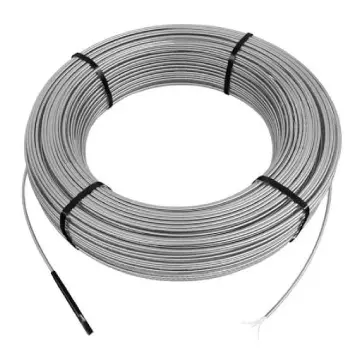
- Amperage draw and circuit loading: For any given heat output, the 120V cable pulls about twice the current of the 240V version.
That means a 1200-watt section at 120V needs roughly 10 amps, while the same 1200 watts at 240V needs only 5 amps.
The difference shows up fast when you size breakers and check remaining capacity in the panel.
- Panel space and breaker type: A 120V run usually takes a single-pole breaker.
A 240V run needs a double-pole breaker that occupies two adjacent slots.
If your panel is already crowded, that extra slot can decide the voltage for you.
- Maximum heated area on one thermostat: Most Ditra-Heat thermostats are limited to 15 amps.
Because 120V systems draw more current per square foot, you hit that limit sooner—often around 100 to 150 square feet depending on the exact watt density.
The 240V cable lets you cover roughly twice the area on the same thermostat before you need a second control or relay.
- Availability of existing circuits: Many homes already have spare 120V capacity or an easy place to tap a nearby receptacle circuit.
A 240V circuit almost always means pulling new wire from the panel.
- Wire gauge and voltage drop: Higher amperage on 120V can push you toward thicker conductors on longer runs.
The lower current of 240V keeps voltage drop lower and often allows standard 12-gauge wire over greater distances.
Key Features Of Ditra-Heat 120V

- Straightforward power source match: You simply connect it to a standard 120-volt circuit.
No special transformer or converter is required, which keeps the electrical work familiar for most electricians and handy homeowners.
- Wide range of cable lengths: Schluter offers many 120V cable options that cover everything from tiny powder-room floors under 15 square feet up to larger bathroom sections.
You select the length that matches the heated area inside the Ditra membrane studs, not the full room size.
- Built-in compatibility with all Ditra-Heat thermostats: Whether you choose the basic digital model, the programmable touchscreen, or the Wi-Fi version, every official thermostat handles 120V cables without extra modules.
- Same heat output density as the 240V line: The cables deliver the same watts per square foot.
You get the same warm-floor feel; the only change is how the electricity is delivered.
- Lower upfront electrical work in many older homes: If the panel still has open single-pole spaces and the bathroom is close to existing wiring, the 120V route often needs less new conduit or cable runs.
Pros Of Ditra-Heat 120V
- Easier to add in many existing homes: You can often use a nearby 120-volt circuit or add a single-pole breaker without major panel work. That lowers labor cost when the electrical room is already tight.
- Simpler mental model for most DIYers: Almost everyone understands 120-volt outlets and switches. Matching the cable voltage to that everyday supply feels less intimidating.
- Plenty of cable sizes for small spaces: Powder rooms, laundry closets, and narrow entryways fit the 120V lengths perfectly. You avoid buying a long 240V cable and then having excess that cannot be shortened.
- Lower risk of over-sizing the system: Because the amp limit arrives sooner, you naturally stay within a modest heated footprint, which matches the typical bathroom remodel budget.
- Compatible with standard GFCI protection already common in wet areas: Bathrooms already require GFCI, and the 120V cable pairs cleanly with those devices.
Cons Of Ditra-Heat 120V
- Higher amperage for the same heat: Twice the current means you reach the 15-amp thermostat limit faster. Large master baths or open-concept floors often need two separate 120V circuits and two thermostats.
- More breaker slots consumed on big jobs: If you end up with multiple zones, each zone takes its own single-pole space. A crowded panel can become a real problem.
- Potential for thicker wire on longer runs: Voltage drop becomes noticeable if the panel is far from the bathroom. You may need to step up to larger gauge conductors, adding cost.
- Less efficient use of panel capacity: Drawing more amps for the same watts leaves less room for other loads on the same bus.
Key Features Of Ditra-Heat 240V

- Lower current for the same heat: Half the amps means less stress on the conductors and the breaker.
That is useful when you want to heat a bigger kitchen or master bath without oversizing the wiring.
- Greater coverage per control unit: One 15-amp thermostat can manage a significantly larger floor area.
That can save money on extra thermostats and simplify programming if you prefer one controller for the whole space.
- Double-pole breaker requirement: The system needs a 240-volt supply, which is the same type of circuit used for dryers or ranges.
Once that circuit is in place, the lower amperage gives you headroom for future expansion.
- Identical membrane and cable installation method: You still snap the cable into the Ditra-Heat membrane studs the same way.
Nothing changes in the tiling or waterproofing steps.
- Full thermostat and sensor support: The same floor sensors and control units work with 240V cables.
The thermostat simply senses the voltage and regulates power accordingly.
Pros Of Ditra-Heat 240V
- Half the current for identical heat output: The lower amp draw keeps everything cooler and allows longer cable runs with standard wire sizes.
- Twice the floor area on one thermostat: You can heat a large kitchen or a spacious primary bath with a single control unit, which simplifies scheduling and reduces hardware cost.
- Better long-term expandability: Once the 240-volt circuit is installed, you have headroom to add more cable later without upgrading the breaker again.
- Cleaner electrical design in new construction: Builders already plan for 240-volt appliances, so adding a dedicated floor-heat circuit feels natural and keeps the panel organized.
- Reduced voltage-drop concerns: Lower current means less loss over distance, which is helpful in larger homes where the mechanical room sits far from the heated floors.
Cons Of Ditra-Heat 240V
- Requires a double-pole breaker and dedicated circuit: You almost always need new wiring from the panel. That adds labor and material cost compared with tapping an existing 120-volt line.
- Takes two slots in the electrical panel: Homes with limited panel space may not have room for the extra breaker without a panel upgrade.
- Less common for very small rooms: A tiny powder room may not justify the extra electrical work. You end up with more capacity than the space can use.
- Slightly higher learning curve for first-time installers: Working with 240 volts feels less familiar to some homeowners, even though the cable installation itself is identical.
How The Two Options Behave In Real Installations?
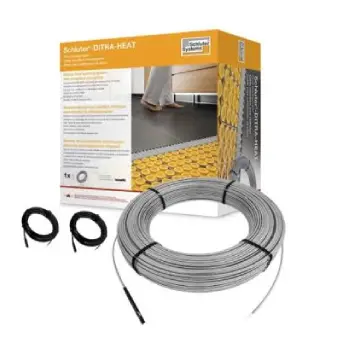
I have watched both voltages go into the same style of Ditra membrane.
The cable snaps into the studs the same way, the thinset covers it the same way, and the tile feels the same temperature once the system reaches set point. The difference shows up only on the electrical side.
In a typical 8-by-10 bathroom the heated area after leaving a 6-inch border is often under 60 square feet. A 120V cable handles that easily on a 15-amp circuit with room to spare.
The electrician can often share a nearby bathroom circuit after load calculation or add a single-pole breaker in minutes.
Step into a 12-by-15 master bath with a freestanding tub and large walk-in shower and the heated footprint climbs past 120 square feet.
At that point the 120V system starts to strain the single thermostat limit. Switching to 240V keeps the current under 10 amps and lets one thermostat run the whole floor.
The extra cost of the double-pole circuit is usually offset by not buying a second thermostat and a second cable.
Heat-up time stays the same because the watt density is identical. A cold tile floor reaches comfortable temperature in roughly the same number of minutes whether the cable is 120 or 240.
Energy use is also the same: 1000 watts is 1000 watts. You pay for the kilowatt-hours, not the voltage.
Choosing Based On Your Panel And Room Size
Start by measuring the actual area that will receive cable—inside the walls and away from fixed cabinets.
Then check the electrical panel for open slots and remaining amperage. If you have open single-pole space and the room is under roughly 120 square feet, 120V is usually the path of least resistance. If the panel is tight or the floor is larger, 240V often solves both problems at once.
Always match the cable voltage to the supply. You cannot run a 120V cable on 240 volts or the reverse.
The thermostat will accept either, but the cable itself is voltage-specific.
Installation Notes That Apply To Both
The membrane goes down first, then the cable is pressed into the stud pattern, then the floor sensor is placed between two cable runs, and finally the thinset and tile complete the sandwich.
Leave the cold lead long enough to reach the thermostat location. Both voltages use the same sensor and the same waterproofing details around drains and transitions.
Local codes still govern GFCI protection and AFCI requirements. Most jurisdictions treat the floor-heat circuit like any other bathroom circuit, so the built-in GFCI in the Ditra-Heat thermostat usually satisfies the rule.
Long-Term Ownership Experience
Once the system is running, the voltage disappears from daily life. You set the thermostat, the floor warms, and you forget about amps and breakers.
Both versions carry the same warranty structure and the same expectation of decades of service when installed correctly.
The only ongoing difference is that a 240V circuit leaves more capacity in the panel for future projects—an electric vehicle charger, a hot tub, or another heated floor somewhere else in the house.
Frequently Asked Questions (FAQ)
120V draws roughly twice the amps of 240V for the same heat output. Coverage per thermostat is larger with 240V, and the breaker type differs.
Both. Schluter makes matching cable lengths in each voltage so you can choose based on room size and panel capacity.
The Wi-Fi model gives the most flexible scheduling and remote control; the basic digital unit is simplest and still fully reliable for either voltage.
No. Once the floor is warm, the feel, the heat-up time, and the energy cost per square foot are identical.
Final Thoughts
I set out to compare Ditra-Heat 120 and 240 so you could match the right voltage to your room and your electrical panel without second-guessing.
The 120V system shines in smaller spaces and simpler wiring situations. The 240V system shines when you need more coverage or want to keep amperage low.
Both deliver the same comfortable warm floor once the tile is down. Measure your heated area, look at the open slots in your panel, and pick the voltage that fits those two facts.
You will end up with a system that works quietly for years and feels exactly the way you hoped when you first decided to heat the floor.
Recent Posts
I spent months comparing budget options against established names after my last set of tires wore out sooner than expected.My goal here is to share what I learned from putting Dextero and...
AquaTru Carafe Vs. Classic: Which Is Actually Fits Your Kitchen?
I decided to write this comparison after months of testing both the AquaTru Carafe and the Classic in my own kitchen. Tracking covered daily use.Taste stayed consistent. Refill frequency...