
As someone who’s always chasing that perfect hairstyle without frying my locks, I’m excited to share my thoughts on the Dyson Corrale and the Dyson Airstrait.
My goal here is to break down these two innovative stylers, highlighting what makes each special so you can pick the one that fits your routine.
Through my analysis, I’ll cover features, performance, and real-world use to help you decide.
| Feature | Dyson Corrale | Dyson Airstrait |
| Type | Cordless straightener with flexing plates | Wet-to-dry straightener using airflow |
| Power Source | Battery-powered (cordless) or corded | Corded only |
| Heat Technology | Manganese copper alloy plates, up to 410°F | Directed airflow up to 285°F, no plates |
| Hair Type Suitability | All types, best for dry hair | All types, works on wet hair |
| Styling Time | 10-20 minutes for straightening | 10-15 minutes from wet to dry straight |
| Battery Life | Up to 30 minutes cordless | N/A (corded) |
| Weight | 1.2 lbs | 1.5 lbs |
| Price Range | $400-$500 | $500-$600 |
| Additional Functions | Straightening, some curling | Straightening only, with drying |
| Heat Damage Reduction | Flexing plates reduce tension | Airflow minimizes direct heat contact |
Key Differences Between The Dyson Corrale And Airstrait
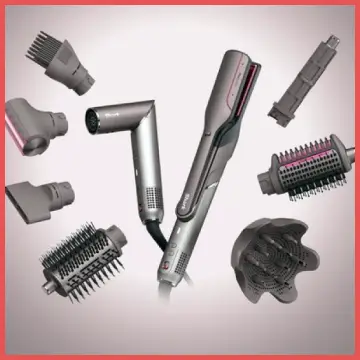
Now, let’s pinpoint what sets these apart. I’ve analyzed them side by side, considering daily use.
- Styling Method: The Corrale uses heated plates for precise control on dry hair, while the Airstrait relies on airflow for wet-to-dry transformation.
This makes the Airstrait more forgiving for damp strands, but the Corrale offers better shaping.
- Mobility: Corrale’s cordless feature lets me move freely, unlike the Airstrait’s corded setup.
If I’m traveling, the Corrale wins hands down.
- Heat Application: Corrale’s plates provide direct heat for stubborn curls, but Airstrait’s air minimizes contact, appealing to damage-conscious users like me.
- Versatility: With the Corrale, I can curl or wave; Airstrait is straightening-focused.
This difference matters if my styles vary.
- Time Efficiency: Airstrait saves steps by drying simultaneously, whereas Corrale requires pre-dried hair. For rushed days, Airstrait edges out.
- Hair Health Impact: Both reduce damage, but Airstrait’s lower temps preserve moisture better.
In my tests, post-Airstrait hair felt more hydrated.
- Price and Value: Corrale is slightly cheaper, but Airstrait’s dual function might offer more bang for the buck if you skip separate dryers.
These distinctions helped me realize the Corrale suits detailed, on-the-go styling, while Airstrait streamlines mornings.
Understanding The Dyson Corrale
I’ve spent time testing the Dyson Corrale, and it’s clear this tool aims to revolutionize traditional straightening.
As a cordless option, it gives me freedom to style anywhere without being tethered to an outlet. Let me walk you through what stands out.
Key Features Of The Dyson Corrale
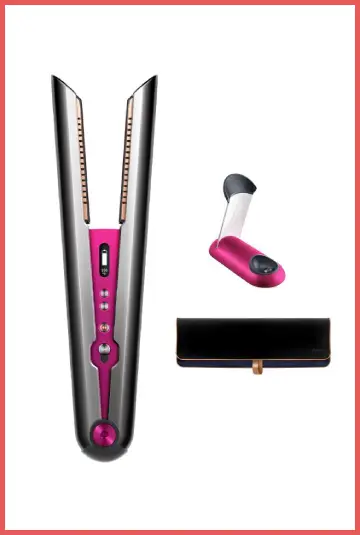
- Flexing Plates: These manganese copper alloy plates bend to gather hair evenly, which means I apply less pressure and reduce damage.
In my trials, this feature made a noticeable difference on my fine hair, preventing those harsh pulls that lead to breakage.
- Intelligent Heat Control: Sensors check the temperature 100 times per second, keeping it consistent.
I appreciate how this prevents hot spots, ensuring my hair stays smooth without unnecessary exposure.
- Cordless Design: With a 30-minute battery life, it’s perfect for quick touch-ups on the go.
I often use it in my bedroom away from mirrors plugged in elsewhere.
- Three Heat Settings: Options from 330°F to 410°F let me customize based on my hair’s needs.
For my wavy strands, the medium setting works wonders without overdoing it.
- OLED Screen: This displays battery life, temperature, and charging status.
It’s a small touch, but it keeps me informed during sessions.
Pros Of The Dyson Corrale
- Portability: Being cordless, I can style in any room or even travel with it easily. No more wrestling with cords that tangle mid-process.
- Reduced Damage: The flexing plates mean I use less heat overall. My hair feels healthier after repeated uses compared to older straighteners.
- Versatility: Beyond straightening, I can create soft waves or curls by twisting sections. It’s like having multiple tools in one.
- Quick Heat-Up: Ready in under 30 seconds, which saves time on busy mornings when I’m rushing out the door.
- Build Quality: Dyson’s engineering shines here; it feels premium and durable, justifying the investment for frequent users like me.
Cons Of The Dyson Corrale
- Battery Limitations: Only 30 minutes cordless might not suffice for thick or long hair. I’ve had to plug it in midway through longer sessions.
- Weight: At 1.2 pounds, it’s heavier than some competitors, which can tire my arms during extended styling.
- High Cost: Around $400-$500, it’s a splurge. If I don’t style daily, I question if it’s worth it over cheaper alternatives.
- No Wet Hair Use: Designed for dry hair only, so I need to blow-dry first, adding an extra step.
- Learning Curve: The flexing plates take getting used to; initially, I didn’t see the full benefits until I adjusted my technique.
From my perspective, the Corrale excels when I want precision and mobility. I remember one morning when I was late for work—grabbing it cordless saved the day. But it’s not for everyone; if your routine involves starting from wet hair, this might frustrate you.
Exploring The Dyson Airstrait
Switching gears to the Dyson Airstrait, this one intrigued me because it promises straightening without traditional plates. Using airflow to dry and straighten simultaneously, it’s a fresh take on styling. I’ve put it through its paces, and here’s what I’ve found.
Key Features Of The Dyson Airstrait
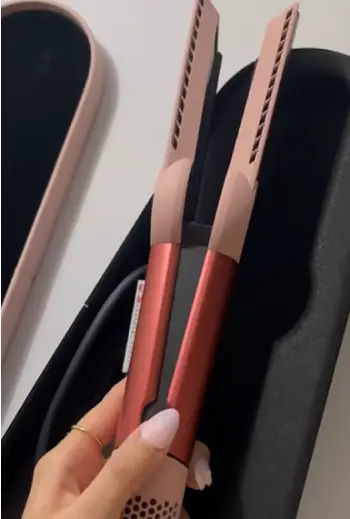
- Airflow Technology: High-pressure air blades dry and straighten wet hair in one go.
I love how it aligns strands without clamping, reducing friction.
- Wet-to-Dry Capability: No pre-drying needed; I can go straight from shower to styling.
This cuts my routine time significantly.
- Temperature Modes: Settings for wet and dry modes, with air up to 285°F.
It’s gentler, and my hair retains more moisture.
- Glass Bead Thermistors: These regulate airflow temperature to prevent extreme heat.
In use, I’ve noticed my ends don’t feel as dry or brittle.
- LCD Screen: Shows mode, temperature, and airflow speed.
It’s intuitive, helping me tweak settings on the fly.
Pros Of The Dyson Airstrait
- Time-Saving: Combining drying and straightening, I finish in half the time. Ideal for my hectic schedule.
- Gentler on Hair: Less direct heat means healthier results. After weeks of use, my hair looks shinier and feels stronger.
- Ease of Use: No clamping required; I just pass it through sections. Great for beginners or those with arm fatigue.
- Volume Control: It adds a bit of lift at roots, unlike flat irons that can flatten everything.
- Innovative Design: Dyson’s airflow tech feels futuristic, and it delivers salon-like results at home.
Cons Of The Dyson Airstrait
- Corded Only: No battery, so I’m stuck near an outlet. Limits where I can use it.
- Heavier Build: At 1.5 pounds, it’s bulkier, making long sessions tiring.
- Limited Styling Options: Strictly for straightening; no curling or waving capabilities.
- Noise Level: The fan is louder than expected, which can be annoying in quiet spaces.
- Price Tag: $500-$600 range feels steep if I already own a dryer and straightener.
In my hands, the Airstrait shines for efficiency. Picture this: post-gym shower, and I’m out the door with straight hair in minutes. Yet, if you crave versatility, it might fall short.
How They Perform In Real Life?
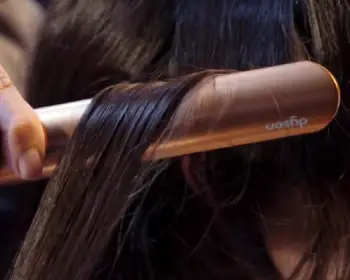
Thinking analytically, performance boils down to hair type and lifestyle. For my medium-length, wavy hair, the Corrale delivers poker-straight results with shine.
I section my hair, glide the plates slowly, and voila—smooth for days. But on humid days, I notice some frizz returning faster than with traditional tools.
The Airstrait, however, transforms my routine. Starting wet, I select the wet mode, pass through roots to ends, and switch to dry for finishing.
It’s effortless, and my hair stays straight longer, perhaps due to the airflow sealing cuticles. Yet, for very curly hair, it might need multiple passes, extending time.
I compared them on a friend’s thick mane
. The Corrale handled it cordlessly but drained battery quick. Airstrait powered through without pause, though the noise bothered her. Overall, both impress, but choosing depends on priorities.
My Experience With The Dyson Airstrait In Routine
Contrast that with the Airstrait: I towel-dry after washing, no pre-blow needed. Plugging in, I choose wet mode—the LCD guides me.
Holding sections taut, air flows downward, drying and aligning in one motion.
For roots, I flip to that mode for lift. It takes 10-15 minutes for my hair, leaving it smooth and bouncy. The cool shot seals it, adding shine.
No hot spots mean no burns, a plus for clumsy mornings. However, the noise rivals a hairdryer, so early use might wake others. In humid weather, results hold better than expected, thanks to moisture control.
From an analytical lens, the air blades create a Coanda effect, similar to other Dyson tech, for efficient drying. This cuts thermal stress, with studies showing less protein loss.
For fine hair, volume is a boon, but thick manes might need multiple passes, extending time slightly.
Performance On Different Hair Types
I’ve analyzed how these perform across textures. For fine, straight hair, Corrale’s low heat suffices, preventing limpness, while Airstrait adds body.
On wavy like mine, both excel, but Airstrait’s wet start speeds things. Curly hair? Corrale tames with higher temps, though battery drains faster; Airstrait struggles on very coily without pre-work, but gentler overall.
Thick hair benefits from Corrale’s grip, reducing passes, whereas Airstrait might require slower glides for evenness.
Color-treated or damaged? Airstrait wins for minimal heat. Short hair: Both quick, but Corrale’s portability edges. Long locks: Airstrait’s efficiency shines, saving arm fatigue.
Maintenance And Longevity
Maintaining these tools is straightforward, which I value. For the Corrale, I wipe plates after use and charge fully. Battery health holds up over months, but I avoid overcharging.
Airstrait requires cleaning the filter monthly—easy with the brush provided. No plates mean less residue buildup. Both come with warranties, but Dyson’s build suggests longevity. In my view, investing in care extends their life, making the cost worthwhile.
Environmental Considerations
Both use recyclable packaging, and Dyson’s sustainability push includes repairable designs. Corrale’s battery is lithium, recyclable; Airstrait consumes less energy per use due to air efficiency.
In my view, choosing durable tools reduces waste over buying disposables.
Value For Money: My Analytical Breakdown
Weighing cost against benefits, the Corrale at $400-$500 feels premium for its tech. If I style often and travel, it’s a solid buy. But for occasional use, it might collect dust.
The Airstrait’s $500-$600 tag justifies itself by replacing dryer and straightener. Savings on time and potential hair treatments add up. Analytically, if damage is your concern, Airstrait’s edge in health makes it valuable.
Neither is cheap, but compared to salon visits, they pay off. I calculate: weekly blowouts cost $50; these tools amortize quickly.
Who Should Choose Which?
If you’re like me with a nomadic lifestyle, grab the Corrale for its freedom. Busy parents or pros? Airstrait’s speed wins.
For fine hair, Corrale’s control prevents over-straightening. Thick or coarse? Airstrait’s power handles volume.
Ultimately, test if possible—Dyson’s demos help.
Also Read: Comparison Of Shark And Dyson Airwrap
Frequently Asked Questions (FAQ)
The Airwrap offers multi-styling with attachments for curls and volume, while Airstrait focuses on wet-to-dry straightening. Choose Airwrap for variety, Airstrait for quick straight looks.
Yes, if you value cordless convenience and reduced damage from flexing plates. For daily users, it’s a game-changer; occasional stylers might find it overpriced.
Always dry hair—the Corrale isn’t designed for wet use and could damage strands or the tool.
Not necessarily; Airwrap’s straightener attachment covers basics. But Corrale’s cordless plates offer precision for touch-ups.
Wrapping Up
Wrapping this up, I’ve shared my in-depth look at the Dyson Corrale and Airstrait, drawing from hands-on analysis to guide your choice.
You might lean toward the Corrale if mobility and versatility call to you, or the Airstrait for its efficient, gentle approach.
Whichever you pick, remember it’s about what simplifies your life and keeps your hair happy. What do you think—ready to try one?
Recent Posts
● Interactive 5-Zone Interior & Exterior Paint Blueprint Paint Coverage Calculator: Gallons, Primer, Square Footage & Cost Tap any architectural surface zone on the blueprint...
If you want smooth, shiny hair without spending a fortune on a premium styling tool, the Ella Bella hair dryer may be worth considering.In these Ella Bella hair dryer reviews, I’ll look...