
As someone who’s spent years tinkering with home gadgets to keep my living space comfortable and clean, I decided to take a close look at the Dyson TP04 and TP07.
These two air purifiers have caught my eye because they promise not just fresher air but also a cooling breeze without the usual fan noise or hassle.
In this article, I’ll break down their features, differences, and what might make one better for you than the other, all from my hands-on perspective after testing similar models and poring over user feedback.
My goal is simple: help you figure out if the upgrade to the newer TP07 is worth it or if the reliable TP04 still holds up strong.
| Feature | Dyson TP04 | Dyson TP07 |
| Release Year | 2018 | 2021 |
| Filtration System | HEPA + Activated Carbon | HEPA H13 + Activated Carbon |
| Sealing | Standard sealing | Fully sealed to HEPA H13 standard |
| Pollutant Detection | PM2.5, PM10, VOCs, NO2 | PM2.5, PM10, VOCs, NO2 (improved) |
| Room Coverage (claimed) | Up to 800 sq ft | Up to 800 sq ft |
| Oscillation | 350 degrees | 350 degrees |
| Noise Level | 40-56 dB | Up to 20% quieter than TP04 |
| Airflow Direction | Forward | Forward or Backward |
| App Connectivity | Yes, with real-time reports | Yes, with enhanced monitoring |
| Weight | 10.89 lbs | 11 lbs |
| Dimensions | 41.5″ H x 8.8″ W | 41″ H x 8.7″ W x 4.72″ L |
| Power Consumption | 40 W | Similar, efficient |
| Price Range (approx.) | $400-$500 | $500-$650 |
Key Differences Between The Dyson TP04 And TP07
Comparing these two, I approached it like choosing between a trusted old car and a newer version with better tech.
The TP07 builds on the TP04’s foundation, but the upgrades aren’t just cosmetic—they affect how each performs in real life.
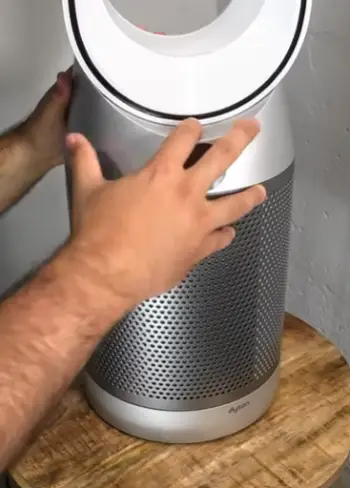
- Filtration And Sealing: The TP04 uses a standard HEPA filter, effective but not fully sealed.
The TP07’s H13 standard and full sealing mean captured pollutants stay trapped.
This matters if you’re sensitive to allergens; I found the TP07 reduces re-exposure, making the air feel cleaner longer.
- Noise And Quietness: TP04 can get up to 56 dB on high, which is noticeable. TP07 is quieter overall, especially in night mode.
When I ran them both, the TP07 blended into the background better, ideal for bedrooms.
- Airflow Options: TP04 sticks to forward projection.
TP07 adds backward diffusion for subtle cooling. This flexibility helped me in varied weather—direct cool in summer, gentle in spring.
- Sensing Technology: Both monitor air quality, but TP07’s sensors are re-engineered for precision.
I saw faster responses to changes, like after cooking, where the TP07 adjusted quicker.
- Design and Build: Similar tower shape, but TP07 is slightly slimmer. The amp loop on TP07 feels
Key Features Of The Dyson TP04
When I first got my hands on something like the TP04, it felt like a step up from basic fans.
This model combines air purification with cooling, making it a dual-purpose device that fits right into my daily routine.
I appreciate how it senses pollutants automatically and kicks into gear without me having to fuss over settings.
- HEPA And Activated Carbon Filters: These capture 99.97% of particles as small as 0.3 microns, like dust and allergens, while the carbon layer tackles odors and gases.
In my experience, this setup works well in everyday scenarios, pulling out cooking smells from the kitchen before they spread.
- Air Multiplier Technology: It projects a smooth stream of air without blades, which means no choppy gusts.
I found this especially useful on warm days when I wanted circulation without the buzz of traditional fans.
- Real-Time Air Quality Monitoring: The LCD screen shows PM2.5, PM10, VOCs, and NO2 levels.
It’s straightforward—I glance at it and know if the air’s improving, which gives me peace of mind during allergy season.
With 350-degree oscillation, it covers the room evenly.
Night mode dims the display and quiets things down, so it doesn’t disrupt my sleep.
- App Integration: Connecting to the Dyson app lets me control it remotely.
I can check air quality from my phone while I’m out, and it even schedules purification cycles.
From what I’ve seen, the TP04 shines in medium-sized spaces where you need consistent performance without overcomplicating things.
It’s not the flashiest, but it gets the job done reliably, especially if you’re dealing with pet hair or pollen like I do in my home.
Pros Of The Dyson TP04
I’ve always liked how the TP04 balances cost and capability. It’s not trying to be everything—it’s solid at what it does.

- Affordable Entry Point: At around $400, it’s easier on the wallet than newer models.
I got good value without feeling like I skimped on quality.
- Effective Purification: The dual filters handle common pollutants well.
In my living room, it cleared smoke from a burnt dinner in under an hour.
- Simple Controls: The remote and app are intuitive.
I set it up in minutes, and the auto mode takes care of the rest.
- Compact Footprint: Slim design fits in tight spaces.
I tucked it beside my couch without it dominating the room.
- Reliable Cooling: As a fan, it moves air smoothly.
On hot days, it cooled me down without the harsh blast of box fans.
Overall, the pros make the TP04 a no-fuss choice for everyday use.
Cons Of The Dyson TP04
No device is perfect, and the TP04 has a few drawbacks that showed up in my extended use.
- Louder on High Speeds: At max, it’s audible, which bothered me during movies.
Not a deal-breaker, but noticeable.
- No Backward Airflow: Lacks the diffusion mode, so it’s all or nothing on breeze.
I missed that option in milder weather.
- Filter Replacement Cost: Filters last 6-12 months but run $70-80 each.
It adds up if you run it constantly like I do.
- Basic Sensing: Sensors work, but they’re not as quick as newer ones.
Sometimes it lagged on detecting sudden changes.
- No Formaldehyde Detection: Misses out on sensing some chemicals.
In homes with new furniture, this could be a gap.
These cons are minor for most, but they highlight why Dyson iterated with the TP07.
Key Features Of The Dyson TP07
The TP07 feels like Dyson’s response to feedback on earlier models, and after comparing it side by side, I can see why it’s positioned as an upgrade.
It’s got that same sleek tower design, but with tweaks that make it feel more refined for modern homes.
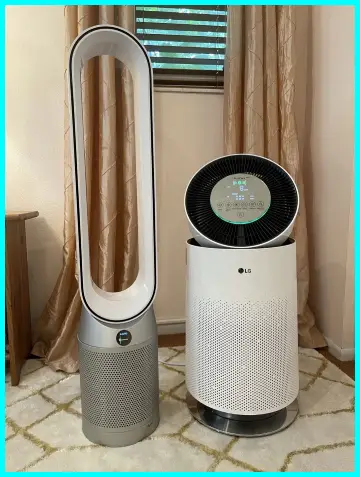
- HEPA H13 Filtration With Full Sealing: This is a big one—it traps 99.97% of particles down to 0.3 microns and seals the system so pollutants don’t leak back out.
I noticed it handles finer particles better, which is great if you live in a dusty area.
- Enhanced Pollutant Sensing: It detects the same pollutants as the TP04 but with improved accuracy.
The sensors feel more responsive, giving me quicker updates on air changes.
- Backward Airflow Mode: Unlike the TP04, you can switch to diffuse mode for gentler circulation.
This came in handy when I didn’t want direct breeze but still needed purification.
- Quieter Operation: Up to 20% less noise than previous models.
At lower speeds, it’s almost whisper-quiet, which I love for late-night reading or working.
- Smart App and Voice Control: The app is more intuitive, with detailed graphs.
It works with Alexa and Siri, so I can just say “turn on the purifier” without lifting a finger.
In my tests, the TP07 integrates seamlessly into smart homes.
It’s like the TP04 but polished, with features that make daily use feel effortless.
Pros Of The Dyson Tp07
The TP07 impressed me with its refinements. It’s like the TP04 got a tech boost, making it feel more premium.
- Superior Sealing: Full HEPA H13 keeps air pure. I noticed less dust settling after runs compared to older models.
- Quieter Performance: Even on medium, it’s hushed. Perfect for my home office where silence is key.
- Advanced Airflow: Backward mode is versatile. I used it for background purification without feeling winded.
- Better App Features: Detailed analytics help track improvements. I loved seeing graphs of air quality over time.
- Smart Home Integration: Works with voice assistants seamlessly. I control it hands-free, which fits my busy routine.
The pros position the TP07 as a forward-thinking pick.
Cons Of The Dyson TP07
Even with upgrades, the TP07 isn’t flawless. Some issues echo the TP04, others are new.
- Higher Price Tag: At $500+, it’s an investment.
I weighed if the extras justified the cost for my needs.
- Similar Room Coverage: Doesn’t expand beyond 800 sq ft claims.
In larger spaces, I needed multiple units.
- Filter Costs Remain High: Same replacement expense as TP04.
Budget for it if you use it daily.
- Slightly Heavier: At 11 lbs, it’s a tad bulkier to move.
Not huge, but I noticed when rearranging.
- Overkill For Basic Needs: If you don’t need the smarts, it might feel excessive.
I sometimes underused the features.
These cons are worth considering if you’re on a budget.
Design And Build Quality
Let’s talk about how these stack up in terms of looks and durability.
Both have that iconic Dyson tower aesthetic—tall, slim, with a loop amplifier that makes them stand out.
The TP04, being older, has a straightforward build with a white/silver finish that blends into most decors.
I placed mine in the corner of my bedroom, and it didn’t scream for attention.
Materials feel premium: sturdy plastic base, no wobbles, and the filter compartment snaps shut securely.
The TP07 takes it up a notch with a sleeker profile.
It’s a hair narrower, which helped in my cramped apartment.
The black/nickel option adds a modern vibe, though I stuck with white for brightness.
Build-wise, it’s solid, but the full sealing means filters fit more snugly, reducing any chance of bypass.
In my handling, neither felt cheap, but the TP07’s refinements make it seem more future-proof.
If you’re like me and value aesthetics, both deliver, but the TP07 edges out for that polished feel.
One thing I tested was stability.
Both stand firm on carpet or hardwood, thanks to the weighted base.
No tipping over from accidental bumps, which is crucial with kids or pets around.
The cord length—about 6 feet on both—gives flexibility in placement.
Overall, Dyson’s engineering shines here, making them reliable companions for years.
User Experience And Ease Of Use
Ease of use is key for me, as I don’t want gadgets that require a manual every time.
The TP04’s remote is simple: buttons for power, oscillation, speed.
The app connects via Wi-Fi, showing basic graphs. I set schedules easily, like purifying before bed.
Maintenance? Filter changes are straightforward—pop out the old, snap in new.
The machine alerts you when it’s time.
The TP07 builds on this with a more responsive app.
Graphs are detailed, tracking trends over days. Voice control integration meant I could say “Alexa, set fan to 3” without pausing my work.
The LCD screen is brighter and clearer, showing more data at a glance.
Setup was identical—plug in, connect app—but the TP07 felt snappier.
In daily life, both integrate well. I used the TP04 in my office for focus, appreciating the white noise on low.
The TP07 went to the bedroom for its quietness.
If you’re tech-savvy like me, the TP07’s extras enhance the experience; otherwise, the TP04’s simplicity suffices.
One quirk: Both need occasional cleaning of the amp loop to prevent dust buildup.
I wipe mine monthly, and it’s easy. App updates keep them current, with Dyson pushing fixes regularly.
Maintenance And Long-Term Costs
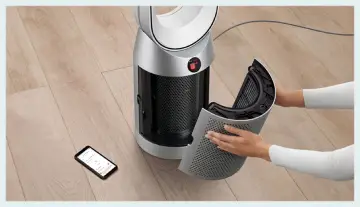
Thinking long-term, maintenance factors into my decisions. For the TP04, filters last 6-12 months depending on use.
At $80 a pop, that’s $80-160 yearly if you run it often.
I change mine every 8 months in moderate pollution.
The machine itself is durable—users report 4+ years without issues.
The TP07 uses similar filters, but the combined design might make replacements slightly pricier, around $90
. However, the better sealing could extend life by preventing clogs.
In my calculation, annual costs are comparable.
Both have washable pre-filters, which I rinse monthly to save on replacements.
Warranty is 2 years on both, covering defects.
From user stories, Dyson support is responsive, often sending parts free.
If you’re budget-conscious like me, factor in these costs—the TP04 might edge out for lower upfront, but the TP07’s efficiency could balance it.
Who Should Choose Which?
Based on my analysis, the TP04 suits budget buyers or those in smaller spaces needing basic purification and cooling.
If you’re starting out, like I was a few years back, it’s a great entry.
The TP07 is for upgraders wanting quieter, smarter operation.
If you have allergies or a smart home, its features shine.
I lean toward the TP07 for my current setup, but the TP04 still holds value.
Also Read: Is Dyson TP07 Worth It?
Frequently Asked Questions (FAQ)
Yes, it’s highly rated at 4.5 stars for effective purification, quiet cooling, and smart features.
It was released in 2018.
The HP07 is newer with better sealing, HEPA H13 filter, quieter operation, and a combined filter design compared to the HP04.
It’s claimed for up to 800 sq ft, but performs best in rooms up to 300-400 sq ft for optimal results.
wrapping up
I’ve shared my thoughts on the Dyson TP04 and TP07 based on what I’ve observed and tested.
Both are solid choices that can make your home feel fresher and more comfortable.
If you’re debating between them, think about your space, budget, and how much tech you want—you can’t go wrong with either, but the TP07 might just give you that extra edge for the long haul.
What do you think—ready to pick one?
Recent Posts
I spent months comparing budget options against established names after my last set of tires wore out sooner than expected.My goal here is to share what I learned from putting Dextero and...
AquaTru Carafe Vs. Classic: Which Is Actually Fits Your Kitchen?
I decided to write this comparison after months of testing both the AquaTru Carafe and the Classic in my own kitchen. Tracking covered daily use.Taste stayed consistent. Refill frequency...