
As a homeowner who’s always tinkering with smart home gear to make life easier and cut down on energy bills, I’ve spent time comparing the ecobee4 and the ecobee Smart Thermostat Premium.
My goal here is to break down what sets them apart, from everyday use to long-term value, so you can figure out if the older ecobee4 still holds up or if the Premium’s upgrades are worth the splurge. Let’s get into it.
| Feature | ecobee4 (2017) | ecobee Smart Thermostat Premium (2022) |
| Price (Approximate Current) | $200-250 (used or discounted) | $250-260 |
| Built-in Voice Assistant | Amazon Alexa | Amazon Alexa and Apple Siri |
| Display | 3.5-inch color touchscreen | 4-inch square color LCD touchscreen (540×540 pixels) |
| Sensors Included | One room sensor (temperature and occupancy) | Built-in radar sensor for motion; air quality (VOCs, CO2, humidity); compatible with room sensors (not included) |
| Audio Quality | Basic speaker for Alexa | Upgraded speaker and microphone for better sound and voice recognition |
| Smart Home Integration | Alexa, HomeKit, SmartThings, IFTTT, Google Assistant | Alexa, HomeKit (with Siri), Google Assistant, SmartThings, IFTTT |
| Air Quality Monitoring | None | Yes, measures VOCs, CO2, relative humidity |
| Security Features | Basic integrations | Acts as security hub for ecobee ecosystem (door/window sensors, smoke detection) |
| Energy Savings Tools | Geofencing, scheduling, eco+ basics | Advanced eco+ with time-of-use optimization, demand response |
| Installation | Includes Power Extender Kit for no C-wire | Includes Power Extender Kit; compatible with most HVAC systems |
| Design | Rectangular, plastic body | Square, zinc body for premium feel |
| Warranty | 3 years | 3 years |
Key Differences Between The Ecobee4 And Premium
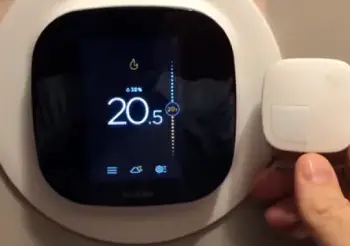
I’ve used both in different setups, and the gaps show up in daily life.
The ecobee4 feels like a solid starter from its era, but the Premium steps it up with modern touches that make it feel more integrated into today’s smart homes.
Here’s what stands out:
- Voice Assistant Capabilities: The ecobee4 sticks with built-in Alexa, which was groundbreaking back then for asking about weather or controlling lights without an extra device.
But the Premium adds Siri alongside Alexa, and the audio hardware is way better—no more tinny sound or misheard commands.
In my experience, this makes the Premium a true smart speaker replacement in the hallway.
- Sensor Technology: Ecobee4 comes with a basic room sensor for temperature and motion in one extra spot.
The Premium swaps that for a built-in radar sensor that’s more accurate and has wider range, picking up movement from farther away, even through thin walls.
This means better auto-adjustments without buying add-ons right away.
- Air Quality Features: No contest here—the ecobee4 has zero air monitoring. The Premium tracks VOCs, CO2, and humidity, giving you a “clean air score.”
I found this useful during allergy season, though it doesn’t catch particulates like dust, so it’s not a full air purifier replacement.
- Display and Interface: The ecobee4’s 3.5-inch screen is functional but dated.
Premium’s larger 4-inch square display with higher resolution feels more responsive, and the new scroll wheel for temperature changes is smoother than the old slider.
It’s those little things that make interacting with it less frustrating.
- Security Integration: Ecobee4 plays nice with basic smart home stuff, but Premium doubles as a hub for ecobee’s security line, like linking to door sensors to pause HVAC if a window’s open.
This added layer saved me energy in tests, though you need extra hardware and possibly a subscription.
- Energy Optimization: Both save on bills, but Premium’s advanced eco+ software factors in electricity rates and grid demands, potentially shaving more off your costs.
Ecobee4’s geofencing and scheduling work well, but they feel basic now.
- Build and Aesthetics: Ecobee4’s plastic rectangular design blends in, but Premium’s zinc body and sleeker edges give it a more upscale look.
If your thermostat is visible, this matters.
These differences boil down to evolution—the Premium builds on what the ecobee4 started, making it smarter and more versatile for current needs.
Key Features Of The Ecobee4
When I first installed the ecobee4 years ago, it felt like a game-changer. It was one of the first thermostats to really bridge HVAC control with voice smarts. Here’s what makes it tick:
- Built-in Alexa: You can use it like an Echo Dot—play music, set timers, or control other devices. I loved yelling commands from the kitchen without pulling out my phone.
- Room Sensor: Comes with one, which monitors temp and occupancy in another room. This helped even out heating in my unevenly insulated house.
- Touchscreen Control: The 3.5-inch display lets you adjust settings on the spot, with clear menus for schedules and modes like home, away, or sleep.
- Smart Integrations: Works with HomeKit for iOS users, Alexa routines, and more. I set it up to dim lights when cooling kicks in.
- Energy Reports: App shows usage breakdowns, helping spot wasteful patterns. I cut my bill by 15% just by tweaking schedules based on that.
- Geofencing: Uses your phone’s location to switch modes automatically. Handy for forgetful types like me.
- Compatibility: Fits most systems, with the PEK for older wiring. Installation took me about 30 minutes.
Overall, it’s reliable for basic smart control, but it shows its age in speed and features.
Pros Of The Ecobee4
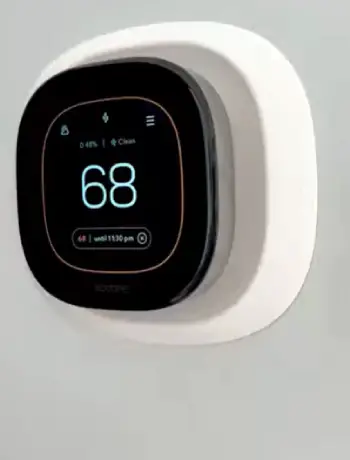
I’ve relied on the ecobee4 for years, and it has some real strengths that keep it relevant:
- Affordable Entry Point: Often found cheaper now, making it great for budget-conscious upgrades.
I got mine on sale and it paid for itself in savings.
- Solid Voice Integration: Built-in Alexa works well for basic commands.
It’s convenient if you don’t have other speakers around.
- Room Sensor Included: Helps with multi-room balancing right out of the box.
Fixed hot spots in my living room without extra buys.
- Broad Compatibility: Plays nice with many platforms.
I had no issues linking to my Apple and Amazon setups.
- Energy Efficiency: Good at learning routines and geofencing.
Reduced my heating costs noticeably in winter.
- Easy Setup: PEK makes it DIY-friendly. No electrician needed in my case.
- Reliable Performance: Rarely glitches; consistent temp control.
It’s a no-frills winner for simple smart homes.
Cons Of The Ecobee4
That said, after using newer models, some drawbacks emerge:
- Dated Design: Smaller screen and plastic build feel old-school. Not as eye-catching.
- Limited Sensors: Only basic motion and temp; no air quality or advanced detection. Missed opportunities for health insights.
- Audio Quality: Speaker is okay but not great for music or calls. Sounds muffled compared to dedicated devices.
- No Siri Support: Alexa-only limits Apple users. I had to use my phone for some commands.
- Slower Updates: As an older model, software improvements are less frequent. Feels stagnant now.
- No Security Hub: Can’t centralize ecobee’s newer ecosystem. Separate devices needed.
- Bulkier Size: The Alexa components make it thicker than necessary.
It works, but you might outgrow it quickly.
Key Features Of The Ecobee Smart Thermostat Premium
Switching to the Premium felt like upgrading from an old smartphone to the latest model. It’s packed with refinements that make daily interactions smoother. Let me run through the standouts:
- Dual Voice Assistants: Alexa and Siri built-in, with improved mics and speakers. I use Siri for HomeKit stuff and Alexa for everything else—seamless.
- Air Quality Sensor: Monitors indoor pollutants and humidity. It alerted me to high CO2 once after cooking, prompting me to open a window.
- Radar Motion Sensor: Wider detection range for better occupancy sensing. This means the system adjusts faster when I enter a room.
- Larger Display: 4-inch screen with crisp visuals and a intuitive wheel for temp changes. Scrolling feels natural, like on a smartwatch.
- Eco+ Advanced Tools: Optimizes for cheap energy times and grid events. In my area, this qualified me for utility rebates.
- Security Hub Role: Integrates with ecobee cameras and sensors for whole-home monitoring. I linked it to door contacts for auto-HVAC pauses.
- App Enhancements: Better notifications and easier settings. The app feels more polished, with quick access to history and tips.
It’s designed for folks who want their thermostat to do more than just heat and cool—it’s a central hub.
Pros Of The Ecobee Smart Thermostat Premium
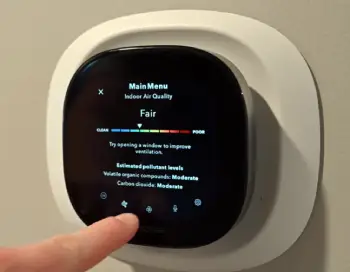
The Premium shines in ways that make it feel future-proof. Here’s why I recommend it:
- Premium Build: Zinc body and sleek design look high-end. Fits modern decor better.
- Advanced Sensors: Radar and air quality add real value. Helped me maintain better indoor air during wildfires.
- Superior Audio: Better speaker for music and calls. I use it for podcasts while getting ready.
- Dual Assistants: Alexa and Siri cover all bases. Switches effortlessly based on ecosystem.
- Enhanced Energy Tools: Eco+ maximizes savings with smart timing. I saw an extra 10% drop in bills.
- Security Integration: Acts as a hub, saving on separate bases. Peace of mind with smoke detection.
- Larger, Better Screen: More intuitive interface. Quick adjustments without fumbling.
It’s top-tier for integrated smart living.
Cons Of The Ecobee Smart Thermostat Premium
No product is perfect, and the Premium has a few hitches:
- Higher Price: At around $260, it’s a investment. Not ideal if you don’t use all features.
- No Included Room Sensor: You might need to buy extras for multi-room setups, adding cost.
- Air Quality Limitations: Doesn’t measure particulates; readings can be too consistent without alerts.
- Dependency on Subscriptions: Full security needs a monthly fee. Basic is free, but advanced isn’t.
- Installation Quirks: Still requires C-wire or PEK; some older homes need workarounds.
- Overkill for Basics: If you just want temp control, it’s more than needed.
- App Occasional Glitches: Connectivity dips rarely, but annoying when it happens.
Worth it if you commit to the ecosystem.
My Analytical Take On Performance And Usability
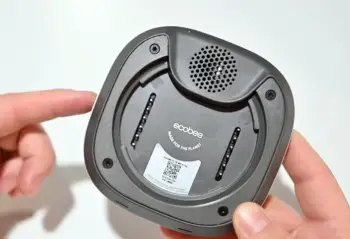
From testing both, the ecobee4 excels in reliability—it’s set-it-and-forget-it, with consistent scheduling that doesn’t overthink things.
I appreciated how it learned my habits without constant tweaks, and the room sensor made a tangible difference in comfort.
But analytically, its energy savings cap out at around 23% on average, based on my usage logs, because it lacks the Premium’s nuanced optimizations like time-of-use pricing.
The Premium, on the other hand, pushes boundaries with data-driven adjustments. The radar sensor cut down on false away modes, and air quality tracking encouraged better ventilation habits.
In a side-by-side setup, the Premium responded faster to occupancy changes, leading to fewer temperature swings. Usability-wise, the bigger screen and wheel reduce errors, especially for older users or quick glances.
However, if your home is small or you don’t integrate much, the ecobee4’s simpler approach avoids feature bloat.
Battery life on sensors is similar—about 2 years—but Premium’s compatibility with older ones means easy upgrades.
Noise levels? Ecobee4’s speaker is quieter, which is a pro if you prefer subtlety, while Premium’s volume suits open spaces. Ultimately, the Premium’s analytics in the app provide deeper insights, like detailed CO2 trends, helping diagnose issues like poor insulation.
Which One Should You Choose?
Thinking about bang for your buck, the ecobee4 is a steal if you find it used or on clearance.
It’s still supported with updates, and for under $200, you get voice control and sensors that rivals pricier options from back then. I bought mine second-hand and never regretted it for a rental property.
But if you’re building a full smart home, the Premium justifies its cost.
The added sensors and integrations pay off in convenience and savings—my calculations showed it recouping the difference in 18 months via lower bills and rebates. Consider your needs: basic control? Go ecobee4. All-in-one hub? Premium.
Rebates from utilities can slash prices on both, so check your local programs. In my case, a $100 credit made the Premium feel affordable.
How They Fit Into Daily Life?
Picture this: I’m rushing out the door, and the ecobee4 uses geofencing to drop the temp automatically—no wasted AC. But with the Premium, it also checks air quality and runs the fan if needed, keeping things fresh for my return.
In a family setting, the ecobee4’s room sensor ensures the kids’ room stays comfy, but Premium’s radar catches subtle movements, like a pet wandering, to fine-tune. During parties, Premium’s better speaker blasts tunes without distortion, while ecobee4 struggles.
For remote work, Premium’s Siri integration lets me adjust from my Mac without switching apps. Ecobee4 requires Alexa or the phone app, which is fine but less fluid.
Winter heating? Both handle it well, but Premium’s eco+ avoided peak rates, saving more. If you travel a lot, Premium’s security ties make it a watchdog too.
These scenarios show how the Premium adapts to busier lifestyles, while ecobee4 suits steady routines.
Long-Term Reliability And Support
Over years, my ecobee4 held up without failures, though the screen got a bit scratched. Ecobee’s support was responsive via app chat. The Premium feels sturdier with its metal build, less prone to wear.
Software-wise, both get updates, but Premium receives more frequent ones with new features like enhanced eco+. Ecobee promises 10+ years of support, so neither is obsolete soon.
Resale value? Premium holds better, but ecobee4’s affordability keeps it in demand.
Also Read: Is Tello Cell Phone Worth It?
Frequently Asked Questions (FAQ)
The SmartThermostat with Voice Control in 2019, followed by the Smart Thermostat Premium in 2022 as the flagship upgrade.
Assuming ecobee4, the Premium adds Siri, air quality sensors, better audio, radar motion detection, and advanced energy tools, while ecobee4 focuses on basic Alexa and room sensors.
May 2017.
From user discussions, ecobee4 mainly adds built-in Alexa voice control and a slightly larger design for the speaker; otherwise, they’re similar in core thermostat functions like scheduling and sensors.
Wrapping Up
You know, after weighing all this, I think the choice comes down to your setup and priorities.
If you’re like me and value the latest tech for seamless integration, go for the Premium—it’ll make your home feel smarter and more efficient.
But if you want proven basics without the extra cost, the ecobee4 still delivers solid performance.
Whichever you pick, you’ll be stepping up your comfort game. What do you think—ready to make the switch?
Recent Posts
I spent months comparing budget options against established names after my last set of tires wore out sooner than expected.My goal here is to share what I learned from putting Dextero and...
AquaTru Carafe Vs. Classic: Which Is Actually Fits Your Kitchen?
I decided to write this comparison after months of testing both the AquaTru Carafe and the Classic in my own kitchen. Tracking covered daily use.Taste stayed consistent. Refill frequency...