
If you’re looking for a toy that keeps kids moving while encouraging creativity and active play, I genuinely think the Fat Brain Teeter Popper deserves your attention.
After spending time with it, I found that it offers much more than simple entertainment. It combines balance, sensory stimulation, and endless imaginative fun in one durable design.
If you want a screen-free activity that children can enjoy indoors or outdoors, this is one of those products that can easily become a household favorite.
My Personal Experience With The Fat Brain Teeter Popper
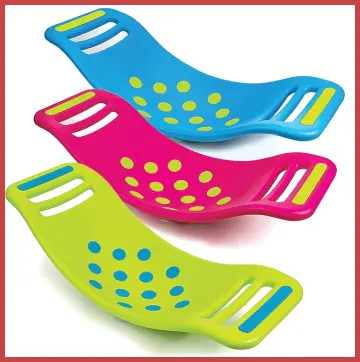
The first thing I noticed when I unpacked the Fat Brain Teeter Popper was how simple it looked.
Honestly, I wondered whether such a basic piece of plastic could really keep a child entertained for very long.
It didn’t take long before I realized why so many parents recommend it.
The suction cups underneath immediately grabbed everyone’s attention.
Instead of functioning like an ordinary balance board, the Teeter Popper makes satisfying popping sounds every time you rock, tilt, or bounce on it.
Those sounds instantly turned balancing into a game instead of an exercise.
I watched children use it in ways I never expected. One minute they were balancing carefully from side to side.
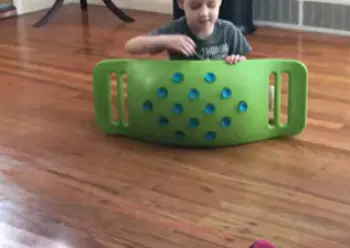
The next minute they flipped it over and transformed it into a tunnel, a pretend boat, or even a bridge for their toys.
I appreciated that the toy didn’t force one specific way of playing. Instead, it encouraged imagination naturally.
I also tested it myself. Surprisingly, it comfortably supported my weight, and balancing on it required enough coordination to make it interesting.
It wasn’t difficult, but it challenged my core muscles enough to understand why occupational therapists often recommend balance-based activities.
What impressed me most was the durability. Even after repeated rocking, jumping, and flipping, the sturdy plastic barely showed any signs of wear.
The suction cups continued producing loud pops on smooth flooring without becoming loose.
Another pleasant surprise was how often children returned to it throughout the day.
Many toys receive attention for twenty minutes before being forgotten, but this one kept finding its way back into playtime.
Sometimes it became part of an obstacle course. Other times it served as a chair, stepping stone, or spaceship.
Of course, the Teeter Popper isn’t magical. Some children immediately loved balancing while others needed encouragement before they became confident enough to experiment. Once they understood there wasn’t a wrong way to play, their confidence grew quickly.
After spending considerable time with it, I understood why it has remained popular for years. It isn’t packed with electronics, flashing lights, or batteries. Instead, it relies entirely on movement, creativity, and physical activity, making it refreshingly different from many modern toys.
Pros Of The Fat Brain Teeter Popper
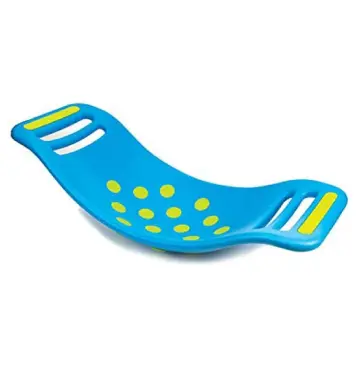
- Excellent for Active Play
One of the biggest advantages I noticed is how naturally the Teeter Popper gets children moving.
Instead of sitting still in front of a screen, they constantly shift their weight, rock back and forth, crawl over it, jump around it, and invent new challenges.
Without realizing it, they’re exercising their muscles and improving coordination while simply having fun.
That’s something I truly appreciate because children rarely enjoy activities that feel like workouts.
- Encourages Better Balance and Coordination
As soon as you step onto the Teeter Popper, your body automatically begins making tiny adjustments to stay balanced. Those constant movements strengthen coordination over time.
I found this particularly impressive because children don’t realize they’re practicing important physical skills.
They’re simply trying not to tip over while laughing at the popping sounds.
For younger children who are still developing motor skills, this type of active play can be incredibly rewarding.
- Supports Sensory Development
The popping sensation underneath the board adds another level of engagement. The combination of movement, sound, pressure, and vibration creates a sensory experience that many children genuinely enjoy.
Children who seek sensory input often spend much longer with the Teeter Popper because every movement provides immediate feedback.
Instead of overwhelming kids with lights and electronic sounds, the toy creates natural sensory stimulation through physical activity.
- Inspires Creative Play
One thing I absolutely loved was watching how children transformed the Teeter Popper into completely different objects.
Sometimes it became a pirate ship.
A few minutes later it turned into a mountain.
Then suddenly it became a race car or a turtle shell.
There are no instructions telling children how they should play, allowing imagination to take over naturally.
I believe this open-ended design helps keep the toy interesting much longer than many electronic alternatives.
- Durable Enough for Years of Play
Some toys begin showing scratches, cracks, or loose parts after only a few weeks. Fortunately, that wasn’t my experience here.
The plastic feels thick and well-made, while the suction cups remain firmly attached after repeated use.
Even rough play didn’t seem to affect the overall quality, giving me confidence that it can last through years of regular use.
- Easy to Store
Despite being fairly large, the Teeter Popper remains surprisingly easy to store.
I simply leaned it against a wall, slid it under furniture, or tucked it into a playroom corner. Since it weighs very little, children can usually put it away themselves.
- Encourages Independent Play
Another benefit I appreciated was how often children entertained themselves without needing constant supervision or instructions.
Because there isn’t a right or wrong way to use it, kids naturally invent their own activities. Sometimes they’ll balance quietly, while other times they’ll create obstacle courses or imaginative adventures.
That independence makes the toy valuable not only for children but also for parents looking for engaging, screen-free entertainment.
Cons Of The Fat Brain Teeter Popper
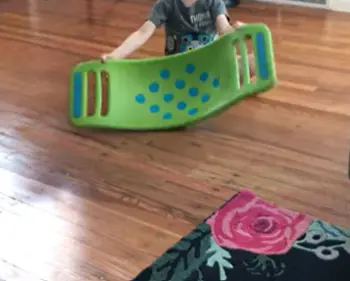
- It Works Best on Smooth Floors
One of the first limitations I noticed is that the suction cups perform much better on smooth, hard surfaces.
On hardwood, laminate, polished concrete, or tile, the popping action is loud, satisfying, and consistent. However, when I tried it on carpet, the experience changed quite a bit.
The board still functioned as a balance toy, but the signature popping sound was greatly reduced or disappeared entirely.
Since the popping effect is one of the biggest reasons many children enjoy the Teeter Popper, this is worth considering if your home is mostly carpeted.
- Some Children Need Time to Build Confidence
Not every child jumps on and starts balancing immediately. I noticed that some children were cautious at first because the rocking motion felt unfamiliar.
A few preferred sitting on the board before eventually standing up and experimenting with balancing.
The good news is that confidence usually grows quickly. Once children realize they can control the movement, they become much more adventurous. Still, parents shouldn’t expect every child to master it within the first few minutes.
- Limited Appeal for Older Kids
Although the Teeter Popper supports a generous amount of weight, I found that older children eventually become less interested unless they enjoy fitness challenges or balance games.
Younger children tend to get more creative with imaginative play, while pre-teens may move on after exploring most of the ways to use it.
That doesn’t mean older kids won’t enjoy it, but the longest-lasting appeal generally belongs to younger age groups.
- It Can Be Noisy
The popping sounds are part of the fun, but they can become surprisingly loud during energetic play.
If several children are using it repeatedly, the constant popping may become noticeable throughout the house.
Personally, I didn’t find it annoying because it sounded like active play rather than electronic noise, but if you’re looking for a very quiet toy, this may not be the best choice.
Maintenance Tips For Fat Brain Teeter Popper
- Keep the Suction Cups Clean
The suction cups are responsible for the signature popping action, so keeping them clean is one of the easiest ways to maintain performance.
I simply wipe them with a damp cloth whenever dust, pet hair, or dirt begins collecting underneath. Clean suction cups grip smooth floors much better and continue producing the satisfying popping sound that makes the toy so entertaining.
If the cups become dirty over time, the popping effect may become less noticeable. Fortunately, regular cleaning only takes a few minutes.
- Wash the Surface Regularly
Children naturally touch the Teeter Popper with their hands, shoes, and sometimes even snacks nearby. Giving the board a quick wipe with mild soap and warm water helps remove fingerprints, dirt, and sticky residue.
I avoid harsh cleaning chemicals because they aren’t necessary. Gentle cleaning keeps the surface looking fresh without affecting the material.
Regular cleaning also makes the toy more pleasant to handle, especially when multiple children share it.
- Inspect It Before Play
Although the Teeter Popper is built to be durable, I think it’s still smart to give it a quick inspection every now and then.
I check for deep scratches, cracks, or damage after particularly rough play sessions. Thankfully, I haven’t experienced any problems, but routine inspections provide extra peace of mind.
Making this a habit helps ensure the toy remains safe for years.
- Use It on Suitable Surfaces
For the best experience, I recommend using the Teeter Popper on smooth flooring whenever possible.
Hardwood, laminate, vinyl, polished concrete, and tile usually provide the strongest popping action and the smoothest movement.
Using it on rough outdoor surfaces isn’t necessarily harmful, but frequent use on concrete or gravel may create unnecessary wear over time.
- Store It Indoors
Although the material is durable, I prefer storing it indoors instead of leaving it outside.
Constant exposure to sunlight, rain, and changing temperatures can eventually affect plastic products. Keeping it inside when not in use helps preserve both its appearance and performance.
Fortunately, its lightweight design makes carrying it indoors effortless.
- Encourage Safe Play
One maintenance habit many people overlook involves how the toy is actually used.
I encourage children to play in open spaces without sharp furniture nearby. This doesn’t just improve safety—it also helps prevent accidental scratches or impacts that could damage the board.
Simple precautions go a long way toward keeping both the toy and your home in excellent condition.
Rotate Different Activities
Instead of using the Teeter Popper in exactly the same way every day, I like encouraging different types of play.
Some days it’s a balance board.
Other days it’s part of an obstacle course.
Sometimes it becomes a pretend bridge, a boat, or even a stage during imaginative games.
Changing activities doesn’t just keep children interested—it also spreads wear across different parts of the toy rather than repeatedly stressing one area. Over time, this can help maintain its overall condition while making playtime feel fresh and exciting.
Comparison Of Fat Brain Teeter Popper With Other Brands
- Fat Brain Teeter Popper vs. Wobbel Balance Board
After trying both styles of balance toys, I noticed they appeal to different types of play.
The Wobbel Balance Board has a beautiful wooden design and focuses on balance, strength, and imaginative activities. It feels more like a piece of premium play furniture.
The Fat Brain Teeter Popper, on the other hand, adds an extra layer of fun with its popping suction cups.
Those sounds provide instant feedback that keeps children engaged for longer periods.
I found younger kids especially enjoyed the playful noises, making the Teeter Popper feel more interactive.
- Fat Brain Teeter Popper vs. Gonge Balance Toys
Gonge products are widely used in classrooms and therapy settings because they focus on structured balance exercises and motor skill development. They perform exceptionally well when children are following guided activities.
The Teeter Popper feels more relaxed and open-ended. Instead of encouraging one specific exercise, it invites children to create their own adventures.
If your goal is imaginative play mixed with physical activity, I believe the Teeter Popper offers more variety.
- Fat Brain Teeter Popper vs. Traditional Balance Boards
Traditional balance boards often concentrate on improving stability and coordination. While they are effective, they can sometimes feel repetitive, especially for younger children.
The Teeter Popper transforms balancing into a game. The popping sounds, curved shape, and multiple ways to play make it easier for children to stay interested. During my experience, kids returned to the Teeter Popper more often because every movement felt rewarding.
- Fat Brain Teeter Popper vs. Electronic Activity Toys
Electronic toys usually depend on flashing lights, music, and batteries to capture a child’s attention. While they can be entertaining, their appeal sometimes fades once the novelty wears off.
The Teeter Popper succeeds by encouraging movement instead of passive entertainment.
become the source of the fun, using their imagination and physical energy to create new games.
I appreciate that it offers a refreshing break from screens and electronic distractions.
Frequently Asked Questions (FAQ)
Yes. Fat Brain Toys carries a variety of NeeDoh sensory toys and stress balls alongside many other educational and active play products.
Simply place it on a smooth floor, sit, stand, kneel, or balance on it, then shift your body weight to rock and create the popping sounds.
It helps improve balance, coordination, core strength, sensory engagement, physical activity, and imaginative play while reducing screen time.
You can use it during active playtime, indoor exercise sessions, sensory activities, or whenever children need a fun way to stay active.
Wrapping Up
The Fat Brain Teeter Popper delivers far more than its simple appearance suggests. I found it entertaining, durable, creative, and genuinely engaging for active children.
While it performs best on smooth floors and requires a little space, its combination of balance, sensory fun, and imaginative play makes it easy to recommend.
If you want a toy that keeps kids moving while creating endless opportunities for creative adventures, this one is well worth considering.
Recent Posts
● Interactive 5-Zone Interior & Exterior Paint Blueprint Paint Coverage Calculator: Gallons, Primer, Square Footage & Cost Tap any architectural surface zone on the blueprint...
If you want smooth, shiny hair without spending a fortune on a premium styling tool, the Ella Bella hair dryer may be worth considering.In these Ella Bella hair dryer reviews, I’ll look...