
I spent months researching and testing base options for my backyard patio project after watching traditional gravel installs turn into back-breaking weekends of digging, hauling, and compacting.
My goal here is simple: give you a clear, side-by-side look at Gator Base and Brock PaverBase so you can pick the right lightweight panel system for your walkways, patios, or pool decks without the usual guesswork or buyer’s regret.
| Feature | Gator Base | Brock PaverBase |
| Material | High-density polypropylene | High-density polypropylene |
| Panel Size | Approx. 23.5″ x 35.5″ (about 5.8 sq ft) | 24″ x 36″ or 20″ x 36″ (5–6 sq ft) |
| Weight per Panel | About 1.3 lb | About 1 lb |
| Interlocking Style | Tongue-and-groove Lock-n-Go | Overlapping edges with tire-tread texture |
| Drainage | Channels + multiple holes | Vertical holes + horizontal channels |
| Load Rating | Up to 8 psi dynamic (1152 lb on 12×12 paver) | Strong load spreading for pedestrian use |
| Insulation | R-value 3.6, acts like thicker stone | Equivalent to roughly 9″ of stone |
| Best For | Pedestrian patios, walkways, pool decks, low seating walls | Pedestrian patios, walkways, limited access spots |
| Availability | Mostly contractor yards | Home Depot, Lowe’s, Menards |
| Origin | Canada (licensed) | USA (original patent holder) |
| Excavation Depth Saved | Replaces about 6″ of crushed stone | Replaces 4–6″ of traditional base |
Key Differences Between Gator Base And Brock Paverbase
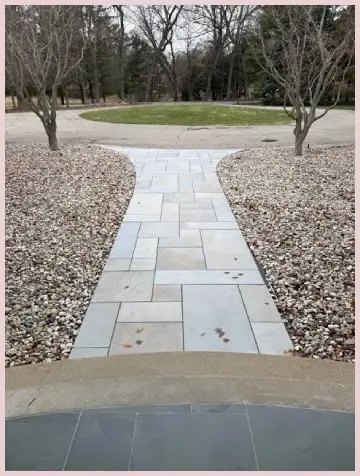
- Interlocking design: Gator Base uses a true tongue-and-groove Lock-n-Go system that snaps panels together into one continuous sheet.
This reduces any chance of panels shifting during install or later under foot traffic.
- Panel grip style: Brock relies on overlapping edges plus a textured bottom that grips the sand layer.
Both create a solid platform, but the full interlock on Gator feels more locked-in when you walk across unfinished sections.
- Buying options: Brock panels show up at major home centers so you can buy exactly the number you need by the piece.
Gator Base typically comes in packs of ten through landscape suppliers and contractor yards.
- Project flexibility: If you want to start small or add a few panels mid-project, Brock wins on convenience.
For larger jobs where you plan ahead, Gator’s bulk packs work fine.
- Manufacturing background: Brock holds the original patents and produces panels in the United States.
Gator operates under license and manufactures in Canada.
- Market impact: This does not change day-to-day performance for most homeowners.
It can affect local stock and pricing because Brock’s longer track record shows up in the sheer square footage installed over the years.
- Water movement: Both move water effectively, yet the patterns differ.
Gator routes water through sloping channels and a set number of holes while Brock emphasizes high vertical permeability through many holes and also allows horizontal flow.
- Climate performance: In heavy rain climates I have watched both keep surfaces dry underneath.
The exact path water takes can influence how you slope the subgrade.
- Traffic limits: Both target pedestrian traffic only.
Gator lists clear limits for seating walls up to 18 inches and fire pits while Brock supports similar patio and walkway uses.
- Vehicle restriction: Neither replaces a full aggregate base under vehicles.
If a car might ever park on the surface, traditional methods remain safer.
Key Features Of Gator Base
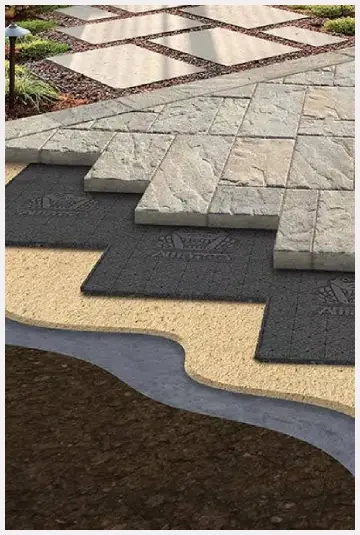
- Light weight: Each panel weighs a little over a pound yet stands in for nearly 300 pounds of crushed stone.
Carrying a stack across the yard feels almost too easy after years of moving rock by wheelbarrow.
- Thermal blanket: With an R-value around 3.6, the panels act as a thermal blanket.
This slows freeze-thaw movement in the soil below and helps keep the finished surface flatter through winter cycles.
- Drainage system: Sloped channels and drainage holes move water away quickly so it does not pool under the pavers.
The design works with a proper site slope of about one degree.
- Easy cutting: A utility knife or handsaw shapes panels around curves, posts, or edges.
Waste stays low when you plan the layout carefully.
- Surface compatibility: Concrete pavers, natural stone, porcelain tiles, and even some wet-cast products sit directly on the panels.
Edge restraints screw into the base for extra hold.
Pros Of Gator Base
- Faster installs: By cutting excavation depth and eliminating most of the stone hauling and compacting, many crews finish jobs at least 20 percent quicker. I finished my own test section in half the time I expected.
- Unified base: The tongue-and-groove system creates a more unified base. Walking on it before placing pavers feels solid and it reduces the chance of panels drifting out of alignment.
- Seasonal stability: The insulation and load distribution cut down on seasonal movement. In climates with repeated freeze-thaw cycles this matters more than people realize.
- Cleaner sites: Less digging means less dirt to haul away and fewer heavy trucks. Neighbors and landscaping stay happier.
- Wall support: Rated for walls up to 18 inches when installed correctly, it expands the range of projects beyond simple flat patios.
Cons Of Gator Base
- Harder to find: Finding panels at local home centers can be hit or miss. You may need to order through a landscape supplier and wait for delivery.
- Bulk packaging: Buying by the ten-pack forces you to estimate carefully or end up with extras. Small repair jobs feel less flexible.
- No vehicle use: Any future plan that involves vehicle traffic rules it out. You cannot upgrade later without starting over.
- Higher material cost: Panels cost more per square foot than bulk gravel. Labor savings usually offset this while the initial receipt can surprise first-time buyers.
- Cutting waste: Tight curves or many obstacles generate more scrap because panels are relatively large and rigid.
Key Features Of Brock PaverBase
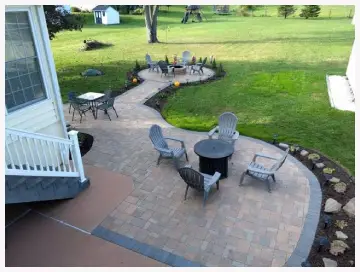
- Ultra-light panels: Panels tip the scale at roughly one pound each.
A full box covering 100 square feet weighs about as much as a couple of bags of sand.
- Fast drainage: Vertical flow rates exceed 100 inches per hour in testing.
Water moves both down and sideways and this reduces the risk of trapped moisture.
- Frost resistance: The polypropylene delivers thermal resistance similar to several inches of traditional aggregate.
This helps limit frost heave over time.
- Bottom texture: The tire-tread pattern locks into the thin sand bed below and limits lateral sliding during installation and use.
- Store availability: Buying individual panels at big-box stores lets you match exact square footage without leftover packs or special orders.
Pros Of Brock PaverBase
- Easy shopping: Grabbing panels at Home Depot or Lowe’s on the same trip as sand and edge restraints simplifies planning. No special ordering is required for most sizes.
- Strong drainage: The high permeability rate keeps water moving even in heavy storms. I watched a test area dry out faster than neighboring gravel sections after a downpour.
- Low effort: One person can carry and place an entire patio’s worth of panels without help or equipment. That alone sold me for my limited-access backyard.
- Good insulation: The material behaves much like the expanded polystyrene used in building insulation, only tougher. Long-term flatness improves as a result.
- Flexible quantities: Buying by the individual panel means you pay only for what you need and can easily add more mid-project.
Cons Of Brock PaverBase
- Less locked: Panels can shift slightly more during install compared with a locked tongue-and-groove system. Careful placement and immediate edge restraint help while it requires more attention.
- Pedestrian only: Like Gator, it stays limited to foot traffic. Driveways and parking pads need traditional or specialized heavy-duty systems.
- Material price: Even with labor savings, the panels run more expensive than a cubic yard of stone. Budget-conscious projects must weigh the time trade-off.
- Shorter history: Polypropylene lasts for decades in other applications. These specific base panels have a shorter real-world history than gravel while most installs look excellent years later.
- Debris catch: The bottom pattern grips sand well. Loose soil or leaves need sweeping before final placement to avoid high spots.
Installation Realities From A User Perspective
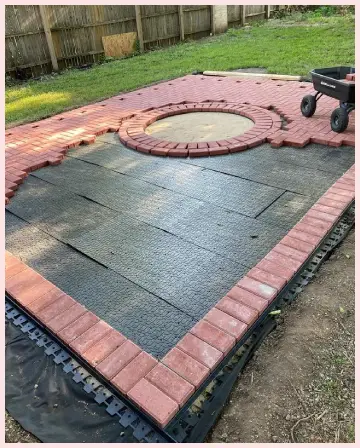
I installed sample sections of both systems side by side on the same soil type.
The process starts the same: mark the area, dig to the calculated depth (usually 3 to 5 inches total once you add sand, panel, and paver thickness), compact the subgrade, lay geotextile, and spread a half-inch to three-quarter-inch leveling layer of sand or fine stone.
With Gator Base the panels click together quickly once you orient the logos the same way. The lock feels positive.
Brock panels overlap and press into the sand; the texture holds them, but you watch alignment more closely until edge restraints go in. Both accept utility-knife cuts for borders.
Pavers slide into place easily on the smooth top surface, which speeds layout compared with working over loose sand.
Edge restraints screw or spike into the panels themselves on both systems, giving a solid perimeter.
Polymeric sand finishes the joints as usual. The whole sequence feels lighter and cleaner than any gravel job I have done.
Long-Term Performance Considerations
After watching both systems through a couple of seasons, settling stays minimal when the subgrade is compacted and drainage slopes correctly.
Water moves through the panels rather than sitting in voids that can form in poorly compacted stone. Freeze-thaw movement drops because the insulation layer buffers temperature swings.
Weed growth is rare under the continuous panel surface. The biggest risk remains poor initial prep: soft spots in the subgrade or inadequate slope will still cause issues no matter which brand you choose.
Both products reward careful work and punish shortcuts the same way traditional methods do.
Cost Breakdown And Value Analysis
Material cost per square foot runs higher for panels than bulk gravel. Labor and equipment savings usually close the gap and often reverse it.
Fewer truckloads, less disposal, shorter install days, and lower wear on tools add up. On a 200-square-foot patio the panel route can finish in a single focused weekend for a motivated DIYer, while gravel often stretches longer.
Availability affects total price too. Brock’s big-box pricing is transparent. Gator pricing through suppliers sometimes includes volume discounts that favor larger jobs. Factor local delivery fees and your own time value when comparing.
Choosing Based On Project Type
For a standard backyard patio or garden path with only foot traffic, both work well. Choose Gator if you value the tightest interlock and can source the panels easily.
Choose Brock if you want same-day store pickup and individual panel flexibility.
Tight access, steep slopes, or existing landscaping that you want to disturb as little as possible favor either panel system over gravel.
Pool decks and seating areas stay within the rated limits of both. Any project that might see a vehicle, trailer, or heavy equipment later should stick with a traditional compacted base or a purpose-built heavy-duty system.
Frequently Asked Questions (FAQ)
For most residential pedestrian projects the best base is the one that matches your soil, climate, access, and traffic. Both Gator Base and Brock PaverBase outperform gravel on speed and ease when loads stay light. Traditional stone still wins for vehicle areas or highly expansive soils that need maximum depth.
Yes. It delivers solid load spreading, excellent drainage, and major labor savings for patios and walkways. Users report flat, stable surfaces years after install when the subgrade is prepared correctly.
Gator Base serves as a lightweight replacement for several inches of crushed stone under concrete pavers, natural stone, and porcelain tiles on patios, walkways, pool surrounds, and low seating walls.
Yes. It offers vertical permeability over 100 inches per hour plus horizontal channels, moving water away faster than most paver surfaces themselves.
Final Thoughts
I started this comparison because I wanted a patio that stayed level without destroying my yard or my back in the process.
Both Gator Base and Brock PaverBase delivered on that promise for me. They cut excavation, slash material weight, improve drainage and insulation, and still leave a professional-looking result.
You now have the side-by-side details, the real-world pros and cons, and the practical differences that matter on the ground.
Measure your space, check local availability, confirm your traffic will stay pedestrian, and pick the system that fits your timeline and access.
Whichever you choose, careful subgrade work remains the foundation of success. Get that right and either panel system will give you a durable, attractive surface that feels solid underfoot for years to come.
Recent Posts
Kingsdown Vs. Stearns & Foster: Which Luxury Mattress Actually Fits Your Sleep Style?
spent weeks testing and comparing Kingsdown and Stearns & Foster mattresses because I needed a clear answer on which luxury hybrid better matches real sleep needs for support, pressure relief,...
Kingsdown Vs. Beautyrest: Which Mattress Actually Fits Your Sleep?
I spent weeks testing Kingsdown and Beautyrest mattresses side by side, rotating them in my own bedroom and talking with friends who own both brands. My goal here is straightforward: help...