
spent weeks testing and comparing Kingsdown and Stearns & Foster mattresses because I needed a clear answer on which luxury hybrid better matches real sleep needs for support, pressure relief, cooling, and long-term value.
My goal here is to give you an honest, side-by-side breakdown so you can decide which brand fits your body type, sleep position, and budget without the usual sales talk.
| Feature | Kingsdown | Stearns & Foster |
| Typical Price (Queen) | $800 – $2,500+ | $1,500 – $4,500+ |
| Construction Focus | Zoned coils + foam layers, diagnostic matching | IntelliCoil (coil-in-coil), hand-tufted, premium fibers |
| Firmness Range | Variable by zone, multiple options | Consistent medium-firm to firm across lines |
| Edge Support | Strong to excellent | Excellent reinforced perimeter |
| Motion Isolation | Good to very good | Good to excellent |
| Cooling | Mixed; some models retain heat | Generally strong with Tencel and vents |
| Best For | Side sleepers needing targeted relief, personalized fit | Back/stomach sleepers wanting uniform support |
| Warranty | Typically 10 years | 10 years limited |
| Trial | Retailer-dependent, often 100 nights | Often 90–120 nights depending on seller |
Brand Background And Philosophy About Kingsdown And Stearns & Foster
I started with the history because it shapes how each mattress feels on the floor. Kingsdown has been building beds since 1904.
The company leans hard into sleep science and matching systems that measure your pressure points and recommend a specific model.
Many of their lines use proprietary wrapped coils with intentional zoning—firmer under the hips, softer at the shoulders.
That approach shows up in real use: the surface responds differently depending on where your weight lands.
Stearns & Foster dates back to 1846 and now sits under the Tempur-Sealy umbrella. Their philosophy centers on traditional craftsmanship.
You see hand-tufting, Belgian damask covers on higher models, and the IntelliCoil system that places a coil inside another coil for progressive support.
The Estate and Lux Estate collections feel more uniform from edge to edge. When I lay on them, the pushback stays consistent no matter which part of my body contacts the surface first.
Key Differences Between The Kingsdown And Stearns & Foster
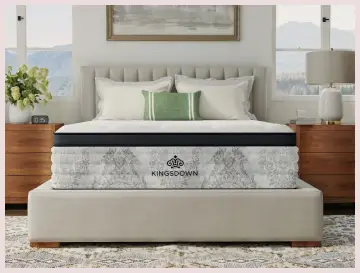
- Coil design and response: Kingsdown relies on individually wrapped coils with deliberate zoning so the center firms up under the hips while shoulders sink more freely.
Stearns & Foster uses the IntelliCoil dual-stage design that compresses in stages and stays more even across the full surface.
- Personalization tools: Kingsdown pushes its bedMATCH or similar diagnostic systems in many stores where you lie on a sensor pad and receive a model suggestion.
Stearns & Foster offers firmness choices by collection but leaves the final pick more to in-store feel and sales guidance.
- Surface materials and height: Higher Kingsdown models mix gel foams, latex options, and quilted tops that create a slightly more contoured cradle.
Stearns & Foster layers Tencel covers, cashmere or silk blends on premium lines, and denser memory foams that often sit taller and denser.
- Price positioning and availability: Kingsdown spreads across a wider range and appears more often at mid-tier retailers and warehouse clubs.
Stearns & Foster stays firmly in the luxury lane with fewer entry-level options so usable queens under $1,500 appear more readily from Kingsdown.
Also Read: Is Kingsdown Mattress Worth It?
Key Features Of Kingsdown Mattresses
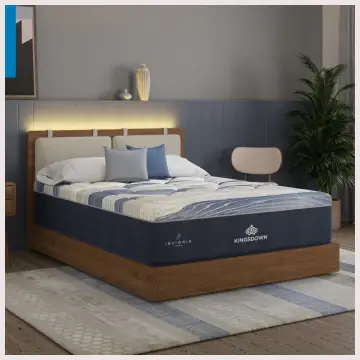
- Zoned support cores: The coils change gauge or density by body zone so hips receive extra lift while shoulders ease in more comfortably during side sleeping.
- Diagnostic matching systems: Store sensors and questionnaires aim to match your weight, height, and preferred positions to a specific model and the process felt practical once the recommendation aligned with my actual preference after a week.
- Strong perimeter reinforcement: Most models I tried held their shape when I sat to put on shoes or when my partner perched on the edge and independent tests often land in the high 9s out of 10.
- Multiple construction types: You can choose traditional innerspring, hybrid with foam comfort layers, or occasional latex options so you stay inside the brand while switching the overall feel.
- Bounce and responsiveness: The coil systems recover quickly so rolling over or getting out of bed felt easy compared with slower memory-foam beds I have owned before.
Pros Of Kingsdown Mattresses
- Targeted pressure relief for side sleepers: The zoning reduced shoulder and hip pressure more effectively for me than uniform firm surfaces so after three consecutive side-sleeping nights I woke with less stiffness.
- Responsive feel that suits combination sleepers: Quick recovery made position changes effortless and I never felt stuck the way some all-foam beds trap you during the night.
- Broader price ladder: You can find solid options without jumping straight into the highest luxury tier and that flexibility matters when budget sits between mid-range and premium.
- In-store testing availability: Most major mattress retailers carry multiple Kingsdown models so lying on them before buying removed a lot of guesswork for me.
- Good motion isolation relative to traditional coils: Wrapped coils kept partner movement muted enough that light sleepers in the household stayed undisturbed through the night.
Cons Of Kingsdown Mattresses
- Variable cooling performance: Some models held more heat than expected so on warmer nights I noticed warmth building under the hips and shoulders on certain firm hybrids.
- Durability feedback is mixed: Owner reports and some lab scores show body impressions appearing earlier than the price suggests on a portion of models even though a 10-year warranty helps.
- Pressure relief drops on firmer versions: Strict side sleepers under 150 pounds may find the firmer coils too rigid at the shoulders after longer periods of rest.
- Return policies depend on the retailer: Trials and restocking fees vary widely and direct online options are limited so you work through store policies instead.
- Off-gassing on newer beds: A few models needed more than a week of airing before the new-mattress smell faded completely from the room.
Key Features Of Stearns And Foster Mattresses
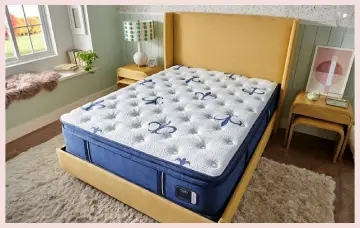
- IntelliCoil support system: A coil nested inside another coil creates progressive resistance where light pressure meets a softer response and heavier pressure engages the inner coil for steady alignment.
- Hand-tufted construction: Tufting locks the comfort layers in place so foam and fiber stay put longer and the surface on Estate and Lux Estate models looked and felt more finished than quilted-only designs.
- Premium cover materials: Tencel, moisture-wicking fibers, and occasional natural blends such as cashmere or silk appear on higher lines so these covers pulled heat away better than standard polyester knits on several nights.
- Precision edge systems: Reinforced perimeter coils keep the usable sleep surface large so I could sleep near the edge without feeling roll-off and sitting support stayed solid throughout the night.
- Collection structure: Studio, Estate, Lux Estate, and Reserve lines step up materials and coil counts so you can enter at a lower price and move up if you want denser latex or extra micro-coils.
Pros Of Stearns And Foster Mattresses
- Consistent firmness and spinal support: Back and stomach sleepers get reliable alignment because the IntelliCoil system prevented the hammocking I sometimes feel on softer hybrids.
- Excellent edge support: Sitting and sleeping near the perimeter felt secure and independent edge tests frequently rank these models near the top of the luxury category.
- Strong cooling on many current models: Tencel covers and ventilation channels kept surface temperatures lower during my warm-room tests so hot sleepers in the house preferred these over denser foam beds.
- Handcrafted details and material quality: Tufting, denser foams, and premium upholstery create a hotel-like surface that holds its shape well under normal daily use.
- Clear collection progression: Moving from Estate to Lux Estate or Reserve gives measurable upgrades in coil count and comfort materials without changing the overall brand character.
Cons Of Stearns And Foster Mattresses
- Higher average price: Even the core Estate line sits well above many competing hybrids of similar performance so value depends heavily on finding a sale or promotion.
- Limited pressure relief on firm models: Side sleepers who need deep cushioning may find the firmer options too unyielding at the shoulders and hips after several hours.
- Trial windows can be shorter: Many retailers offer 90 nights rather than the 100–365 night trials common with direct-to-consumer brands and return fees sometimes apply.
- Occasional early impressions reported: Some owners notice body indentations within the first year or two despite the warranty so proper foundation use becomes important.
- Weight and height: These mattresses run heavy and tall so moving them or finding deep-pocket sheets requires extra planning on my part.
Also Read: Is Kingsdown Sunham Mattress Worth It?
Performance Across Sleep Positions
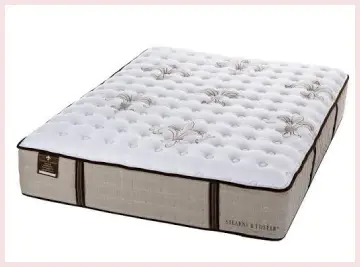
I tested both brands as a combination sleeper who spends most of the night on my side and switches to back toward morning.
Kingsdown’s zoned models kept my shoulders comfortable longer. The extra give at the top of the mattress reduced the need to adjust every hour.
Stearns & Foster models held my spine straighter when I rolled onto my back and stayed supportive if I drifted onto my stomach for short periods.
For pure side sleepers the Kingsdown approach usually wins on pressure relief. Pure back and stomach sleepers tend to prefer the more uniform firmness of Stearns & Foster.
Couples who share a bed will notice solid motion isolation on both, though Stearns models with thicker foam comfort layers mute movement a bit more.
Durability And Long-Term Feel
Both brands carry 10-year limited warranties that typically cover defects and excessive sagging past 1.5 inches.
Real-world longevity depends on body weight, foundation quality, and rotation habits. Kingsdown models sometimes show impressions earlier according to aggregated owner feedback, especially on mid-tier hybrids.
Stearns & Foster generally holds its surface longer in independent longevity observations, yet a portion of users still report early softening on pillow-top versions.
I rotate any mattress every three to six months and use a solid platform or matching foundation. That practice stretches the usable life on both brands. Heavier sleepers over 230 pounds should lean toward the denser coil counts found in Stearns Lux Estate or higher Kingsdown hybrids.
Value And Who Should Buy Each
If your budget sits closer to $1,200–$2,000 for a queen and you want zoning plus the option of a diagnostic match, Kingsdown makes practical sense.
Side sleepers and combination sleepers who change positions often will feel the benefits of the variable support most clearly.
If you prefer a more traditional luxury feel, consistent firmness, and are willing to spend $2,000–$3,500 or more, Stearns & Foster delivers the craftsmanship and edge performance that match that price.
Back sleepers, stomach sleepers, and anyone who sits on the edge of the bed regularly will appreciate the reinforced perimeter and progressive coil response.
Neither brand ranks as the single highest-scoring mattress in every independent lab ranking. Both sit in the solid premium tier rather than the absolute top of every scorecard. Your personal fit matters more than overall brand averages.
Also Read: Is Zonli Futon Mattress Worth It?
Frequently Asked Questions (FAQ)
Yes. They use solid coil systems and offer strong edge support with a long manufacturing history, though independent scores and durability reports sit in the mid-to-upper range rather than the absolute top.
Luxury hybrids such as the Saatva Classic or higher-end Amerisleep models offer similar craftsmanship and support at comparable or slightly lower prices for many sleepers.
Rankings change by tester and year. Current top performers frequently include models from Saatva, WinkBed, and Helix depending on the category, with no single mattress dominating every list.
Avoid brands with repeated early sagging complaints, extremely short warranties, or no clear return policy. Focus on verified construction details and real owner feedback rather than price alone.
Final Thoughts
After living with both brands I landed on a clear preference based on my side-to-back sleep pattern and desire for targeted pressure relief.
Kingsdown’s zoning and diagnostic approach solved the shoulder pressure that used to wake me. Your results will differ if you sleep primarily on your back or need maximum edge stability for sitting.
Test both in a store if possible, pay attention to how your hips and shoulders feel after fifteen minutes, and match the firmness to your weight.
The right choice between these two comes down to whether you value adaptive zoning or consistent progressive support more.
Once you decide, rotate the mattress regularly and use a proper foundation so the investment lasts. Sleep well.
Recent Posts
Gator Base Vs. Brock PaverBase: Which Lightweight Panel Wins For Your Patio?
I spent months researching and testing base options for my backyard patio project after watching traditional gravel installs turn into back-breaking weekends of digging, hauling, and...
Kingsdown Vs. Beautyrest: Which Mattress Actually Fits Your Sleep?
I spent weeks testing Kingsdown and Beautyrest mattresses side by side, rotating them in my own bedroom and talking with friends who own both brands. My goal here is straightforward: help...