
If you’re shopping for a new central air conditioner, I would think twice before buying a Gibson AC.
Gibson offers budget-focused HVAC equipment, and its official lineup includes single-stage systems with efficiency ratings reaching roughly 16 SEER or 14.3 SEER2, depending on the model.
However, after weighing the equipment’s value against customer complaints, repair concerns, and long-term ownership risks, I wouldn’t make Gibson my first choice.
If reliability and dependable service matter more to you than getting the lowest initial price, I’d spend more on a better-established alternative.
My First Experience With Gibson Air Conditioners
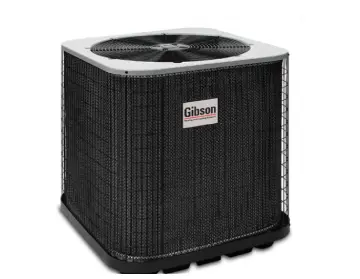
When I evaluate an air conditioner, I try not to judge it simply by its sticker price or the manufacturer’s marketing claims.
I want to know what happens after installation, because that is when the real ownership experience begins.
My biggest hesitation with Gibson is that it sits in the budget-oriented portion of the HVAC market. That can sound attractive when you’re looking at installation estimates and trying to keep the project affordable.
I understand that completely. Nobody wants to spend thousands of dollars replacing an air conditioner, especially when the old system is still technically running.
But I’ve learned that the cheapest HVAC quote isn’t necessarily the cheapest system to own.
Gibson markets its equipment around value, and the company says its units are factory checked before shipping.
The current product range includes conventional central air conditioners, furnaces, heat pumps, packaged systems, and mini/multi-split equipment.
Some central systems are available with efficiency ratings up to 16 SEER, while lower-cost options are also offered.
On paper, that sounds reasonable.
The problem for me is what happens when something goes wrong.
An air conditioner isn’t like buying a small appliance that you can replace relatively easily. Once a central AC system is installed, you’re dealing with an outdoor condenser, indoor coil, refrigerant circuit, electrical components, blower equipment, thermostat controls, ductwork, and installation labor.
If one important component fails, your inexpensive purchase can suddenly become a surprisingly expensive repair.
That’s why I pay close attention to what HVAC professionals and homeowners say about parts availability, service support, warranty handling, and recurring failures.
When looking through homeowner and HVAC discussions, I found some particularly concerning opinions about Gibson equipment.
In one HVAC discussion, contractors described Gibson as a builder-grade or lower-tier option and raised concerns about parts availability and previous service headaches.
These are individual opinions rather than scientific failure-rate data, so I wouldn’t treat them as proof that every Gibson unit will fail.
Still, they are enough to make me cautious when I’m spending several thousand dollars on a complete HVAC installation.
I also wouldn’t ignore the difference between a warranty and a genuinely trouble-free ownership experience.
Gibson currently advertises a 10-year limited all-parts warranty for qualifying central systems when the product is registered within the required period.
Without registration, the standard coverage is shorter. The company specifically states that registration must be completed within 60 days of installation to qualify for the extended 10-year parts coverage.
That sounds reassuring, but remember one important point: a parts warranty isn’t the same thing as free repairs.
You can still potentially pay labor, diagnostic fees, refrigerant-related costs, and other expenses depending on the problem and the contractor’s warranty arrangement.
For me, that’s the dividing line.
I don’t want to buy an inexpensive AC simply because the warranty looks impressive. I want a system that has a strong reputation for lasting, is easy for local technicians to service, has readily available replacement parts, and doesn’t leave me worrying about another expensive repair a few years after installation.
That’s why my overall experience-based assessment of Gibson is cautious rather than enthusiastic.
If your contractor offers Gibson at a dramatically lower price and you have a strong local installer who regularly services the brand, the calculation can change.
But if the price difference between Gibson and a more established alternative is relatively small, I would personally choose the alternative.
Pros Of Gibson Air Conditioners
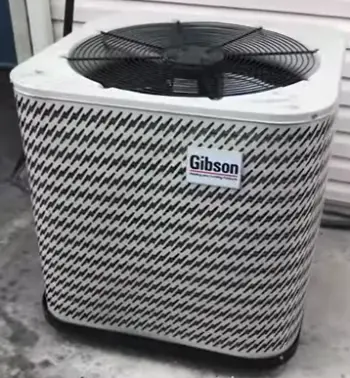
- Budget-Friendly Initial Pricing
The biggest attraction is straightforward: price.
If you’re replacing an old AC and your budget is tight, Gibson can look tempting.
Its product range is designed around value, and the company explicitly positions its HVAC equipment as a cost-conscious choice.
I understand why homeowners consider it.
A lower initial equipment cost can make a replacement project easier to afford, particularly when you’re already paying for installation, electrical work, duct modifications, permits, and other project expenses.
The problem is that I wouldn’t let the initial price be the only factor.
- Multiple System Options
Gibson isn’t limited to one basic configuration. The brand offers different air conditioner capacities and efficiency levels, along with furnaces, heat pumps, packaged systems, and other HVAC equipment.
That gives contractors some flexibility when matching a system to a particular home.
If you have a modest-sized property and don’t need premium variable-speed technology, a simpler system can sometimes make sense.
- Factory Testing
One of Gibson’s stronger marketing points is its factory testing process.
The company says its equipment is checked using Demand Flow Technology and describes the process as an automated, computer-controlled method for testing systems before they leave the factory.
I like seeing manufacturers emphasize quality control.
However, factory testing doesn’t guarantee years of trouble-free operation. Installation quality, climate, maintenance, sizing, refrigerant charge, electrical conditions, and component durability all matter after the unit reaches your home.
- Extended Parts Warranty
The potential for 10-year limited parts coverage is another positive.
Gibson states that eligible central systems can receive extended parts coverage after registration, compared with the shorter default warranty.
If you’re considering Gibson despite my reservations, I would absolutely confirm the exact warranty terms before signing anything.
I would also ask the installer who pays labor if a covered component fails.
That question matters.
Cons Of Gibson Air Conditioner
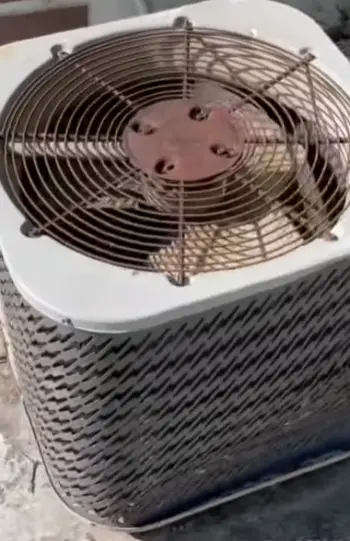
- Reliability Concerns
This is my biggest issue.
When I’m buying an AC system, reliability is more important to me than saving a little money upfront.
Customer and technician discussions contain negative experiences involving Gibson equipment, including reports of repeated problems and concerns about long-term dependability.
Again, these are anecdotal reports rather than controlled reliability statistics, but the pattern is enough to influence my buying decision.
I don’t believe every Gibson air conditioner is destined to fail.
That’s simply too broad a statement.
But I also don’t think you should dismiss repeated negative ownership experiences when you’re making a major purchase.
- Limited Enthusiasm From HVAC Professionals
Another concern is how the brand is perceived by some HVAC professionals.
In online HVAC discussions, some technicians characterize Gibson as a builder-grade or budget-oriented product and compare it unfavorably with more widely supported brands. Some also mention concerns about parts availability and service headaches.
That doesn’t mean every contractor dislikes Gibson.
In fact, the quality of your local installer may have an enormous effect on your experience.
But if I have two systems with similar prices and one has broader technician familiarity and stronger market acceptance, I’m going with the easier-to-service option.
- Warranty Doesn’t Eliminate Repair Costs
This is where I think many buyers get confused.
A 10-year parts warranty sounds fantastic until you realize that warranty coverage doesn’t necessarily mean zero out-of-pocket expense.
Gibson itself notes that extended warranty packages can vary depending on the contractor, including labor protection, financing, and other coverage.
So before you buy, ask:
Who pays labor?
Who pays diagnostic charges?
What happens if the replacement component isn’t immediately available?
Does the contractor handle the warranty claim?
How long is labor covered?
I would get the answers in writing.
- Budget Construction Isn’t Automatically a Bargain
When a manufacturer competes heavily on price, something has to give somewhere.
That doesn’t automatically mean poor construction. It can mean fewer premium features, simpler controls, less sophisticated compressor technology, fewer efficiency options, or a distribution strategy aimed primarily at price-sensitive projects.
For me, that’s acceptable only when the savings are substantial.
If you’re saving a significant amount, you can at least understand the tradeoff.
If you’re saving only a small amount, I don’t see enough reason to accept additional uncertainty.
- Resale and Long-Term Ownership Considerations
I also think about the next homeowner.
If I were selling my house a few years after installing a Gibson system, I’d rather have an HVAC brand that immediately inspires confidence in the buyer.
An unfamiliar or poorly regarded HVAC brand can become a negotiating point during a home inspection.
That doesn’t mean Gibson equipment automatically reduces home value. It simply means brand perception can matter when you’re making a major mechanical-system purchase.
Maintenance Tips Of Gibson Air Conditioner
- Replace the Air Filter Regularly
This is the easiest maintenance task and one of the most important.
I check my HVAC filter regularly rather than waiting until the airflow becomes weak.
A clogged filter forces the blower to work harder and restricts airflow across the system. Poor airflow can contribute to reduced cooling performance and, under certain conditions, coil icing.
How often you replace the filter depends on the filter type, household conditions, pets, dust levels, and system operation.
If you have pets or allergies, check it more frequently.
- Keep the Outdoor Condenser Clean
I always want sufficient clearance around the outdoor unit.
Leaves, grass clippings, dirt, weeds, and other debris can accumulate around the condenser and interfere with airflow.
Keep vegetation trimmed around the unit and avoid stacking objects against it.
When cleaning the exterior coil, don’t aggressively bend the fins. Damaged fins can restrict airflow.
If the coil requires substantial cleaning, I would rather have an HVAC professional handle it than risk damaging the equipment.
- Schedule Professional HVAC Service
I wouldn’t rely entirely on DIY maintenance.
Before the heavy cooling season, I recommend having a qualified technician inspect the system.
A professional can check electrical connections, capacitors, refrigerant-related operation, airflow, temperature split, coils, blower operation, and other components.
That’s particularly important if your system is already showing symptoms such as unusual noises, short cycling, weak airflow, poor cooling, or ice formation.
- Keep the Condensate Drain Clear
The condensate drain removes moisture produced during cooling.
If it becomes blocked, water can back up and potentially cause leakage or damage around the indoor unit.
I would periodically inspect the drain area and have a technician clear persistent blockages.
- Don’t Ignore Strange Sounds
A new buzzing, rattling, grinding, clicking, or squealing sound deserves attention.
I wouldn’t wait until the system stops completely.
A relatively small electrical or mechanical issue can sometimes become a larger repair if the equipment continues operating under abnormal conditions.
- Don’t Keep Lowering the Thermostat
When the house feels hot, it’s tempting to set the thermostat dramatically lower.
But that doesn’t necessarily make the AC cool the house faster.
Instead, I prefer a reasonable temperature setting and consistent operation.
If the system cannot maintain the desired temperature, I’d investigate airflow, insulation, ductwork, sizing, thermostat settings, and equipment condition rather than simply lowering the thermostat further.
Comparison Of Gibson With Other Air Conditioner Brands
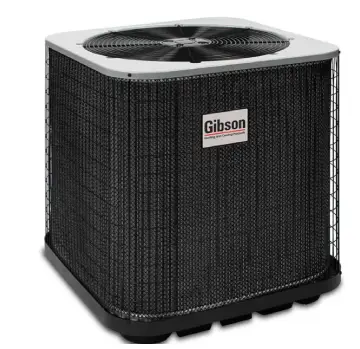
- Gibson vs Goodman
Goodman is generally more familiar to homeowners and HVAC contractors, and I would personally lean toward Goodman when the installed price is competitive.
The biggest advantage for me isn’t simply the logo. It’s the broader familiarity among installers and parts/service ecosystem.
I’ve seen HVAC professionals discuss Gibson as a lower-tier alternative and specifically favor more commonly supported brands.
That makes Goodman the safer direction for my money when the price difference isn’t substantial.
- Gibson vs Carrier
Carrier occupies a stronger position when you’re looking for a more established HVAC name with broader product depth.
I’d consider Carrier when long-term ownership, efficiency choices, comfort features, and overall brand reputation matter more than achieving the lowest installation price.
The tradeoff is obvious: you’re likely to spend more.
But with an AC system, I don’t mind paying extra for confidence.
- Gibson vs Trane
Trane is another brand I’d consider before Gibson if my priority were long-term ownership rather than initial cost.
Trane has a strong reputation and extensive product range, although the actual installation quality still matters enormously.
I wouldn’t buy a premium brand from a poor contractor over a less expensive brand installed by an excellent contractor.
That point is critical.
- Gibson vs Lennox
Lennox is another major option with a broad range of HVAC systems.
One interesting point for current buyers is that Gibson is part of the Allied Air brand portfolio, while Allied Air itself is a Lennox International company.
That doesn’t mean Gibson and Lennox are identical products.
They aren’t.
They occupy different positions in the market, and their product lines, distribution, features, and positioning differ.
For my own purchase, I would still compare the complete installed package rather than assuming corporate relationships mean equivalent equipment.
Who Makes Gibson Air Conditioning Units?
Gibson HVAC is part of the Allied Air organization. Allied Air is currently a Lennox International company, according to Allied Air’s current corporate information.
This is worth clarifying because Gibson’s ownership and brand relationships can be confusing when you’re researching older discussions online.
I would always check the model number and current warranty documentation rather than relying on an old forum post about who manufactured a particular generation of equipment.
HVAC brands and corporate ownership can change over time.
Are Gibson Air Conditioners Worth Buying?
For me, the answer is generally no.
If Gibson were dramatically cheaper than every alternative and I had an excellent local contractor who regularly installed and serviced Gibson equipment, I might consider it.
But if the difference is only a modest amount, I would spend more for a brand with stronger market recognition, broader technician familiarity, and a reputation that gives me more confidence.
I especially wouldn’t choose Gibson simply because someone tells me, “It has a 10-year warranty.”
Warranty length is only one piece of the ownership equation.
Installation quality, parts availability, contractor support, system sizing, efficiency, noise, reliability, and expected repair costs matter too.
Also Read: Is Vissani Portable AC Worth It?
Frequently Asked Questions (FAQ)
However, based on the negative homeowner and HVAC-professional feedback I found, I would not consider Gibson one of my preferred choices for a new AC installation. If the price difference is small, I’d choose a more established alternative.
I wouldn’t create a blanket “never buy” list because HVAC performance depends heavily on the specific model, installation quality, climate, sizing, and local service support.
Instead, I would be cautious with brands that have consistently poor customer feedback, weak local parts support, limited technician familiarity, or a reputation for frequent repair problems.
For me, Gibson falls into the “research very carefully before buying” category rather than the “automatic recommendation” category.
Gibson is part of Allied Air, and Allied Air is currently a Lennox International company. Gibson operates as its own HVAC brand with residential air conditioners, furnaces, heat pumps, packaged systems, and other equipment.
Because corporate ownership and product manufacturing arrangements can change, I recommend checking the current model documentation and warranty information for the exact unit you’re considering.
There isn’t one universal winner for every home.
If I were choosing an AC today, I would focus on established manufacturers with strong local contractor networks, readily available parts, good warranty support, and proven model lines.
More importantly, I’d prioritize the installer.
A properly sized, correctly installed mid-range system can outperform a premium system that was installed incorrectly. So when you compare brands, compare the complete installation package rather than just the outdoor unit.
Final Verdict
After looking at Gibson’s current product offerings, warranty structure, and the concerns raised by homeowners and HVAC professionals, I wouldn’t recommend Gibson as my first choice for a new air conditioner.
Yes, Gibson has attractive qualities. The equipment is positioned around affordability, there are several system options, and eligible central systems can receive substantial parts-warranty coverage after registration.
But I don’t buy an air conditioner just to get through the first summer.
I want dependable cooling for years.
If you are being offered a Gibson system, compare the complete installed price against Goodman, Carrier, Trane, Lennox, or another well-supported option in your area. Ask about labor warranties, parts availability, expected maintenance costs, and the contractor’s experience with the exact model.
Recent Posts
● Interactive 5-Zone Interior & Exterior Paint Blueprint Paint Coverage Calculator: Gallons, Primer, Square Footage & Cost Tap any architectural surface zone on the blueprint...
If you want smooth, shiny hair without spending a fortune on a premium styling tool, the Ella Bella hair dryer may be worth considering.In these Ella Bella hair dryer reviews, I’ll look...