
I spent weeks comparing the Graco Triride and SlimFit side by side in my own vehicles and daily routines because I needed one clear answer for my growing family.
My main goal here is to show you exactly how these two 3-in-1 car seats stack up in real life so you can pick the one that fits your car, budget, and child’s needs without second-guessing.
| Feature | Graco Triride 3-in-1 | Graco SlimFit 3-in-1 |
| Modes | Rear-facing, forward-facing, highback booster | Rear-facing, forward-facing, highback booster |
| Weight range | 5-40 lb RF / 26.5-65 lb FF / 40-100 lb booster | 5-40 lb RF / 26.5-65 lb FF / 40-100 lb booster |
| Approx. width | 19 inches | 19.9 inches (narrower with cups rotated) |
| Seat weight | About 18.45 lb | About 19.47 lb |
| Recline positions | 6 | 4 |
| Headrest positions | 10 | 10 |
| Standout trait | More recline flexibility and lighter feel | Rotating cup holders for space savings |
| Typical price range | Often under $200 | Slightly higher, around $200-$230 |
My Real-World Experience With Both Seats
I installed both seats in my mid-size SUV and a smaller compact car to see how they behaved day after day.
The Triride felt solid and adaptable right away. The SlimFit surprised me with how the rotating cup holders changed the usable width when I needed to squeeze in another seat or passenger.
Both lasted through the same stages, but the daily differences showed up in comfort, space, and how easy they were to adjust.
Key Differences Between The Graco Triride And SlimFit
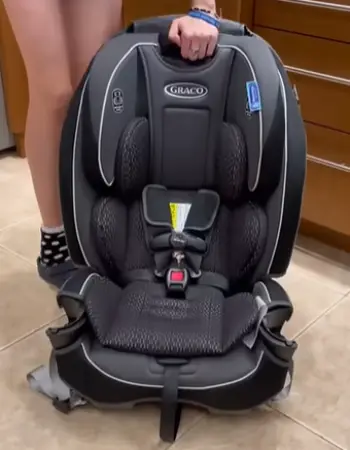
- Width and space use: The Triride sits at roughly 19 inches across.
The SlimFit starts wider at about 19.9 inches but the dual cup holders rotate inward and trim the profile by around 10 percent.
In my compact car the SlimFit gave me more room to open doors fully and still fit an adult beside it. In the SUV the Triride never felt cramped.
- Recline options: The Triride offers six positions. I used the deeper ones for rear-facing naps and the upright ones for older toddlers.
The SlimFit has four. That worked fine for most days but left me wanting one extra angle on longer drives when my child kept sliding forward.
- Weight of the seat itself: The Triride comes in lighter at about 18.45 pounds. Moving it between cars felt manageable.
The SlimFit is a bit heavier at roughly 19.47 pounds. I noticed the difference when I carried it upstairs or into a rental car.
- Installation feel: Both use LATCH and vehicle belts. The SlimFit often has the push-button InRight system that clicks more clearly in my experience.
The Triride uses a standard setup that still locked tight once I followed the level indicator carefully.
- Long-term growth path: Both cover the same weight bands up to 100 pounds in booster mode and last about ten years.
The Triride’s extra recline positions made the transition between modes smoother for my child who preferred different sitting angles as height changed.
Key Features Of The Graco Triride

- Six-position recline: This let me match the seat angle to both the vehicle seat and my child’s age.
Rear-facing infants stayed more upright for better airway support while still looking comfortable.
- Ten-position headrest with no-rethread harness: One motion raises the headrest and harness together.
I adjusted it in seconds as my toddler grew instead of pulling straps through slots.
- Steel-reinforced frame and ProtectPlus engineering: The seat is tested beyond basic federal standards for frontal, side, rear, and rollover scenarios.
That gave me peace of mind on highway trips.
- Two easy-clean cup holders: They hold bottles and snacks without taking over the seat area.
I wiped them after every sticky juice incident.
- Lightweight shell and clear level indicator: At under 19 pounds it was easy to move.
The ball-style indicator removed guesswork during installation.
- Harness storage for booster mode: When I switched to booster the straps tucked away neatly so they did not dangle or get in the way.
Pros Of The Graco Triride
- More recline flexibility: Six positions meant I could fine-tune for comfort on long drives or when the vehicle seat was steeply angled. My child stayed happier during naps.
- Lighter weight: Easier to switch between cars or take on trips. I carried it through airports without feeling worn out.
- Strong value: Usually priced lower while still delivering the full 3-in-1 range and solid safety features. It felt like a smart long-term buy.
- Smooth harness adjustment: The no-rethread system worked quickly every time. No fighting with straps when we were already late.
- Comfortable padding for the price: Soft enough for daily use and held up after months of wear. My child never complained about hard spots.
- Clear installation aids: The level indicator and open belt paths reduced the usual frustration. Once set, it stayed tight.
Cons Of The Graco Triride
- Slightly wider footprint in tight cars: At 19 inches it fit most vehicles but left less side room than the SlimFit with cups rotated. Three-across installs needed careful planning.
- Standard LATCH connectors: They work but lack the one-click confidence of some higher-end systems. I had to double-check the connection more often.
- Fewer advanced convenience touches: No rotating cups or extra storage pockets. Everyday features are solid but basic.
- Harness can feel stiff at first: New straps needed a few uses to soften. Tightening took an extra pull in the beginning.
- Booster mode is transitional: It works well up to the height limit but the shell design is better for younger booster users than older kids who want more room to move.
Key Features Of The Graco SlimFit
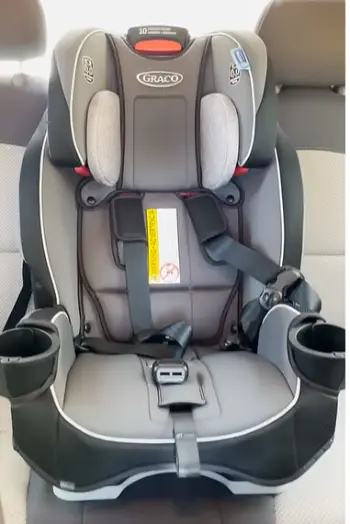
- Rotating dual cup holders: These are the real space savers.
Swing them out for drinks or fold them in to reclaim inches of width.
I used this trick every time I installed a second seat next to it.
- Four-position recline: Enough for most cars.
The positions cover rear-facing and forward-facing needs without extra bulk.
- Ten-position no-rethread headrest: Same one-motion adjustment as the Triride.
It kept the harness at the right height without tools.
- Slim design focus and InRight LATCH: The overall shape aims at tighter back seats.
The push-button LATCH connectors gave a clear click that helped me know the install was secure.
- Steel-reinforced frame and ProtectPlus testing: Matches the Triride on the safety engineering side.
Both seats meet the same rigorous internal crash standards.
- Machine-washable cover: I removed the pad after a few snack explosions and it came out clean.
The process was straightforward once I learned the attachment points.
Pros Of The Graco SlimFit
- Space-saving rotating cups: This single feature changed how the seat fit in my smaller car. Folding them in created noticeable extra room for another passenger or seat.
- Confident LATCH install: The push-button system gave a clear audible click. I felt more sure the lower anchors were fully engaged.
- Good overall comfort: Padding and fabric stayed soft through daily use. My child sat happily for hours without shifting around.
- Easy cleaning: The cover came off without tools in most cases and washed well. Spills never became permanent stains.
- Reliable growth range: Same weight limits as the Triride meant one seat from infancy through the early school years.
- Narrower usable width when needed: Even though the base measurement is close, the rotating cups and overall shape helped in multi-seat setups.
Cons Of The Graco SlimFit
- Fewer recline positions: Only four options limited fine adjustments. On some vehicle seats I could not get the exact angle I wanted for rear-facing.
- Slightly heavier: The extra pound or so showed up when I moved the seat often. Not a deal-breaker but noticeable.
- Not as narrow as the name suggests on paper: Without the cups rotated it sits near 20 inches. True three-across success often needs the even narrower SlimFit3 LX version.
- Cover removal can require more care: Some parents report needing to uninstall the seat first on certain models. I managed it but it took extra minutes.
- Price is usually a bit higher: You pay a little more for the space-focused design. The difference is small but it adds up if you buy more than one.
Safety Features Shared By Both
Both seats carry Graco’s ProtectPlus engineering. That means they go through tests that cover frontal impacts, side impacts, rear impacts, and rollover scenarios beyond the minimum federal requirements.
The steel-reinforced frames add strength for the full ten-year life of the seat. Energy-absorbing foam and the five-point harness system work the same way on both.
I never felt one was safer than the other. The real difference is how the design choices affect fit and daily use rather than the core protection.
Installation And Daily Use In Different Vehicles
In my SUV both seats installed cleanly with LATCH. The Triride’s extra recline positions made rear-facing feel more natural against the vehicle seat.
In the compact car the SlimFit with cups rotated gave me better door clearance and room for a second adult. Switching modes was simple on both once I stored the harness for booster use.
Cleaning the covers took about the same effort. The Triride felt quicker to adjust on the fly because of the extra recline choices. The SlimFit won when space was the priority.
Which One Fits Different Family Situations?
If you drive a smaller car or regularly need three seats across the back, the SlimFit’s rotating cups and space focus make more sense.
If you want maximum comfort angles, lighter weight for moving between vehicles, and often a lower price, the Triride delivers.
Families who keep one seat in one car for years may lean toward the Triride for the extra recline. Families who switch cars or squeeze multiple seats will appreciate the SlimFit more.
Longevity And Real Cost Over Time
Both last about ten years from the manufacture date. That covers one child from newborn through the booster years for most families.
The Triride usually costs less up front. The SlimFit costs a little more but can save you from buying a second narrower seat later if space becomes an issue.
Factor in how often you move the seat and whether your vehicle is tight. Those practical details affect the true value more than the sticker price alone.
Frequently Asked Questions (FAQ)
Yes. It offers solid safety engineering, six recline positions, easy harness adjustment, and strong value for families who want a long-lasting 3-in-1 without extra bulk.
It depends on needs. Many parents rate the Triride highly for comfort and price while others prefer the SlimFit or SlimFit3 LX for tighter vehicles. No single model wins every situation.
The standard SlimFit becomes narrower when the cup holders rotate in. The SlimFit3 LX version is the truly slim option at about 16.7 inches and is better for three-across installs.
The Triride has more recline positions and is usually lighter and less expensive. The SlimFit focuses on space savings with rotating cup holders and often easier LATCH connectors.
Wrapping Up
I tested both seats through the same stages of my child’s growth and the same mix of daily drives and longer trips.
The Triride gave me more flexibility in how the seat sat and felt lighter to handle. The SlimFit gave me back precious inches in tight spaces.
Neither failed on safety or basic comfort. Your choice comes down to the shape of your vehicle and how much you value recline options versus width savings.
You now have the clear side-by-side picture I wished I had at the start. Look at your back seat, measure the available width, and decide whether extra recline or rotating cups will matter more in your daily routine.
Either seat will protect your child for years. Pick the one that fits the way your family actually moves.
Recent Posts
● Interactive 5-Zone Interior & Exterior Paint Blueprint Paint Coverage Calculator: Gallons, Primer, Square Footage & Cost Tap any architectural surface zone on the blueprint...
If you want smooth, shiny hair without spending a fortune on a premium styling tool, the Ella Bella hair dryer may be worth considering.In these Ella Bella hair dryer reviews, I’ll look...