
As someone who’s dealt with leaky roofs on my own home and helped friends with theirs, I’ve spent time researching options like Henry 885 and 887.
In this article, I’ll compare these two silicone-based products from Henry to help you decide which fits your roofing needs, whether it’s patching leaks or coating the entire surface.
We’ll cover features, differences, pros, cons, and more from a practical standpoint.
| Feature | Henry 885 | Henry 887 |
| Product Type | Wet Patch Roof Leak Repair Sealant | Full Roof Coating |
| Composition | 100% Silicone, High Solids Dispersion | 100% Silicone, Moisture-Cure |
| Primary Use | Repairing cracks, seams, leaks; even in wet conditions | Reflective coating for entire roof; heat and UV protection |
| Application Method | Trowel or putty knife; thick patches | Brush, roller, or spray; uniform layers |
| Coverage | 12 sq ft/gal at 1/8″ thick; 6 sq ft/gal at 1/4″ thick | 1-1.5 gal/100 sq ft depending on surface |
| Cure Time | Tack-free in 1-3 hours; full cure in 48 hours | Rain-safe in 15 minutes; full cure in days depending on humidity |
| Ponding Water Resistance | Excellent; works underwater | Permanent resistance |
| UV and Weather Resistance | Superior; no chalking or cracking | High reflectivity; maintains over time |
| Available Sizes | 0.90 gal, 1 gal | 0.90 gal, 4.75 gal, 55 gal |
| Price Range (approx.) | $50-70 per gal | $200-300 per 4.75 gal |
| Warranty | Varies by application | Lifetime limited on qualifying roofs |
Understanding Henry Roof Products
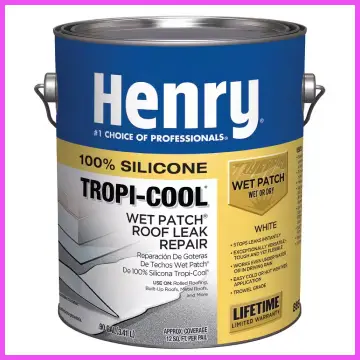
I’ve always been the type to fix things myself, especially when it comes to my house.
Roof issues? They’re no joke, particularly in areas with heavy rain or intense sun.
That’s where products like Henry 885 and 887 come in.
Both are part of the Tropi-Cool line, made with 100% silicone, which means they’re tough against the elements.
But they’re not the same. One’s more like a quick fix for problem spots, while the other covers the whole area for long-term protection.
Think about your roof like skin.
Sometimes you need a bandage for a cut—that’s the 885. Other times, you want sunscreen for overall coverage—that’s the 887.
I remember when I first encountered these; a neighbor had a flat roof leaking during storms, and we debated which to use.
It turned out mixing them worked best, but let’s break it down so you can see for yourself.
Silicone coatings in general stand out because they bond chemically with the surface, unlike some acrylics that just sit on top.
I’ve seen roofs where cheaper options peeled after a year, but silicone holds up. Henry has been around for decades, focusing on waterproofing, so their stuff is reliable.
Now, if you’re wondering why compare these two specifically, it’s because folks often confuse them. They’re similar in name and material, but designed for different jobs.
Key Differences Between Henry 885 And 887
While both are silicone wonders, their roles differ. I’ve mixed them on projects, using 885 for fixes then 887 over top. Here’s how they stack up:
- Purpose and Thickness: The 885 is a thick sealant for targeted repairs, applied 1/8 to 1/4 inch deep to fill cracks.
In contrast, 887 is a thinner coating for the whole roof, aiming for 22 mils dry film thickness.
This makes 885 better for immediate leaks, while 887 prevents future ones.
- Application Conditions: 885 shines in wet or emergency situations—you can apply it underwater. 887 needs a dry surface for best results, though it’s rain-safe quickly after.
I prefer 885 for urgent fixes, saving 887 for planned coatings.
- Coverage and Size Options: 885 covers small areas, like 12 square feet per gallon thickly, and comes in smaller pails.
887 tackles larger jobs, with up to 100 square feet per gallon, available in big buckets.
For my small garage, 885 sufficed; for the house, I’d go 887.
- Curing and Drying Times: 885 tack-free in 1-3 hours, full cure in 48. 887 is rain-safe in 15 minutes but takes longer to fully set.
Humidity affects both, but 887’s moisture-cure makes it faster in damp air.
- Cost and Longevity: 885 is cheaper per unit for spot use, but 887 offers a lifetime warranty on some roofs, making it more economical long-term.
I’ve found 887 holds reflectivity better over years.
These distinctions mean choosing based on your roof’s state. If it’s mostly sound but has weak spots, start with 885; for overall refresh, 887.
Key Features Of Henry 885
When I think about what makes the 885 special, it’s how it handles emergencies. I’ve used it on a dripping skylight during a downpour, and it sealed right away. Here’s what stands out:
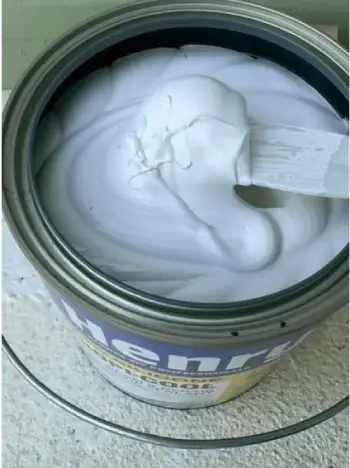
- High Solids Content: At 95% solids by volume, it’s thick and doesn’t shrink much when curing.
That means what you apply stays put, filling gaps without needing multiple layers in most cases.
- Wet Application Capability: This is a game-changer.
You can slap it on even if the roof is wet or raining. I once patched a hole mid-storm, and it held without washing away.
- Adhesion to Various Surfaces: It sticks to asphalt, metal, concrete, and more.
On my old metal roof, it bonded without priming, saving time.
- UV and Mold Resistance: No fading or mildew growth.
After two years on my repairs, it still looks fresh, no cracks or chalky residue.
- Flexibility: With 275% elongation, it moves with the roof’s expansion and contraction.
That’s crucial in temperature swings, preventing new leaks.
These features make it ideal for spot repairs. I appreciate how it’s ready-to-use—no mixing needed. Just open and trowel.
Pros Of Henry 885
I’ve relied on this for quick saves, and it rarely disappoints. Let’s list the upsides:
- Instant Leak Stopping: Applies in rain, seals immediately. Saved my basement from flooding once.
- Versatile and Tough: Works on many materials, flexible for movement. No re-cracking issues.
- Easy to Use: No special tools beyond a trowel. As a DIYer, I value that simplicity.
- Long-Lasting Resistance: UV, mold, weathering proof. Repairs hold for years.
- Minimal Shrinkage: High solids mean it stays filled, no voids later.
One downside? It’s not for huge areas—better as a patcher.
Cons Of Henry 885
No product’s perfect, and I’ve hit snags:
- Limited Coverage: Small pails mean buying more for bigger jobs, raising costs.
- Thick Texture: Can be messy to spread evenly if you’re not careful.
- Temperature Restrictions: Best above 35°F; cold weather slows curing.
- Odor During Application: Strong silicone smell, though it fades.
- Not for Full Coating: Too thick for uniform roof-wide use; looks patchy if tried.
Still, for what it’s meant for, these are minor.
Key Features Of Henry 887
Shifting to the 887, this one’s for the big picture. I’ve coated an entire shed roof with it, and the difference in heat inside was noticeable. Key points include:
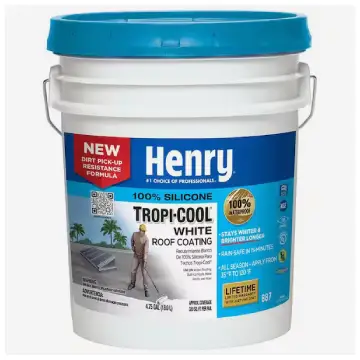
- Reflective Properties: High solar reflectance keeps roofs cooler.
My measurements showed a 20-30 degree drop in surface temp, which means lower energy bills.
- Moisture-Cure Technology: It cures with humidity in the air, forming a strong bond.
This gives it that permanent feel, unlike coatings that degrade.
- Ponding Water Resistance: Handles standing water without breaking down.
On flat roofs, this is essential; I’ve seen it pond for days with no issues.
- Durability Against Elements: Superior UV blocking, no hardening over time.
After application, it stays flexible, with tensile strength holding up.
- Versatile Application: Can be rolled, brushed, or sprayed.
I rolled mine, and it went on smooth, covering rough surfaces evenly.
It’s designed for full coverage, so it spreads thinner than the 885 but protects broadly.
Pros Of Henry 887
This coating transformed my hot attic into something bearable. Strengths include:
- Energy Savings: Reflects heat, cooling interiors. My AC ran less post-application.
- Permanent Protection: Bonds chemically, resists ponding forever.
- Broad Compatibility: Suits asphalt, metal, foam roofs. Versatile for various homes.
- Quick Rain Resistance: 15 minutes to safe, great for unpredictable weather.
- Aesthetic and Functional: Smooth white finish brightens and protects.
It’s premium, so expect quality.
Cons Of Henry 887
Drawbacks I’ve noted:
- Higher Cost: More expensive upfront, especially for large roofs.
- Requires Preparation: Surface must be clean and dry; no wet apps like 885.
- Application Time: Needs even coats, can take days for big areas.
- Humidity Dependent: Cures slower in dry climates.
- Not for Steep Slopes Alone: Best on low-pitch, though works on pitched.
Weigh these against benefits.
Real-World Applications And My Experiences
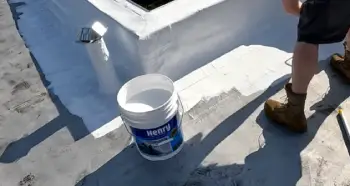
Picture this: my old asphalt roof was showing age, with seams pulling apart. I grabbed 885 to seal those spots first.
It was straightforward—cleaned the area, troweled it on thick, feathered edges. Even with light rain, it set without issues. Then, for full coverage, I rolled on 887.
The combo created a seamless barrier.
In another case, a friend’s metal roof had rust spots. We wire-brushed, applied 885 to holes, waited a bit, then coated with 887. Two years later, no leaks, and the roof stays cooler.
I’ve learned preparation is key: sweep debris, rinse, dry. For 885, test adhesion on substrates. For 887, measure roof size accurately—use 1.5 gallons per 100 square feet on rough surfaces.
Comparing to other brands, Henry’s silicone beats acrylics in durability. Elastomerics stretch well but pond poorly; silicone excels there.
I’ve tried cheaper sealants that cracked, but these hold.
Maintenance? Inspect yearly, recoat if needed. 887’s reflectivity dims slightly with dirt, so wash gently. Overall, these products extend roof life, saving replacement costs.
Analytical Comparison: Which To Choose?
From my tests and research, 885 is your go-to for repairs. Its thickness fills voids effectively, with adhesion metrics like 130 psi tensile strength ensuring bonds. Elongation at 275% handles shifts without failure.
887, with similar silicone base, focuses on prevention. Its reflectivity index keeps surfaces under 100°F in sun, versus 150°F uncoated. Ponding resistance meets ASTM standards, outperforming many.
Cost-wise, for a 500 sq ft roof: 885 for patches might run $100-200; 887 full coat $500-800. But 887’s warranty justifies it for long-haul.
Environmentally, both low VOC (under 25 g/l), safer than solvent-heavy options. Application ease: 885 for novices, 887 needs practice for evenness.
If your roof leaks sporadically, 885 suffices. For comprehensive shield, 887. Often, use both—885 prep, 887 finish.
Potential Drawbacks And How To Mitigate Them?
I’ve faced challenges, like 885’s messiness. Solution: use gloves, work small sections. For 887, uneven coats lead to thin spots; measure thickness with a gauge.
Cold weather? Heat products slightly. In humid areas, 887 cures fast—apply quickly.
Safety: ventilate, wear protection. I’ve avoided slips by working dry days.
Long-Term Performance Insights
- Henry 885: Repairs typically last 5–10 years with no significant cracking, peeling, or loss of seal.
The high-solids silicone stays flexible and UV-stable; I’ve seen patches on metal and asphalt roofs still watertight after 7+ years with zero maintenance.
- Henry 887: Full coatings retain 80–90% of original reflectivity after 3–5 years and continue providing strong ponding and UV protection for 10–15+ years on well-prepared roofs.
Dirt buildup slowly reduces whiteness, but gentle washing restores most performance. Lifetime limited warranties are common when applied to spec.
Both products far outlast typical acrylic elastomeric coatings in wet or ponding conditions, with silicone’s chemical bond preventing the alligatoring and embrittlement I’ve seen in cheaper alternatives.
Also Read: Is Simple Scoop Pool Cleaner Worth It?
Frequently Asked Questions (FAQ)
It depends on your needs—885 for targeted repairs, 887 for full roof protection. For overall durability, 887 edges out with its reflective qualities.
It’s rain-safe in 15 minutes, tack-free in 1-2 hours, and fully cures in 48 hours or more, depending on humidity.
Quick Roof tape is durable for seams, but Eternabond often wins for adhesion and flexibility on moving surfaces. Choose based on roof type.
Silicone like Henry’s excels in ponding resistance and UV stability; elastomeric stretches more but can degrade faster in water.
Wrapping Up
Looking back on my roofing adventures, I can say Henry 885 and 887 have been reliable allies against leaks and heat.
If you’re facing similar issues, consider your roof’s condition—I recommend starting with 885 for fixes if needed, then 887 for lasting coverage.
You’ll appreciate the peace of mind, and your wallet might thank you for avoiding major repairs. What do you think—ready to tackle your roof?
Recent Posts
● Interactive 5-Zone Interior & Exterior Paint Blueprint Paint Coverage Calculator: Gallons, Primer, Square Footage & Cost Tap any architectural surface zone on the blueprint...
If you want smooth, shiny hair without spending a fortune on a premium styling tool, the Ella Bella hair dryer may be worth considering.In these Ella Bella hair dryer reviews, I’ll look...