
If you want a straightforward air purifier for everyday dust, pet dander, odors, and common indoor pollutants, I think a Holmes air purifier is worth considering, especially if you prefer a familiar, uncomplicated design over a feature-packed smart appliance.
I like the idea of having a purifier that I can set up quickly, run regularly, and maintain without turning it into another complicated household chore.
In this Holmes air purifier review, I’ll share what stood out to me, where it falls short, how I would maintain it, and how it compares with other popular purifier brands.
My First Experience With A Holmes Air Purifier
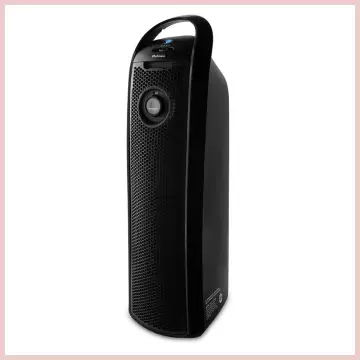
When I first started using an air purifier, I wanted something practical.
I wasn’t looking for a machine covered in complicated settings that I would probably ignore after the first week.
What mattered to me was simple operation, reasonable filtration, manageable noise, and a design that wouldn’t feel out of place in my room.
That’s where Holmes air purifiers caught my attention.
The first thing I noticed was the familiar, straightforward design. Depending on the model, you get controls that are easy to understand, different fan-speed settings, and filtration designed to capture airborne particles.
I appreciate that kind of simplicity because when I want cleaner indoor air, I don’t necessarily want to spend ten minutes figuring out an app or navigating unnecessary menus.
I found the purifier most useful when running it consistently rather than expecting an instant transformation. When the fan was operating for several hours, the room felt fresher, particularly after cleaning, cooking, or other activities that stirred up dust.
One thing I learned quickly is that placement matters. If I tucked the purifier behind furniture or pushed it against a wall, I wasn’t giving it the best opportunity to circulate air.
Once I positioned it where air could move freely around the intake and outlet, the overall experience was better.
Noise also depended heavily on the fan setting. On a lower setting, I could generally tolerate the sound while working or relaxing. Higher settings were more noticeable, but that’s not unusual for an air purifier. You are essentially asking a fan to move a significant amount of air through a filter.
What I liked most was the low-effort operation. I could turn it on, choose a suitable speed, and let it work. That’s exactly the kind of appliance I tend to use consistently.
However, I wouldn’t treat every Holmes model as identical. Features, filtration systems, room-size recommendations, controls, and replacement-filter requirements can vary between models. That’s important because your experience will depend heavily on the specific unit you choose.
Pros Of Holmes Air Purifiers
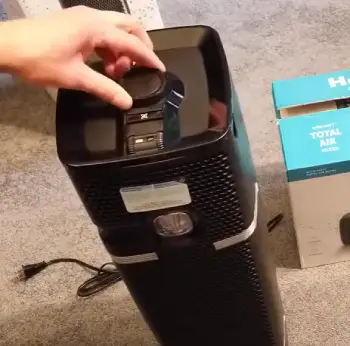
- Simple Controls and Everyday Convenience
One of the biggest advantages I see with Holmes air purifiers is simplicity.
I don’t want every household appliance to require an instruction manual every time I use it. A purifier should ideally be something I can operate almost automatically.
Holmes models generally focus on practical controls. Depending on the model, I can choose a fan speed and let the unit run.
That’s useful for bedrooms, offices, living rooms, and other everyday spaces where I want consistent air circulation without constantly adjusting settings.
For you, this simplicity can be particularly useful if you don’t care about smartphone controls or elaborate automation.
- Useful Particle Filtration
The main job of an air purifier is filtration, and Holmes units are designed around that purpose.
A suitable filter can capture airborne particles that would otherwise remain suspended in your indoor environment. That can include household dust and other common airborne debris.
I especially appreciate this during cleaning. Vacuuming and dusting can temporarily put particles back into the air. Running an air purifier afterward gives the machine an opportunity to capture some of those suspended particles.
The exact performance depends on the model, filter condition, room size, and operating speed, so I wouldn’t assume that one Holmes purifier performs identically to another.
- Multiple Fan Settings
I like having control over airflow.
Sometimes I want quieter operation while sleeping or working. Other times, I want stronger airflow because I’ve just cleaned the room or cooked something that left a noticeable smell.
Multiple fan settings give me that flexibility.
Instead of being forced to choose between completely silent operation and maximum airflow, I can find a middle ground. That’s a small feature, but I find it important for long-term use.
- Familiar, Practical Design
Holmes air purifiers generally don’t try too hard to look futuristic.
Personally, I see that as an advantage in many rooms. A purifier is already another appliance occupying valuable floor or tabletop space. I don’t necessarily need it to become the visual centerpiece.
The practical design also makes the device easier to understand. I can identify the controls, understand what the machine is doing, and focus on maintaining it properly.
- Potential Value for Basic Air Cleaning
If your needs are relatively simple, a Holmes air purifier can make sense.
You may not need advanced connectivity, extensive sensor systems, or a premium display. If your goal is simply to circulate and filter indoor air, paying for features you won’t use may not make much sense.
That’s where I think Holmes can appeal to practical buyers.
Cons Of Holmes Air Purifiers
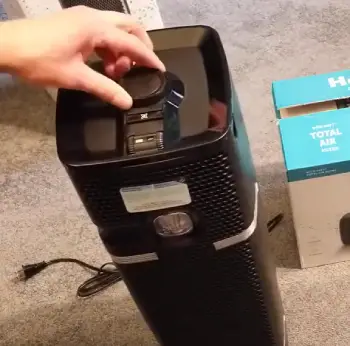
- Model Differences Can Make Shopping Confusing
One issue I would pay attention to is that Holmes has offered different purifier configurations over time.
That means you shouldn’t buy based only on the brand name.
I would look carefully at the exact model’s recommended room size, filter type, replacement requirements, airflow capabilities, and available settings. Two products carrying the same brand can provide noticeably different experiences.
- Filters Require Ongoing Attention
This isn’t unique to Holmes, but it’s important.
Your purifier can only work properly if its filtration system is maintained. As the filter collects particles, it becomes loaded with debris. A neglected filter can restrict airflow and reduce efficiency.
For me, this is one of those maintenance tasks that’s easy to forget until performance starts changing.
- Fan Noise Increases at Higher Settings
If you run the purifier at maximum speed, you’ll probably hear it.
That’s not necessarily a defect. Higher airflow usually means more fan noise. Still, if you’re particularly sensitive to sound, you may prefer using a lower setting in a bedroom.
I would test different speeds instead of assuming that the highest setting is always the best choice.
- Not a Complete Indoor-Air Solution
An air purifier can help filter airborne particles, but it cannot solve every indoor-air problem.
It won’t magically eliminate the source of persistent moisture, mold, smoke, chemical emissions, or poor ventilation. If the underlying problem remains, the purifier is only treating part of the situation.
That’s an important distinction that I think every buyer should understand.
Maintenance For Holmes Air Purifier
- Check the Filter Regularly
The filter is the component I pay the most attention to.
I don’t simply wait for the purifier to perform poorly. I check the filter periodically and follow the specific maintenance instructions for my model.
The replacement interval can vary based on the filter type, operating hours, room conditions, and how much dust or particulate matter is present.
If you have pets, live in a dusty environment, or run the purifier frequently, your filter may need attention sooner than someone using the machine occasionally in a relatively clean room.
- Keep the Air Intake Clear
This is surprisingly easy to overlook.
I make sure furniture, curtains, bedding, boxes, and other objects aren’t blocking the purifier’s air intake. If airflow is restricted, the machine has a harder time circulating air.
Give the unit breathing room.
Even a good purifier won’t perform as intended if you place it somewhere that prevents adequate air movement.
- Clean the Exterior
Dust doesn’t only collect inside your home. It can accumulate around the purifier itself.
I periodically wipe the exterior using an appropriate dry or slightly damp cloth according to the manufacturer’s care instructions. I also pay attention to vents and surrounding areas.
The goal isn’t to make the purifier look showroom-new. It’s simply to prevent unnecessary dust accumulation around the appliance.
- Don’t Ignore Unusual Sounds
If your purifier suddenly sounds different, I don’t ignore it.
A new rattling, buzzing, grinding, or unusually loud vibration can indicate that something needs attention. Sometimes the cause may be dust, an obstruction, or an improperly positioned component.
I would switch the machine off before inspecting or cleaning it.
- Choose the Right Location
Placement can make a surprisingly noticeable difference.
I prefer an open area where air can circulate freely. I avoid hiding the purifier behind furniture or squeezing it into a cramped corner.
For bedrooms, I also consider where the airflow is directed. I don’t want strong airflow blowing directly at my face while I’m sleeping.
- Follow the Correct Replacement Schedule
I don’t try to stretch a filter indefinitely just to save money.
The replacement schedule should be based on the instructions for the particular model and actual usage conditions. If the purifier operates heavily in a dusty environment, the filter may become saturated faster.
A fresh filter can help maintain appropriate airflow and filtration performance.
- Run It Consistently
One of the most practical tips I can give you is to use the purifier consistently.
Instead of running it for ten minutes and expecting dramatic results, I prefer allowing it to operate for longer periods at an appropriate setting.
Air cleaning is a continuous process. The more air the machine processes over time, the more useful it can be for maintaining indoor air quality.
- Holmes Air Purifier for Bedrooms
A bedroom is one of the places where I think purifier operation needs a little balance.
You want useful air circulation, but you also want a comfortable sleeping environment.
I would generally start with a lower fan setting and see whether the airflow and noise are acceptable. If the room needs stronger filtration, I could increase the speed temporarily before returning to a quieter setting.
Placement matters here too. I wouldn’t put the purifier somewhere that makes it difficult to access or where bedding blocks its intake.
If you have allergies or sensitivity to airborne particles, maintaining a clean bedroom environment overall is still important. Washing bedding, reducing dust accumulation, and controlling indoor humidity should work alongside filtration rather than being replaced by it.
Comparison Of Holmes Air Purifier With Other Brands
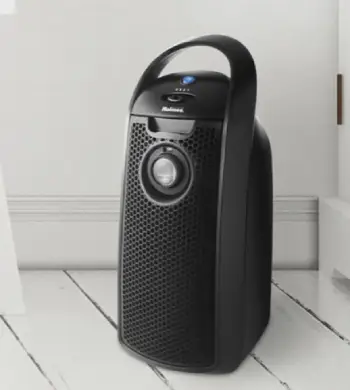
- Holmes Vs Levoit
Levoit has become well known for offering air purifiers across several room sizes and feature levels. Holmes tends to appeal more to people looking for straightforward operation.
When I compare the two, I would focus less on brand reputation and more on the exact model. Compare room coverage, filtration, noise, controls, replacement-filter availability, and operating cost.
If you want more modern connected features, certain Levoit models may offer them. If you prefer uncomplicated controls, a Holmes model may fit your routine more naturally.
- Holmes Vs Honeywell
Honeywell offers a broad selection of air-cleaning appliances, including models aimed at different room sizes.
The comparison becomes especially interesting when filtration and airflow are your primary concerns. I would look at the specific filter design, replacement frequency, room recommendation, and fan settings.
For me, the better match depends on how I intend to use the purifier rather than simply choosing based on the logo.
- Holmes vs GermGuardian
GermGuardian products are another common option in the household air purifier category.
When comparing one with a Holmes purifier, I would examine the filtration setup carefully. Some GermGuardian models incorporate additional filtration technologies or features that aren’t necessarily present across Holmes models.
Again, I wouldn’t assume one brand’s entire lineup is identical. Model-level specifications matter much more than brand-level assumptions.
- Holmes vs Coway
Coway generally occupies a more feature-focused segment of the purifier market, with some models offering more sophisticated controls, sensors, and air-quality features.
Holmes can be appealing if you want a simpler appliance.
If you’re comfortable paying more for additional features and a more sophisticated user experience, you may naturally look toward models with those capabilities. If you simply want basic filtration without excessive complexity, Holmes remains worth considering.
What I Would Look For Before Buying A Holmes Air Purifier?
Before buying, I would start with the room.
How large is it? How dusty is it? Do you have pets? Will the purifier run overnight? Do you need odor reduction? How frequently are you prepared to replace filters?
These questions can quickly narrow down your choices.
I would also check the replacement-filter situation before purchasing the purifier. A cheap appliance isn’t necessarily cheap to own if its replacement filters are expensive or difficult to find.
Noise is another factor I wouldn’t overlook. If you’re buying for a bedroom, think about whether you’ll tolerate the fan sound at the speed you actually need.
Finally, consider how much automation you really want. If you enjoy smart controls and air-quality monitoring, a basic purifier may feel limited. If you just want to switch on a machine and let it run, those missing features may not matter much.
Is A Holmes Air Purifier Worth It?
For me, the answer depends heavily on what you expect from it.
If your priority is straightforward air filtration, simple operation, and practical everyday use, a Holmes air purifier can fit that role. I wouldn’t buy one expecting it to replace every other form of indoor-air management.
The strongest part of the experience is the uncomplicated approach. I can use the purifier regularly without turning air cleaning into a complicated project.
But I would carefully evaluate the individual model before purchasing. Room capacity, filtration, noise, filter costs, and maintenance requirements can vary.
That is ultimately what determines whether the specific Holmes purifier you’re considering makes sense for your home.
Also Read: Is Austin Air HealthMate Plus Air Purifier Worth It?
Frequently Asked Questions (FAQ)
There isn’t one universally best-rated purifier. Ratings vary by model, testing method, room size, filtration, noise, and user priorities.
Holmes-branded air purifiers have been sold in different configurations over the years, but product availability can vary by model and market.
It depends on the specific model, filter type, usage, and indoor conditions. Follow the replacement guidance for your particular unit.
Yes. Filters require replacement, fans produce some noise, electricity is consumed, and a purifier cannot eliminate every source of indoor-air pollution.
Wrapping Up
After looking at the overall experience, I see Holmes air purifiers as practical options for people who want straightforward indoor air filtration without unnecessary complexity.
If you want a simple purifier for everyday dust, airborne particles, and general room freshness, I think it’s worth considering the right Holmes model for your space.
Just make sure you check room capacity, filter requirements, noise, and ongoing maintenance before buying.
If those factors fit your needs, a Holmes air purifier can become a useful part of your regular home-cleaning routine.
Recent Posts
I spent months comparing budget options against established names after my last set of tires wore out sooner than expected.My goal here is to share what I learned from putting Dextero and...
AquaTru Carafe Vs. Classic: Which Is Actually Fits Your Kitchen?
I decided to write this comparison after months of testing both the AquaTru Carafe and the Classic in my own kitchen. Tracking covered daily use.Taste stayed consistent. Refill frequency...