
If you struggle with occasional joint stiffness, everyday aches, or reduced flexibility, Juicy Joint may be worth considering as a plant-based joint support supplement.
Its combination of turmeric, ginger, devil’s claw, white willow bark, and other herbs makes it an interesting option for adults seeking an alternative to conventional joint formulas.
I would recommend considering Juicy Joint if you prefer liquid herbal supplements, but checking its ingredients, dosage transparency, and potential medication interactions before purchasing is essential.
My First Experience With Juicy Joint Supplement

When evaluating Juicy Joint, the first thing that caught my attention was its liquid herbal formulation.
Most joint supplements I come across are available as capsules, tablets, or powders.
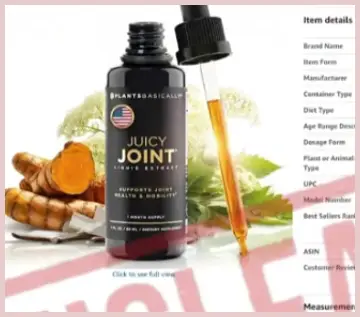
Juicy Joint takes a different approach by combining several traditional botanicals into a liquid extract designed to support joint comfort, flexibility, and everyday mobility.
I particularly like the idea of having several plant-based ingredients in one formula.
For someone who experiences occasional stiffness after walking, exercising, working long hours, or spending considerable time standing, a convenient daily supplement can sound appealing.
However, I would separate the product’s advertised benefits from what its ingredients can actually demonstrate.
Although some of the herbs in Juicy Joint have been investigated for their potential effects on inflammation and musculoskeletal discomfort, that does not automatically establish that the finished supplement produces the same results.
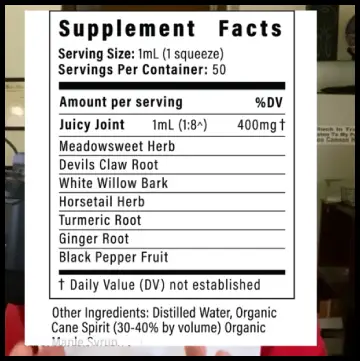
The formula contains seven primary botanical ingredients: meadowsweet, devil’s claw, white willow bark, horsetail, turmeric, ginger, and black pepper. Each ingredient has a different traditional use and potential contribution to the overall formulation.
Another detail I noticed is that the product comes in a liquid tincture format. This may appeal to people who dislike swallowing multiple capsules every day.
It can also be mixed with water, making it relatively easy to incorporate into a daily routine.
Nevertheless, I would not describe Juicy Joint as a guaranteed solution for arthritis, chronic joint pain, or damaged cartilage.
Those conditions require appropriate medical assessment, and a dietary supplement should never replace necessary treatment.
My overall impression is that Juicy Joint has an interesting ingredient combination, but its actual effectiveness deserves careful consideration. I would pay particular attention to ingredient quantities, safety information, and whether the product’s claims are supported by independent clinical research.
Also Read: Is Let Loose Supplement Worth It?
Pros Of Juicy Joint Supplement
- Combines Multiple Botanical Ingredients
One of the biggest attractions of Juicy Joint is its seven-herb formulation.
Instead of purchasing separate turmeric, ginger, devil’s claw, and other botanical products, consumers get several ingredients in one liquid supplement.
This may simplify a daily wellness routine.
I also appreciate that the formula combines herbs with different traditional uses rather than relying on one familiar ingredient.
However, having more ingredients does not automatically mean better results. Their quantities and interactions are important.
- Convenient Liquid Formulation
Not everyone enjoys swallowing capsules.
Juicy Joint offers a liquid tincture that can be taken directly or mixed with water.
This makes it an appealing option for people who prefer liquid supplements.
The manufacturer recommends taking 1 mL twice daily. Following the product label and checking with a healthcare professional before beginning are important steps.
- Includes Ingredients With Existing Research
Another positive feature is the inclusion of botanicals that have been investigated in scientific research.
Devil’s claw, turmeric, ginger, and white willow bark are not unfamiliar ingredients in discussions about musculoskeletal discomfort.
Some standardized preparations have demonstrated potential benefits in particular studies.
This gives the formulation a more interesting foundation than a supplement containing only poorly researched ingredients.
However, I would not assume that studies on individual extracts prove that Juicy Joint itself works.
- May Complement an Active Lifestyle
Maintaining mobility involves much more than taking supplements.
Regular movement, appropriate exercise, adequate nutrition, and healthy recovery habits all matter.
For adults who want to maintain an active routine, a supplement marketed for joint comfort may be an additional consideration.
Juicy Joint is positioned for people who want to stay comfortable while managing ordinary daily activities.
I would still prioritize exercise, proper movement techniques, and medical guidance over relying on a supplement alone.
- Easy to Incorporate Into a Routine
The liquid format makes daily supplementation relatively straightforward.
You do not need to prepare complicated recipes or consume several different products.
The manufacturer describes taking the extract directly or mixing it into water.
For people who already follow a consistent wellness routine, this may be convenient.
- Botanical-Based Formulation
Some consumers prefer plant-derived ingredients over conventional supplement formulas.
Juicy Joint caters to this preference by focusing on traditional botanical ingredients.
However, natural does not automatically mean harmless. Several of its ingredients have meaningful medication interactions and safety considerations.
Cons Of Juicy Joint Supplement
- Limited Product-Specific Clinical Evidence
This is probably my biggest concern.
Research on turmeric or devil’s claw does not establish that the complete Juicy Joint formula produces clinically meaningful improvements.
I could not establish that the finished supplement has been tested in a published, high-quality randomized controlled clinical trial.
That makes it difficult to determine how effective it really is.
- Individual Ingredient Amounts Are Not Clearly Disclosed
The product’s supplement facts identify a 333 mg botanical blend per 1 mL serving.
However, the individual quantities of the seven herbs are not clearly provided in the displayed formulation.
This makes it difficult to compare the formula with doses used in published research.
For me, this is an important transparency issue.
- Possible Medication Interactions
White willow bark and meadowsweet contain salicylate-related compounds.
These ingredients deserve particular attention if you take aspirin, anticoagulants, antiplatelet medicines, or other medications that affect bleeding.
Turmeric, ginger, and black pepper may also interact with certain medications.
I would not recommend starting this supplement without professional advice if you regularly use prescription medicines.
- Contains Alcohol
Juicy Joint uses organic cane alcohol as part of its extraction process. The manufacturer identifies the alcohol content as approximately 30–40% by volume.
Although a serving is only 1 mL, this is an important consideration.
People avoiding alcohol for personal, medical, religious, or recovery-related reasons should carefully consider this before purchasing.
- Results Are Not Guaranteed
Some people may notice improvements in comfort, while others may experience no meaningful difference.
Joint discomfort has many possible causes, and a herbal supplement cannot address every underlying problem.
I would avoid purchasing Juicy Joint with the expectation that it will eliminate chronic pain or reverse joint damage.
Also Read: Is Tropical Rise Supplement Worth It?
Maintenance Tips For Juicy Joint Supplement
- Follow the Recommended Serving Instructions
The manufacturer recommends taking 1 mL twice daily.
I would avoid increasing the serving size in an attempt to achieve faster results.
More is not necessarily better, especially when a formula contains multiple active botanical ingredients.
Read the current label carefully and consult a healthcare professional if you have questions about whether the recommended serving is appropriate for you.
- Maintain a Consistent Routine
Consistency matters when evaluating any dietary supplement.
Rather than taking a product occasionally and expecting immediate improvements, establish a regular routine if a healthcare professional considers it appropriate.
Keep track of your daily serving and any changes in comfort or mobility.
I would also avoid introducing several new supplements simultaneously because that makes it difficult to identify which product is responsible for a reaction or perceived improvement.
- Stay Physically Active
Movement is essential for maintaining general joint function.
Walking, swimming, cycling, and appropriate low-impact exercises can help support mobility.
I would choose activities that match my current fitness level rather than immediately attempting demanding workouts.
If a particular movement causes significant pain, stop and seek appropriate advice.
A physiotherapist can help identify exercises that support strength and flexibility without placing unnecessary stress on uncomfortable joints.
- Prioritize a Balanced Diet
Your daily nutrition plays an important role in maintaining general musculoskeletal health.
Include protein-rich foods, vegetables, fruits, whole grains, and healthy fats.
Calcium, vitamin D, and adequate protein are particularly relevant to bone and muscle health.
I would focus on getting nutrients from a varied diet rather than assuming a joint supplement can compensate for poor eating habits.
- Drink Enough Water
Staying hydrated supports normal bodily functions and helps maintain overall wellness.
Although drinking additional water will not directly repair cartilage, adequate hydration is an important part of a healthy daily routine.
Keep a water bottle nearby, especially when exercising or spending long hours outdoors.
- Avoid Overloading Your Joints
Repeatedly placing excessive stress on your joints can contribute to discomfort.
If your daily routine involves lifting heavy objects, standing for extended periods, or performing repetitive movements, pay attention to your body mechanics.
Use proper lifting techniques, take breaks, and avoid suddenly increasing exercise intensity.
I would rather make gradual improvements than push through persistent discomfort.
- Monitor Potential Side Effects
Because Juicy Joint contains several botanicals, monitoring your response is important.
Pay attention to stomach discomfort, nausea, heartburn, allergic reactions, unusual bruising, or bleeding.
Stop taking the product and seek medical advice if you experience concerning symptoms.
Severe allergic reactions or unusual bleeding require prompt medical attention.
- Check Medication Compatibility
This is particularly important with Juicy Joint.
White willow bark and meadowsweet contain salicylate-related compounds, while other ingredients may affect medication metabolism.
If you take blood thinners, aspirin, anti-inflammatory medication, or prescription drugs for an ongoing condition, discuss the complete ingredient list with your healthcare professional.
Pregnant or breastfeeding individuals should avoid using the product unless specifically advised by an appropriate healthcare professional.
Comparison Of Juicy Joint Supplement With Other Joint Support Brands

- Juicy Joint vs. Glucosamine and Chondroitin Supplements
Glucosamine and chondroitin supplements are among the most familiar products in the joint health category.
These formulas generally focus on compounds associated with cartilage and connective tissue.
Juicy Joint takes a different approach by combining seven botanical ingredients.
I would consider Juicy Joint if I preferred herbal extracts and wanted a liquid supplement. Glucosamine and chondroitin formulas may appeal more to people who prefer traditional joint supplement ingredients.
However, evidence for glucosamine and chondroitin is mixed, and neither approach guarantees meaningful relief.
- Juicy Joint vs. Move Free
Move Free is a recognizable joint supplement brand offering formulations that may include glucosamine, chondroitin, hyaluronic acid, and other ingredients depending on the specific product.
Its conventional capsule-based approach differs from Juicy Joint’s herbal tincture.
I would compare the exact ingredient amounts, rather than assuming every Move Free product has the same formulation.
People who prefer established supplement categories may find Move Free more familiar, while those interested in botanical combinations may prefer exploring Juicy Joint.
Neither product should be considered a proven treatment for arthritis.
- Juicy Joint vs. Osteo Bi-Flex
Osteo Bi-Flex offers joint support products featuring ingredients such as glucosamine, chondroitin, and other formulation-dependent compounds.
The brand generally focuses on conventional joint-support supplementation.
Juicy Joint, on the other hand, uses herbs traditionally associated with physical discomfort and inflammation.
I would compare these products based on ingredient transparency, serving requirements, personal tolerability, and cost.
The best choice depends on your preferences and health circumstances rather than the number of ingredients listed on the packaging.
- Juicy Joint vs. Turmeric Supplements
Turmeric supplements are another relevant comparison.
Unlike Juicy Joint, which combines seven botanicals, a dedicated turmeric product may focus on standardized curcumin extracts.
This can make it easier to identify the amount of curcumin being consumed.
Some turmeric products also include piperine or specialized delivery systems to improve absorption.
If your primary interest is turmeric, I would compare standardized curcumin products with Juicy Joint’s broader herbal formula.
- Juicy Joint vs. Collagen Supplements
Collagen supplements focus on providing collagen peptides or other collagen-related ingredients.
Some formulations are marketed for connective tissue, skin, and joint health.
Juicy Joint does not contain collagen in its standalone liquid extract.
Instead, its formula emphasizes botanical ingredients.
People interested in collagen supplementation may prefer a dedicated collagen product, while those seeking a multi-herb tincture may find Juicy Joint more appealing.
Importantly, collagen supplements also have varying levels of supporting evidence, and they should not be expected to regenerate damaged joints.
Is Juicy Joint Worth Buying?
After reviewing the formula, I think Juicy Joint has some interesting qualities, but I would approach it with realistic expectations.
Its biggest attraction is the combination of seven botanical ingredients. Turmeric, ginger, devil’s claw, and white willow bark have attracted research interest for their potential effects on musculoskeletal discomfort.
The liquid format is another advantage for people who dislike capsules.
However, the lack of clearly disclosed individual ingredient quantities makes it difficult to evaluate whether the product delivers research-relevant doses.
I would also pay close attention to the alcohol content and potential interactions involving salicylate-containing herbs.
Ultimately, I would consider Juicy Joint an optional herbal wellness supplement rather than a proven solution for joint pain.
Before purchasing, compare its current price, serving information, return conditions, and ingredient transparency with other joint support products.
Also Read: Is Pineal Guardian Supplement Worth It?
Frequently Asked Questions (FAQ)
Juicy Joint is a marketed herbal supplement with an identifiable ingredient formulation. However, its specific effectiveness has not been established through independent clinical trials of the complete product.
There is no universally recognized number one joint supplement. The best choice depends on ingredients, clinical evidence, safety, and individual health needs.
Possible concerns include stomach discomfort, allergic reactions, bleeding risks, and medication interactions. White willow bark and meadowsweet deserve particular caution.
The manufacturer suggests some customers notice changes within 14 days, but results vary. There is no clinically established timeframe for the finished formula.
Final Thought
Juicy Joint is an interesting herbal joint support supplement featuring turmeric, ginger, devil’s claw, white willow bark, and other botanicals.
I would recommend considering it if you prefer liquid herbal formulas and understand its limitations.
However, limited product-specific evidence, undisclosed individual ingredient quantities, and potential medication interactions deserve attention before purchasing.
Compare the formulation carefully and consult your healthcare professional, particularly if you have existing health concerns.
Recent Posts
Nature's Way Weight Manager Drink Mix Reviews: Is It Worth Trying?
Nature's Way Weight Manager Drink Mix may appeal to people looking for a simple way to support their weight management goals.However, after considering the product's intended benefits, potential...
TIRTIR Milk Skin Toner Reviews: Is This Korean Hydrating Toner Worth Buying?
If you want softer, healthier-looking skin without adding several complicated products to your routine, TIRTIR Milk Skin Toner deserves your attention.This Korean skincare favorite is designed...