
After looking into Pineal Guardian supplement reviews, its marketing claims, available product information, and the concerns raised by consumers, I would not recommend buying it.
The product is promoted as a way to support memory, mental clarity, and the pineal gland, but those promises go considerably further than the evidence I could find.
I also found concerns surrounding the product’s online reputation and the limited availability of independent customer feedback.
If you are considering Pineal Guardian, I think you should look carefully at what is actually supported before spending your money.
My First Experience With Pineal Guardian Supplement
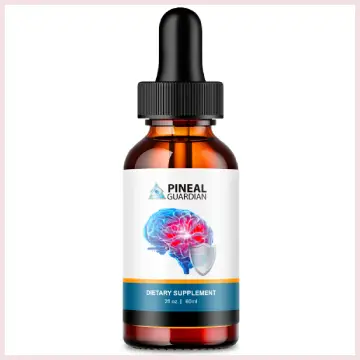
When I first came across Pineal Guardian, the marketing immediately caught my attention because it combines several popular ideas: memory support, brain health, sleep, mental clarity, and the pineal gland.
That sounds appealing, especially if you are dealing with occasional brain fog or simply want to maintain your cognitive health.
But I have learned that attractive supplement claims deserve a second look.
The first thing I noticed was that Pineal Guardian is marketed as a supplement intended to support cognitive health and the pineal gland.
One version of the product is promoted as a liquid formula, while another product presentation describes a broader multi-ingredient formula.
The marketing also makes claims about helping to “decalcify” the pineal gland and supporting melatonin production.
That was the point where I became more cautious.
The pineal gland is a real endocrine structure involved in melatonin production and the regulation of sleep-wake rhythms.
However, the leap from that basic biology to claims that a particular supplement can remove harmful buildup from the pineal gland and restore cognitive performance is much bigger than the marketing makes it sound.
I wanted to know whether there was strong human research specifically showing that Pineal Guardian produces the advertised results.
I could not find convincing clinical evidence demonstrating that the finished Pineal Guardian product improves memory, reverses cognitive decline, or “decalcifies” the pineal gland in humans.
That distinction matters.
A supplement can contain ingredients that have been studied individually without the finished product itself having strong clinical evidence.
I see this distinction missed frequently in supplement advertising. An ingredient may have an interesting mechanism in a laboratory study, but that does not automatically mean a particular commercial formula will produce the same outcome in real people.
The broader research on cognitive supplements also made me more cautious. A systematic review of over-the-counter supplements found insufficient evidence to recommend any OTC supplement for preventing cognitive decline in adults with normal cognition or mild cognitive impairment.
More recent research is somewhat more nuanced. A 2026 systematic review and network meta-analysis examined 29 trials involving 2,000 people with Alzheimer’s disease or mild cognitive impairment.
Some specific nutritional interventions showed improvements on certain cognitive measures, but no supplement produced a significant improvement on the Alzheimer’s Disease Assessment Scale-Cognitive Subscale.
So, for me, the question isn’t whether nutrients can ever influence brain function. They can. The real question is whether Pineal Guardian has enough product-specific evidence to justify its particular claims.
I don’t think the evidence gets us there.
I also looked at the product’s online reputation. One third-party website assessment currently gives the Pineal Guardian domain a very low trust score and flags concerns including a recently registered domain, limited traffic, hidden ownership information, and other risk indicators.
That assessment does not prove that a product is fraudulent, but it is another reason I would exercise caution before purchasing.
I also found online articles discussing complaints about effectiveness, price, refunds, and customer service.
Those reports should not automatically be treated as verified evidence because the source quality varies, but they add to the overall uncertainty rather than resolving it.
After putting all of that together, my personal reaction changed from curiosity to caution.
If I were shopping for a cognitive supplement, I would want a transparent ingredient label, clearly disclosed dosages, independent quality testing, reliable customer feedback from established platforms, and human clinical research on the finished product.
Pineal Guardian did not give me enough confidence on those points.
That is why I would not purchase it simply because the advertising sounds impressive.
Pros Of Pineal Guardian
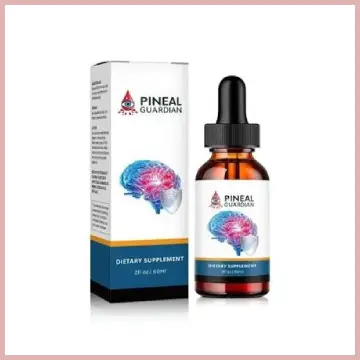
- Convenient Supplement Format
One obvious advantage is convenience. A person who prefers taking a supplement rather than changing several aspects of their daily routine may find the concept attractive.
The liquid version is also promoted as easy to use, which may appeal to people who dislike swallowing capsules.
From a practical standpoint, convenience can matter. If something is difficult to take consistently, even a well-designed supplement won’t fit comfortably into your routine.
- Focuses on Several Areas of Brain Health
The product doesn’t focus solely on memory. Its marketing talks about concentration, mental clarity, mood, sleep-related processes, and general cognitive support.
That broad approach may sound attractive to someone experiencing several mild concerns at once.
- Naturally Positioned Formula
The product is marketed around natural ingredients rather than pharmaceutical drugs. For some consumers, that positioning is appealing.
However, I would not automatically equate “natural” with “safe” or “effective.” Natural substances can still interact with medications, cause side effects, or be inappropriate for particular people.
- Raises Awareness About Brain Health
There is one indirect benefit I see in products like this: they can encourage people to think about cognitive health.
If buying a supplement motivates you to sleep better, eat more nutritious food, exercise, manage stress, and pay attention to persistent cognitive symptoms, those broader lifestyle changes may be considerably more meaningful than the supplement itself.
Cons Of Pineal Guardian
- Limited Product-Specific Clinical Evidence
This is my biggest concern.
I could not find strong, independent clinical evidence showing that Pineal Guardian itself improves memory or reverses cognitive problems.
That makes it difficult for me to justify the product’s more ambitious claims.
Research on supplements and cognition is complicated. A large systematic review found that evidence for many OTC supplements was insufficient or low-strength, and the researchers concluded that evidence was insufficient to recommend any OTC supplement for cognitive protection in adults with normal cognition or mild cognitive impairment.
- The Pineal Gland “Decalcification” Claim Needs Caution
The term “decalcify” sounds scientific, but I think consumers should be careful about what it implies.
Pineal gland calcification has been studied as a biological phenomenon, but that does not establish that taking a particular dietary supplement can safely reverse it or that doing so would automatically improve memory.
The marketing leap is therefore much larger than the evidence I could identify.
I would not buy a supplement specifically because it promises to “decalcify” my pineal gland.
- Online Reputation Concerns
Another issue is the quality and quantity of independent consumer feedback.
I found third-party warnings and complaint-oriented discussions surrounding the product and its sales ecosystem. Again, these sources do not establish that every complaint is accurate, but they are enough to make me more cautious.
For me, uncertainty is important when evaluating something that I am expected to ingest.
- Marketing Can Outpace Evidence
This is a common problem in the supplement industry.
A product can combine scientific terminology with natural ingredients and impressive descriptions without having the same level of evidence required for an approved medical treatment.
Whenever I see words suggesting that a product can “restore,” “activate,” “detoxify,” or “decalcify” an important part of the body, I want to know exactly what human clinical evidence supports that statement.
With Pineal Guardian, I wasn’t satisfied with what I found.
- Possible Value Concerns
Price becomes another issue when evidence is uncertain.
If I’m paying premium supplement prices, I want a clear reason why the product deserves that premium. If a formula hasn’t demonstrated meaningful benefits in controlled human research, I have a harder time justifying the expense.
Maintenance Tips For Pineal Guardian Supplement
- Prioritize Consistent Sleep
If you’re concerned about memory or mental clarity, I would start with sleep before spending money on an expensive supplement.
Your brain needs consistent sleep for normal cognitive function. Instead of relying entirely on a product marketed for mental clarity, establish a regular bedtime and wake time.
I would also reduce unnecessary screen exposure close to bedtime and keep the bedroom comfortable and dark.
This isn’t glamorous, but it is practical.
- Eat a Nutrient-Dense Diet
Your daily diet provides the foundation for brain health.
I would prioritize vegetables, fruits, legumes, whole grains, nuts, seeds, fish, and other nutrient-dense foods while limiting heavily processed foods.
Research examining nutrition and cognition has found that dietary patterns can matter, although the evidence surrounding individual supplements remains mixed.
That is why I prefer building a strong nutritional foundation instead of trying to compensate for an inconsistent diet with one bottle.
- Stay Physically Active
Movement is another habit I would put ahead of a questionable supplement.
You don’t need to become a professional athlete. Walking regularly, performing resistance exercises, cycling, swimming, or participating in another activity you enjoy can help you stay physically active.
The most useful routine is usually the one you can actually maintain.
- Keep Your Mind Active
I like the idea of keeping the brain engaged through activities that require actual thinking.
Reading, learning a skill, playing an instrument, solving puzzles, writing, practicing a language, or working on mentally demanding hobbies can give your brain regular stimulation.
I wouldn’t claim that these activities prevent every form of cognitive decline, but they are low-cost ways to remain mentally engaged.
- Manage Stress
Chronic stress can affect sleep, concentration, mood, and everyday mental performance.
If I notice that I’m forgetting things while simultaneously dealing with poor sleep and high stress, I wouldn’t immediately assume I need a brain supplement.
I’d first look at the bigger picture.
Simple strategies such as regular physical activity, time outdoors, breathing exercises, social interaction, and structured daily routines can be useful additions.
- Review Your Medications With a Professional
If memory problems appear suddenly or seem to be getting worse, I wouldn’t try to solve the issue with supplements alone.
Some medications and health conditions can influence cognition, concentration, sleep, or mood.
If you notice persistent or significant changes, talking with a qualified healthcare professional is a much more sensible step than experimenting with several supplements.
- Don’t Chase Every Brain-Health Trend
This is probably the most useful lesson I took from researching Pineal Guardian.
Every few months, a new supplement seems to promise sharper memory, better focus, improved sleep, or a “detoxed” brain.
I try to separate marketing enthusiasm from actual evidence.
A supplement doesn’t become scientifically established simply because its advertising uses scientific terminology.
Comparison Of Pineal Guardian With Other Memory Supplements
- Pineal Guardian vs. ThinkEase
ThinkEase provides an interesting comparison because there are more publicly visible customer reviews available for it.
Its own review page currently shows numerous customer testimonials describing perceived improvements in focus, energy, memory, and mental clarity, although some users say they are still evaluating the product or are uncertain about the benefits.
Independent Trustpilot reviews also show mixed experiences. Several reviewers report improvements in memory or cognition, while at least one recent reviewer reported no lasting improvement in brain fog and memory.
Trustpilot itself notes that reviews represent individual opinions and may not be representative.
So I would not interpret ThinkEase reviews as proof that it works.
What they do show is a broader body of publicly visible consumer feedback than I found for Pineal Guardian.
- Pineal Guardian vs. Prevagen
Prevagen has been much more extensively discussed in relation to memory claims, but that does not mean its effectiveness is settled.
ConsumerLab’s April 2026 review of Prevagen concluded that available evidence provides little support for a meaningful memory benefit and noted that the company’s marketing claims had been scaled back following FTC-related actions.
For me, this comparison reinforces an important point: even a supplement with substantial public visibility and research surrounding its active ingredient can still have disputed evidence.
Therefore, I wouldn’t use Prevagen as a reason to assume Pineal Guardian works.
- Pineal Guardian vs. Neuriva
Neuriva has also been included in scientific research involving memory-support supplements. A laboratory study comparing numerous commercial memory supplements found activity from several products against amyloid-beta fibrils and tau structures, including Neuriva and Prevagen.
But laboratory activity is not the same as demonstrating meaningful memory improvement in humans.
That’s a distinction I would keep firmly in mind when comparing products.
- Pineal Guardian vs. Basic Nutritional Support
Sometimes the simplest option is also the easiest to evaluate.
If someone has a genuine nutrient deficiency, correcting that deficiency can be relevant to overall health. But taking a complicated multi-ingredient supplement without knowing whether you need its ingredients is a different proposition.
A 2026 meta-analysis found that certain nutritional interventions were associated with improvements in some cognitive measures, while also showing that effects varied by intervention and outcome.
That makes individualized nutrition and professional guidance more appealing to me than blindly choosing a supplement based on aggressive marketing.
Also Read: Is Mindful Advantage Supplement Worth It?
Frequently Asked Questions (FAQ)
Some nutrients and supplements have shown benefits in particular studies or populations, but there is no single OTC memory supplement with strong evidence of reliably improving memory for everyone.
There is not convincing human clinical evidence establishing that boron supplementation safely decalcifies the pineal gland or improves memory by doing so.
Reviews are mixed. Many customers report better focus, energy, memory, or mental clarity, while others remain uncertain or report little improvement. Independent reviews also include both positive and negative experiences.
The evidence is mixed and does not justify treating either product as a guaranteed solution for memory problems. Prevagen has particularly limited evidence for meaningful memory improvement according to a 2026 ConsumerLab assessment, while Neuriva has been examined in laboratory research that does not by itself establish real-world cognitive benefits.
Final Verdict
After reviewing Pineal Guardian’s marketing claims, the available product information, broader research on cognitive supplements, and the concerns surrounding its online reputation, I would not buy Pineal Guardian.
The biggest problem for me isn’t that every ingredient must be ineffective. It’s that the product’s larger promises appear stronger than the product-specific human evidence I could verify.
The claims surrounding pineal gland “decalcification” particularly make me cautious. I would rather spend my money on proven health priorities such as nutritious food, regular physical activity, adequate sleep, and appropriate medical evaluation when memory changes persist.
If you’re considering Pineal Guardian, don’t let an impressive supplement description make the decision for you.
Look at the evidence, examine the ingredient amounts, consider independent reviews, and ask whether the product has actually been tested in humans for the specific benefits being advertised.
For me, there simply isn’t enough reliable evidence to justify recommending it.
Recent Posts
● Interactive 5-Zone Interior & Exterior Paint Blueprint Paint Coverage Calculator: Gallons, Primer, Square Footage & Cost Tap any architectural surface zone on the blueprint...
If you want smooth, shiny hair without spending a fortune on a premium styling tool, the Ella Bella hair dryer may be worth considering.In these Ella Bella hair dryer reviews, I’ll look...