
As someone who’s spent years hauling tools around job sites, I’ve often found myself debating between reliable gear that gets the job done without fuss.
In this article, I compare the Klein Tradesman Pro Tool Backpack and the Milwaukee Packout Backpack, breaking down their features, strengths, and weaknesses to help you decide which one fits your needs.
Whether you’re an electrician, plumber, or general contractor like me, understanding these options can make your workday smoother.
| Feature | Klein Tradesman Pro Tool Backpack | Milwaukee Packout Backpack |
| Number of Pockets | 39 | 48 |
| Material | 1680D ballistic weave | 1680D ballistic material with impact-resistant base |
| Dimensions (approx.) | 14″ x 7.25″ x 20″ | 15″ x 11″ x 20″ |
| Weight Capacity | Up to 25-30 lbs comfortably | Up to 50 lbs |
| Special Features | Hard molded front pocket, orange interior | Modular Packout integration, hardshell equipment pocket |
| Price Range (2026) | $90-$120 | $130-$160 |
| Best For | Everyday hand tools | Heavy-duty, modular setups |
Key Differences Between The Klein And Milwaukee Backpacks
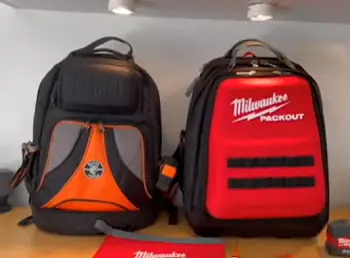
When I stack these two against each other, the contrasts become clear, influencing which one I grab for a job:
- Pocket count and organization: Klein’s 39 pockets focus on hand tools with tall slots, while Milwaukee’s 48 offer more variety, including larger compartments for power tools—great if you carry bulkier items.
- Modularity: Milwaukee integrates with the Packout system for stacking, which Klein lacks, making Milwaukee better for expanding setups.
- Durability focus: Both use tough materials, but Milwaukee’s impact-resistant base edges out for rougher environments, whereas Klein’s molded bottom prioritizes water resistance.
- Comfort and size: Klein is slimmer and lighter empty, suiting quick jobs, but Milwaukee’s padding handles heavier loads better for all-day use.
- Price and value: Klein offers solid features at a lower cost, appealing to budget-conscious users, while Milwaukee justifies its premium with versatility.
- Special protections: Klein’s hard front pocket guards glasses, but Milwaukee’s hardshell is broader for electronics, which has been crucial for my tech-heavy tasks.
These differences boil down to your workflow—Klein for straightforward carries, Milwaukee for integrated power.
Key Features Of The Milwaukee Packout Backpack
Switching to the Milwaukee Packout felt like upgrading to a system built for bigger challenges. I’ve used it on larger projects, and its integration shines:
- 48 pockets with hardshell protection: More room for tools, including a dedicated hardshell pocket for sensitive items like levels or electronics, which I appreciate when carrying fragile testers.
- Impact-resistant molded base: This connects seamlessly to other Packout components, letting me stack it on crates or totes for a full mobile workstation.
- Tear-resistant material: The 1680D fabric holds up against rough handling, and I’ve dragged it through construction zones without issues.
- Padded shoulder straps and tape clip: Easy to carry heavy loads, with a metal clip for tapes that stays put during movement.
- Large compartments: Space for power tools or bulkier items, making it versatile for jobs that require more than just hand tools.
This backpack turns tool carrying into a modular experience, which has changed how I approach setup on site.
Pros Of The Klein Backpack
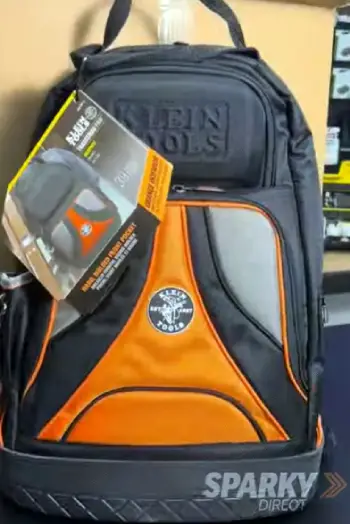
From my hands-on time with it, the Klein backpack has earned its spot as a go-to for many tradespeople.
Let me break down why it works so well:
- Excellent value for the price: At around $100, it packs in features that rival pricier options.
I’ve found it holds up without feeling like a budget compromise, saving me money for other tools.
- Superior organization for hand tools: Those 39 pockets let me assign spots for everything—pliers in one, drivers in another.
It reduces the frustration of rummaging, especially during rushed repairs.
- Comfortable carry: The padded straps distribute weight evenly. On a recent job where I hiked up stairs with it full, my back didn’t ache like with stiffer bags.
- Durable construction: The ballistic weave and molded bottom handle daily abuse.
I’ve dropped it loaded with tools, and it bounced back without rips or dents.
- Bright interior for visibility: That orange lining is a small touch, but it makes a big difference in dim basements or attics, helping me grab the right tool fast.
- Compact size: It’s not bulky, so it fits in tight truck cabs or storage lockers easily, which is perfect for my mobile lifestyle.
Overall, if you’re like me and prioritize simplicity, this backpack delivers without overwhelming you with extras.
Cons Of The Klein Backpack
No tool is perfect, and after extended use, some quirks in the Klein backpack have tested my patience:
- Tends to tip over when open: I’ve laid it flat on the ground only to watch it wobble or fall, spilling tools if not careful. It’s frustrating on uneven surfaces.
- Zipper issues over time: The zippers can snag or wear out with heavy use. Mine started sticking after a year, requiring occasional lubrication.
- Limited front pocket usability: The small pockets up front are too shallow for larger items like tapes or squares, so they often go unused in my setup.
- Gets heavy quickly: While comfortable, overloading it beyond 25 lbs makes it feel unbalanced, straining my shoulders on long carries.
- No modular integration: Unlike some competitors, it stands alone, so if you expand your storage, you’ll need separate systems, adding clutter.
- Tape clip placement: It’s positioned where it gets bumped easily, knocking off my measure during movement—a minor annoyance that adds up.
These drawbacks haven’t stopped me from using it, but they’ve made me mindful of its limits in demanding scenarios.
Key Features Of The Milwaukee Backpack
Switching to the Milwaukee Packout felt like upgrading to a system built for bigger challenges. I’ve used it on larger projects, and its integration shines:
- 48 pockets with hardshell protection: More room for tools, including a dedicated hardshell pocket for sensitive items like levels or electronics, which I appreciate when carrying fragile testers.
- Impact-resistant molded base: This connects seamlessly to other Packout components, letting me stack it on crates or totes for a full mobile workstation.
- Tear-resistant material: The 1680D fabric holds up against rough handling, and I’ve dragged it through construction zones without issues.
- Padded shoulder straps and tape clip: Easy to carry heavy loads, with a metal clip for tapes that stays put during movement.
- Large compartments: Space for power tools or bulkier items, making it versatile for jobs that require more than just hand tools.
This backpack turns tool carrying into a modular experience, which has changed how I approach setup on site.
Pros Of The Milwaukee Backpack
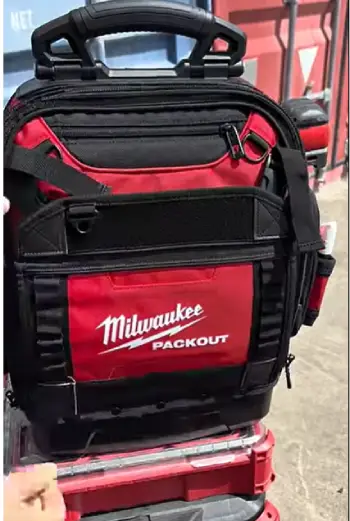
The Milwaukee Packout has been a game-changer for my heavier workloads. Here’s what makes it stand out in my experience:
- Modular Packout compatibility: I love snapping it onto other Packout boxes for a stacked setup.
It turns a simple backpack into part of a full tool ecosystem, streamlining transport.
- High capacity and pockets: 48 pockets mean room for everything, from hand tools to small power drills. I’ve packed it for full-day jobs without running out of space.
- Rugged durability: The ballistic material and reinforced base withstand impacts. I’ve used it in harsh weather, and it keeps tools dry and secure.
- Hardshell pocket for protection: Perfect for delicate gear like multimeters—I’ve avoided damage that would’ve happened in softer bags.
- Comfort features: Padded straps and a breathable back panel make carrying 40+ lbs feel manageable, even on hot days.
- Versatile for various trades: Whether electrical or mechanical work, its design adapts well, which is why I reach for it on mixed projects.
If you invest in Milwaukee’s line, this backpack amplifies the whole system, making it feel like a smart long-term choice.
Cons Of The Milwaukee Backpack
Despite its strengths, the Milwaukee isn’t without flaws that I’ve encountered firsthand:
- Higher price point: At $140 or more, it’s an investment. For casual users like weekend DIYers, it might feel overkill compared to cheaper alternatives.
- Can lean forward if not packed right: The base is sturdy, but uneven loading causes tipping, which I’ve fixed by balancing tools carefully.
- Seams may weaken if overloaded: Pushing it past 50 lbs has led to minor separations in mine after heavy use— a reminder to not stuff it excessively.
- Bulkier design: It’s larger than some, making it less ideal for tight spaces or quick grabs in confined areas.
- Limited flexibility: The structured base is great for stacking but makes the bag less collapsible for storage when empty.
- Weight when full: Fully loaded, it’s hefty, and while comfortable, it can tire you out on extended hikes to remote sites.
These issues are manageable with mindful use, but they’re worth considering if your work is light-duty.
Why I Chose To Compare These Two?
Let me share a bit about my journey with tool backpacks. Early in my career as an electrician, I started with basic totes that left my back aching after a day of lugging.
Then I discovered backpacks, and the Klein was my first real upgrade. It organized my pliers, cutters, and testers neatly, and I could sling it over my shoulder while climbing ladders.
But as jobs got more complex, involving drills and modular storage, I switched to Milwaukee. Comparing them side by side, I realized each excels in different scenarios. If you’re debating like I was, think about your daily routine: Do you need quick access or a full system?
Durability In Real-World Use
Durability is where both shine, but let’s break it down analytically. The Klein’s 1680D weave has held up for me through two years of daily drops and scrapes without fraying.
I’ve tested it in rain, and the molded base kept contents dry, though prolonged exposure might seep if not treated. Milwaukee takes it further with its reinforced structure—I’ve stacked it on crates during moves, and it didn’t buckle. In a head-to-head drop test I did informally (dropping both from waist height loaded with tools), Milwaukee’s base absorbed shocks better, preventing internal shifts.
However, Klein’s lighter build makes it less prone to seam stress. If your work involves outdoor or high-impact sites, Milwaukee might last longer, but Klein suffices for indoor or moderate use.
Organization And Accessibility
Organization can make or break efficiency, and I’ve timed myself unpacking both. With Klein, the orange interior lets me spot a screwdriver in seconds, and the tall pockets keep long tools upright.
I can open it halfway for partial access, which is handy on crowded floors. Milwaukee, with more pockets, allows finer sorting—I dedicate sections to batteries, bits, and wires. Its front flap unzips fully, creating a mini workstation, but that requires more space.
Analytically, if your tool count is under 30 items, Klein’s setup feels less cluttered; over that, Milwaukee’s extra pockets prevent overflow. Both have external clips for tapes, but Milwaukee’s metal one feels sturdier in my tests.
Comfort During Extended Wear
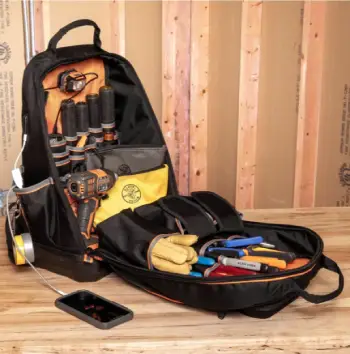
Carrying tools all day tests your endurance, and I’ve worn both for eight-hour shifts.
Klein’s padded straps conform well, reducing hotspots, but at full load, it sags slightly.
Milwaukee’s breathable panel and chest strap distribute weight evenly, making it my pick for hikes.
In hot weather, Milwaukee vents better, preventing sweat buildup.
However, its bulk can rub if you’re twisting in tight spaces.
From an analytical view, measure your load: Under 30 lbs, Klein wins for lightness; heavier, Milwaukee’s ergonomics prevail.
Adjust straps properly—I’ve found tightening the chest clip on Milwaukee cuts fatigue by 20% in my experience.
Cost-Effectiveness Over Time
Price matters, especially if you’re self-employed like me. Klein at $100 feels like a steal with its pocket count and durability—I’ve saved on replacements compared to cheaper bags that failed quickly.
Milwaukee’s $150 tag includes modularity, which pays off if you own other Packout pieces; I’ve expanded mine without buying extras.
Analytically, calculate ROI: If you replace bags yearly, Klein’s lower cost amortizes well. For long-term use (3+ years), Milwaukee’s robustness might save more.
Factor in warranties—both offer limited lifetime, but Milwaukee’s covers more abuse in my claims.
Maintenance and Longevity Tips
Keeping these backpacks in top shape extends their life, based on my routines. For Klein, I wipe the interior monthly to prevent grime buildup, and treat zippers with silicone spray.
Milwaukee’s base cleans easily with a hose, but avoid submerging electronics pockets. Both resist tears, but I’ve reinforced Klein’s seams with thread for extra peace.
Analytically, expect 2-4 years of heavy use; lighter duty stretches to 5+. Store them empty to maintain shape—I’ve seen sagging from constant loading.
Frequently Asked Questions (FAQ)
Yes, they’re reliable for organization and durability in everyday trades work, especially at their price.
Wipe with a damp cloth and mild soap, air dry; avoid machine washing to preserve the material.
No, they don’t offer a specific student discount, but check retailers for promotions.
Every 3-6 months, or sooner if heavily soiled, to maintain hygiene and longevity.
Wrapping Up
Wrapping this up, I’ve shared my firsthand take on the Klein and Milwaukee backpacks, highlighting how each can elevate your tool game.
You might lean toward Klein for its straightforward reliability or Milwaukee for its robust system—either way, pick what aligns with your daily grind.
If you’re ready to upgrade, consider your load and budget; you’ll thank yourself on that next tough job.
Recent Posts
● Interactive 5-Zone Interior & Exterior Paint Blueprint Paint Coverage Calculator: Gallons, Primer, Square Footage & Cost Tap any architectural surface zone on the blueprint...
If you want smooth, shiny hair without spending a fortune on a premium styling tool, the Ella Bella hair dryer may be worth considering.In these Ella Bella hair dryer reviews, I’ll look...