
If you want an insulation solution that can seal gaps, reduce unwanted drafts, and improve the comfort of your home, I think Kraken spray foam is worth considering.
I like spray foam because it can reach awkward spaces where traditional insulation can be difficult to install.
After looking at its application, performance, convenience, and limitations, I can see why homeowners and DIY users may choose it for smaller insulation and sealing projects.
If you need a practical foam product for sealing cracks, cavities, and air leaks, I’d recommend giving Kraken spray foam serious consideration before making your purchase.
My First Experience With Kraken Spray Foam
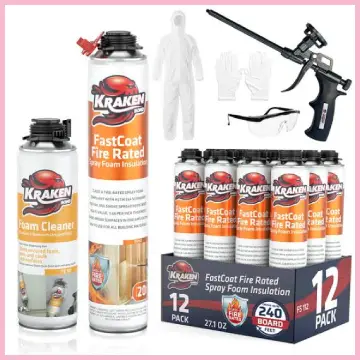
When I first considered Kraken spray foam, my main goal was simple: I wanted an insulation and sealing product that could handle small gaps without requiring an elaborate installation process.
I had several areas where ordinary caulk wasn’t quite enough, particularly around openings, joints, and spaces where air could potentially move through.
What immediately stood out to me was the expanding nature of the foam. I could apply a relatively small amount and allow it to expand into the surrounding space.
That made the product useful for filling irregular gaps where getting a conventional insulation material into every corner would have been difficult.
I also appreciated the versatility. I could see potential uses around pipes, framing gaps, utility penetrations, and other areas where unwanted air movement can occur. For me, that versatility is one of the strongest reasons to consider spray foam in the first place.
The application did require some care. I quickly realized that applying too much foam at once isn’t necessarily better. Since expanding foam increases in volume, a heavy application can create unnecessary mess and require additional trimming once cured. I found that controlled application produced a much cleaner result.
Another thing I paid attention to was curing. The surface can become firm before the entire application has completely cured, so I wouldn’t rush to trim or disturb it. Giving the foam enough time to set properly makes the finished job look much cleaner.
Overall, my experience made me view Kraken spray foam as a practical option for targeted sealing and insulation work.
I wouldn’t treat it as a universal replacement for every type of insulation, but for gaps, cracks, cavities, and smaller projects, I found the concept very useful.
Pros Of Kraken Spray Foam
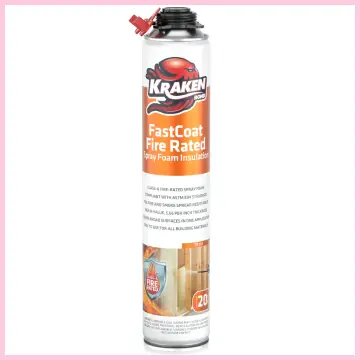
- Effective Gap Filling
The first advantage I noticed is its ability to fill gaps efficiently. When you have an irregular opening, stuffing another material into it can leave small spaces around the edges. Expanding foam can occupy those spaces as it grows.
For me, this makes it especially useful around penetrations and difficult-to-reach openings.
- Helps Reduce Air Leakage
Air leakage is one of the most frustrating issues in a home. Even when walls and ceilings have insulation, gaps can allow outside air to enter or conditioned air to escape.
A properly applied expanding foam can seal many of these smaller openings. That can contribute to a more comfortable indoor environment and potentially reduce unnecessary heating or cooling demand.
- Convenient for Smaller Projects
I wouldn’t want to use an unnecessarily complicated installation system for a tiny gap. Kraken spray foam can make smaller jobs much more manageable.
If you have several modest openings to seal, the ability to apply foam directly where needed can save time and effort.
- Expands Into Irregular Spaces
This is probably one of my favorite characteristics of expanding foam. Not every gap is perfectly shaped.
Foam expands into spaces that can be difficult to fill with rigid materials. That makes it useful around uneven surfaces, joints, corners, and penetrations.
- Useful for DIY Applications
If you’re comfortable with basic home improvement work, spray foam can be relatively straightforward to use. You don’t necessarily need a large collection of tools for a small sealing job.
That said, I’d still recommend reading the product instructions carefully and preparing the area before applying anything.
- Creates a More Finished Seal
When trimmed properly after curing, expanding foam can leave a neat filled surface that can later be covered or finished depending on the application.
I like this because the result doesn’t have to remain visibly unfinished.
- Versatile Around the Home
I can see many situations where Kraken spray foam could be useful. Small openings around utility lines, gaps near framing, cracks, and other air-leakage points are common candidates.
The versatility makes it more appealing than a product designed for only one narrow purpose.
- Can Improve Overall Comfort
I wouldn’t promise dramatic changes from sealing a single small gap. But when several air leaks are addressed, the combined effect can make a room feel more comfortable.
For me, that’s the bigger picture: spray foam is most useful when it becomes part of a broader air-sealing strategy.
Cons Of Kraken Spray Foam
- Expansion Requires Control
The same expansion that makes the foam useful can also create problems if you apply too much.
I learned that restraint matters. If you overfill a cavity, the foam can expand beyond the intended area, leaving you with extra trimming and cleanup.
- Requires Proper Preparation
You can’t simply spray and walk away.
The surface should be reasonably clean, dry, and suitable for the application. Dust, moisture, grease, or other contaminants may affect the finished result.
- Can Become Messy
Spray foam is sticky during application, and accidental overspray can create a frustrating cleanup situation.
I would always protect nearby surfaces and wear appropriate protective equipment rather than trying to fix a mess afterward.
- Not Ideal for Every Insulation Job
I wouldn’t choose a small expanding foam product for every insulation requirement. Large walls, attics, and extensive building-envelope projects may require different insulation systems and professional installation.
Knowing the intended application is important.
- Trimming May Be Necessary
Once the foam has cured sufficiently, excess material may need to be trimmed. That’s not a major issue for me, but it adds another step to the project.
- Application Technique Matters
The final result depends heavily on how the product is applied. Uneven application, overfilling, or poor surface preparation can reduce the quality of the finished seal.
So while the product can be convenient, technique still matters.
Maintenance For Kraken Spray Foam
- Prepare the Surface First
Before I apply spray foam, I make sure the target area is clean and free from loose debris. A clean surface gives the foam a better opportunity to adhere properly.
I don’t like rushing this stage because five minutes of preparation can save much more time later.
- Start With a Small Amount
My biggest practical tip is to start conservatively.
Because the foam expands, you usually don’t need to fill the entire cavity immediately. Applying a smaller amount allows the material to expand naturally without creating excessive overflow.
If more is needed, you can add another application when appropriate.
- Protect Surrounding Areas
I always think about where the foam could accidentally land before starting.
Cover nearby surfaces, flooring, trim, fixtures, and anything else that you don’t want covered in sticky foam. Once the material cures, removing it can become much harder.
- Wear Appropriate Protection
I wouldn’t treat spray foam like ordinary household caulk. Follow the manufacturer’s safety instructions and use appropriate gloves, eye protection, and ventilation.
If you’re working in an enclosed space, adequate ventilation is particularly important.
- Give It Enough Time to Cure
One of the easiest mistakes is disturbing the foam too early.
Even if the outside feels firm, the material underneath may still be curing. I prefer to give it the recommended curing time before trimming, painting, covering, or putting pressure on the area.
- Trim Carefully
Once cured, excess foam can generally be trimmed where appropriate.
I recommend using a sharp tool and taking small cuts rather than trying to remove a large section at once. That gives you more control and helps create a cleaner finish.
- Inspect the Finished Seal
After the foam has cured, I inspect the entire area.
I’m looking for visible gaps, loose edges, incomplete coverage, or places where the foam didn’t expand as expected. A quick inspection can reveal whether another application is necessary.
- Don’t Overload Large Cavities
More foam isn’t automatically better.
For larger spaces, I’d rather use the insulation method appropriate for that particular cavity than attempt to fill everything with expanding foam in one application.
- Store the Product Properly
If the container is reusable according to its instructions, follow the recommended storage and nozzle-cleaning procedures. Proper storage can help preserve usability and prevent unnecessary product waste.
- Check Sealed Areas Periodically
Once the project is complete, I like to inspect repaired areas occasionally, especially when they’re exposed to movement, temperature changes, or moisture.
If you notice cracking, separation, or deterioration, investigate the cause rather than simply adding another layer over the problem.
Comparison Of With Other Spray Foam Brands
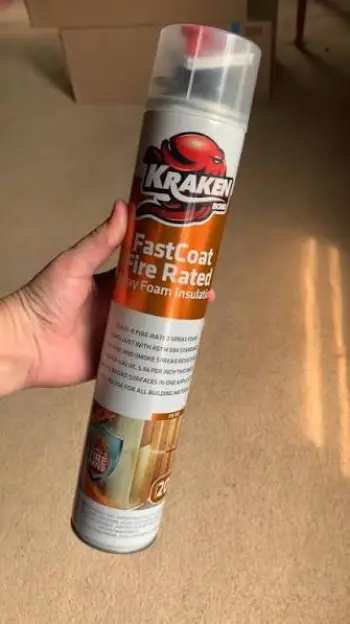
- Kraken Spray Foam vs. Great Stuff
Great Stuff is another widely recognized expanding foam option. Both products are associated with gap filling and air sealing, so the right choice depends heavily on the particular formulation and intended application.
When comparing them, I’d pay attention to the exact product type, expansion characteristics, curing requirements, and recommended uses rather than judging the brands solely by name.
- Kraken Spray Foam vs. Loctite TITE FOAM
Loctite TITE FOAM is another option in the expanding foam category. Like Kraken, it can be considered for sealing and filling applications.
For me, the key comparison points would be application control, expansion behavior, adhesion, curing characteristics, and the specific job I’m trying to complete.
- Kraken Spray Foam vs. Handi-Foam
Handi-Foam products are also available for various insulation and sealing applications. The important thing is that spray foam products can differ considerably even when they look similar.
I’d compare the exact specifications and intended use before choosing one for a particular project.
What I Would Compare Before Buying?
Rather than choosing based only on price, I’d consider coverage, expansion rate, curing time, application method, temperature requirements, and the type of gap I’m trying to seal.
That approach gives me a more realistic idea of which product fits the project.
Is Kraken Spray Foam Worth Considering?
After looking at the product from a practical homeowner perspective, I think Kraken spray foam makes the most sense for targeted sealing and smaller insulation-related jobs.
Its biggest strengths are convenience, expansion, versatility, and its ability to fill irregular spaces. Its main limitations are the need for careful application, curing time, potential mess, and the fact that it isn’t a universal solution for large-scale insulation projects.
If you understand those differences, you can approach the product with realistic expectations.
I wouldn’t buy it simply because it’s spray foam. I’d buy it when I have a specific job that matches what expanding foam is designed to do.
Frequently Asked Questions (FAQ)
There isn’t one universal best brand; the right choice depends on the application, formulation, and required insulation performance.
The R-value depends on the specific Kraken foam formulation and application thickness, so check the product’s packaging for the applicable rating.
The surface may become firm relatively quickly, but complete curing can take longer depending on thickness, temperature, humidity, and ventilation.
The best option depends on whether you need low expansion, high expansion, insulation, air sealing, or another specific application.
Wrapping Up
After considering its application, versatility, strengths, and limitations, I think Kraken spray foam is worth buying if you need a practical solution for targeted gap filling and air sealing.
I especially like it for smaller projects where conventional insulation materials may be awkward to install. Just remember that careful application and proper curing are essential for good results.
If your project matches its intended use, I’d recommend considering Kraken spray foam as a convenient addition to your home-repair toolkit.
Recent Posts
I spent months comparing budget options against established names after my last set of tires wore out sooner than expected.My goal here is to share what I learned from putting Dextero and...
AquaTru Carafe Vs. Classic: Which Is Actually Fits Your Kitchen?
I decided to write this comparison after months of testing both the AquaTru Carafe and the Classic in my own kitchen. Tracking covered daily use.Taste stayed consistent. Refill frequency...