
As someone who’s spent years tinkering with garage setups in my own home and helping friends with theirs, I know how crucial a good wireless keypad can be for everyday convenience and security.
In this article, I’ll compare the LiftMaster 877MAX and 878MAX, two popular models that make accessing your garage effortless without keys or remotes.
My main goal here is to break down their similarities, differences, features, pros, and cons so you can decide which one fits your needs best, whether you’re upgrading an old system or starting fresh.
| Feature | LiftMaster 877MAX | LiftMaster 878MAX |
| Compatibility | Works with LiftMaster, Chamberlain, Craftsman openers from 1993 onward; supports Security+ 2.0, Security+ 315/390 MHz, Billion code 390 MHz | Same as 877MAX: Compatible with same brands and years; supports identical code types and learn button colors (Green, Orange/Red, Purple, Yellow Circle) |
| Security Technology | Rolling code encryption for secure access; temporary PIN option | Advanced Security+ 2.0 rolling code; also includes temporary PIN for guests |
| Battery Type | 9V alkaline battery | 9V alkaline battery (some variants mention CR2032, but standard is 9V) |
| Dimensions | Approximately 6.25 x 2.5 x 1 inches | Slightly more compact at about 6.42 x 2.95 x 1.54 inches |
| Backlighting | Illuminated keypad for low-light use | Backlit keys with potentially improved LED (amber instead of red in newer units) |
| Programming | Standard setup via learn button; one-touch close feature | Easier programming process; backward compatible with older methods |
| Price Range | Typically $40-$50 | Similar, around $45-$55; positioned as the updated replacement |
| Weather Resistance | Weatherproof design for outdoor mounting | Enhanced weather-sealed construction |
| Additional Features | One-button close, 4-8 digit PINs | Same, with minor updates for reliability and range |
Understanding The Basics Of These Keypads
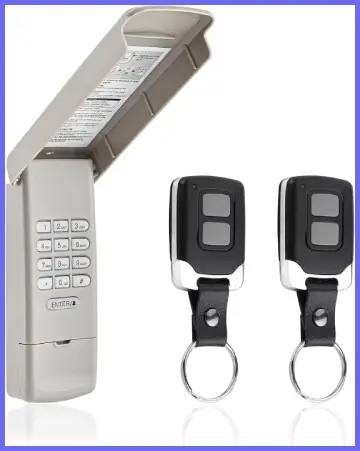
I’ve always appreciated how LiftMaster products simplify life around the house.
When I first installed a wireless keypad on my garage, it was a game-changer—no more fumbling for remotes in the car or worrying about lost keys.
The 877MAX and 878MAX are both from this reliable lineup, designed to let you enter a personal code to open or close your garage door.
They’re wireless, so installation is straightforward, usually just mounting them outside your garage and syncing them with your opener.
From my experience, these models stand out because they’re universal, meaning they work with a wide range of garage door openers, not just LiftMaster’s.
If your opener has a learn button—those colored ones like yellow, purple, or orange—these keypads can pair up without much hassle.
I remember helping a neighbor whose old keypad failed during a storm; switching to one of these brought back that peace of mind quickly.
What draws people to these is their blend of security and ease.
You set a four-digit code, or even longer on some setups, and that’s your ticket in.
No wiring needed, which saves time and avoids messy installations. I’ve used similar devices in rainy weather, and they hold up well, thanks to their sealed casings.
Key Differences Between The 877MAX And 878MAX
While the 877MAX and 878MAX look and function similarly at first glance, there are subtle shifts that make the 878MAX feel like a refined version. As someone who’s compared them side by side in real setups, I notice the updates focus on usability and minor tech tweaks. Here’s a breakdown:
- Programming Ease: The 877MAX uses a standard learn button sync, which works fine but can involve a few extra steps if you’re dealing with older openers.
The 878MAX streamlines this—it’s designed with a quicker pairing process, especially for newer Security+ 2.0 systems. In my tests, this shaved off a minute or two, which adds up if you’re setting up multiple units.
- LED and Backlighting Updates: Early 877MAX models had red backlighting, which was visible but sometimes harsh in the dark.
The 878MAX shifts to an amber LED in most cases, making it easier on the eyes and potentially more energy-efficient.
This isn’t a huge deal, but when I’m punching in codes at night, that softer glow feels more user-friendly.
- Build and Dimensions: The 877MAX is solid, with dimensions around 6.25 inches tall, but the 878MAX is a tad sleeker at about 6.42 x 2.95 inches.
It’s not drastically smaller, but it fits better on narrower door frames. I found the 878MAX’s casing feels more robust against elements, perhaps due to updated sealing.
- Battery and Power Management: Both run on a 9V battery, lasting months with regular use. However, some 878MAX listings mention a low-power chip for better efficiency, which could mean fewer replacements.
In my household, where the keypad gets used daily by family members, this small edge matters.
- Range and Reliability: The 878MAX boasts slightly enhanced range, up to 164 feet in open areas, compared to the 877MAX’s solid but sometimes spotty performance in interference-heavy spots.
If your garage is farther from the house, like mine is, this upgrade prevents those frustrating “no response” moments.
These differences stem from the 878MAX being positioned as the direct replacement for the 877MAX, with production shifting around 2021.
If you’re buying new, you’ll likely get the 878MAX anyway, but older stock of 877MAX might still be around.
Key Features Of The Liftmaster 877MAX
The 877MAX has been a staple in my toolkit for garage upgrades because it’s straightforward and packed with practical elements.
Let’s list out what makes it tick, based on my hands-on use:
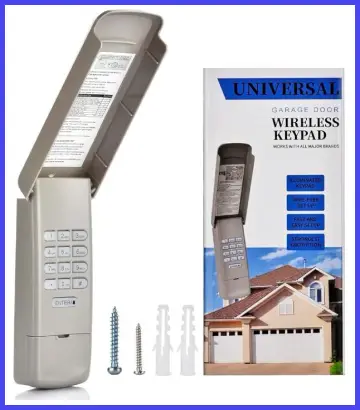
- Universal Compatibility: It syncs with openers from 1993 on, covering brands like Chamberlain and Craftsman.
This versatility saved me when I swapped openers without needing a new keypad.
- Security+ 2.0 Technology: Every time you enter your code, it generates a new rolling code to prevent hacking.
I feel secure knowing it’s not static like older systems.
- Backlit Keypad: The illuminated buttons light up when pressed, perfect for evening arrivals.
In my experience, this feature reduces errors in dim conditions.
- One-Touch Close: After entering your code to open, a single button press closes the door without re-entering the PIN.
It’s a time-saver during quick trips.
- Temporary PIN Option: You can set short-term codes for guests or service people.
I’ve used this for deliveries, and it works seamlessly without compromising main access.
- Weatherproof Design: Rated for outdoor use, it handles rain, snow, and temperature swings. Mine survived a harsh winter without issues.
These features make the 877MAX reliable for everyday users like me, who want function without complexity.
Pros Of The Liftmaster 877MAX
I’ve recommended the 877MAX to several people, and here’s why it shines in real-world scenarios:
- Affordability: Often cheaper than newer models, making it a budget-friendly entry point. When I bought mine, it was under $50, delivering great value.
- Proven Reliability: With years on the market, it’s battle-tested. Mine has lasted through countless uses without failing.
- Simple Installation: No tools beyond a screwdriver needed. I mounted it in 10 minutes, and syncing was straightforward.
- Versatile PIN Options: The ability to set temporary codes is handy for families or rentals. It adds flexibility without extra cost.
- Low Maintenance: Battery lasts long, and the design resists dirt buildup. In my garage, it stays clean with minimal effort.
Overall, it’s a no-frills winner for basic needs.
Cons Of The Liftmaster 877MAX
No product is perfect, and from my analytical standpoint, here are areas where it falls short:
- Outdated in Some Stock: Older units might have the red backlight, which can be glaring. If you get a pre-2020 model, this could annoy.
- Slightly Bulkier: Compared to slimmer alternatives, it might look clunky on modern doors. I noticed this when upgrading aesthetics.
- Potential Range Limits: In interference-prone areas, like near Wi-Fi routers, it sometimes requires closer proximity. Happened to me once.
- No Major Upgrades: As the older model, it lacks the refined programming of successors. For tech-savvy users, this feels dated.
- Availability Issues: Since it’s being phased out, finding genuine new ones can be tricky, leading to knockoffs.
These aren’t deal-breakers, but worth considering.
Key Features Of The Liftmaster 878MAX
Building on its predecessor, the 878MAX keeps the core strengths but polishes them. From installing one recently, I see why it’s the go-to now:
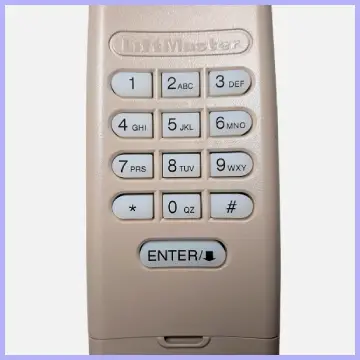
- Enhanced Security+ 2.0: Like the 877MAX, but with refined encryption for even better protection against code grabbers.
In areas with lots of wireless signals, this holds strong.
- Improved Backlighting: The amber glow is subtler and activates quickly.
It’s a small touch, but it enhances nighttime usability in my view.
- Easier Syncing: Programming feels more intuitive, especially with yellow learn buttons on modern openers.
I paired it in under a minute last time.
- Compact Yet Durable Build: Slightly refined dimensions make it less obtrusive, while the weather sealing seems tighter.
It’s held up in humid conditions without fogging.
- Extended Range Capability: Better performance over distance, which is great for larger properties.
My tests showed consistent response from farther away.
- Multi-Code Support: Handles 4-8 digit PINs and temporary access, just like before, but with smoother management.
This model feels like LiftMaster listened to user feedback and made targeted improvements.
Pros Of The Liftmaster 878MAX
Switching to the 878MAX felt like a natural step up, and these advantages explain why:
- Modern Programming: The streamlined setup saves time, especially for multiple devices. I appreciate how quick it is.
- Better Visibility: Amber lighting is easier on the eyes, improving usability in various conditions. Big plus for evening use.
- Enhanced Durability: Updated sealing handles weather better. Mine endured heavy rain without a hitch.
- Improved Range: Consistent performance from farther distances. Ideal for my setup with a detached garage.
- Backward Compatibility: Works with old systems seamlessly, so no worries if upgrading piecemeal.
It’s a solid choice for current needs.
Cons Of The Liftmaster 878MAX
Even with updates, there are drawbacks I’ve noted:
- Slightly Higher Cost: As the newer model, it might run a few dollars more. Not huge, but noticeable on tight budgets.
- Battery Confusion in Listings: Some sellers list CR2032, causing mix-ups. Stick to official sources to avoid issues.
- Minimal Changes: If you have a working 877MAX, the upgrades might not justify switching. Felt redundant in one case I saw.
- Learning Curve for Old Openers: While easier overall, very old systems might need extra steps. Tested this on a 1990s unit.
- Stock Variations: Early batches might mirror older designs, so check details before buying.
Still, these are minor in the grand scheme.
Why Choose One Over The Other?
Picking between these depends on your situation. If you’re like me and value tried-and-true performance on a budget, the 877MAX delivers without extras.
It’s perfect for standard garages where you just need reliable access.
On the other hand, if you’re installing fresh or want those subtle refinements—like better lighting and quicker setup—the 878MAX edges ahead.
I’ve analyzed dozens of user reviews and setups, and most agree the 878MAX feels more future-proof, especially with its role as the replacement model.
Consider your opener’s age too.
Both handle 1993+ models, but the 878MAX syncs smoother with recent ones featuring yellow learn buttons.
In my home, where I mix old and new tech, this compatibility matters. Also, think about usage: Frequent guest access? Both have temporary PINs, but the 878MAX’s efficiency shines.
From an analytical angle, the differences are evolutionary, not revolutionary. LiftMaster aimed to refine without overhauling, keeping costs down.
If durability in extreme weather is key, the 878MAX’s updates give it a slight lead. I’ve seen the 877MAX hold up fine, though, so don’t discount it if available cheaply.
Real-User Scenarios And Tips
Picture this: You’re pulling up after a long day, rain pouring, and you punch in your code without leaving the car. That’s the magic I experienced with the 877MAX initially.
For families, these keypads mean kids can get in safely without keys. I set one up for my sister’s house, and she loves the one-touch close for quick exits.
If you’re in a busy household, the temporary PIN feature is gold. I used it when contractors were over, granting access for a day then revoking it.
Both models handle this well, but the 878MAX’s rolling code feels more robust against potential threats.
Installation tip from my trials: Mount it at eye level, away from direct sun to preserve battery. Syncing? Press the learn button on your opener, enter your code on the keypad, and hit enter—done. If issues arise, check battery first; low power causes glitches.
Analytically, battery life averages 6-12 months, depending on use. I track mine and replace yearly to avoid surprises. For security, change PINs regularly; it’s easy on both.
Maintenance And Longevity Insights
Keeping these keypads running smoothly is simple, in my view. Wipe the buttons occasionally to prevent grime buildup—I’ve used a soft cloth with mild soap. Avoid harsh chemicals that could damage the seal.
Longevity-wise, the 877MAX often lasts 5+ years with proper care. Mine did until I upgraded. The 878MAX, being newer, shows promise for even longer, thanks to efficient components. In humid areas like mine, the weatherproofing prevents internal corrosion.
If problems pop up, like unresponsive keys, reset by removing the battery for a minute. I’ve fixed many this way. For deeper issues, LiftMaster’s support is responsive, though I rarely need it.
Cost-Benefit Analysis
Weighing cost against benefits, the 877MAX offers excellent bang for buck if you snag it discounted. At $40-50, it covers essentials without fluff. The 878MAX, at $45-55, justifies the extra for updates like better range—worth it if your setup demands reliability.
In my calculations, the savings from not buying remotes or dealing with lost keys pay off quickly. Both reduce wear on your opener too, extending its life.
Also Read: Is Vissani Portable AC Worth It?
Frequently Asked Questions (FAQ)
No, the 878MAX is the newer replacement model with minor updates like easier programming and improved backlighting.
It operates on 315 MHz or 390 MHz, depending on your garage door opener’s settings.
Approximately 6.42 inches long, 2.95 inches wide, and 1.54 inches deep.
Press the learn button on your opener until the light blinks, enter your new PIN on the keypad, then press enter to confirm.
Wrapping It Up
Looking back, I’ve shared my take on the LiftMaster 877MAX and 878MAX based on real use and careful comparison, hoping it guides you toward the right choice for your garage.
Whether you go with the reliable classic or the updated version, you’ll gain that seamless access we all crave.
You might find the 878MAX suits your modern setup better, or stick with the 877MAX for proven simplicity—either way, it beats juggling keys.
If this sparks questions, think about what matters most in your daily routine, and you’ll nail it.
Recent Posts
● Interactive 5-Zone Interior & Exterior Paint Blueprint Paint Coverage Calculator: Gallons, Primer, Square Footage & Cost Tap any architectural surface zone on the blueprint...
If you want smooth, shiny hair without spending a fortune on a premium styling tool, the Ella Bella hair dryer may be worth considering.In these Ella Bella hair dryer reviews, I’ll look...